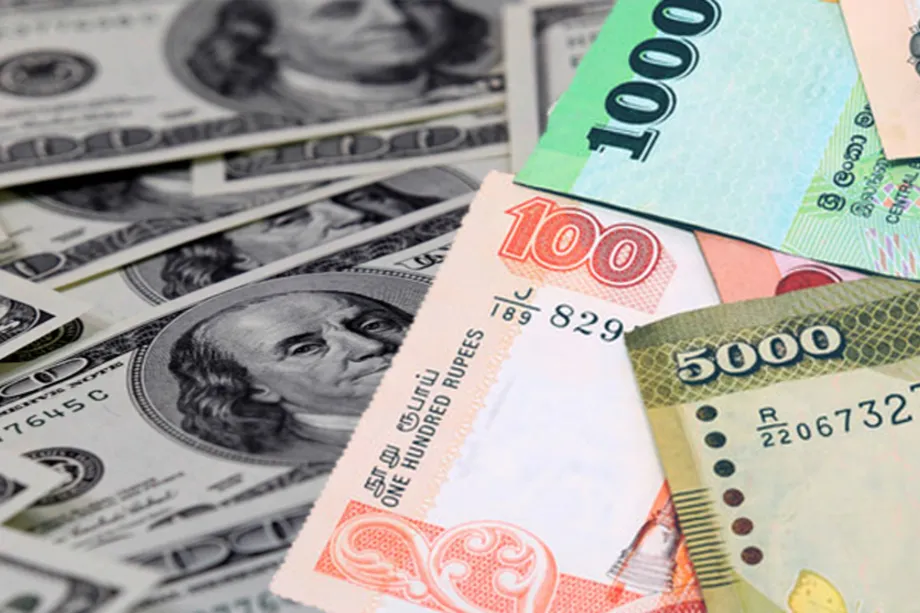
Record exports fail to close a widening foreign currency gap
Sri Lanka's rupee ended October 2026 at Rs. 332.61 per US dollar, with the Central Bank of Sri Lanka reporting a depreciation of 6.8% since the start of the year. The decline came despite record merchandise exports in September and rising money transfers from Sri Lankans working abroad.
Contents
- Record exports fail to close a widening foreign currency gap
- What the exchange rate means for households
- Why September's export record was not enough
- Petroleum spending weighs on reserve building
- Remittances grow while services provide less support
- The current account returns to deficit
- Foreign investors withdraw from bonds and shares
- The Central Bank balances reserves and currency movements
- Market prices and the next financing date
- Key Points
The pressure is visible in the country's import bill. During January to September, merchandise imports reached $18.666 billion, while exports earned $10.754 billion. The resulting trade deficit of $7.912 billion was about 53% larger than the $5.174 billion gap recorded during the same period in 2025.
The Central Bank's External Sector Performance report for September also recorded gross official reserves of $6.9 billion, including a currency swap facility with the People's Bank of China. That reserve stock covered the equivalent of 3.3 months of imports.
Governor Nandalal Weerasinghe said the bank was buying foreign currency carefully while working toward reserves of around $8 billion by the end of 2026 under Sri Lanka's commitment to the International Monetary Fund. Higher petroleum spending, weaker earnings from some services and foreign investment withdrawals complicated that task.
The figures show why strong exports and remittances have not been enough to prevent the currency from weakening. Sri Lanka is earning more foreign currency through some channels, but its spending on imports has grown much faster across the first nine months of the year.
What the exchange rate means for households
The rupee moved from Rs. 309.99 per dollar at the end of 2025 to Rs. 330.83 at the end of September and Rs. 332.61 at the end of October. The Central Bank put depreciation at 6.3% through September and 6.8% through October.
A dollar therefore cost Rs. 22.62 more at the end of October than at the close of 2025. A payment of $100 would require Rs. 33,261 rather than Rs. 30,999, an increase of Rs. 2,262 before bank charges.
The dollar's price in rupees rose about 7.3%, while the rupee's value measured in dollars fell about 6.8%. Those percentages describe the same exchange rate movement from opposite directions.
Importers paying for fuel, medicine or machinery need more rupees to buy an unchanged dollar amount. Exporters and households receiving dollars can receive more rupees when they exchange the same foreign currency payment. The final effect on household budgets also depends on prices, taxes and whether businesses pass higher costs to customers.
The main changes unfolded as follows:
- End of 2025: the exchange rate stood at Rs. 309.99 per dollar.
- May 2026: the governor said the year's steepest currency decline occurred as oil prices rose amid uncertainty about supplies.
- End of September: the rupee stood at Rs. 330.83 per dollar, and official reserves were $6.9 billion.
- End of October: the exchange rate reached Rs. 332.61 per dollar, with depreciation at 6.8% for the year.
- November 4: a Treasury bill auction of Rs. 90 billion was scheduled.
Why September's export record was not enough
Merchandise exports reached a monthly record of $1.377 billion in September, rising 21% from a year earlier. That exceeded the previous record of $1.302 billion set in July 2025 by $75 million.
September imports rose much more slowly, increasing 2.9% to $2.109 billion. The monthly trade deficit narrowed to $731.3 million from $910.1 million in September 2025, an improvement of $178.8 million.
January to September figures explain the continuing pressure. Exports increased 5.3%, but imports grew 21.3%. Import spending therefore rose at roughly four times the pace of export earnings.
The nine month trade deficit widened by $2.738 billion compared with 2025. September's stronger performance reduced the gap for that month, while the accumulated shortfall remained much larger than a year earlier.
The Central Bank also recorded weaker terms of trade because import prices rose faster than export prices. In simple terms, the prices Sri Lanka paid for goods from abroad increased faster than the prices it received for goods sold overseas.
Petroleum spending weighs on reserve building
Fuel imports cost about $4.5 billion during January to September, up 51.5% from a year earlier. Petroleum accounted for roughly 24% of the $18.666 billion merchandise import bill.
Monthly fuel spending fell for a fifth consecutive month in September. The accumulated cost nevertheless remained far above the previous year's level, showing how earlier increases continued to affect the country's foreign currency needs.
Weerasinghe linked slower reserve accumulation partly to petroleum demand following the Middle East conflict. He said the Central Bank could have accumulated another $2 billion without that additional spending.
Vehicle imports were another substantial expense. Spending on personal and commercial vehicles fell 34.4% from a year earlier to $188 million in September, while the January to September total reached $1.871 billion.
Fuel and vehicles together accounted for about $6.37 billion, or roughly 34% of merchandise imports during the first nine months. Their combined cost helps explain why the stronger September export result did not remove pressure on foreign currency supplies.
Remittances grow while services provide less support
Workers abroad sent home $734.4 million in September, an increase of 5.6% from a year earlier. Remittances reached $6.865 billion during January to September, up 18.1%.
Those transfers provide foreign currency while supporting household spending. Their growth helped offset part of the trade shortfall, although the current account also includes services and income payments.
Sri Lanka's services surplus fell 34.3% to $118.7 million in September because payments for services, particularly travel and air transport, grew faster than receipts. The surplus for January to September declined 22.3% to $2.213 billion.
Tourism produced a mixed result. September earnings rose 1.5% to $185.6 million even as arrivals fell 0.3%. Across January to September, arrivals declined 1.8% and estimated earnings fell 9.2% to $2.245 billion.
The tourism earnings estimates use a revised method introduced by the Sri Lanka Tourism Development Authority in 2026. That method was also applied to earlier monthly estimates for the year, providing a consistent basis for the updated 2026 figures.
The current account returns to deficit
Sri Lanka recorded a current account deficit of $128.4 million in September after a surplus in August. The September shortfall was smaller than the $193.8 million deficit recorded a year earlier.
The current account brings together trade in goods and services, income paid across borders and transfers such as workers' remittances. A deficit means payments exceeded receipts across those categories during the period.
The cumulative current account deficit reached $420.4 million during January to September. Remittances and the services surplus covered much of the merchandise trade gap, while other payments added to the shortfall.
The primary income deficit widened to $240.6 million in September from $152.4 million a year earlier. The Central Bank attributed much of the increase to higher dividend payments on direct investments. Such payments arise when businesses send part of their profits to foreign owners.
September therefore brought both improvement and continuing strain: the trade gap narrowed compared with a year earlier, but weaker services support and larger income payments left the current account in deficit.
Foreign investors withdraw from bonds and shares
Foreign investment in government securities recorded a net outflow of $39.9 million in September. The Colombo Stock Exchange recorded another $4.7 million in net outflows across new share issues and trading in existing shares.
Government securities still attracted a net foreign inflow of $168 million during January to September, compared with $178 million in the same period of 2025. Foreign outflows from the stock exchange reached $170 million, twice the $85 million recorded a year earlier.
More recent bond figures showed net foreign sales of Rs. 2.818 billion, about $8.5 million, in the week ended October 23. That was the first week of net selling in four weeks and brought net outflows over six weeks to Rs. 13.8 billion.
Foreign investors had bought a net Rs. 5.5 billion during the preceding three weeks. They were net sellers in three of the previous 19 weeks, while net inflows into government bonds denominated in rupees remained about Rs. 58.3 billion for the year to that point.
Currency movements matter to these investors because they receive interest and repayments in rupees. When they convert those proceeds into dollars, a weaker rupee reduces the dollar value of the money received.
The Central Bank balances reserves and currency movements
Gross official reserves stood at $6.9 billion at the end of September, including the swap facility with China's central bank. A currency swap is an arrangement between central banks to exchange currencies under agreed conditions. The usable amount outside that facility was not specified.
Weerasinghe said the Central Bank was managing its purchases of foreign currency with attention to market conditions. Speaking at a forum in Colombo organised by the Colombo Stock Exchange and the Securities and Exchange Commission of Sri Lanka, the governor described the bank's approach:
We build reserves without creating volatility in the market,
The governor said petroleum demand had slowed reserve building and that the bank was allowing gradual currency movement in response to demand and supply. Buying dollars adds to reserves, but also creates demand for dollars in the local market.
The stated objective of around $8 billion by the end of 2026 was approximately $1.1 billion above September's reserve stock. That made the final quarter important for reserve accumulation while importers continued to need foreign currency.
Market prices and the next financing date
The latest market quotation placed the rupee at Rs. 332.55 to Rs. 332.65 per dollar, compared with Rs. 332.50 to Rs. 332.62 in the preceding Friday quotation. Those figures kept the currency close to its October closing level.
Quoted telegraphic transfer rates, used for bank transfers, were Rs. 328.10 when buying dollars and Rs. 337.10 when selling dollars. Euro rates were Rs. 363.8243 buying and Rs. 377.6051 selling, while sterling rates were Rs. 438.1944 buying and Rs. 452.3028 selling. Customers buying foreign currency therefore faced a different rate from those selling it.
Government bond yields were broadly steady. A bond maturing on May 15, 2030, was quoted at 11.45% to 11.55%, while one maturing on August 15, 2036, was quoted at 12.85% to 12.93%. A bond yield expresses the return available at its market price.
The All Share Price Index rose 0.09% to 20,161, while the S&P SL20 increased 0.23% to 5,759. The next stated government financing event was the November 4 auction of Rs. 90 billion in Treasury bills.
Interest rates also form part of the policy picture. The Central Bank raised its policy rate by 100 basis points, equal to one percentage point, in May, after cumulative cuts of 825 basis points over the previous two years. Higher rates can support returns on rupee investments while increasing borrowing costs for households and businesses.
Key Points
- The rupee ended October at Rs. 332.61 per dollar, with depreciation of 6.8% since the start of 2026.
- September exports reached a record $1.377 billion, but the January to September trade deficit widened to $7.912 billion.
- Fuel imports cost about $4.5 billion during the first nine months, rising 51.5% from a year earlier.
- Workers' remittances increased 18.1% to $6.865 billion, while the services surplus declined.
- The current account recorded a September deficit of $128.4 million and a cumulative deficit of $420.4 million.
- Official reserves stood at $6.9 billion, including the Chinese swap facility, against a stated objective of around $8 billion by year end.
- A Treasury bill auction of Rs. 90 billion was scheduled for November 4.