A mountain programme reaches the draft, with key decisions still open
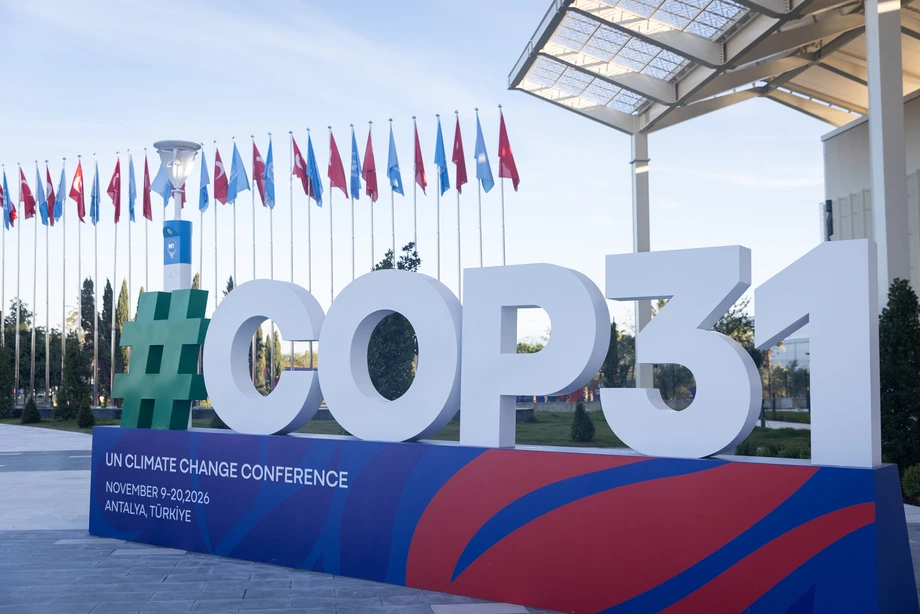
Nepal's campaign for a permanent place for mountains in UN climate negotiations has reached a crucial stage in Antalya, Türkiye. Paragraphs 31 and 32 of the COP31 presidency's November 16 draft propose a dedicated mountain work programme, a standing conference agenda item and a political dialogue at COP32 in 2027.
Contents
- A mountain programme reaches the draft, with key decisions still open
- How the original proposal changed
- What the proposed programme would do
- Where Nepal wants stronger commitments
- Why mountain risks reach far downstream
- Flood survivors face a much longer wait
- A small fund faces competing demands
- Adaptation finance exposes another large gap
- The final push depends on political agreement
- Key Points
The proposals follow a setback on November 9, when the conference adopted its formal agenda without the separate mountain item sought by Nepal, Bhutan and Kyrgyzstan. Nepal is now pressing negotiators to define what the proposed programme would do, how it would operate and how mountain communities would gain access to finance.
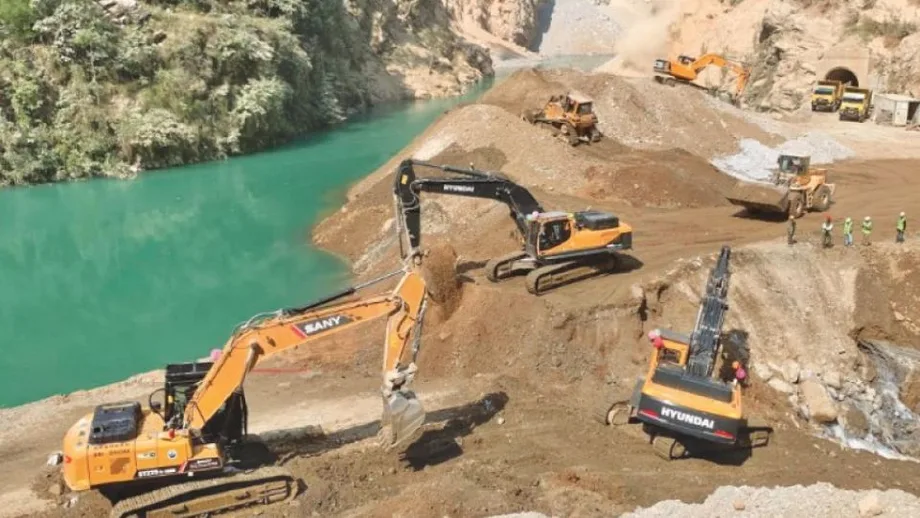
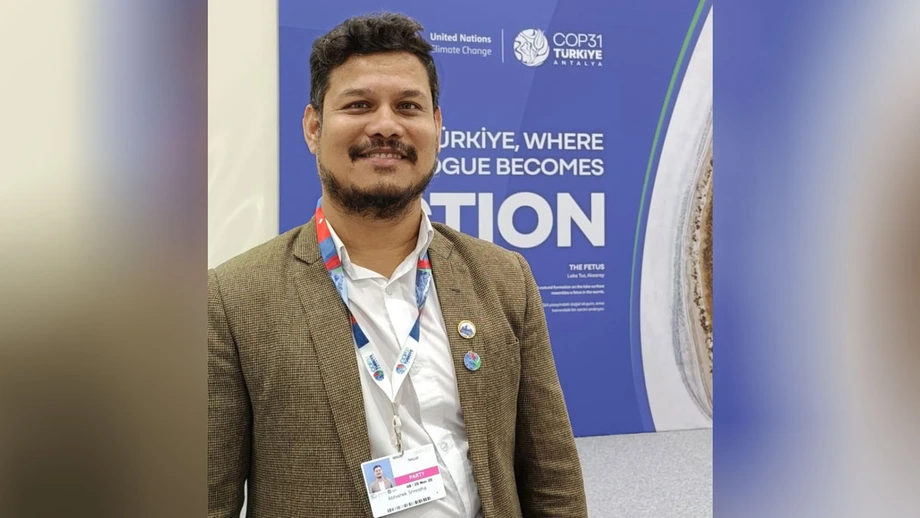
The stakes are immediate for communities recovering from the Bhotekoshi–Trishuli floods. Nepal has identified $20 million for recovery work through the Fund for Responding to Loss and Damage, plus $1.6 million for operational costs. Avishek Shrestha, adviser to Agriculture, Forests and Environment Minister Gita Chaudhary, puts reconstruction needs at about $4.7 billion.
With COP31 scheduled to close on November 20, Nepal wants the final overarching agreement, commonly called a cover decision, to connect scientific research, regular political discussions and practical financial support.
Nepal's foreign minister, Shishir Khanal, described the task in a statement at the climate talks:
After the disaster, we received an outpouring of sympathy. This is the time to put sympathy into the system.
How the original proposal changed
Nepal and Bhutan submitted their proposal on October 29 under Rule 12 of the conference's draft rules of procedure. Its title, "1.5°C Warming in Mountains", put temperature risks at the centre of the request.
The submission sought four connected measures: research into mountain warming, an annual dialogue involving senior political leaders, a dedicated work programme and explicit mountain priorities within adaptation, climate finance and loss and damage arrangements.
Kyrgyzstan submitted a similar initiative, and the countries joined forces. Some governments interpreted the reference to 1.5°C as carrying heavier obligations. The proponents agreed to the broader title "matters relating to mountains and climate change".
The presidency then agreed to continue consultations. Shrestha said Nepal had kept its proposal alive and would continue seeking stronger language in the final decision.
The main steps in the negotiations are:
- October 29: Nepal and Bhutan submit their mountain proposal.
- November 9: COP31 opens and adopts its agenda without a separate mountain item.
- November 14: Nepal, Bhutan and Kyrgyzstan submit further proposals covering science, early warnings, preparedness and mountain indicators.
- November 15: Minister Gita Chaudhary meets Australia's Chris Bowen and Türkiye's Murat Kurum.
- November 16: The presidency releases a draft containing proposals for a mountain programme and future dialogues.
- November 20: The conference is scheduled to conclude.
What the proposed programme would do
Paragraph 31 of the presidency's draft recognises the vulnerability of mountain regions and communities dependent on glaciers. It proposes work to improve scientific understanding, assess climate impacts and strengthen adaptation and disaster risk reduction.
The paragraph asks the Subsidiary Body for Scientific and Technological Advice, known as SBSTA, to recommend a draft programme decision for consideration at a future COP. SBSTA is the technical body that helps climate negotiators turn scientific and technological information into policy proposals.
The same paragraph proposes a standing COP agenda item and a dialogue involving senior political leaders at COP32. A standing item would give countries a recurring place to negotiate mountain issues, rather than requiring them to seek a new opening each year.
Paragraph 32 supports continued mountain dialogues and encourages regular political discussions under successive COP presidencies. It names mountain countries, Indigenous Peoples and local communities among those whose priorities should inform climate action.
Where Nepal wants stronger commitments
Nepal wants the programme's scope and operating arrangements written into the final outcome. It also wants the mountain dialogues brought under that programme, with a regular political forum that can push implementation forward.
The November 14 proposals sought stronger scientific assessments, early warning systems, disaster preparedness and indicators tailored to mountain conditions. Indicators are practical measures used to track progress, such as whether communities can receive warnings or whether essential water supplies are becoming more secure.
The presidency's draft leaves several of these requests open. It contains no explicit research process focused on the consequences of 1.5°C warming and temperature overshoot for mountains. Overshoot means global temperatures rise above a warming threshold before later falling below it.
The draft also leaves specific arrangements for mountain priorities in adaptation, finance and loss and damage to further negotiations. Nepal wants those connections made explicit so that research and dialogue lead to decisions about resources.
Adaptation means preparing for changing conditions and reducing harm, for example through safer infrastructure and flood warnings. Loss and damage finance addresses harm that communities have already suffered or cannot avoid. Nepal is seeking attention to both needs.
Why mountain risks reach far downstream
Glacier retreat, unstable mountain slopes, threatened water supplies and glacial lake outburst floods underpin the three countries' proposals. An outburst flood occurs when water stored in a glacial lake escapes suddenly, potentially carrying ice, rock and debris downstream.
According to the International Centre for Integrated Mountain Development, snow and glaciers in the Hindu Kush Himalaya feed rivers on which nearly 2 billion people depend for drinking water, farming and electricity.
Nepal's proposed Sagarmatha to Sea partnership connects these mountain changes with river systems, agriculture, energy and ecosystems farther downstream. Its diplomatic purpose is to build support beyond mountain states by showing how risks travel through shared water systems.
Pam Pearson, director of the International Cryosphere Climate Initiative, warned at COP31 that snow and ice can disappear quickly while recovery can take centuries or millennia. The cryosphere is the frozen part of the Earth, including glaciers, snow and frozen ground.
"There is no negotiating with the melting point of ice," Pearson said.
Nepal has discussed a proposed initiative with India and China on warnings across borders, beginning with cooperation between research institutions. China has supported Nepal's mountain agenda, and Nepal planned further discussions with India.
Paragraphs 47 and 48 of the presidency's draft also support warnings covering multiple hazards and the UN goal of access to early warning systems for everyone by 2027. For settlements downstream of dangerous lakes or unstable slopes, faster information sharing could provide more time to move people out of danger.
Flood survivors face a much longer wait
In Nuwakot and surrounding areas, August flooding destroyed homes, farmland and bridges, leaving communities dependent on temporary shelters and donated supplies. Thousands of people were reported dead or missing.
Lakchin Bahadur Tamang, an 18-year-old hydropower plant worker living amid the destruction, described his concern about assistance running out:
I fear that once these aid organizations and helping hands leave, we will be left helpless, without even enough drinking water.
Shrestha has described Nepal's $21.6 million fund package as received, comprising $20 million for work and $1.6 million for operational expenses. The funding process has also been described as a pledge requiring a formal proposal and final board approval. No disbursement date has been announced.
Nepal's government has begun preparing its proposal and plans consultations with ministries and other stakeholders on projects and financing.
Shrestha estimates reconstruction needs at $4.7 billion, roughly 20 percent of gross domestic product. Khanal has put rebuilding at about one tenth of the economy, while another estimate places disaster losses at $4.3 billion. Using Shrestha's reconstruction figure, the $20 million intended for work would cover about 0.43 percent of the need.
A small fund faces competing demands
The Fund for Responding to Loss and Damage was established in 2022 to support vulnerable developing countries suffering climate impacts. Nepal's experience brings two problems into focus: the amount available and the time required to secure it.
Shrestha cited roughly $800 million in pledges, with around $400 million received. Other figures circulating during the summit put commitments at about $822 million, requests at $2.8 billion and financing provided at approximately $342 million.
A different tally put pledges above $1.3 billion and counted 184 support requests worth about $1.6 billion. The fund's board is expected to consider further requests in December. These totals describe a fund facing substantial demand while contributions and approvals continue.
Manjeet Dhaka, a member of Nepal's delegation and lead adviser to least developed countries at COP, welcomed the initial response while calling for more resources:
The scale of the resources needs to increase.
The Stockholm Environment Institute estimates that countries with lower incomes could need $400 billion to $580 billion annually in loss and damage finance by 2050. Nepal is asking for funding that is accessible, timely and affordable, with grants preferred over loans that add repayment obligations after a disaster.
Adaptation finance exposes another large gap
Developing countries are seeking delivery of the climate finance goal agreed at COP29 in Baku: $300 billion annually by 2035, alongside a broader effort to mobilise $1.3 trillion a year by then. Nepal also wants clear delivery arrangements for the commitment to triple adaptation finance.
The COP31 presidency's draft proposes at least $120 billion in adaptation finance by 2035. Estimated annual adaptation needs in developing countries reach about $305 billion by that year, compared with $28 billion to $32 billion in international public adaptation finance in 2024.
The proposed $120 billion would equal about 39 percent of the estimated $305 billion need, leaving a difference of $185 billion annually. It would also represent roughly four times the 2024 public finance level.
Paragraph 99 proposes an Antalya to Addis Ababa Adaptation and Resilience Finance Roadmap, with findings due at COP32 in 2027. Its purpose is to identify predictable public funding sources, including new approaches to financing and access.
Paragraph 98 cites a 21 percent rise in climate finance from multilateral development banks. It recalls their separate goals of providing $120 billion annually to economies with low and middle incomes by 2030 and mobilising another $65 billion in private investment.
Shrestha argues that climate finance commitments are falling short in delivery. He has also called for resources to be redirected from fossil fuel subsidies and military spending.
The final push depends on political agreement
Minister Chaudhary's November 15 meetings with Australia's Climate Change and Energy Minister Chris Bowen and Türkiye's Murat Kurum formed part of Nepal's effort to secure stronger text. Shrestha said those bilateral discussions helped advance the mountain proposals.
Nepal has also approached the G77 and China, the Least Developed Countries, the African Group, the Arab Group and European countries. Its delegation met UN Secretary-General António Guterres, whom Shrestha described as an advocate for mountain concerns.
UN climate decisions generally depend on consensus, allowing objections to delay agreement. Nepal had warned that it could raise a point of order and interrupt the plenary if its proposal was not endorsed.
The mountain negotiations sit alongside unresolved disputes over finance, adaptation measures and the transition away from fossil fuels. Nepal wants the final cover decision to define the mountain programme, place the dialogues within it and establish regular political oversight.
The next scheduled mountain discussions are at subsidiary body sessions SB66 and SB68 in Bonn, in June 2027 and June 2028. Nepal's immediate objective is to leave Antalya with an agreed structure that gives those meetings a clear purpose and connects them to action for affected communities.
Key Points
- Nepal, Bhutan and Kyrgyzstan failed to secure a separate mountain item on COP31's November 9 agenda.
- The November 16 draft proposes a mountain work programme, a standing agenda item and a COP32 political dialogue.
- Nepal wants clearer scientific tasks, operating rules and links to finance, adaptation and loss and damage.
- The $20 million identified for recovery work equals about 0.43 percent of Shrestha's $4.7 billion reconstruction estimate.
- Funding for Nepal still faces proposal and approval steps, with no disbursement date announced.
- COP31 is scheduled to close on November 20, with further mountain dialogues planned for June 2027 and June 2028.