South Korea Halts Tesla Driving Exemption Review
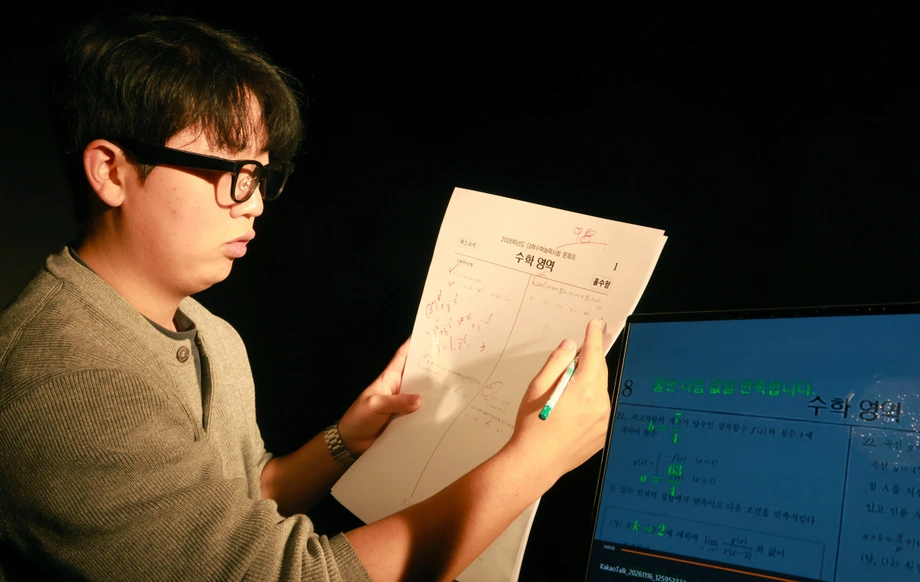
South Korea rejected an application by Tesla Korea to bypass local safety standards for its Full Self-Driving system, citing paperwork that was far too thin for a proper safety assessment. The Ministry of Land, Infrastructure and Transport announced on November 20, 2026, that the Korea Transportation Safety Authority notified the automaker of the decision. Tesla Korea had submitted its request on October 22, 2026, using an email submission that contained only two pages of technical descriptions and three cover pages from Dutch approval documents.
Contents
The transport ministry stated that the submitted materials amounted to little more than general website descriptions of the software rather than the rigorous technical data required by regulators. Government officials had previously requested safety validation data, records of United States defect investigations, and details regarding sales contracts for features not yet cleared for domestic use. Regulators received no specific answers to those inquiries before the recent filing was rejected.
Understanding Full Self Driving Technology
Full Self Driving, often abbreviated as FSD, is an advanced driver assistance system developed by Tesla to help steer, brake, and navigate on public roads. The term Supervised indicates that the software does not make the vehicle fully autonomous, meaning a human driver must remain alert and ready to take control at a moment notice. Software of this type relies on artificial intelligence, cameras, and computer processing to interpret road conditions, traffic signs, and obstacles in real time.
Different countries enforce distinct safety rules for driving assistance software to protect the public from potential accidents or system failures. South Korean regulations require strict adherence to specific vehicle safety standards, such as mandatory physical intervention requirements for lane changes. Manufacturers wishing to bypass these standard limits must apply for special exemptions under the Motor Vehicle Management Act by demonstrating that their technology meets international standards or guarantees safety through verified data.
The Factory Origin Divide
Vehicle manufacturing location determines which approval path a Tesla must follow to legally use the driving software within the country. United States manufactured models can utilize the feature immediately because their compliance with American safety rules is recognized locally under the terms of the Korea United States Free Trade Agreement. Vehicles produced at Tesla Shanghai Plant in China do not qualify for this trade agreement recognition and must clear domestic certification processes instead.
Data provided to National Assembly member Jang Jong-tae revealed that approximately seventy-seven percent of the roughly 239,000 Teslas registered in South Korea were manufactured in China. This creates a wide gap where many owners paid thousands of dollars for software they cannot legally operate on their vehicles. Five pages were not enough for a safety review as government officials maintained that approving the feature without proper testing would violate local safety laws designed to protect motorists.
Parliamentary Scrutiny and Consumer Complaints
Tesla Korea country manager Seo Yeong-deuk faced sharp questioning during the National Assembly Land and Transport Committee national audit last October. Lawmakers addressed consumer safety concerns and the commercial practice of selling expensive software options to buyers whose cars lacked the necessary regulatory approval. Seo acknowledged that only about twenty percent of registered Teslas in the country could legally use the software, corresponding to models imported directly from the United States.
Consumer advocacy groups filed complaints over deceptive marketing practices, pointing out that many buyers purchased the software package without realizing their specific vehicles were ineligible. The Korea Fair Trade Commission opened an investigation into how the company advertised and sold the driving feature to local customers. Furthermore, consumer advocates sought administrative fines and formal investigations into the continued promotion of software that most local owners could not legally activate.
Recent Security Warnings and Illegal Modifications
South Korean authorities issued strict warnings regarding illegal attempts by vehicle owners to bypass regional software blocks and activate the driving assistant without authorization. Government officials warned that drivers caught using modified software face severe penalties under the law. A costly option unavailable to the vast majority of local Tesla owners has driven some enthusiasts in online communities to attempt unauthorized jailbreaking procedures to unlock the features.
The Ministry of Land, Infrastructure and Transport announced on March 31, 2026, that unauthorized activation classifies the vehicle as non-compliant with safety standards and bans it from public roads. Modifying safety related software systems carries penalties of up to two years in prison or a fine reaching twenty million won. The transport ministry stressed that software alterations must strictly follow official certification channels to ensure public road safety.
Global Regulatory Hurdles and Market Competition
Tesla chief executive Elon Musk has faced expanding regulatory scrutiny across multiple international markets while attempting to deploy driver assistance software on a wider scale. China approval remains unfinished despite the automaker accumulating millions of paying users worldwide. Local Chinese automakers have introduced competitive navigation systems at lower price points, forcing Tesla to navigate intense price and technology rivalries abroad.
While the company pursues broader regulatory clearance in Europe and Asia, regional authorities continue to demand rigorous empirical safety data. Regulators consistently reject self-certification claims, requiring automakers to supply verifiable testing results and defect records before granting special exceptions. The current South Korean administrative pause highlights the growing friction between rapid software deployment strategies and traditional automotive safety regulations.
Timeline of Key Events
- October 22, 2026: Tesla Korea submits a five-page exemption application via email.
- November 20, 2026: The transport ministry and safety authority formally decline the application due to insufficient documentation.
- November 21, 2026: Regulators give Tesla a fifteen-day window to supplement missing safety data.
- March 31, 2026: Government warns motorists against unauthorized software modifications under threat of criminal penalties.
The Essentials
- South Korea rejected Tesla exemption request for Full Self Driving due to inadequate technical documentation.
- The application contained only two pages of descriptions and three Dutch approval cover pages.
- Roughly seventy-seven percent of registered Teslas in South Korea are manufactured in China and lack automatic regulatory clearance.
- Regulators requested empirical safety data and United States defect records, but received no specific answers.
- Unauthorized software activation carries penalties including up to two years in prison.