A Mathematical Journey from Ho Chi Minh City to Chicago
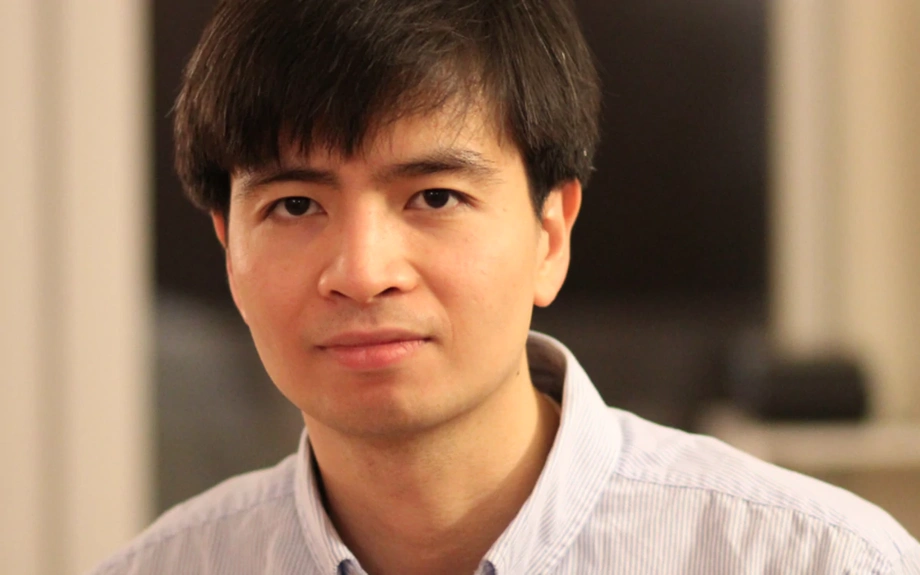
Phạm Tuấn Huy was born in 1996, the same year the Gifted High School was established at Vietnam National University in Ho Chi Minh City. He made a defining choice in 2011 by declining a scholarship to study in Singapore, opting instead for the tenth-grade math specialist class at his local institution. That decision set the stage for a remarkable academic trajectory. While still a high school student in 2013, he joined forces with Cấn Trần Thành Trung to secure a gold medal at the International Mathematical Olympiad, a feat he repeated the following year. Beyond his competition medals, teachers noted his distinct ability to mentally map complex mathematical structures and write down complete proofs without needing scratch paper. His early education also included formal piano and music studies at a conservatory, cultivating a blend of rigorous logic and artistic sensitivity. He subsequently earned a bachelor of science in mathematics with a minor in computer science and a master of science in statistics from Stanford University, followed by a master of advanced study in mathematics with distinction from the University of Cambridge where he ranked first in Part III. Under the guidance of his PhD advisor Jacob Fox, he completed his doctorate in mathematics at Stanford University. He then served as a Stanford Science Fellow and a member of the Institute for Advanced Study before joining the California Institute of Technology as an Assistant Professor of Mathematics and Rosenberg Scholar.
Contents
- A Mathematical Journey from Ho Chi Minh City to Chicago
- Understanding Modular Arithmetic and Clock Numbers
- The Juggling Inspiration Behind the Half-Century Puzzle
- Breaking Down the Problem Through Collaborative Breakthroughs
- Combining Probability and Fourier Analysis for the Final Proof
- Returning to the Roots and Inspiring Future Generations
- The Bottom Line
The Clay Research Fellowship announcement on January 27, 2023, named him alongside Paul Minter as recipients of the five-year award beginning July 1, 2023. The Clay Mathematics Institute recognized his contributions across combinatorics, probability, number theory, and theoretical computer science. His doctoral and postdoctoral output includes proving the Kahn-Kalai conjecture on thresholds and Talagrand conjectures on suprema of selector and empirical processes, alongside co-authoring the paper on Graham's rearrangement conjecture submitted on February 17, 2026 with co-author Lisa Sauermann. His academic profile at Stanford details his focus on large and random networks, while his curriculum vitae records his appointment at the California Institute of Technology starting in 2025.
Understanding Modular Arithmetic and Clock Numbers
To grasp the puzzle solved by Phạm Tuấn Huy and Lisa Sauermann, one must understand how numbers behave in circular systems, known in mathematics as modular arithmetic or clock arithmetic. Imagine a clock face that stops at seven instead of twelve, meaning positions are numbered zero through six. Once a calculation moves past six, the count wraps around to zero. Adding three and four yields seven, which occupies the same position as zero on this seven-hour clock. Ronald Graham, a prominent mathematician who served as president of both the Mathematical Association of America and the International Jugglers Association, proposed his puzzle in 1971 based on principles found in juggling performance routines.
Graham wondered what happens when numbers are restricted to such a circular system. He conjectured that for any prime number, any subset of non-zero numbers taken from that clock system can be arranged in a specific sequence so that all partial sums generated step-by-step remain distinct. This means every running total created by adding the next number in the line must produce a unique value rather than repeating an earlier total. Proving this required navigating what computer scientists call finding a needle in a haystack, because checking every possible ordering of a large number set quickly becomes impossible through brute force alone.
The Juggling Inspiration Behind the Half-Century Puzzle
Ronald Graham spent decades exploring connections between mathematics and the physical coordination required for juggling multiple objects, spinning items, and throwing objects against walls. His wife and fellow mathematician Fan Chung recalled his fascination with physical dexterity, noting how he practiced spinning basketballs and clothes hangers simultaneously. In television interviews from 1980, Graham remarked that many mathematicians and computer scientists share an affinity for juggling because both pursuits involve seeking hidden rules and underlying structures.
The juggling metaphor translates directly into how individual numbers behave when given specific durations in the air. If numbers are all positive, running totals increase steadily without collisions. When negative and positive numbers alternate, totals fluctuate in predictable ways. However, when numbers are trapped inside a circular clock system where totals wrap around after reaching a limit, predicting whether a non-repeating sequence of partial sums can always be formed became a fifty-five-year challenge. Mathematical colleagues noted that Graham possessed a unique intuition for such symmetrical designs, yet formal proof eluded researchers for decades.
Breaking Down the Problem Through Collaborative Breakthroughs
Solving the puzzle required a sequence of breakthroughs achieved by several young mathematicians working across different universities over a four-year period. In 2022, Alp Müyesser at the University of Oxford realized that a random probability technique he had just used for a separate network problem could unlock Graham's conjecture. Working alongside Alexey Pokrovskiy from University College London, Müyesser tackled the scenario where the selected number subset contains nearly all available positions on the clock system. Their method involved isolating a few backup numbers and randomly shuffling the rest, inserting a backup number whenever a rogue subsequence produced a zero sum that would ruin the distinct partial totals.
That initial solution remained largely hidden inside a paper focused on broader topics until Noah Kravitz at the University of Oxford encountered the unsolved problem online in 2024. Kravitz and his Oxford colleague Benjamin Bedert chose to examine the opposite extreme, focusing on subsets that are very small compared to the total clock size. They published their proof for small subsets in September 2024. Upon reading their work, Müyesser contacted them to share his earlier findings. The expanded team joined forces to handle intermediate subset sizes that neither method could previously resolve.
Combining Probability and Fourier Analysis for the Final Proof
The final phase of the research combined probability theory, anti-concentration techniques, and Fourier analysis to cover every remaining gap in subset sizes. Phạm Tuấn Huy and Lisa Sauermann completed the final piece of the puzzle by establishing bounds for subsets of any size relative to the prime modulus. Their proof demonstrates that for any prime number and any subset satisfying specific size thresholds, a valid ordering always exists.
Alp Müyesser explained the difficulty of the intermediate cases by comparing it to finding a precise path through a dense maze where standard algebraic tools fail. By deploying advanced probabilistic methods, the research team demonstrated that random arrangements possess an inherent structural resilience that prevents accidental collisions in running totals. The collaboration bridged two distinct subfields of combinatorics that rarely intersected, bringing together researchers from Oxford, Bonn, and Chicago.
Returning to the Roots and Inspiring Future Generations
Despite building an international research career across North America and Europe, Phạm Tuấn Huy maintains close ties with his former teachers at the Gifted High School in Ho Chi Minh City. In 2024, he returned to his alma mater to present a scientific report titled When are structures robust under randomness at an international mathematics conference organized alongside the University of Science. Tran Nam Dung, vice principal of the school, noted that Huy remains remembered as a math phenomenon who could organize complex arguments in his head without drafting rough notes, while also possessing a deep appreciation for literature and piano performance.
That academic visit allowed current students to engage directly with a researcher who walked the same hallways a decade prior. Faculty members emphasize that his journey illustrates the importance of intellectual curiosity, independent thought, and humility when exploring complex subjects. As the Gifted High School approaches its thirtieth anniversary in 2026, coinciding with Phạm Tuấn Huy turning thirty, his resolution of a half-century-old mathematical problem stands as a milestone for both Vietnamese mathematics education and the global research community.
The Bottom Line
- Phạm Tuấn Huy and Lisa Sauermann proved Graham's rearrangement conjecture, solving a mathematical problem posed in 1971 by Ronald Graham.
- The research was finalized across a series of four collaborative papers, concluding with a formal manuscript submitted in February 2026.
- Graham's puzzle investigates whether any set of numbers in a circular clock system can be ordered so that all partial sums remain entirely distinct.
- Early contributions to the solution were made by Alp Müyesser, Alexey Pokrovskiy, Noah Kravitz, and Benjamin Bedert between 2022 and 2025.
- Phạm Tuấn Huy currently serves as an assistant professor at the California Institute of Technology and holds a Clay Research Fellowship.