From a vaccine patch to a new scientific honour
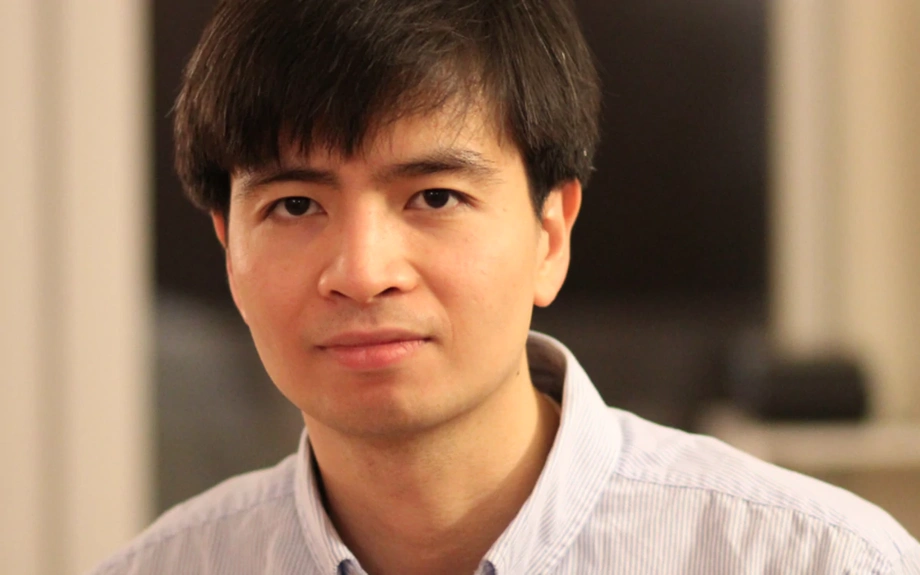
Nguyen Duc Thanh, a Vietnamese scientist at the University of Connecticut, was elected to the Connecticut Academy of Science and Engineering in March 2026, joining a class of 36 new members. His research tackles three concrete medical problems: repeated vaccination visits, severe bone injuries and the difficulty of delivering chemotherapy to brain tumours.
Contents
- From a vaccine patch to a new scientific honour
- A small patch with a timed delivery system
- Why fewer vaccination visits could matter
- Helping damaged bones repair themselves
- Using ultrasound to help chemotherapy reach the brain
- What the funding totals cover
- A route from Da Nang to biomedical engineering
- Building companies and training researchers
- Recognition across invention and engineering
- Key Points
The academy's March 10 announcement confirms his election among the 36 new members and lists him as Thanh Nguyen, an associate professor of Mechanical, Aerospace, and Manufacturing Engineering at the University of Connecticut.
Nguyen, an associate professor working in mechanical and biomedical engineering, has attracted $25 million in research funding to the university since joining in 2016, according to UConn. His projects include a biodegradable patch designed to release vaccines at scheduled intervals and an ultrasound device intended to help cancer drugs reach their target before breaking down inside the body.
The funding figures describe several overlapping parts of his research programme. By October 2024, his group had secured four R01 grants from the US National Institutes of Health worth more than $9.5 million, alongside two grants totalling $6.6 million from the Bill and Melinda Gates Foundation. Together, those two sources accounted for approximately $16.1 million of the broader funding total.
For patients, the ambition is practical: fewer journeys for vaccinations, better support for damaged bones and fewer operations to remove temporary medical devices. These technologies remain research and development projects. No timetable for routine patient access or regulatory approval was given.
A small patch with a timed delivery system
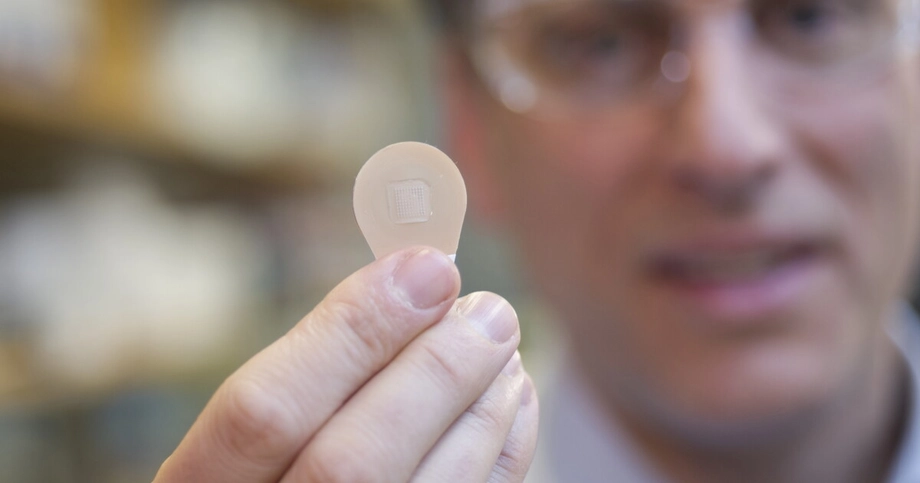
Nguyen's vaccine patch is roughly the size of a thumb tip and carries hundreds of microneedles, each about as fine as a hair. The needles contain a medicine or vaccine and are made from biodegradable material similar to that used in surgical stitches that dissolve after an operation.
Microneedles provide a way to deliver their contents through the skin. The group's design goes further by seeking to control when those contents are released. Adjusting the structure and thickness of the biodegradable material changes the timing, allowing the patch to act as a delivery system with a schedule built into it.
A conventional vaccination course may require someone to return to a clinic several times. Nguyen's approach aims to place doses in the body through one patch, with material breaking down at different times to release them. The same platform is also being developed to carry different vaccines or medicines.
The central engineering challenge is therefore more demanding than making a small needle. A useful patch must deliver the intended substance in the intended amount at the intended time. The research brings together materials science, the study of how substances behave, and biomedical engineering, which applies engineering to problems in health care.
Why fewer vaccination visits could matter
People living far from health facilities can face a substantial burden when a vaccine requires repeat appointments. Every return visit can mean another journey, transport costs and time away from work or family responsibilities. A patch capable of delivering a scheduled course after one application could reduce those demands.
Remote communities are a particular focus of the technology's proposed benefits. A delivery system that reduces the number of clinic visits could make completing a vaccination course easier for people who struggle to reach health services or keep track of later appointments.
Nguyen's research also aims to reduce dependence on refrigerated storage. Many vaccines need a carefully controlled temperature during transport and storage, often called the cold chain. Keeping that chain working requires equipment, electricity and coordination, which can be difficult where health infrastructure is limited.
The Gates Foundation's two grants, worth $6.6 million combined, support development of patches capable of delivering multiple vaccines. The intended benefits connect two parts of vaccination that patients experience together: getting the vaccine to a community and making sure a person receives the required doses.
Helping damaged bones repair themselves
Nguyen's group is also developing a biological scaffold for severe injuries to long bones, including the femur in the thigh and the tibia in the lower leg. When damage is extensive, the body's usual repair process may need extra support to rebuild the injured area.
A scaffold is a supporting framework that gives new tissue somewhere to grow. In this project, the framework does more than occupy space: it is designed to generate electrical signals that encourage bone repair. The work received a $2.1 million NIH grant.
The approach uses piezoelectric materials, which can produce an electrical charge when they are pressed or deformed. Connecting a material's physical behaviour to a biological response is a recurring theme in Nguyen's work. Here, the aim is to use electrical stimulation to support healing while providing a structure for regeneration.
The practical goal is to help repair injuries that the body struggles to heal alone. Success would depend on the scaffold supporting tissue growth and working safely within the body, making the choice and design of its material central to the treatment.
Using ultrasound to help chemotherapy reach the brain
A separate project, supported by a $2.16 million NIH grant, focuses on a biodegradable ultrasound device for brain cancer treatment. The device is designed to be implanted in the brain and help chemotherapy reach cancer cells.
The brain has a protective filtering system, known as the blood brain barrier, that tightly controls which substances can pass from the blood into brain tissue. That protection is essential for normal health, but it can also restrict the passage of medicines intended to treat a tumour.
Ultrasound uses sound waves at frequencies above human hearing. Nguyen's project applies that technology to assist drug delivery, aiming to improve the access of chemotherapy to the area requiring treatment.
The implant is intended to break down in the body after completing its task. A temporary device that disappears could reduce the need for a later operation to remove it. The project therefore addresses both delivery of the medicine and what happens to the equipment afterwards.
What the funding totals cover
NIH's R01 programme supports defined health research projects. By October 2024, Nguyen's team had four such awards worth more than $9.5 million, funding work across its biomedical research programme rather than a single invention.
Three named allocations illustrate the range: $2.1 million for long bone repair, $1.5 million for microneedle technology and $2.16 million for biodegradable ultrasound to improve chemotherapy delivery in brain cancer. These are parts of the NIH total, rather than additional sums to place on top of it.
The Gates Foundation's $6.6 million adds a substantial commitment to vaccine delivery. Combined with the NIH awards, it brings the two funding streams to approximately $16.1 million. UConn's $25 million figure covers the wider amount Nguyen attracted to the university after arriving in 2016.
Using those stated figures, NIH and Gates Foundation funding represent about 64% of the university's $25 million total. The comparison shows how much of the programme is concentrated in these two sources, while leaving other research support within the broader university figure.
A route from Da Nang to biomedical engineering
Nguyen was born in 1984 in Da Nang, central Vietnam. He studied in the specialised physics class A2 at Le Quy Don High School for the Gifted before entering the talented engineering programme in physics at Hanoi University of Science and Technology.
His academic path later moved from mechanics and aerospace engineering towards biomedical technology. That transition brought a background in how materials and physical systems behave into research on how devices interact with the human body.
The main milestones in his education and research career span nearly two decades:
- 2007: Graduated from Hanoi University of Science and Technology.
- 2008: Received a Vietnam Education Foundation scholarship to pursue doctoral study at Princeton University.
- 2013: Completed his doctorate and subsequently undertook postdoctoral research at the Massachusetts Institute of Technology.
- 2016: Joined the University of Connecticut and established his research programme.
- 2022: Became an associate professor.
- 2024: Was elected a Senior Member of the US National Academy of Inventors.
- March 2026: Was elected to the Connecticut Academy of Science and Engineering.
At UConn, Nguyen built a laboratory combining biomedical research, biomaterials and technologies at micro and nano scales. Those fields meet in devices small enough to deliver a vaccine through the skin or operate temporarily inside the body.
Building companies and training researchers
Nguyen is also a cofounder and chief technology officer of PiezoBioMembrane, Inc. and SingleTimeMicroneedles, Inc. The companies focus on biodegradable piezoelectric therapies and microneedle technology aimed at delivering vaccination courses through a single administration.
The businesses give his research a route towards practical medical products. Moving a laboratory design towards clinical use requires work beyond demonstrating an idea, including making devices consistently and evaluating how they perform in their intended setting.
Nguyen is credited with more than 20 patents in biomedical engineering. His work therefore includes both scientific investigation and inventions developed with potential applications in mind.
Training is another part of the programme. He has supervised more than 30 doctoral and postdoctoral researchers, including more than 10 Vietnamese researchers. Their work connects the laboratory's projects with a growing group of scientists gaining experience in materials, medical devices and drug delivery.
Recognition across invention and engineering
Nguyen received an NIH Trailblazer Award in 2017 and recognition from SME in 2018 among 18 outstanding young manufacturing engineers. In Vietnam, he was named among the country's 10 outstanding young faces in 2019.
His election as a Senior Member of the National Academy of Inventors followed in 2024. The organisation recognises inventors whose patents and research make substantial contributions to innovation.
The March 2026 election to the Connecticut Academy of Science and Engineering adds recognition within the state where he works. Established in 1976, the academy advises Connecticut's government and industry on science and technology issues. Election is open to scientists and engineers who work or live in Connecticut and is based on scientific distinction achieved through significant original contributions in theory or applications, unusual accomplishments in pioneering new and developing fields of applied science and technology, or both.
The academy cited Nguyen's pioneering research in biodegradable piezoelectric and self-boosting microneedle vaccines, and his advancement of biomedical engineering through innovative biomaterials and translational technologies that impact global health and strengthen Connecticut's scientific innovation. The 36 newly elected members will be introduced at the academy's 51st Annual Dinner at the Aqua Turf Club in Plantsville on May 19, 2026.
Across Nguyen's projects, the common idea is a material that carries out a medical task and then breaks down, or helps the body rebuild tissue. The vaccine patch, bone scaffold and brain implant apply that idea to very different needs, linking the design of a material directly to the treatment it is meant to support.
Key Points
- Nguyen Duc Thanh joined UConn in 2016 and has attracted $25 million in research funding to the university.
- By October 2024, his team had secured more than $9.5 million through four NIH R01 grants and $6.6 million through two Gates Foundation grants.
- His biodegradable microneedle patch aims to deliver medicines or vaccines at scheduled intervals after one application.
- Other projects target severe bone injuries and chemotherapy delivery for brain cancer.
- He cofounded two companies and has supervised more than 30 doctoral and postdoctoral researchers.
- He became a National Academy of Inventors Senior Member in 2024 and was elected to Connecticut's science and engineering academy in March 2026.
- No timetable was given for routine patient access to the technologies.