Record streak hides a widening divide
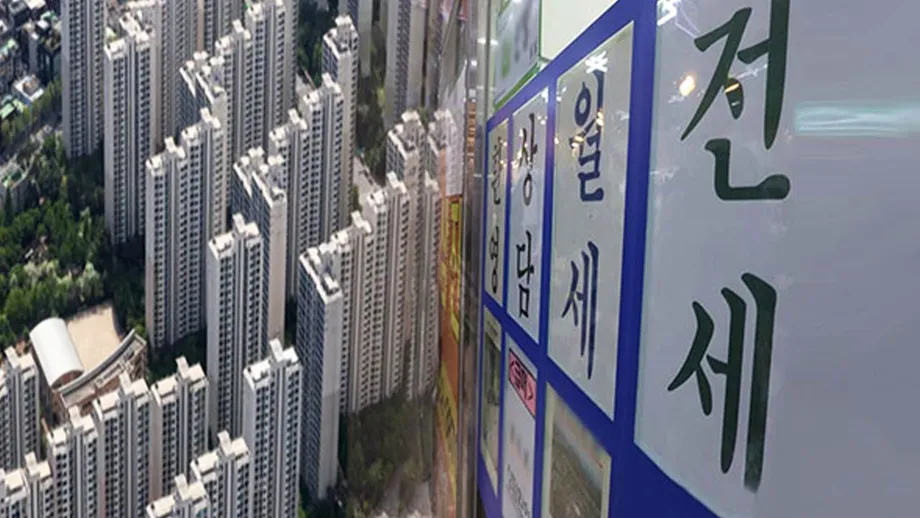
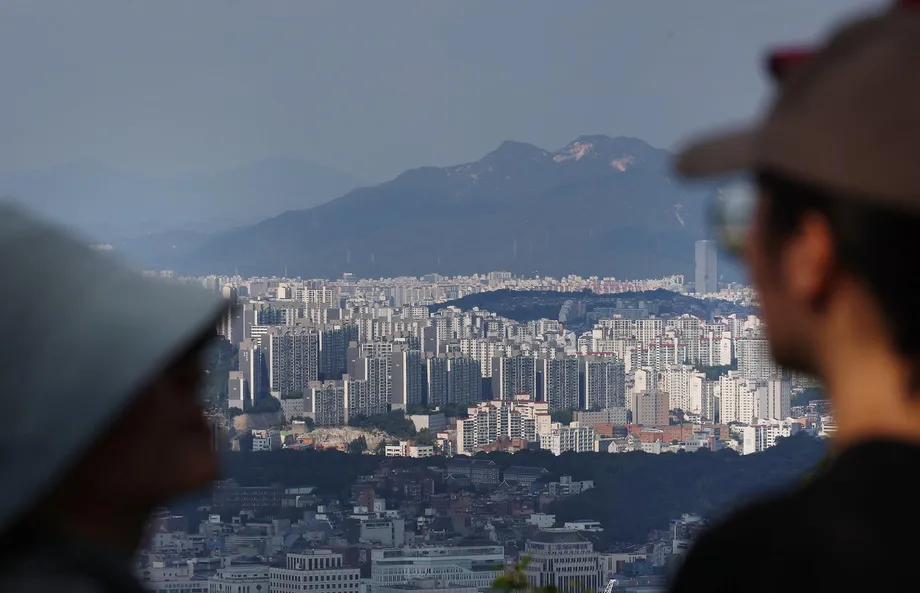
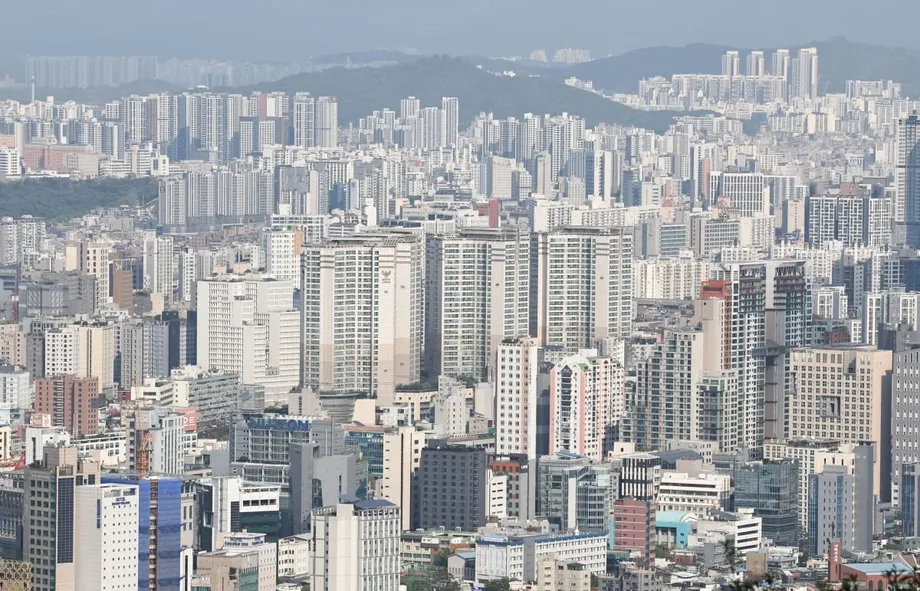
Seoul apartment prices rose for a record 89th consecutive week in the third week of October 2026, even as its three expensive Gangnam area districts continued to fall. Nearby Byeongjeom in Hwaseong recorded a weekly increase of 0.65%, the strongest nationwide, as housing demand spread through southern Gyeonggi Province.
Contents
- Record streak hides a widening divide
- Where Seoul prices are still climbing
- Gangnam's declines deepen the contrast
- Southern Gyeonggi's gains spread outward
- Byeongjeom transactions show the jump in costs
- Renters face higher deposits as well
- Some lease deposits rose faster than sale prices
- Completed sales show strength alongside falling activity
- Restrictions meet a shortage of listings
- Key Points
The Korea Real Estate Board's survey, released on October 22 and based on prices as of October 19, put Seoul's weekly increase at 0.13%, down from 0.16% the previous week. Gyeonggi rose 0.21%, also slower than before but still ahead of the capital.
The figures reveal a market moving at different speeds. Buyers continued to pursue relatively affordable apartments near subway stations and major workplaces, while prices weakened in Gangnam, Seocho and Songpa. Renters faced another squeeze as jeonse deposits increased and the supply of rental listings remained tight.
Seoul's cumulative apartment price increase reached 8.63% for the year, compared with 6.64% over the corresponding period a year earlier. That is a gap of 1.99 percentage points, despite tighter borrowing conditions and slower transactions.
Where Seoul prices are still climbing
Seongbuk and Seodaemun led Seoul with weekly increases of 0.36% each. Jung followed at 0.35%, Dobong at 0.33% and Jungnang at 0.31%. All 22 districts outside Gangnam, Seocho and Songpa recorded gains.
The city's 14 northern districts rose 0.26%, compared with just 0.02% across its 11 southern districts. Seongbuk's strength included apartments around Jeongneung and Hawolgok with convenient transport access.
The Korea Real Estate Board explained the demand behind the citywide increase:
While some areas saw price adjustments due to declining transactions, the overall rise in Seoul was driven by large complexes with favorable living conditions, high demand, and small-to-medium-sized units near subway stations.
Seongbuk's cumulative increase reached 16.10%, the highest in Seoul. Seodaemun followed at 13.67%, Gangseo at 12.89%, Guro at 12.74% and Nowon at 12.57%. Those gains show how strongly prices have risen beyond the capital's traditional expensive districts.
Several central areas also accelerated. Jung's weekly increase widened from 0.16% to 0.35%, Seongdong's from 0.12% to 0.21%, and Yangcheon's from 0.14% to 0.16%. Along the Han River, Mapo rose 0.25% and Gwangjin 0.16%. Yongsan gained 0.04%, its second consecutive weekly increase.
Gangnam's declines deepen the contrast
Seocho fell 0.32%, a steeper decline than the previous week's 0.27%. Gangnam dropped 0.31%, extending its decline to 11 weeks, while Songpa fell 0.13%. Gangnam's cumulative change for the year stood at minus 1.26%, far below Seoul's 8.63% increase.
Gangnam and Songpa nevertheless recorded smaller weekly declines than before. Gangnam had fallen 0.35% the previous week and Songpa 0.21%. Nam Hyuk-woo, a researcher at Woori Bank's real estate research institute, attributed some of that easing to buyers taking lower priced listings at older apartment complexes intended for rebuilding.
Nam said buyers remained cautious, with policy uncertainty and interest rate increases weighing on transactions. His assessment points to continued weak trading and soft prices in those expensive areas for some time.
Seoul's broader slowdown also followed a period of sharp increases. Fewer completed sales and more difficult access to loans were restraining demand, while limited listings kept many sellers from reducing their asking prices much.
Southern Gyeonggi's gains spread outward
Byeongjeom's weekly increase accelerated from 0.56% to 0.65%, a rise of 0.09 percentage points. Nearby Dongtan moved in the opposite direction, slowing from 0.66% to 0.57%, but remained among the strongest markets.
Other large increases included Anyang's Dongan district at 0.56%, Seongnam's Bundang district and Gunpo at 0.53% each, Suwon's Yeongtong district at 0.52%, and Uiwang at 0.47%.
Price pressure extended farther across Gyeonggi. Bucheon's Wonmi district rose 0.46%, Gwangmyeong 0.44% and Hanam 0.42%. In Osan, which borders Byeongjeom, the weekly increase widened from 0.13% to 0.24%.
Southern Gyeonggi's semiconductor industry provides jobs and income that support housing demand near offices and factories. Bonuses paid by Samsung Electronics and SK hynix have also contributed money available for purchases. As sought after areas become more expensive, some households look to neighboring communities.
Nam described tenants approaching the end of their leases and buyers with reduced purchasing power moving toward nearby alternatives. Byeongjeom and Gunpo were attracting demand alongside regulated markets such as Dongtan, Bundang and Dongan.
Dongtan's cumulative increase reached 20.83% since separate statistics for the district began in February. Yeongtong rose 16.80% for the year, Bundang 16.63% and Dongan 16.45%. Across the broader capital region, the weekly increase was 0.16%, twice the nationwide gain of 0.08%.
Byeongjeom transactions show the jump in costs
Byeongjeom Station I'Park Castle illustrates how rapidly the cost of individual homes has increased. An apartment with 84 square meters of interior floor space sold for 1.03 billion won on October 1, compared with 900 million won for a unit of the same size on September 20.
The difference was 130 million won, or about 14.4%, between those two transactions. Another apartment of that size sold for 1 billion won on October 12. Prices for the size category had been in the low 700 million won range early in the year.
A smaller apartment measuring 59 square meters sold for 850 million won on October 13, compared with prices in the low 600 million won range earlier in the year. Both size categories recorded new transaction highs at the complex.
The sequence of sales and surveys shows how the latest record developed:
- September 20: An 84 square meter apartment at Byeongjeom Station I'Park Castle sold for 900 million won.
- October 1: Another apartment of the same size sold for 1.03 billion won.
- Second week of October: Seoul prices rose 0.16%, completing 88 consecutive weeks of gains.
- October 12 and 13: Further Byeongjeom transactions reached 1 billion won for an 84 square meter unit and 850 million won for a 59 square meter unit.
- October 19: The latest weekly survey recorded Seoul's 89th consecutive increase.
- October 22: The Korea Real Estate Board released the survey results.
Renters face higher deposits as well
Seoul apartment jeonse prices rose 0.16%, easing from 0.18% the previous week. Gyeonggi's increase slowed from 0.19% to 0.18%. The slower pace still meant that households seeking new leases faced rising costs.
Jeonse is a Korean rental arrangement in which a tenant provides a large refundable deposit instead of paying conventional monthly rent. A higher deposit means a household must find more savings or borrow more money when arranging a new contract.
Seongbuk again led Seoul, with a 0.36% increase in jeonse prices. Nowon rose 0.31%, Dobong 0.28%, Jungnang 0.27% and Seodaemun 0.24%. Seocho, by contrast, declined 0.10%.
Gyeonggi's rental pressure was particularly strong in Dongtan, where jeonse prices rose 0.57%. Seongnam's Sujeong district increased 0.50% and Suwon's Yeongtong district 0.39%.
Monthly rent also occupied a growing part of Seoul's apartment rental market. It accounted for 51.0% of rental transactions from January through September, and 54.6% in September alone. Households therefore faced a choice between finding a large deposit and taking on recurring monthly payments.
Some lease deposits rose faster than sale prices
New lease contracts at several Seoul complexes show why remaining a renter can also require substantially more money. At Geonyeong 3 in Junggye-dong, Nowon, the average sale price of an 84 square meter apartment rose from 1.23833 billion won in the first quarter to 1.293 billion won in the third quarter, an increase of 54.67 million won.
Average deposits on new jeonse contracts for the same size rose from 710.23 million won to 835.71 million won. The increase was about 125.5 million won, more than twice the increase in the average sale price.
At Gileum New Town Complex 4 in Seongbuk, the average sale price for an 84 square meter apartment increased by 110.25 million won between the first and third quarters. The average new jeonse deposit rose by 268.33 million won.
At DMC Raemian e-Pyeonhansesang in Seodaemun, the corresponding increases were 66.65 million won for sales and 111.32 million won for new lease deposits.
Park Won-gap, a senior real estate expert at KB Kookmin Bank, attributed the pressure to a shortage of available jeonse listings. He said households without a home of their own faced pressure either to buy or to bear a growing financial burden.
Nam also linked shortages of jeonse and monthly rental listings to some tenants choosing to buy. For households already considering a purchase, a rising deposit can narrow the amount of extra money needed to move from renting to ownership, although financing remains a central constraint.
Completed sales show strength alongside falling activity
August data on completed transactions provide another view of the market. Seoul's city government, citing the Korea Real Estate Board, said apartment sale prices were 15.50% above a year earlier and 0.72% above July. The annual increase was the fastest since November 2021, when it reached 17.92%.
The northeast, including Nowon, Seongbuk and Dongdaemun, rose 1.54% from July and 16.82% from a year earlier. The southeast, which includes Gangnam, Seocho, Songpa and Gangdong, fell 0.29% during the month.
Apartments larger than 40 square meters and no larger than 60 square meters recorded the strongest annual gain, at 19.88%. Apartments larger than 85 square meters and no larger than 135 square meters led monthly growth at 1.32%. The transaction index measures completed deals, while the October weekly survey tracks broader price movements over a different period.
Seoul's apartment jeonse transaction price index rose 0.30% in August, its 16th consecutive monthly increase, and stood 11.31% above a year earlier.
Trading activity was weaker. September apartment sales totaled 2,923 as of October 16, down 18.3% from August's 3,578. September filings were still being accepted through the end of October, so the total could increase. Rental transactions fell 12.0% to 14,204, including 6,454 jeonse contracts and 7,750 monthly rent contracts.
Restrictions meet a shortage of listings
The government's October 15 housing measures, introduced a year before the latest survey, designated all of Seoul and 12 Gyeonggi areas as regulated zones. They tightened mortgage limits and required buyers in land transaction permit zones to occupy the homes they purchased.
The Ministry of Land, Infrastructure and Transport announced the measures at 10:00 on October 15, 2025. The full housing market stabilization measures set out the designations, lending restrictions and implementation dates.
All 25 Seoul districts became adjustment target areas and speculative overheating districts from October 16, 2025. Gangnam, Seocho, Songpa and Yongsan retained their existing designations, while the other 21 districts were newly designated. The 12 Gyeonggi areas were Gwacheon, Gwangmyeong, Seongnam's Bundang, Sujeong and Jungwon districts, Suwon's Yeongtong, Jangan and Paldal districts, Anyang's Dongan district, Yongin's Suji district, Uiwang and Hanam. The separate designations for private housing price caps and speculative areas remained limited to Gangnam, Seocho, Songpa and Yongsan.
The land transaction permit designation covered all of Seoul and the same 12 Gyeonggi areas from October 20, 2025, through December 31, 2026, taking effect five days after publication. It applied to apartments and to row houses and multi-family homes in complexes containing at least one apartment building. Buyers, whether Korean or foreign, were required to live in the property for two years from acquisition. Violations could lead to enforcement charges or cancellation of the permit. The designation applied separately from existing permit zones, and the loan-to-value limit for non-housing mortgage loans in the zones fell from 70% to 40%.
From October 16, 2025, home purchase mortgages in the capital region and regulated areas were capped according to the property's market value: 600 million won for homes priced at 1.5 billion won or less, 400 million won for homes above 1.5 billion won and up to 2.5 billion won, and 200 million won for homes above 2.5 billion won. Policy loans were excepted, while relocation loans retained a maximum of 600 million won regardless of property value. The mortgage caps were introduced through administrative guidance, with supervisory regulation amendments to follow.
The regulated-area rules also set a 40% loan-to-value ceiling for buyers without a home, including owners purchasing on condition that they sell their existing home, and 0% for other existing homeowners. First-time buyers had a 70% ceiling. Home purchase mortgages carried a requirement to move in within six months and a maximum term of 30 years, while first-time buyers using Didimdol loans retained a one-month move-in requirement. Interim payment loans were excluded from the purchase mortgage cap, but the cap applied when they were converted into final payment loans. Living expense mortgages for owners of one home were limited to 100 million won, and those for multiple-home owners were prohibited under the applicable capital-region and regulated-area rules.
Other regulated-area restrictions included an 80% jeonse loan guarantee ratio, compared with 90% outside the capital region, and a uniform 200 million won jeonse loan limit for owners of one home. Jeonse loans conditional on ownership transfer were prohibited, and restrictions linked jeonse borrowing to purchases of apartments worth more than 300 million won in regulated areas. Borrowers with more than 100 million won in unsecured credit were barred from buying homes in regulated areas for one year after the loan was issued. Designation also brought tighter subscription qualifications, resale and redevelopment restrictions, and requirements to submit financing plans, occupancy plans and supporting documents. Tax effects included higher acquisition taxes for multiple-home owners and a two-year residence requirement, alongside two years of ownership, for the one-household, one-home capital gains tax exemption; the surcharge on multiple-home capital gains remained temporarily suspended through May 2026.
The stress interest rate used to calculate debt service ratios for mortgages in the capital region and regulated areas rose from 1.5% to 3.0% on October 16, 2025. This was an allowance for possible future rate increases when assessing borrowing capacity, not an increase in the interest rate actually charged. From October 29, 2025, interest repayments on jeonse loans taken out in the capital region or regulated areas by owners of one home counted toward their debt service ratios, regardless of where the owned home was located. The increase in banks' minimum mortgage risk weighting from 15% to 20% was brought forward from April 2026 to January 1, 2026.
The package also called for a review of property holding and transaction taxes, stronger joint investigations into market manipulation and tax evasion, and legislation to establish a real estate supervision body under the prime minister with investigation powers. It reaffirmed follow-up work on the September 7 supply plan to deliver 1.35 million homes in the capital region over 2026 to 2030.
Those rules affect both financing and the use of a property. A buyer required to live in a home cannot immediately make it available to a tenant, while a lower mortgage limit increases the cash needed to complete a purchase.
Nam connected the persistence of asking prices to the shortage of homes available for sale or rent:
Although transactions are slowing because higher interest rates have made borrowing more difficult, asking prices in these areas have remained stubbornly high due to a severe shortage of homes available for sale or rent,
Seoul and Gyeonggi's latest figures capture that tension. Borrowing constraints and expensive homes are slowing activity, yet limited listings and rising rental deposits keep pressure on households. Demand is shifting toward smaller apartments, transport connections and nearby places where the purchase price is less burdensome.
Key Points
- Seoul apartment prices rose 0.13% in the week measured on October 19, completing a record 89 consecutive weekly increases.
- Seongbuk and Seodaemun led Seoul at 0.36% each, while Gangnam, Seocho and Songpa declined.
- Gyeonggi rose 0.21%, with Byeongjeom recording the strongest nationwide increase at 0.65%.
- An 84 square meter apartment at Byeongjeom Station I'Park Castle sold for 1.03 billion won on October 1.
- Jeonse prices rose 0.16% in Seoul and 0.18% in Gyeonggi, adding to the cost of securing a new lease.
- August completed sale prices in Seoul were 15.50% above a year earlier, while September transaction counts showed weaker activity.
- The October 15, 2025, measures expanded regulation to all of Seoul and 12 Gyeonggi areas, imposed two years of owner occupancy in the designated land transaction permit zones, and set home purchase mortgage caps of 600 million, 400 million or 200 million won according to property value.