Seoul crosses a rental market threshold
Monthly rent accounted for 51% of Seoul apartment lease transactions from January through September 2026, as a sharp fall in jeonse contracts pushed the traditional deposit system into second place. The shift reached 13 of the capital's 25 districts, compared with just four a year earlier, while the average monthly apartment rent climbed to 1,661,000 won.
Contents
- Seoul crosses a rental market threshold
- Fewer jeonse deals reshape the balance
- How the change developed
- Monthly rent spreads across the districts
- Jungnang shows a different kind of change
- What higher rent means for a household
- Why landlords and tenants are changing course
- The pressure extends beyond apartments
- The policy debate turns to rental supply
- Key Points
The Seoul Real Estate Information Plaza's figures for those nine months put monthly rental contracts at 87,740 and jeonse contracts at 84,287. Monthly rentals led by 3,453 contracts out of 172,027 transactions. Their share rose from 43.7% during the same period in 2025, a gain of 7.3 percentage points.
Jeonse allows a tenant to provide a large refundable deposit instead of paying monthly rent. Monthly rental contracts generally combine a smaller deposit with regular payments. For households deciding between them, the choice involves both the money they can raise at the start and the amount they can afford to spend each month.
Seoul's change was driven mainly by fewer jeonse transactions, rather than a surge in monthly rental deals. Monthly rental contracts fell about 2.8% from a year earlier, while jeonse contracts dropped about 27.5%.
The city's apartment transaction data are compiled from property transaction reports according to the contract date. Seoul describes them as reference figures rather than official statistics, excludes cancelled contracts and warns that totals can change as reports and cancellations are processed.
The financial pressure on tenants is rising alongside that change. September's average rent was 218,000 won higher than a year earlier, and the median, the middle value when rents are arranged in order, rose from 1.2 million won to 1.4 million won.
Fewer jeonse deals reshape the balance
Seoul recorded 90,310 monthly rental contracts and 116,272 jeonse contracts in January through September 2025. A year later, the monthly rental total was only modestly lower, but the jeonse total had lost nearly 32,000 transactions.
Those figures explain how monthly rent can gain market share even while its own transaction count falls. Imagine two queues shrinking at different speeds: the queue that becomes smaller more slowly can still become the larger of the two. In Seoul, jeonse contracts fell roughly ten times as fast in percentage terms.
The combined rental market also contracted. Using the published totals, apartment lease transactions fell from 206,582 in the first nine months of 2025 to 172,027 in the same period of 2026, a decline of roughly one sixth.
For tenants looking for a home, the figures point to a market with fewer completed lease deals and a greater likelihood that the next contract will require monthly payments. Existing tenants seeking renewal and households searching for a new address face different choices, especially when a landlord plans to occupy the property.
How the change developed
Seoul's monthly figures show the balance shifting during the year. Jeonse still led in January and February 2026, but monthly rental contracts exceeded jeonse contracts in every month from March through September.
- 2025: Monthly rent accounted for 44.5% of apartment lease transactions across the full year, then the highest annual share in the series dating to 2011.
- December 2025: Monthly rental contracts edged ahead for the month, at 12,872 against 12,866 jeonse contracts.
- January and February 2026: Jeonse contracts remained more numerous, with 22,592 combined transactions against 20,941 monthly rental contracts.
- June 2026: Monthly rental contracts reached 10,920, compared with 8,662 jeonse contracts.
- September 2026: Monthly rental contracts totalled 7,920 and jeonse contracts 6,553, giving monthly rent about 54.7% of that month's transactions.
The full year result is still undecided. If the balance through September continues, 2026 would become the first year in the city's series when monthly rental apartment contracts outnumber jeonse contracts.
Monthly rent spreads across the districts
From January through September 2026, Jongno had Seoul's highest monthly rental share at 65.6%, followed by Jungnang at 64.9% and Guro at 63.1%. At those levels, almost two out of every three apartment lease transactions involved monthly payments.
Jung followed at 59.6%, Geumcheon at 58.7%, Yongsan at 56.9% and Dongdaemun at 56.7%. Monthly rent also led in Gwanak at 56.1%, Mapo at 54.1%, Gangnam at 54.0%, Gangbuk at 53.0%, Gwangjin at 52.6% and Yeongdeungpo at 50.2%.
Geumcheon, Jongno, Jung and Guro were the only districts where monthly rental contracts exceeded jeonse contracts during the same period in 2025. The addition of nine districts means the shift now extends across very different parts of the capital, including Gangnam, university neighbourhoods and residential districts in the north and east.
Yangcheon remained at the other end of the range, with monthly rent accounting for 42.1% of apartment leases. Jeonse also remained more common in Seongbuk and Dobong, where monthly rent had a 44.7% share in each, as well as Gangseo at 45.6% and Dongjak at 46.0%.
Jungnang shows a different kind of change
Jungnang recorded the largest increase in monthly rental share among Seoul's districts, rising 20.3 percentage points from 44.6% in January through September 2025 to 64.9% in the same period of 2026. Unlike the citywide pattern, its change involved a substantial increase in monthly rental transactions.
The district's monthly rental contracts rose from 2,166 to 4,151, an increase of 91.6%. Jeonse contracts fell from 2,687 to 2,244, down 16.5%. Monthly rent therefore gained ground through both more monthly rental deals and fewer jeonse deals.
Gangnam crossed the halfway mark with a smaller change in share, moving from 48.6% to 54.0%. Its 8,406 monthly rental transactions exceeded 7,170 jeonse contracts by 1,236.
These district figures help explain why tenants can experience the same citywide shift differently. Jungnang saw a rapid expansion in monthly rental contracting, while across Seoul the larger force was the retreat in jeonse activity. The options available to a household depend heavily on where it needs to live.
What higher rent means for a household
The Korea Real Estate Board's National Housing Price Trend Survey put Seoul's average apartment monthly rent at 1,661,000 won in September 2026, up from 1,443,000 won a year earlier. That is an increase of about 15.1%.
At the September average, 12 monthly payments would total 19,932,000 won. The increase of 218,000 won a month would add 2,616,000 won to a household's annual spending if it paid that amount for a full year. Deposits, maintenance charges and other housing expenses would come separately.
The median rent rose by 200,000 won a month, or 16.7%, from 1.2 million won to 1.4 million won. The average adds all rents together and divides by the number of homes surveyed; the median identifies the middle rent. Both measures show a substantial rise in recurring housing costs.
Individual contracts illustrate the sums involved. An apartment with 84 square metres of private floor space at e-Pyeonhansesang Seoul National University Entrance 2 Complex in Gwanak was leased in July with a deposit of 100 million won and monthly rent of 3 million won. A November 2025 contract for the same unit had the same deposit and monthly rent of 2.5 million won, making the increase 20% in eight months.
Transactions at or above 3 million won a month are also appearing in northern districts. A unit at Hanwha Foret Mia in Gangbuk was leased with a 50 million won deposit and monthly rent of 3.15 million won, while a unit at Nowon Lotte Castle Signature carried a 150 million won deposit and monthly rent of 3 million won.
Why landlords and tenants are changing course
Government policies encouraging owners to live in their properties, restrictions affecting jeonse loans and expectations of higher taxes on property ownership and leasing have all been cited as reasons for the shift. Each can alter whether a home is offered under jeonse, offered for monthly rent or occupied by its owner.
Land transaction permission rules are central to the debate. Under the residence requirements described for Seoul's permit zones, buyers generally need to occupy the apartments they purchase. A home sold to someone who moves in is then removed from the pool available to tenants.
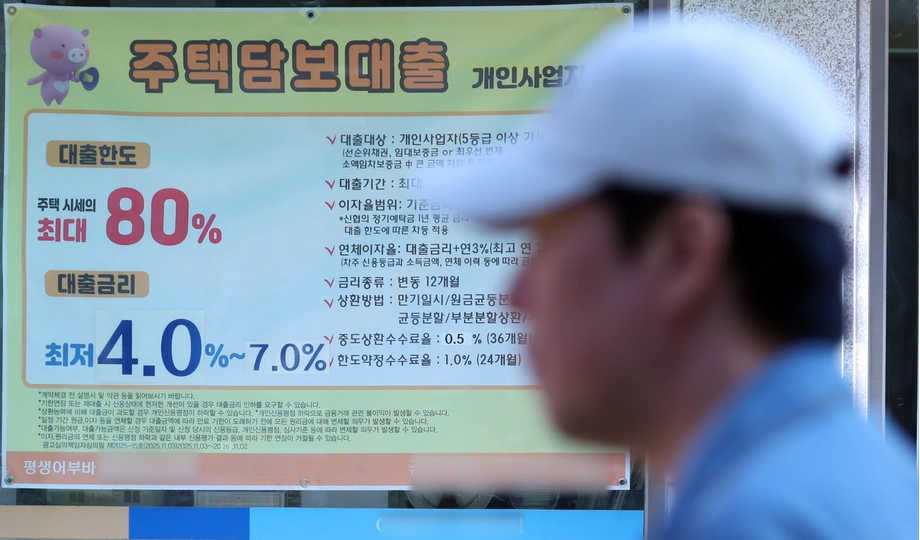
Jeonse borrowing costs also affect the calculation. Jung Sung-jin, chief executive of Urban Asset Management, has attributed growing interest in monthly rent with a deposit to higher jeonse loan interest rates and lending restrictions. A tenant who must borrow most of a large deposit may find monthly rent easier to arrange, even while facing a substantial recurring bill.
Some landlords have a different reason: they want regular income. Kim Jong-woo, a real estate agent in Seoul's Gangdong district, described that preference among older owners.
Older property owners sometimes prefer monthly rent over jeonse as it helps supplement their living expenses.
Those decisions place pressure on households trying to remain under jeonse. Park Sang-min, an office worker in his 30s, began looking in Gyeonggi Province after a new landlord said they intended to move into his Seoul apartment. His existing deposit was insufficient for another suitable jeonse home in the capital.
Park, a jeonse tenant, described the difficulty of raising a much larger deposit within a single lease period.
With jeonse prices having nearly doubled, and given that I don't have the capacity to earn such a large amount within two years, I have so many concerns right now.
The pressure extends beyond apartments
Ministry of Land, Infrastructure and Transport housing figures put monthly rent at 78.1% of Seoul's non-apartment lease transactions in the first half of 2026. That was up from 74.1% a year earlier and 16 percentage points above the five year average of 62.1%.
The ministry's figures placed the apartment monthly rental share at 52% for the first half and 52.3% for January through August. Those figures come from the ministry's housing series, while the 51% figure for January through September comes from the city's contract date transaction records.
For households considering other housing types as an alternative to an apartment, the ministry's figures show that monthly payments are already much more common outside the apartment sector. Moving to a different type of building can therefore still leave a tenant facing the same deposit and monthly payment calculation.
Supply conditions add to the pressure. Seoul recorded 2,049 housing move-ins in June, down 77.7% from a year earlier, while permits fell 55.1% to 1,603 homes. Construction starts rose 67.9% to 3,491 homes, but those projects take time to become places people can occupy.
The policy debate turns to rental supply
Kwon Dae-jung, chair professor in Hansung University's Department of Economics and Real Estate, has called for easing regulations on housing outside the apartment sector to increase rental supply sooner. His proposal addresses the delay between starting an apartment project and making homes available to tenants.
Other proposals include selectively removing land transaction permission zones in outer areas of Seoul and adjusting the pace of reductions in tax benefits for registered rental businesses. Supporters argue that these changes could help keep more homes available for rent while new construction proceeds.
The government has also announced extensions to exemptions from residence deadlines for eligible buyers without a home, including existing tenants' renewal contracts within those arrangements. The requirement to live in a purchased home for two years after moving in remains part of the framework.
Seoul's immediate challenge is the combination of fewer jeonse contracts, more widespread monthly payments and rising rents. For tenants, that can mean borrowing more for a deposit, accepting a larger monthly bill or searching farther from their current neighbourhood. The annual transaction figures will determine whether 2026 becomes the first full year in which monthly rent leads the city's apartment leasing market.
Key Points
- Monthly rent accounted for 51% of Seoul apartment lease transactions from January through September 2026, up from 43.7% a year earlier.
- City figures totalled 87,740 monthly rental contracts and 84,287 jeonse contracts. The reference data can be revised.
- Jeonse transactions fell about 27.5%, compared with a decline of about 2.8% in monthly rental contracts.
- Monthly rental contracts outnumbered jeonse contracts in 13 of Seoul's 25 districts, up from four.
- September's average apartment monthly rent reached 1,661,000 won, while the median reached 1.4 million won.
- Residence requirements, lending conditions, landlord income preferences and rental supply constraints are central to the debate over the shift.