A Sunrise City Becomes an AI Test
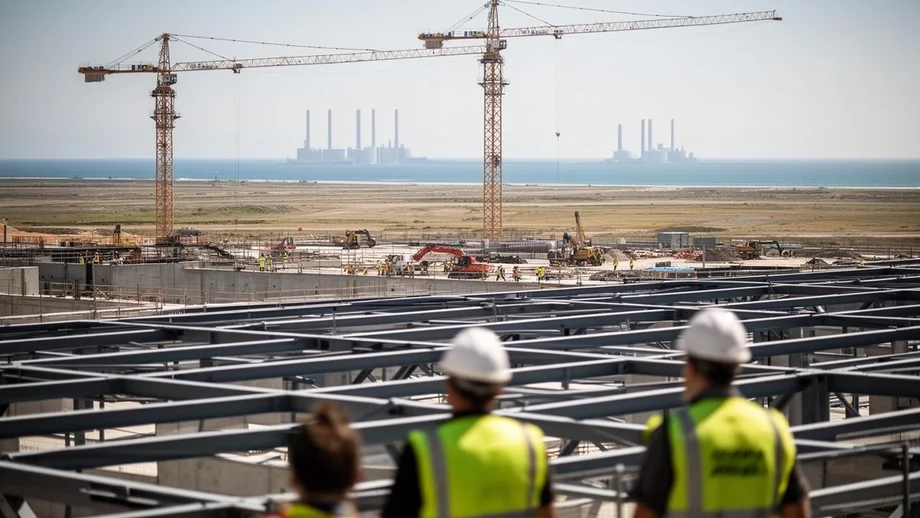
President Lee Jae-myung attended a groundbreaking ceremony on November 28, 2026, as GS Group began constructing the first 1.2 GW phase of an artificial intelligence data center at Bukpyeong 2nd General Industrial Complex in Donghae City, Gangwon Special Self-Governing Province. The project is part of South Korea's three megaprojects announced in June, and it is the first gigawatt scale AI data center in that plan to reach construction. About 270 people attended, including Deputy Prime Minister and Science and ICT Minister Bae Kyung-hoon, Gangwon Governor Woo Sang-ho, Donghae Mayor Lee Jung-hak, GS Group Chairman Huh Tae-soo and GS AI Infra CEO Do Hyun-soo.
Contents
- A Sunrise City Becomes an AI Test
- What Is Being Built, and When
- How the Price Tag Reaches 120 Trillion Won
- How GS Moved From Plan to Groundbreaking
- Why Donghae Won the Site Selection
- The Companies Behind the Build
- What the Project Means for Workers and Local Firms
- Residents, Markets and the Transmission Line
- Government Rules Move in Parallel
- What It Changes for Korea's AI Race
- Key Points
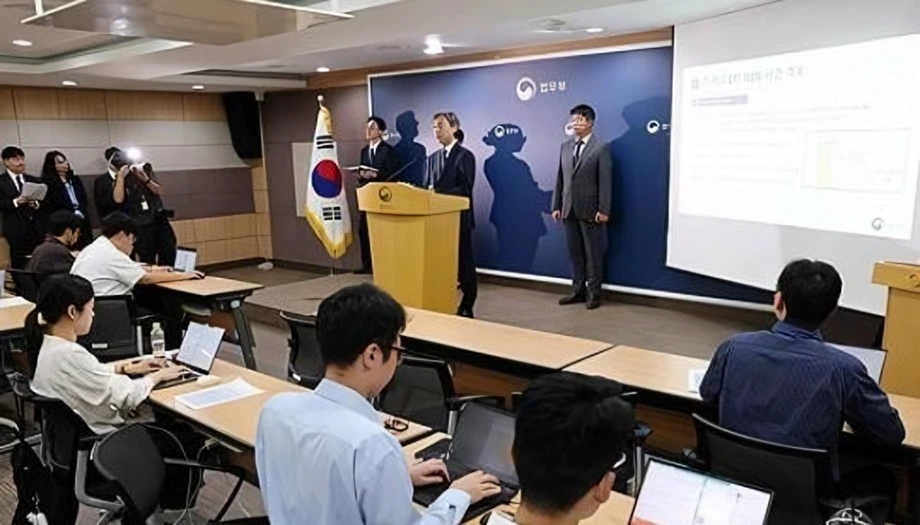
GS called the Donghae site the beginning of a much larger build. The full plan is 2.4 GW across two stages of 1.2 GW each. Phase one alone carries an investment of 15 trillion won, about 11.3 billion dollars, and the company aims to start operating the completed 1.2 GW phase in 2029. The ceremony came about five months after the government presented its plan at the National Briefing on Korea's Three Mega Projects for a Great Leap on June 29.
GS Group Chairman Huh Tae-soo used his welcoming remarks to link the city's best known natural feature with the industrial project. He presented Donghae not only as a place for sunrise viewing, but also as a place where visitors could see the future of AI infrastructure.
Donghae is known as a place where the sun rises most beautifully.
GS executives at the ceremony included Huh, GS Holdings Corp. Vice Chairman Hong Sun-ki, GS Engineering and Construction CEO Heo Yun-hong, GS AI Infra CEO Do Hyun-soo and GS E&R CEO Hwang Byeong-so. After the formal event, President Lee and Huh toured exhibition booths showing power equipment, cooling systems, servers and facility technologies.
What Is Being Built, and When
The first phase will use about 80,000 pyeong, a Korean land measure (about 264,000 square meters), inside Bukpyeong 2nd General Industrial Complex. GS will divide that area into three zones for centers with a combined capacity of 700 MW, then build a 500 MW center on an additional site. Together, those facilities make up the 1.2 GW now under construction. One GW equals 1,000 MW, so the phase is large enough to require careful planning for electricity, cooling and transmission lines.
GS set out a staged schedule. The first 100 MW center is due in the second quarter of 2028, followed by the remaining centers one after another. The full 1.2 GW phase is targeted for completion and operation in 2029. A detailed calendar for the second 1.2 GW phase was not announced at the ceremony.
An AI data center is a facility that houses dense racks of computer servers. Many of those servers use graphics processing units (GPUs), chips first built for image processing and now widely used to train and run AI models. The machines consume large amounts of electricity and create heat, so power supply and cooling are as important as the buildings themselves.
- June 11, 2026: GS established GS AI Infra under GS Holdings Corp.
- June 29, 2026: The 2.4 GW plan was presented at the national briefing.
- July 2026: GS signed a memorandum of understanding with Gangwon Province and Donghae City.
- November 28, 2026: Groundbreaking took place at Bukpyeong 2nd General Industrial Complex.
- Second quarter of 2028: The first 100 MW center is due to be completed.
- 2029: The first 1.2 GW phase is due to be completed and operating.
GS plans to use Donghae as a base and later consider other locations with group owned land or suitable sites. Company energy assets cited for possible expansion include GS Caltex in Yeosu, GS EPS in Dangjin, and GS E&R sites in Gumi and Ansan.
How the Price Tag Reaches 120 Trillion Won
The project has three cost figures, each covering a different layer. GS announced a first phase investment plan of 15 trillion won in September. Building the full 2.4 GW of facilities is estimated at about 30 trillion won, about 22.5 billion dollars. Adding GPUs, memory and other computing equipment could lift the whole project to as much as 120 trillion won, about 90 billion dollars.
The wide gap between 30 trillion won and 120 trillion won reflects what goes inside the buildings. The lower figure covers data center infrastructure: land, construction, power systems, cooling systems and site works. The higher figure includes the expensive hardware that performs AI work. Memory chips and GPUs can cost more than the shell of the facility, especially at a campus designed for gigawatt scale computing.
That scale matters for South Korea's AI ambitions. A data center with little computing equipment is only a shell. A data center filled with advanced chips can become a base for training large AI models, serving cloud customers and supporting AI companies. GS is betting that the Donghae campus can attract that equipment and the businesses that use it.
How GS Moved From Plan to Groundbreaking
GS prepared for the project before the public announcement. The company established GS AI Infra on June 11, 18 days before the June 29 briefing. The subsidiary was created to bring together GS experience in power generation and energy with GS Engineering and Construction's design and building skills. Those two strengths match the main needs of an AI data center: reliable electricity and fast, controlled construction.
After the July memorandum of understanding with Gangwon Province and Donghae City, GS worked through reviews and permits. Those steps included a power system impact assessment, changes to the industrial complex management plan, and a building permit. GS also explained the project to the Donghae City Council and held public briefings for residents. Gangwon Province supported the main approval steps, and President Lee later praised the province and city for completing core approvals in three months.
The five month span from the June public plan to the November groundbreaking is short for a project of this size. Permits are the formal approvals a builder needs before work can start. Cutting that process does not remove the checks, but it compresses the schedule by coordinating them closely. GS said it chose Bukpyeong after weighing available land, power supply conditions and transport access.
Why Donghae Won the Site Selection
Donghae sits on the east coast, where GS saw a strong power generation base and room for a large industrial site. The company also cited transport access. Gangwon Province added another reason: the possibility of using seawater for cooling. Seawater cooling can reduce the need for other cooling methods, although GS described it as an option to review rather than a settled design.
The location also fits GS's wider footprint. The group has energy sites in Yeosu, Dangjin, Gumi and Ansan. If the Donghae model works, those sites give GS other places where power supply and land could support similar data center projects. The company said it would use land it owns and other suitable sites as it expands.
The Companies Behind the Build
GS has signed memorandums of understanding with LS ELECTRIC, POSCO, LG Uplus and Honeywell Technologies for equipment procurement and design and operations cooperation. Those agreements cover parts of the project that determine how well the data center runs: power equipment, network links, cooling and facility management.
The ceremony showed the same supply chain in miniature. LS ELECTRIC displayed power supply equipment, while LG Electronics presented cooling solutions. Elice Group showed AI servers and IT infrastructure. ACE Engineering, SDT, KoolMicro, Honeywell and Defog introduced technologies for power, temperature control and facility operations.
For a child friendly picture, the data center is like a very large library of computers. The power equipment feeds it, the servers do the thinking, the network links carry information in and out, and the cooling systems stop the machines from overheating. GS is trying to line up all of those pieces before the first 100 MW center opens in 2028.
What the Project Means for Workers and Local Firms
GS estimates that the 1.2 GW phase will require about 70,000 cumulative construction workers. Cumulative means the total across the whole building period, not 70,000 people on site at the same time. The company expects about 1,000 direct and indirect workers during operations. Gangwon Province put the operating workforce at several hundred to about 1,000, including office and facility roles.
The province said GS plans to hire local residents for a set share of construction roles, including skilled work, security and cleaning. After completion, the company plans to give priority to local specialists in server operations, networks, security and facility management. GS is also considering priority hiring of local residents for building asset management.
Training is part of the plan. Gangwon Province and GS are preparing data center courses with Kangwon National University, Hallym University and Catholic Kwandong University. GS field experts are expected to help design the courses, give lectures and support practical training, with hiring linked to the program. The goal is to turn construction work into longer term careers in AI infrastructure.
GS also expects partner companies and IT service providers to move to Donghae after the data center begins operating. That could create business for local suppliers, repair firms, security providers, caterers and transport companies. President Lee said the government would support the project so local small firms, suppliers and neighborhood shops also benefit.
Residents, Markets and the Transmission Line
GS and Donghae City formed a mutual growth council to study how construction and operations affect the environment and daily life. The council gives residents a route for feedback after the project starts taking shape. GS has already changed one plan in response to local views: the underground transmission line from Bukpyeong Substation to the site was rerouted to bypass the area around the Bukpyeong five day market.
That change is small compared with the 120 trillion won project, but it is concrete. A transmission line carries electricity from a substation to the data center. In this case, the line runs underground and now avoids a market area where residents raised concerns.
A GS official described the company's goal in terms of long term local growth rather than a short construction boom. The official pointed to GS experience in refining, energy, construction and retail, and said the company wanted the project to become a shared opportunity for Donghae.
We want this project to be more than simply building an AI data center and creating temporary jobs; we hope to make it a genuine opportunity for mutual growth as we shape Donghae's future together.
Government Rules Move in Parallel
The Ministry of Science and ICT announced support plans on the same day as the groundbreaking. The Special Act on Promotion of the AI Data Center Industry takes effect in March 2027. The ministry pre announced subordinate legislation on November 20, 2026, to set out how the act will work in practice.
The draft rules include a single process for permits, a 50 MW exemption from power grid impact assessment for AI data centers outside the capital region, and a legal basis for designating AI data center special zones. They also set criteria for easing some facility obligations, including parking areas, charging facilities and artworks. A public debate is scheduled for December 9, 2026, with comments accepted until December 30, 2026.
The government has divided the work. Local governments handle fast permits, while the central government builds the legal foundation and supports related industries. Deputy Prime Minister and Science and ICT Minister Bae Kyung-hoon said AI data centers are core infrastructure for becoming an AI powerhouse and pledged close cooperation so the Donghae project becomes a model of regional shared growth.
In 2027, the ministry plans a new cluster program with technology development and a large scale demonstration testbed. The aim is to raise the domestic content ratio of AI data center solutions from about 10 percent. The ministry plans to call for research institutions, companies and cluster regions in the first half of 2027.
What It Changes for Korea's AI Race
President Lee Jae-myung framed the groundbreaking as part of a national contest. He said South Korea must set global standards in AI and promised that the government would mobilize its capabilities. He also said Gangwon, which supplied labor and resources during Korea's industrialization, can now become a core hub for AI.
Lee described global AI competition in blunt terms and warned that a country that falls behind can spend years chasing. He also praised Gangwon and Donghae officials for moving quickly through approvals and promised support for construction, power, energy, cooling, small firms, suppliers and local shops.
AI competition is a war without gunfire at the national level. One step late means forever a chaser.
The presidential office, Cheong Wa Dae, presented the Donghae project as a turning point for Gangwon and for the country's AI infrastructure. It described the campus as a source of new growth and vitality for the regional economy.
The project will be the first megaproject in the Gangwon region and become Asia's largest AI infrastructure facility.
Lee had visited SK Group's AI data center construction site in Ulsan on November 21, one week before the Donghae ceremony. The two visits show how AI data centers have become a national infrastructure race, not just a private business decision. GS brings a structure other companies may study: an energy experienced group, a construction arm, a dedicated subsidiary and local government support.
Delivery will still require the transmission grid, cooling systems and equipment orders to stay aligned. If the first 100 MW center opens in the second quarter of 2028 and the 1.2 GW phase reaches operation in 2029, Donghae will become one of the first places in South Korea where a megaproject AI data center moves from announcement to full operation.
Key Points
- GS began construction on November 28, 2026, on the first 1.2 GW phase of its Donghae AI data center.
- The full campus is planned at 2.4 GW, split into two phases of 1.2 GW each.
- The first 100 MW center is due in the second quarter of 2028, with the first phase due to operate in 2029.
- Phase one investment is 15 trillion won, about 11.3 billion dollars; the full infrastructure build is about 30 trillion won.
- Including GPUs and memory, the whole project could reach 120 trillion won, about 90 billion dollars.
- GS expects about 70,000 cumulative construction workers and about 1,000 operating jobs.
- Residents' feedback led to a transmission line route that avoids the Bukpyeong five day market area.
- New AI data center rules take effect in March 2027, with public comments on draft rules closing on December 30, 2026.