A Stranger in the Garden
Kouta Bamba, a first class architect in Niigata Prefecture, first saw the bird through a video sent by his wife. She was doing homework with their child when an unfamiliar bird began walking slowly across the garden. The child started to go outside, but she stopped the child and recorded the visitor. Bamba, who runs Bamba Architecture, posted the clip on Threads under the handle @k0tabamba and asked people who know wild birds to name it.
Contents
- A Stranger in the Garden
- What Happened, Step by Step
- Why the Couple Kept Looking
- A Bird With a Scientific Name and a Fragile Status
- Why a Garden Visit Was So Unusual
- The Long Journey Behind a Quiet Walk
- What Put the Species at Risk
- A Renovated House and a Changing Neighborhood
- The Lesson About Keeping the Location Quiet
- Why the Threads Post Traveled
- Key Points
The answer turned a family moment into a rare nature story. Commenters identified the bird as a misogoi, also called the Japanese night heron, a species classed as Vulnerable on the IUCN Red List and as Category II Threatened (VU) in Japan. The post, published on November 28 at 11:10, drew reactions built around wonder and envy. No exact date was given for the garden visit.
What Happened, Step by Step
- At home in Niigata, Bamba's wife noticed the bird while she and the child were doing homework.
- She kept the child indoors and made a video as the bird crossed the garden at a slow pace.
- Bamba posted the video on Threads, writing that his wife had sent footage of a bird he had never seen and asking for its name.
- People familiar with wild birds identified it as a misogoi, and the couple learned that the species is endangered.
- The post gained views and comments, and the family discussed how unusual the encounter had been.
Bamba, the Niigata architect who posted the clip, said he did not think a rare bird was in front of him when he first watched the clip. He described the moment in an interview this way:
At first I thought, is it a badly colored heron? My wife's reaction and the bird's slow, slow movement stayed with me, so I posted it on Threads. At that point, I never imagined it was an endangered species.
The pace mattered. Misogoi usually move on the forest floor rather than flying into view, so a quiet walk through a garden can look unusual even before the bird's reddish plumage is considered.
Why the Couple Kept Looking
Kouta Bamba, the Niigata architect who owns the house, said the identification surprised both husband and wife. He said the number of views and comments grew quickly after the posting, and the family began to understand how uncommon the visit was. He recalled the conversation like this:
We were surprised when people told us it was an endangered species. After that, the views and comments kept increasing, and my wife and I said to each other that it had been a very rare experience. Since then, when we see a misogoi display at a zoo or museum, our eyes naturally go to it.
Bamba said his wife later wished she had taken more photographs. The couple's attention shifted from identifying a strange bird to noticing a species they had previously passed by in displays.
A Bird With a Scientific Name and a Fragile Status
The misogoi is Gorsachius goisagi, a member of the heron family Ardeidae within the pelican order. The English name is Japanese night heron. It was formally described in 1835 by Dutch zoologist Coenraad Jacob Temminck. The genus Gorsachius was introduced in 1855 by French naturalist Charles Lucien Bonaparte. A Red List is a catalogue of species at risk. Vulnerable means a high risk of extinction in the wild, a category below endangered but still serious. The species is listed as Vulnerable on the IUCN Red List, and Japan's Environment Ministry Red List places it in Category II Threatened, VU.
Japan's Environment Ministry also prepared a March 2016 draft conservation plan called Conservation Measures for the Japanese Night Heron (Draft). Size descriptions give a bird about 49 centimeters long. Japanese measurements give a wing length of 25 to 29 centimeters and a wingspan of 80 to 90 centimeters, while another species description gives a wingspan of 43 to 47 centimeters. Weights are generally around 470 to 550 grams, and wild birds can live about 10 to 15 years.
Adult birds have a dark reddish crown and upper body, cream underparts with black vertical streaks, black spots on the wings, a black upper bill, a yellowish lower bill and blackish green legs. Young birds have darker heads and paler wings. A dense, uneven line down the wing coverts, the small feathers laid over the wing, is a useful identifying mark. Those brown tones make the bird hard to see in shade, which fits a species that spends much of its life on the forest floor.
Why a Garden Visit Was So Unusual
Misogoi prefer dense, damp forest in valleys and stream sides, especially below 1,000 meters. Many records sit between 50 and 240 meters. They live alone or in pairs, walk slowly over the ground and feed on earthworms, land snails, insects, freshwater crabs, frogs and small creatures in shallow water. Their thick bills help them dig in soil. They seem to choose more mature snails, perhaps to avoid the softer shells of young ones.
The bird's defense is stillness. When danger appears, it stretches its neck upward and looks up, making its thin body resemble a branch. This behavior has earned it the nickname forest ninja in Japanese nature writing. Most herons are associated with water edges, so seeing one cross a home garden can feel out of place. Its presence in Niigata fits the habit of the species to use low mountains and valleys near water.
The call adds to the mystery. During the breeding season, misogoi give a low, fading call often written as boo in English. Local Japanese names such as ushidori, umekidori and yamaibo come from its voice. In some areas, people heard it as an eerie sound and linked it with yokai, supernatural creatures. Observers at nests in Akiruno in 2007 and 2008 saw adults feeding during the day, even though the bird is often described as active around dusk and at night.
The Long Journey Behind a Quiet Walk
Misogoi breed almost entirely in Japan, including Honshu, Shikoku, Kyushu and the Izu Islands, with isolated breeding records in Taiwan and Jeju Island. They arrive on breeding grounds from March to June and leave from September to November for warmer wintering areas. Most travel to the Philippines, though some winter in Taiwan and parts of Japan, including Kyushu and the southwestern islands. Birds have also reached Indonesia and Palau after overshooting their usual destination.
Breeding runs mainly from May to July. The nest is a rough platform of sticks and leaves, often placed high in zelkova, oak or cherry trees, and sometimes in cedar or cypress. Japanese descriptions give 3 to 4 eggs, while a wider species description gives 3 to 5. Incubation lasts 20 to 27 days, and chicks leave the nest after 34 to 37 days. Both parents share care, and adults may return to feed young once or twice a day late in the nesting period.
The migration is not a simple trip between two forests. Migrating birds have been described in mixed flocks of more than 1,000 herons, and the species has been recorded in Korea, southern China and the Russian Far East. That wide route matters because danger can appear in many places. A bird raised in a Japanese valley may face risks in a winter forest in the Philippines or on the trip between them.
What Put the Species at Risk
The misogoi was common until the 1970s in some areas, but its numbers fell sharply. Earlier explanations focused on forest loss in Japan, including conifer plantations that reduced nesting sites. In Kunado, Yamanashi Prefecture, breeding was confirmed in the 1950s but had nearly disappeared by the 1990s.
Conservation work now places more weight on loss of winter habitat and hunting in wintering areas or along migration routes. Lowland forest clearance for timber and farmland still matters, and crows near cities can take nests. Siberian weasels introduced to Hokkaido in 1901 add another pressure, while introduced weasels on the Izu Islands are a concern. Japan's forest loss rate is not large now, so the international journey is central to the future of the species.
Population figures need care. A 2020 assessment gives fewer than 1,000 mature individuals. The often repeated figure of 1,000 birds has no scientific basis. The species is legally protected in Japan and Hong Kong. Proposed conservation steps include surveys in Japan and the Philippines, habitat protection, public awareness, control of specimen sales and action against invasive species.
A Renovated House and a Changing Neighborhood
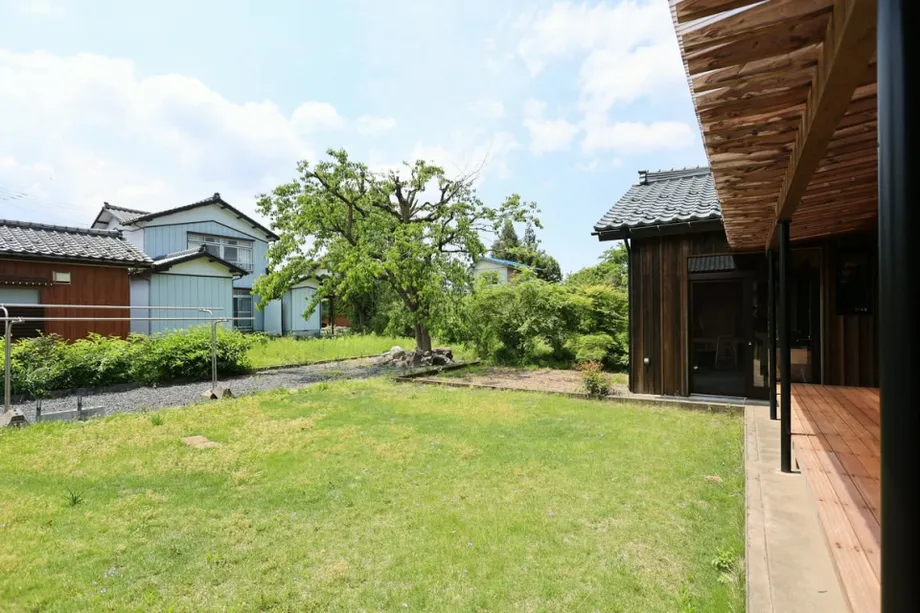
The garden that drew attention is not an ordinary backdrop in Bamba's account. He runs Bamba Architecture in Niigata and works as a first class architect on homes, shops and facilities. The house where the bird appeared had been an empty home that belonged to his grandparents. Bamba renovated it, and the project received the chairperson's award at the 43rd Home Renovation Competition.
Bamba linked the sighting to changes around him. He described a local landscape where population decline has left more empty houses and where satoyama, the worked landscape of woods, fields and homes, is not always maintained. He has seen animals that once stayed in the mountains come down toward villages. A garden beside older woodland and low mountains can be part of the route a forest bird uses.
Kouta Bamba, the architect and homeowner, explained what the encounter made him notice about nearby nature. He said it gave him a new sense of how much remains unknown close to home:
In our area, the population is falling, empty houses are increasing, and satoyama upkeep is not always thorough. Animals that lived in the mountains sometimes come down to the fields and homes, and I feel the relationship between people and nature changing. This encounter made me realize there are many things we do not know about nature nearby, and it gave me a chance to think again about the places where people and living things live.
The Lesson About Keeping the Location Quiet
Bamba said the most useful advice from the online response was not the bird's name alone. People who know birds told the family how rare the species is and warned against sharing the exact filming place without care. For a threatened species, repeated visitors near a feeding or nesting area can disturb the animal and expose it to more risk. The species is usually looked for in March and April or in June, and observers are asked to keep away from nests.
Bamba, the Niigata architect who posted the clip, described that advice as an important lesson. His words were:
People who know birds taught us not just the name, but how rare the bird is. In particular, I learned that it is good manners not to reveal the filming location carelessly, in order to protect the place where living things live. I was happy that we could learn through social media things we could not have understood on our own.
The family also learned the limit of a video clip. Bamba said his wife would have taken more photographs if she had known the bird was threatened. The child was kept inside so the bird would not be disturbed, a small decision that became part of the family's story.
Why the Threads Post Traveled
The Threads post worked because it was specific and modest. Bamba showed a short video, said he did not recognize the bird and asked for help. People with field knowledge supplied an identification that the family could not reach alone. The response then grew through comments and views, with the bird's status giving the clip a second layer of meaning.
A household video can become a public conversation, and a species that usually avoids attention can briefly receive a large audience. The risk is that attention can turn into pressure on the bird. The lesson from this case was a mix of curiosity and restraint: enjoy the encounter, learn the name, and keep the precise place private.
Key Points
- Kouta Bamba posted a video of an unfamiliar bird in his Niigata garden on Threads.
- Commenters identified it as a misogoi, or Japanese night heron, a Vulnerable species.
- The bird usually lives in damp forests and feeds on soil animals such as earthworms and snails.
- Most breeding occurs in Japan, and many birds winter in the Philippines.
- Habitat loss, hunting during migration, crows and invasive weasels are among the pressures on the species.
- The family was advised to keep the exact filming location private to protect the bird's habitat.