A missed deadline makes the victory final
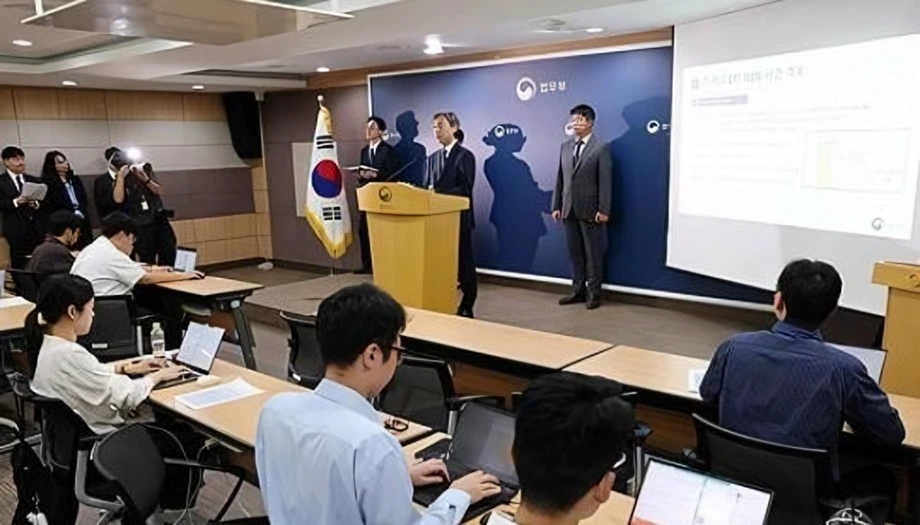
South Korea's Justice Ministry said on Nov. 26, 2026, that six members of Iran's Dayyani family had allowed an Oct. 26 deadline to pass without asking the High Court of England to set aside their second arbitration defeat. The omission makes final a unanimous Sept. 28 ruling that rejected a 770 billion won claim, about $574.1 million, and ordered the family to pay Seoul about 4.8 billion won, or $3.6 million, in legal and arbitration costs.
Contents
- A missed deadline makes the victory final
- The Singapore purchase vehicle and the lost deposit
- Why the first arbitration went against South Korea
- Why the English High Court rejected Seoul's challenge
- Enforcement spread from Paris to Dana Petroleum shares
- Sanctions approval, partial payment and a second claim
- Why the second tribunal rejected every claim
- Key dates in the Dayyani dispute
- What changes for Seoul and the family
- Key Points
The disputed sum was not the original Daewoo Electronics deposit. The family argued that South Korea's delay in paying an earlier award deprived it of money that could have been reinvested at a profit. Its demand initially reached 1.26 trillion won, about $939.4 million, before being reduced to 770 billion won following the government's response. The final ruling removes that additional exposure and leaves the cost order in force.
Investor-state dispute settlement, or ISDS, allows a foreign investor to bring a treaty claim against a government before arbitrators rather than relying only on courts in that country. An application to set aside an award asks the courts supervising the arbitration to overturn it on permitted legal grounds. English law provided 28 days from the second award to make such an application. The ministry confirmed that no filing was made, but announced no reason for the family's decision.
The Singapore purchase vehicle and the lost deposit
The six claimants were Mohammad Reza, Abbas, Mohammad Hossein, Ali, Fetemeh and Kosar Dayyani. They own and control Entekhab Industrial Group, an Iranian home appliance and petrochemical business. Their target was Daewoo Electronics, now Winia Electronics, which was undergoing a financial workout in 2010. A workout is a restructuring process in which creditors and a distressed company try to restore its finances.
Concerned about sanctions against Iran, the family incorporated D&A Holding Co Pte Ltd in Singapore to act as the purchaser. Entekhab had won the creditor committee's tender and was selected as the preferred bidder. D&A signed a Share and Claim Purchase Agreement on Nov. 7, 2010, valuing the transaction at 577.775 billion won. It paid a contract deposit of 57.7775 billion won, exactly 10 percent of that purchase price.
The sellers terminated the agreement on Dec. 13, 2010, according to the case record, and kept the deposit. The Justice Ministry's public chronology places the cancellation in 2011. The ministry says Entekhab failed to submit a required investment commitment letter, while the case record describes D&A's letters of confirmation as unsatisfactory. KAMCO has also been described as citing weak finances and other deficiencies after the family submitted a commitment letter.
Korea Asset Management Corp., known as KAMCO, was Daewoo's largest shareholder and central to the sale process. The case record also says KAMCO later refused to support a court mediation decision that would have returned the deposit. That refusal became part of the family's argument that South Korea was responsible for more than a private commercial disagreement.
Why the first arbitration went against South Korea
The family commenced the first arbitration on Sept. 10, 2015, under Article 12 of the Korea-Iran Bilateral Investment Treaty dated Oct. 31, 1998. The published case record identifies it as PCA Case No. 2015-38. It was an ad hoc proceeding under the UNCITRAL Arbitration Rules, meaning a tribunal was formed for that dispute using established procedural rules. London was the legal seat, so English courts supervised challenges to the award.
Bernard Hanotiau presided over the tribunal, with Philippe Pinsolle and Gavan Griffith as the other arbitrators. A merits hearing took place in May 2017. The Dayyanis alleged breaches of Article 4, which concerns fair and equitable treatment, and Article 6, which concerns expropriation. Fair and equitable treatment addresses the way a state behaves toward an investor, while expropriation concerns the taking of property or its value.
The tribunal unanimously upheld its jurisdiction and found that South Korea had breached Article 4. It dismissed the remaining claims. By majority, it ordered Korea on June 5, 2018, to return the 57,777,500,000 won deposit with simple interest at Libor plus 2 percent, running from April 1, 2011, until payment. Libor was a benchmark interest rate commonly used in financial contracts. The tribunal also awarded costs of $781,870.64 and €1,089,580.65.
The Justice Ministry has described the 2018 result in rounded terms as about 73 billion won plus interest. The distinction between the precise principal and the larger rounded liability matters because interest had been accumulating since 2011. The award was therefore substantially more than an order to repay the original deposit, but far below the lost profits later demanded in the second case.
Why the English High Court rejected Seoul's challenge
South Korea began its challenge on July 3, 2018, under section 67 of the Arbitration Act 1996. That provision concerns a tribunal's substantive jurisdiction rather than providing a complete rehearing of the dispute. Korea argued that there was no qualifying investment or investor, that the Dayyanis lacked standing to claim over assets held by D&A, and that the conduct of KAMCO and the sellers could not be attributed to the state.
Butcher J dismissed the challenge on Dec. 20, 2019, in the English High Court, Commercial Court, in case CL-2018-000454, cited as [2019] EWHC 3580 (Comm). The court held that the treaty's reference to every kind of property or asset was not confined to its listed examples. The purchase agreement created contractual rights under Korean law before closing, including a Best Efforts covenant to work toward completion, and the deposit was plainly an asset.
The court also said the treaty did not impose an additional requirement to prove contribution, risk and duration. It found those features present in any event because the transaction faced material political risk. On standing, the Dayyanis could pursue claims concerning investments held directly by D&A, the company they controlled. Rules governing diplomatic protection of corporations did not override the treaty's specific language.
Whether particular acts could legally be attributed to Korea was a question for the merits, not a reason to eliminate jurisdiction. A majority of the tribunal had also found Korea directly responsible for failing to compel the return of the deposit. The High Court concluded that this finding provided a basis for the same operative award. South Korea's first arbitration defeat consequently became final in December 2019.
Enforcement spread from Paris to Dana Petroleum shares
Enforcement also moved beyond London. On Oct. 19, 2018, the president of the Paris Tribunal de grande instance issued an exequatur order, a court order allowing the award to be enforced in France. Such procedures let an investor pursue assets in another jurisdiction when the government that lost the arbitration has not paid voluntarily.
On Feb. 18, 2020, England's Commercial Court ordered Korea to pay money to the Dayyanis in claim CL-2020-000084. Master Davison then made an interim charging order on June 30 over all issued shares in Dana Petroleum Limited. A charging order can secure an unpaid judgment against property; an interim order does not itself transfer the shares. The order recorded at least 73,120,042,357 won plus the award's dollar and euro costs as owing. A hearing on whether to continue the charge was listed for Oct. 5, 2020.
South Korea appealed the French exequatur order on June 25, 2021. The parties later reached a settlement, and the Dayyanis consented to Korea's request. On March 14, 2023, the Paris Court of Appeal annulled the 2018 exequatur order and declared those proceedings extinguished, with each party bearing its own costs. The decision closed the French enforcement chapter rather than reopening the tribunal's findings on the deposit.
Sanctions approval, partial payment and a second claim
The total first award, including interest, reached 85.8 billion won. Seoul said payment was delayed because transferring money to the Iranian claimants while complying with American sanctions required approval from the U.S. Treasury Department's Office of Foreign Assets Control, or OFAC. OFAC administers American economic sanctions. The government obtained the relevant approval in January 2022.
South Korea paid approximately 62.2 billion won to the family in April 2022. It deposited the remaining 23.6 billion won with a court in December 2022 under domestic attachment and collection orders, rather than sending that portion directly to the family. Together, the payment and deposit equal the full 85.8 billion won total. The government maintained that both steps complied with its legal obligations.
Before receiving the April payment, the family had filed its second ISDS case on Oct. 18, 2021. It argued that Korea had violated the investment treaty by failing to pay promptly and had discriminated against the claimants because of their nationality. The damages calculation assumed that immediate receipt of the money would have allowed profitable investment elsewhere. Seoul answered that an Iranian investor affected by American sanctions could not simply be treated identically to an investor facing no such restrictions, and that its court challenges and deposit were lawful.
Why the second tribunal rejected every claim
Kang Jun-ha, director of the Justice Ministry's International Legal Affairs Bureau, presented the initial merits victory at a Sept. 30 briefing. The panel under the Permanent Court of Arbitration in The Hague had unanimously dismissed the entire claim two days earlier, on Sept. 28. Its decision addressed Korea's conduct after the first award, including the sanctions approval process, the challenge in England and the court deposit.
According to the ministry's account of the ruling, the panel accepted that following the OFAC approval process was legitimate in light of American sanctions on Iran and the international economic order. It found no unfair discrimination against the Iranian investor. The delay associated with sanctions compliance did not amount to a treaty breach, and neither the attempt to set aside the first award nor the deposit required by court orders constituted arbitrary or unfair treatment.
The panel also reasoned that permitting a new ISDS case over alleged nonpayment of an earlier award would defeat the treaty's purpose. Its scope was therefore precise. The first award and the 2022 payment history remained in place, while the additional claim for hypothetical investment returns failed in full. Once the Oct. 26 challenge deadline expired, the dismissal and its financial orders became final.
Key dates in the Dayyani dispute
The dispute moved through a commercial sale, two arbitrations and court proceedings in England and France. The second case began before the first award had been paid, making the sequence essential to understanding the final result.
- Oct. 31, 1998: The Korea-Iran Bilateral Investment Treaty underlying both cases is dated.
- Nov. 7 and Dec. 13, 2010: D&A signs the purchase agreement, and the sellers terminate it weeks later.
- Sept. 10, 2015: The Dayyanis commence the first arbitration.
- June 5, 2018: The tribunal orders return of the deposit, interest and costs.
- Dec. 20, 2019: The English High Court dismisses Korea's jurisdiction challenge.
- Oct. 18, 2021: The family files the second case before receiving the first payment.
- January through December 2022: OFAC approval, the 62.2 billion won payment and the 23.6 billion won deposit follow.
- March 14, 2023: The Paris Court of Appeal annuls the French enforcement order after the settlement.
- Sept. 28 to Nov. 26, 2026: The second claim is dismissed, the Oct. 26 deadline passes and the ministry confirms finality.
What changes for Seoul and the family
The cost award consists of approximately 4.0 billion won, representing 75 percent of South Korea's litigation costs, plus about 800 million won covering the full arbitration administrative expenses. The six claimants were ordered to pay jointly and severally. That means the government can pursue the full obligation without first dividing it into six equal shares.
For Seoul, the outcome prevents an additional damages payment but does not erase the money already paid or deposited under the first award. For the family, the failed second claim has produced a final obligation to meet Korea's costs. The immediate practical issue is recovery of that 4.8 billion won, not another calculation of lost investment profits.
A Justice Ministry official, speaking after the ministry confirmed finality, described the government's next steps and its approach to future investment disputes.
We will do our utmost to recover the litigation costs and continue to respond to international investment disputes professionally and systematically to protect the national interest.
The ministry did not disclose a collection timetable or say that any part of the 4.8 billion won had already been received. It also announced no further procedural date after confirming that the English challenge window had closed.
Key Points
- South Korea's final victory was confirmed on Nov. 26, 2026, after the Dayyani family missed the Oct. 26 deadline to challenge the second award.
- The unanimous Sept. 28 ruling dismissed a 770 billion won claim, about $574.1 million, reduced from an initial demand of 1.26 trillion won.
- The family must pay about 4.8 billion won: 4.0 billion won toward litigation costs and 800 million won in arbitration administration expenses.
- The first case concerned a 57.7775 billion won Daewoo Electronics deposit, exactly 10 percent of D&A's stated purchase price.
- South Korea paid 62.2 billion won in April 2022 and deposited the remaining 23.6 billion won in December, completing the 85.8 billion won first award total.
- The second tribunal accepted the OFAC approval process in light of American sanctions and found no discriminatory or arbitrary treatment by Seoul.