Fourth day of safety protests causes widespread delays
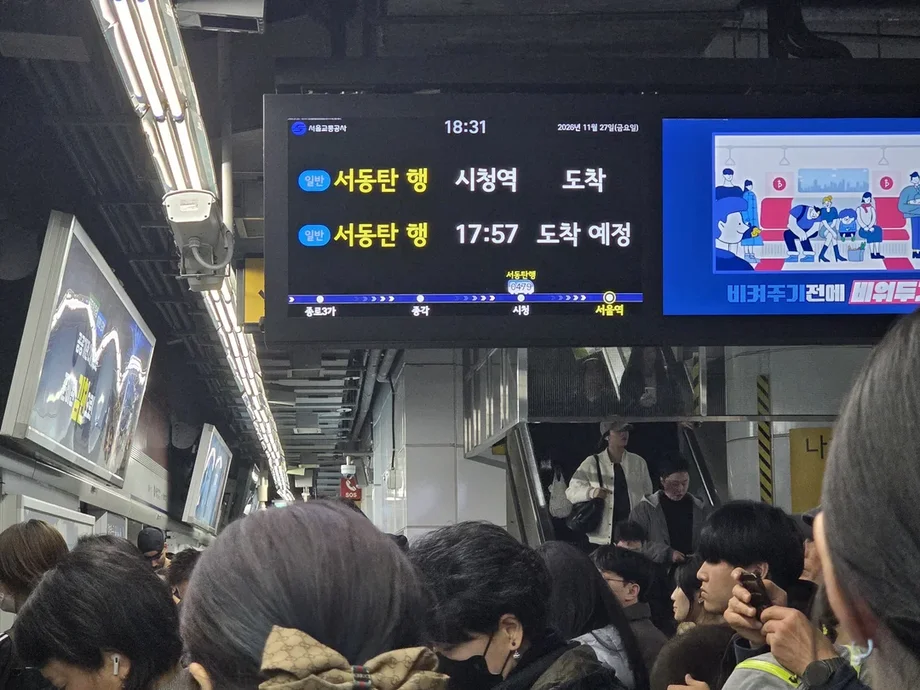
On November 29, the fourth day of the Korean Railway Workers Union work to rule protest, 157 metropolitan subway trains in the Seoul area were delayed by more than 20 minutes. The Korea Railroad Corporation reported that out of 1,533 subway trains that ran through the afternoon, 157 fell behind schedule. This marked a rise of 52 delayed trains compared to the previous day, when 105 trains were affected. Commuters faced mounting congestion as the protest continued into the weekend, raising concerns for the upcoming Monday morning rush hour.
Contents
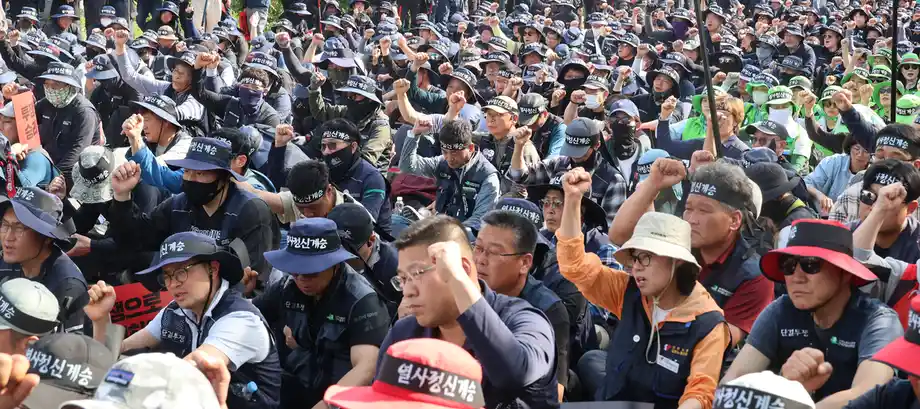
The union began its safety operation protest on November 26 to demand improvements to the promotion system, payment of additional allowances, and expansion of safety personnel. By strictly following work regulations and refusing to perform recovery operations to make up for lost time, the trains have moved slower and with longer intervals between services. The protest is scheduled to continue until December 4. If negotiations with management show no progress, the union has warned it will launch an indefinite general strike starting at 9 a.m. on December 10.
KORAIL delayed trains information
"I think this is the first time I have seen this many people." Choi Yu jeong, an office worker waiting at Seoul Station
Commuters expressed frustration over the growing crowds at major hubs. Choi Yu jeong, an office worker who was waiting for a train at Seoul Station, noted that she was surprised by the sheer volume of people on the platform as soon as she descended. Kim Hye kyung, another commuter, arrived at work 15 minutes later than usual due to the delays. Many passengers reported that trains remained at the platform for extended periods even after becoming fully packed with people.
Delays escalate as protest moves from weekdays to weekends
The number of delayed trains has fluctuated since the protest began. On the first day, November 26, 235 subway trains were delayed. The second day, November 27, saw a sharp increase to 445 delayed trains, causing significant congestion at Seoul Station and Yongsan Station. By the third day, November 28, the number of delayed trains had dropped to 105. The fourth day saw a rebound to 157 delayed trains, indicating that the disruption was not easing as the week progressed.
- November 26: 235 subway trains delayed
- November 27: 445 subway trains delayed
- November 28: 105 subway trains delayed
- November 29: 157 subway trains delayed
Regular trains also experienced delays, with seven trains delayed by more than 30 minutes out of 298 general trains. High speed trains did not suffer from significant delays, with no KTX trains delayed by more than 20 minutes. Two Mugunghwa trains on the Honam line were canceled, and their tickets were fully refunded without a separate application. KORAIL stated that delayed trains may be eligible for compensation in accordance with passenger transport terms and conditions.
Strict adherence to rules creates bottlenecks
The work to rule protest involves railway workers strictly adhering to established regulations and operational manuals. During rush hours, train stop times at stations with high passenger volume are typically reduced to keep to the schedule. However, during the protest, this practice was suspended. Trains already packed with passengers remained at stations for several minutes, leading to wider intervals between services. This mechanical slowing of operations, while strictly legal, has a compounding effect on the network.
Specific delays were recorded across various lines. Line 1 trains heading toward Soyosan and Sinchang faced delays of up to 30 minutes. Line 3 trains toward Daewha and Ogeum experienced delays of 5 to 10 minutes. Line 4 trains toward Dangogae and Oido saw delays ranging from 10 to 20 minutes. The Gyeongui Jungang Line also reported delays, with trains toward Munsan and Yongmun delayed by up to 25 minutes.
"The union is not protesting without reason." Kim Eui gyem, a passenger at Yongsan Station
KORAIL has deployed additional personnel to provide information to passengers and minimize inconvenience. Real time notifications are issued through the website and mobile applications. The corporation has also confirmed that tickets for canceled trains will be fully refunded without separate applications.
Union demands and future strike threats
The core demands of the Korean Railway Workers Union include the expansion of safety personnel, improvements to the promotion system, and the payment of additional allowances. The union argues that the current promotion system favors management over field staff and that outsourcing maintenance tasks, particularly for GTX B trains, compromises railway safety and technical capabilities.
Another contentious issue is the dormitory design standards for shift workers. The union is calling for the restoration of these standards to their original state. Labor and management have been holding working level and main negotiations since July, but have struggled to narrow their differences. If these issues are not resolved, the union is prepared to escalate the situation.
The union has announced a policy to begin an indefinite general strike starting at 9 a.m. on December 10 if there is no progress in the management negotiation proposal. This potential escalation looms over the current work to rule action, which is set to end on December 4.
Passenger reactions and financial impact
Passengers have shown a mix of frustration and understanding. While many expressed annoyance over the delays and crowding, some recognized the validity of the union claims. Kim Eui gyem, waiting at Yongsan Station, noted that while the delays were inconvenient, the union has legitimate grievances. Some passengers reported arriving late for appointments and facing traffic congestion upon arrival in cities like Busan.
"I parked my car early because I did not know how long the delay would be." Kim mo, a passenger at Suncheon Station
The financial impact on passengers includes potential compensation for delayed trains and full refunds for canceled services. KORAIL has emphasized that it is adhering to the passenger transport terms to provide redress for affected travelers. The situation remains fluid as the protest continues, with the possibility of further disruptions as the December 10 deadline approaches.
Key Points
- 157 metropolitan subway trains delayed by over 20 minutes on November 29
- Union protests continue until December 4, with a potential general strike on December 10
- Demand include promotion system improvements, additional allowances, and safety personnel expansion
- KORAIL provides full refunds for canceled trains and compensation for delayed ones
- Commuters face increased congestion and longer travel times during the work to rule action