An argument about feelings becomes a Seoul building programme
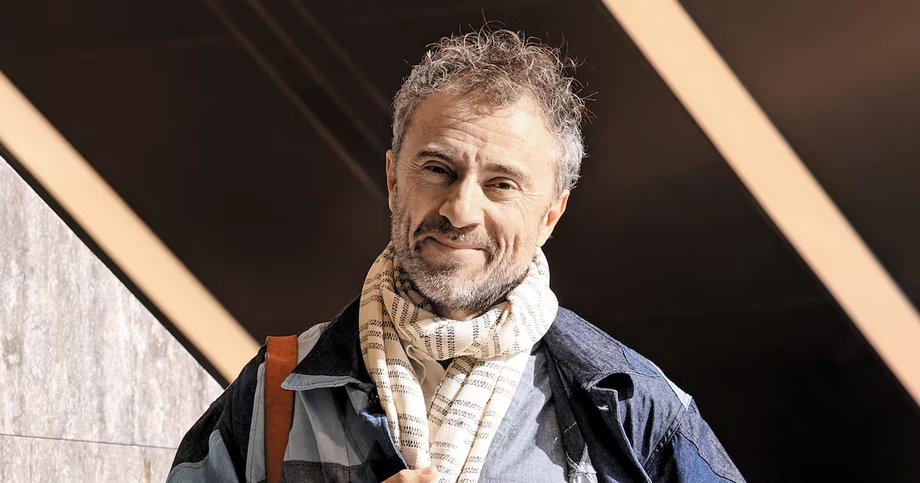
Thomas Heatherwick, 56, used a traveller's choice to explain what he believes modern architecture has lost. Speak to people visiting a city for the first time, he said, and most will head for its old districts before its new ones. Older streets retain curious details and signs of human life, while many newer districts were designed chiefly around efficiency. Heatherwick made the argument during an interview at the Josun Palace Hotel in Yeoksam, Seoul, on 30 October 2026.
Contents
- An argument about feelings becomes a Seoul building programme
- What 97 percent of survey respondents said about apartments
- Daegyo Apartments would grow from 576 homes to about 900
- Nodeul Island is becoming a walkable landscape of music
- How a seven team competition reached the construction site
- Seoul is changing the rules that shape its buildings
- An exhibition connected Seoul to three decades of experiments
- The test is whether places endure and remain public
- Key Points
The British founder of Heatherwick Studio is known for Vessel, the honeycomb shaped staircase structure in Manhattan, and Tokyo's Azabudai Hills development. His criticism is not simply that buildings should be prettier. He argues that convenient space is an incomplete ambition: architecture should also give people pleasure, encourage them to meet and make them feel connected to a place.
Seoul has become an unusually large test of that belief. Heatherwick is overseeing four projects in the capital: the Soundscape redevelopment of Nodeul Island, the replacement of Yeouido's Daegyo Apartments, and work on the Coex Convention Centre and Hanwha Galleria shopping complex in Gangnam. The first two alone involve a music trail extending 1.25 kilometres and a housing plan that would replace 576 homes completed in 1975 with approximately 900.
Heatherwick had already distilled his design philosophy during a press preview for his Seoul exhibition in 2023. He described three elements that he believes places require, while arguing that architectural education has increasingly favoured intellectual reasoning over craft and feeling.
When you're creating places, the head matters, the heart matters and also the hands matter.
His studio often expresses the missing elements through texture and touch. Many new buildings offer nothing that invites physical contact, he has said, so people simply walk past them. His own projects ask visitors to climb, sit, gather or explore, turning a structure from an object viewed at a distance into somewhere the body can experience.
What 97 percent of survey respondents said about apartments
A Humanise Campaign study gives Heatherwick's criticism a local measure. The study surveyed 1,000 Seoul residents and found that 97 percent described existing apartment complex buildings negatively. Respondents called them boring and soulless, while some said their monotony created a suffocating feeling. Participants said they preferred homes that felt distinctive and textured and showed signs of care.
Heatherwick carried that argument into the fifth Seoul Biennale of Architecture and Urbanism in 2025, which he directed. The event ran through 18 November and attracted a record 811,000 visitors, according to Heatherwick Studio. Its public installations treated architecture as a subject on which residents should have a voice, rather than a technical decision left entirely to developers and designers.
The largest installation was the Humanise Wall at Songhyun Green Plaza. Measuring 90 metres wide and 16 metres tall, it consisted of 1,428 steel panels, some etched with visions submitted by Seoul citizens. One imagined hagwons, the private academies that many Korean children attend after school, as places that nurture pupils instead of pitting them against one another. Another proposed a Seongsu-dong facade combining the neighbourhood's industrial history with its creative present.
Heatherwick said the installation was intended to open a public conversation about surroundings that people often feel powerless to change.
The wall is a deliberate attempt to start a conversation about the world around us.
Another biennale exhibition, From a Bird's Eye to the Human Eye at the Seoul Hall of Urbanism and Architecture, traced the city's architectural development and presented major projects in Korean and English. That history helps explain the urgency of the debate. Although Seoul has existed for centuries, much of the present city was built during roughly 65 years following Japanese colonial rule from 1910 to 1945 and the Korean War from 1950 to 1953. Speed and practicality were essential when millions of people needed housing; Heatherwick's question is what the city should value now that basic survival is no longer its only measure of progress.
Daegyo Apartments would grow from 576 homes to about 900
The most direct housing application is the Daegyo Apartments redevelopment near Hangang Park along the Han River. Thomas Heatherwick presented the proposal to the union of residents at its general assembly on 28 February 2026. The studio's Daegyo Apartments announcement describes four residential buildings, a sky garden and a generous ground floor open to residents and the public. It is the studio's first residential development in South Korea.
The scheme would replace the existing 576 units with approximately 900 homes. That represents about 324 additional dwellings, an increase of roughly 56 percent, although the final number remains approximate. Community facilities would include children's play areas, sports amenities and welfare services for older residents.
Natural forms guide the appearance. Undulating rooflines reference the mountains around Seoul, while stepped gardens, sheltered walkways and sunken courtyards are intended to create places for rest and discovery at ground level. Portions of the site's edges would be lifted to shield the development from surrounding traffic. The proposal therefore treats the space between buildings as part of daily life, rather than simply the land left after towers are positioned.
Stuart Wood, an executive partner at Heatherwick Studio, said the practice wanted the project to challenge the repeated apartment blocks that residents have long been expected to accept.
We want this design to spark a fundamental rethink of how apartment living in Seoul should look, feel, and support everyday life.
Heesun Chung, chairperson of the Yeouido Daegyo Apartment Redevelopment Association, connected the design to the residents who had participated in shaping it.
This vision reflects the contributions of more than 600 union members, and the design unveiled today is the result of that collaborative effort.
Chung said residents hoped Daegyo would last and be loved for generations. No construction start or completion date was given with the design announcement.
Nodeul Island is becoming a walkable landscape of music
Nodeul Island provides the clearest view of how Heatherwick's ideas have developed since their first presentation in Seoul. His studio's original Soundscape proposal imagined a 6,000 square metre platform celebrating Korean music, from classical performance to K-pop. Its undulating form took inspiration from Seoul's mountainous terrain. Recording studios, concert venues, a waterfront amphitheatre, a K-pop experience centre and an anechoic chamber were among the proposed spaces. An anechoic chamber is a room engineered to absorb echoes and block outside noise, allowing sound to be experienced with unusual precision.
Heatherwick Studio secured the commission in 2024, and a groundbreaking ceremony followed on 21 October 2025. Citizens and officials attended musical performances and augmented reality displays that illustrated the design. Construction is now scheduled for completion in 2028.
The heart of the current scheme is an elevated urban trail extending 1.25 kilometres. Its looping route resembles a figure eight and passes across small floating islets that appear to hover above the site. Soundwaves and the surrounding mountains inform its shape, while resting places and viewing points look across the Han River and the city.
Music remains distributed throughout the island rather than confined to one hall. The programme includes recording studios, small concert halls, a waterfront amphitheatre, a K-pop experience centre, a music cafe, an anechoic chamber and a karaoke bar. Heatherwick has described sound as embedded in the landscape, the installations and the programming.
At ground level, an art centre and public beach recall the island's recreational history. Planting along the riverbank rises towards an events podium, joining the public spaces to the landscape. Gansam Architects & Associates is delivering the project in partnership with Heatherwick Studio. Work will proceed in phases so that citizens can retain access to parts of Nodeul Island during construction.
How a seven team competition reached the construction site
The Seoul Metropolitan Government began the Nodeul Island design competition in December 2022, with the contest running until March 2023. Seven invited teams took part. Alongside Heatherwick were BIG of Denmark, Jurgen Mayer of Germany and Korean participants Kang Ye-Rin with SoA, Kim Chan-Jung, Na Eun-Jung with Yoo So-Rae, and Shin Seung-Soo. The city's wider concept called for an art island with a waterside stage, a pedestrian connection between its eastern and western sides and an observatory offering sunset views in every direction.
- December 2022 to March 2023: Seoul held the invited competition for a new Nodeul Island design.
- 9 February 2023: Mayor Oh Se-hoon announced a broader urban design programme, with Nodeul Island as its most visible public project.
- July to 6 September 2023: The Building Soulfulness exhibition presented Soundscape to Seoul visitors while it remained one of seven finalist proposals.
- 2024: Heatherwick Studio secured the commission to redesign the island.
- 2025: Heatherwick directed the Seoul Biennale, and construction of Soundscape formally began on 21 October.
- 28 February 2026: The Daegyo Apartments design was presented to the union of residents.
- 2028: Nodeul Island's transformation is scheduled for completion.
The sequence shows a proposal moving through several distinct public stages. Soundscape appeared first as a competition idea, then as an exhibition project, before becoming a commissioned design with a construction partner, a phasing plan and a completion target.
Seoul is changing the rules that shape its buildings
Mayor Oh Se-hoon's administration placed Nodeul Island within a larger attempt to alter how Seoul approves architecture. In its urban design vision, published on 9 February 2023, the Seoul Metropolitan Government argued that limits on height, site coverage and floor area ratio, together with complicated reviews, had made unusual buildings difficult to deliver.
Floor area ratio means the amount of indoor floor space permitted in relation to the size of a plot. A higher allowance permits more floor space on the same land. The city proposed incentives of up to 120 percent for selected innovative designs, alongside relaxation of some height and site coverage restrictions. Officials said the allowances would take account of public contributions such as green areas, shared spaces and a harmonious skyline.
The programme identified nine pilot locations, four public and five private. Public work included Nodeul Island and proposals involving a second Sejong Center for the Performing Arts, Seoul Dongbu Prison and public parking at Suseo Station. A committee drawing on expertise in urban planning, construction, transport and the environment was intended to coordinate reviews and reduce delays or design changes caused by separate administrative decisions.
The policy also referred to the draft Seoul 2040 Comprehensive Plan released in March 2022. Its approach would allow more developments to combine employment, housing, leisure and culture instead of separating those activities rigidly by zone. The Ministry of Land, Infrastructure and Transport had presented its own city planning deregulation plan on 6 January 2023. Seoul also said it wanted to raise the international standing of the Seoul Architecture Award towards that of the Pritzker Prize by involving global architects and experts as judges.
An exhibition connected Seoul to three decades of experiments
Building Soulfulness, staged at Culture Station Seoul 284 in 2023, gave residents a broader view of the studio behind these proposals. Reorganised from an earlier exhibition at Tokyo's Mori Art Museum, it covered 30 projects from three decades. Culture Station Seoul 284 occupies the capital's former main railway station, giving the exhibition a setting shaped by an earlier era of public building. Soundscape and The Core, an art museum in development in Gangwon Province, were added for the Seoul presentation.
Several exhibits showed how Heatherwick uses movement, repetition and public participation. For the 2012 London Olympics, his studio designed 204 copper petals, each engraved with the name of a participating country or region. The flames came together to form a single cauldron during the opening ceremony. For the United Kingdom Pavilion at the 2010 Shanghai World Expo, approximately 60,000 acrylic rods held 250,000 plant seeds at their ends. The Seed Cathedral attracted 8 million visitors and won the gold award for pavilion design, despite being produced with half the budget available to most other Western national design teams.
Other projects used existing structures or invited visitors to become physically involved. Vessel rises 46 metres in New York through an intricate arrangement of staircases. Little Island converted an old Manhattan pier into a public park and outdoor theatre on a small concrete island. In Cape Town, a former grain silo became the African continent's first museum dedicated to contemporary African art, with an atrium shaped like an enormous corn seed recalling the building's previous use.
These examples also explain why Heatherwick's Seoul work cannot be reduced to a single visual style. A music island, an apartment development and an exhibition wall differ greatly in scale and purpose. Their shared proposition is that people should encounter details, choices and places to gather, rather than pass an efficient but impersonal object.
The test is whether places endure and remain public
Heatherwick extends his argument beyond appearance to demolition. In an interview on 26 September 2025, he compared many buildings erected during the previous 80 years with food that has been ultra processed: cheap, easy to produce and easy to consume, but harmful when treated as progress without regard to health. Buildings conceived only around efficiency, he argues, are quickly discarded, creating environmental waste as well as repetitive surroundings.
He described demolition in unusually stark language for an industry whose public presentations usually concentrate on new construction.
Demolition becomes the physical proof of our cultural failure: our tolerance for lifeless, disposable spaces.
His proposed remedy begins with public attention. Heatherwick says residents are rarely invited into architectural conversations even though buildings affect everyone's daily life. If citizens begin asking what they want from their surroundings, he believes politicians, planners and developers will have to respond. The Humanise Wall made that position tangible by displaying thousands of panels and incorporating ideas supplied by ordinary Seoul residents.
The coming building work supplies more concrete measures. On Nodeul Island, phased construction is meant to preserve public access before completion in 2028. At Daegyo, roughly 900 homes, community facilities and a publicly accessible ground floor are proposed, but no building schedule has been announced. Heatherwick Studio is also working on Coex and Hanwha Galleria, although the Daegyo announcement did not provide design timetables for those projects. Seoul's promised planning incentives and coordinated reviews will shape how faithfully the proposals survive the journey from presentation to construction.
For Heatherwick, success would mean more than adding recognisable landmarks to the Han River or Yeouido. It would mean people choosing to use these places, finding enjoyment in them and valuing them enough to keep them. That is the standard he has set for his expanding body of work in Seoul.
Key Points
- Thomas Heatherwick, 56, argues that modern architecture's concentration on efficiency has neglected emotion, craft and human connection.
- A Humanise Campaign survey of 1,000 Seoul residents found that 97 percent viewed existing apartment complexes negatively.
- The Daegyo Apartments proposal would replace 576 homes dating from 1975 with approximately 900 in four buildings, but no construction timetable was announced.
- Nodeul Island's Soundscape project began construction on 21 October 2025 and centres on a 1.25 kilometre elevated trail, with completion scheduled for 2028.
- Heatherwick directed Seoul's 2025 architecture biennale, which drew a record 811,000 visitors and included the 1,428 panel Humanise Wall.
- His other Seoul commissions include the Coex Convention Centre and Hanwha Galleria shopping complex.