A work plan for a shared ocean
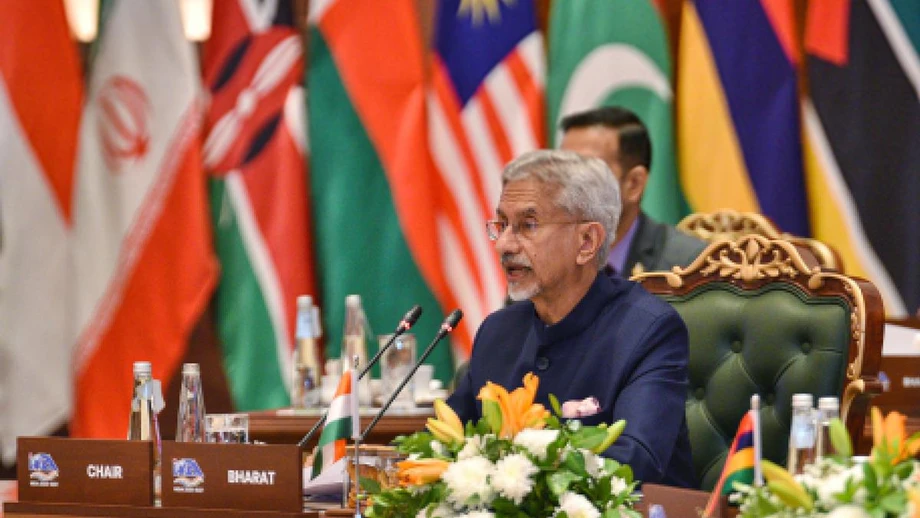
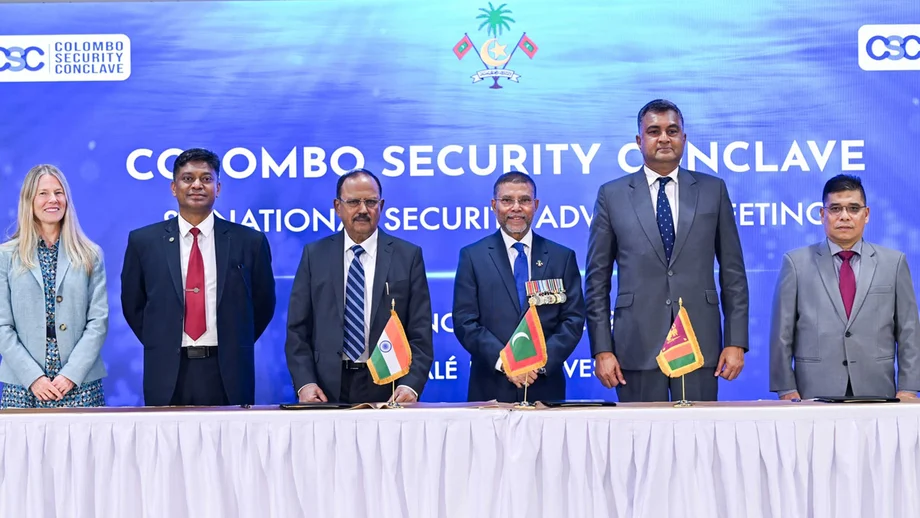
Four members of the Colombo Security Conclave (CSC) have agreed on a common security programme for 2026 and 2027, placing maritime surveillance, drug trafficking, cyber risks and disaster response on one regional agenda. Maldives, India, Mauritius and Sri Lanka signed the Agreed Minutes and adopted the Roadmap of Cooperation on Wednesday, 25 November 2026. The venue was Villa Nautica Paradise Island in the Maldives, while Mauritius joined the proceedings virtually.
Contents
- A work plan for a shared ocean
- Who signed, and whose status remains unresolved?
- What the five pillars mean for daily security
- How the conclave built its permanent machinery
- Why Doval wants the seas to connect nations
- Drugs, illegal fishing and cables enter the security agenda
- Preparing for artificial intelligence and future shocks
- A bilateral meeting with diplomatic weight
- What happens after the signatures
- Key Points
India's Ministry of External Affairs announced the outcome on 26 November after the eighth CSC meeting of national security advisers. The roadmap identifies key deliverables and planned activities, meaning the results and work that governments intend to pursue, across the conclave's five areas of cooperation. Bangladesh also sent a delegation, while Australia and Malaysia attended as guests.
The main session formed part of a conclave running for three days, from 24 to 26 November. National security advisers are senior officials who help their governments coordinate defence, intelligence, diplomacy and responses to major threats. Some member countries were represented by defence ministry or military officials rather than officials holding the exact title of adviser.
For people living around the Indian Ocean, the subjects under discussion have direct consequences. Cooperation at sea can affect the safety of shipping and fishing crews. Action against trafficking can help authorities interrupt drug networks. Protection of communications systems and ports can reduce disruption to essential services, while coordinated disaster planning can determine how quickly food, equipment and rescue teams reach an island or coastal community after a cyclone.
Who signed, and whose status remains unresolved?
The four signatures came from a gathering with wider attendance. Maldives, India, Mauritius and Sri Lanka endorsed the documents. Bangladesh participated in the discussions but was not listed among the governments signing the Agreed Minutes and adopting the roadmap. Australia and Malaysia also did not endorse the framework because they attended as guests.
The senior delegations reflected that mix of statuses and portfolios:
- Maldives was represented by its National Security Adviser, Lieutenant Colonel (Retd.) Ibrahim Latheef, whose government hosted the meeting.
- India's delegation was led by National Security Adviser Ajit Doval.
- Sri Lanka was represented by Air Vice Marshal (Retd.) Sampath Thuyacontha, Secretary at the Ministry of Defence.
- Bangladesh's delegation was led by Lieutenant General Md Faizur Rahman, Commandant of the National Defence College.
- Mauritius participated virtually and joined the other three signatories in adopting the roadmap.
Australia sent Sarah Storey, First Assistant Secretary for the South and Southeast Asia Group and Head of the Office of Southeast Asia in the Department of Foreign Affairs and Trade. Malaysia was represented by Khairul Azhar (Nik) bin Abu Bakar, Director of the Maritime Security and Sovereignty Division at the National Security Council in the Prime Minister's Department. Doval invited both guest countries to consider joining the CSC at a later date, although no accession timetable was announced.
Membership descriptions require some care. The Maldives President's Office has said that Bangladesh and Seychelles were inducted as official members alongside the existing members at the seventh meeting in November 2025, producing a grouping of India, Sri Lanka, Maldives, Mauritius, Bangladesh and Seychelles. Bangladesh's position was also described with an additional qualification: its membership had been approved, but Dhaka was still completing internal processes required for membership.
Seychelles, admitted as the sixth member at the 2025 meeting, did not participate in the Maldives gathering. No official reason was given for its absence. The firm attendance record from Malé is therefore more useful than a simple headcount: four members signed, Bangladesh attended, two outside countries came as guests, and Seychelles was absent.
What the five pillars mean for daily security
The roadmap retains the five pillars around which the CSC organises its work. Each covers a different type of risk, but several overlap in practice. A criminal network, for example, may use ships to move drugs and digital systems to coordinate its finances or avoid detection.
- Maritime Safety and Security covers surveillance, safety and cooperation against threats at sea, including the need for participating agencies to develop a clearer common picture of maritime activity.
- Countering Terrorism and Radicalisation concerns cooperation against terrorist violence and the processes through which people are drawn into extremism.
- Combating Trafficking and Transnational Organised Crime focuses on trafficking and criminal networks operating across national borders, with drug interdiction receiving particular attention during the meeting.
- Cyber Security and Protection of Critical Infrastructure and Technology deals with digital threats to essential systems. Critical infrastructure includes facilities and networks whose disruption would affect public life, such as ports and communications links.
- Humanitarian Assistance and Disaster Relief concerns regional preparation, emergency coordination and the delivery of aid during disasters and other humanitarian emergencies.
The agreed method is as important as the list of threats. Participants called for training programmes, exchanges of best practices and capacity building. In plain terms, that means teaching personnel, sharing lessons from previous operations and developing common procedures so that national agencies can work together more effectively.
India's Ministry of External Affairs issued the joint press statement after the meeting. It described the political promise behind the technical programme.
The Meeting further reaffirmed the collective commitment of Member States to promote regional peace and security through sustained cooperation.
The statement also said participants wanted continued collective efforts to advance the conclave's objectives. The roadmap consequently serves as a programme of work rather than a general declaration alone, connecting the five pillars with activities to be pursued during 2026 and 2027.
How the conclave built its permanent machinery
The CSC grew from an India, Sri Lanka and Maldives trilateral initiative on maritime cooperation established in 2011. Its current form dates from 2020, when the three countries agreed to widen both the scope and membership of that arrangement. Doval described its formation in November 2020 as resting on a collective vision for safety, security and stability in the Indian Ocean region.
Several dates explain how the grouping reached the Malé meeting:
- 2011: India, Sri Lanka and Maldives established the trilateral initiative from which the conclave developed.
- November 2020: the CSC was formed with a broader regional remit and an ambition to address shared security challenges.
- August 2024: members adopted the CSC Charter and a Memorandum of Understanding on establishing its secretariat. They agreed that the permanent secretariat would be located in Colombo, Sri Lanka.
- 20 November 2025: the seventh meeting of national security advisers took place in New Delhi, chaired by Doval. Its decisions became the baseline for the implementation review presented in the Maldives.
- 30 September 2026: India virtually hosted the ninth meeting at the deputy national security adviser level. Officials reviewed the Roadmap for Cooperation and Activities for 2025–2026 and expressed satisfaction with substantial progress in training and capacity building across the five pillars.
- 24 to 26 November 2026: Maldives hosted the latest conclave, with the eighth meeting of national security advisers held on 25 November and its outcome announced the following day.
By the Malé meeting, the secretariat had been established and Vice Admiral S. N. Ghormade (Retd.) was serving as the CSC's first Secretary General. He presented a comprehensive review of action taken on the New Delhi decisions. That gives the grouping a named official and a permanent institution to track commitments between ministerial and advisers' meetings.
Doval welcomed Ghormade's appointment and described the conclave as a mechanism focused on action and mutual benefit. He also recalled that the CSC had begun with the basic proposition that the Indian Ocean mattered to national security, economic prosperity and the welfare of people living in the region.
Why Doval wants the seas to connect nations
India's National Security Adviser used his address to place the technical agenda within a much older history of travel, trade and cultural exchange. Doval argued that geography should encourage cooperation among countries bordering the ocean.
We the littoral states of the Indian Ocean region share a common maritime space and are connected by civilisational heritage shaped over a long period of history.
He credited Latheef with recalling that earlier generations had left a legacy of seas that connected people. Doval asked current governments to leave future generations a tradition that binds them together rather than allowing the waters to divide them. He also thanked the Maldivian government and its National Security Adviser for the hospitality and conference arrangements.
Doval then connected the CSC with two central ideas in Indian foreign policy.
The Colombo Security Conclave represents the intersection of our Neighbourhood First outlook and the MAHASAGAR vision.
Neighbourhood First gives priority to relations with India's nearby countries. Prime Minister Narendra Modi announced MAHASAGAR during a visit to Mauritius in March 2025 as a vision for engagement with the Global South. Its full name is Mutual and Holistic Advancement for Security and Growth Across Regions, with security and economic cooperation forming important components.
China's expanding economic, diplomatic and maritime presence forms part of the strategic setting for this outreach. Its growing engagement in South Asia, including with Maldives, has added to Indian concerns about sea lanes and regional influence. The Indian Ocean carries trade, energy supplies and commercial shipping among Asia, Africa and Europe, while Maldives lies close to important international shipping routes.
Doval assured participating countries that India, as one of the states that initiated the CSC idea, would provide all necessary help and assistance for their common objectives. He also expressed confidence that cooperation could turn the conclave into an effective instrument for collective security and regional interests.
Drugs, illegal fishing and cables enter the security agenda
Doval said counternarcotics work remains at the core of the conclave's activities. He called for a collective response to drug trafficking and natural disasters, pointing to information sharing and cooperation already underway among India, Sri Lanka, Maldives and other partners.
India has been trying to work very closely with Sri Lanka, with Maldives and other countries, and we want to see that this cooperation is further extended.
Sri Lanka's Defence Secretary supplied specific examples of what broader cooperation could cover. Addressing the gathering, Thuyacontha outlined Sri Lanka's Ratama Ekata National Mission against drugs. According to Sri Lanka's Ministry of Defence, the mission combines stronger law enforcement, disruption of supply networks, preventive measures, public awareness and rehabilitation initiatives.
Thuyacontha also called for regional action against illegal, unreported and unregulated fishing, commonly shortened to IUU fishing. The term covers fishing that breaks the law, avoids reporting requirements or escapes proper regulation. His proposed response included information sharing, coordinated surveillance and effective enforcement, reflecting the difficulty of policing activity that can move quickly between national waters.
Submarine communication cables were another concern. These cables lie on the seabed and carry internet and other data traffic between countries, so damage can affect essential communications far from the site of an incident. Sri Lanka urged their protection as critical infrastructure through better maritime domain awareness, meaning a fuller understanding of ships and other activity at sea, together with coordinated regional responses.
Drawing on Sri Lanka's recent experience of Cyclone Ditwah, Thuyacontha called for stronger disaster preparedness, systems that provide early warnings, coordinated emergency responses and humanitarian assistance. He also supported sharing knowledge about climate change adaptation and resilience. His delegation included Varuni Muthukumarana, Chief of National Intelligence and Additional Secretary for South Asia and SAARC at the Ministry of Foreign Affairs, and Chinthaka Abeykoon, Senior Assistant Secretary at the Ministry of Defence.
Preparing for artificial intelligence and future shocks
Doval warned that concentrating on present crimes and disasters should not leave governments unprepared for new forms of conflict. He introduced artificial intelligence as a challenge that could alter both the threats countries face and the ways in which they cooperate.
Challenges of tomorrow have yet to come. Artificial intelligence and others are going to make the world entirely a new challenge area with the new frontiers of conflict and cooperation.
He suggested that cooperation in technology, best practices and shared experience could allow members to work together in a wider range of fields. The broader discussions also identified attacks assisted by artificial intelligence against ports and critical infrastructure as an emerging priority.
The roadmap's cyber and technology pillar provides an existing framework for such work. The public announcement did not identify a separate artificial intelligence programme, its funding or a timetable for particular projects.
A bilateral meeting with diplomatic weight
On 24 November, a day before his main address, Doval met Hassan Rasheed, the Maldivian Minister of Defence and National Service, on the sidelines of the conclave. The High Commission of India in Maldives said the two officials discussed ways to strengthen defence and security cooperation.
The Maldives Ministry of Defence and National Security described the courtesy call as an opportunity to exchange views and restated the importance of the bilateral relationship.
The meeting provided an opportunity to exchange views on matters of mutual interest and reaffirm the commitment to further strengthening the longstanding partnership and defence cooperation between the Maldives and India.
The contact was the first senior engagement between the two governments following Maldivian President Mohamed Muizzu's recent visit to Pakistan. During that visit, Pakistan and Maldives signed 20 memorandums of understanding, including agreements concerning defence and maritime cooperation.
Doval's meeting with Rasheed kept a direct security channel active after the diplomatic differences that marked the early period of Muizzu's presidency. It also gave the two countries a bilateral discussion alongside the wider regional talks, with Maldives simultaneously hosting India, Sri Lanka, Bangladesh, Mauritius and the two guest delegations.
What happens after the signatures
The immediate task is to convert the roadmap's headings into scheduled training, information sharing and practical coordination. The September review of the previous roadmap provides a precedent: member states reported substantial progress in organising training and capacity building events during 2025 and 2026. Ghormade's review and the Colombo secretariat now provide continuity between that programme and the new one.
Progress would be visible in agencies using shared procedures, surveillance information reaching the right authorities, and disaster responders knowing how assistance will be requested and delivered. For Sri Lanka, the agenda also includes specific work on drugs, illegal fishing and submarine cables. For India, it offers a regional structure through which to support neighbours while pursuing its Neighbourhood First and MAHASAGAR policies.
The ministry announcement did not publish a budget, numerical targets or a detailed calendar for individual activities. It also gave no date for the next meeting of national security advisers. The documented next step is therefore implementation of the 2026–2027 programme under the conclave's new institutional structure, rather than another already scheduled summit.
Key Points
- Maldives, India, Mauritius and Sri Lanka signed the Agreed Minutes and adopted the CSC Roadmap of Cooperation for 2026–2027 on 25 November 2026.
- Mauritius joined virtually; Bangladesh attended the meeting, while Australia and Malaysia participated as guests and did not endorse the framework.
- The roadmap covers maritime security, terrorism and radicalisation, trafficking and organised crime, cyber security and critical infrastructure, and humanitarian assistance and disaster relief.
- Vice Admiral S. N. Ghormade (Retd.), the CSC's first Secretary General, reviewed implementation of decisions taken in New Delhi on 20 November 2025.
- Ajit Doval urged Indian Ocean countries to keep the seas as a space that connects nations and pledged India's assistance for common objectives.
- Sri Lanka raised its Ratama Ekata anti-drug mission, illegal fishing, submarine cable protection and lessons from Cyclone Ditwah.
- Doval invited Australia and Malaysia to consider joining the CSC and met Maldivian Defence Minister Hassan Rasheed on 24 November.
- Seychelles did not participate, and no official reason was given; no budget, detailed activity calendar or date for the next advisers' meeting was announced.