India pairs regional diplomacy with practical commitments
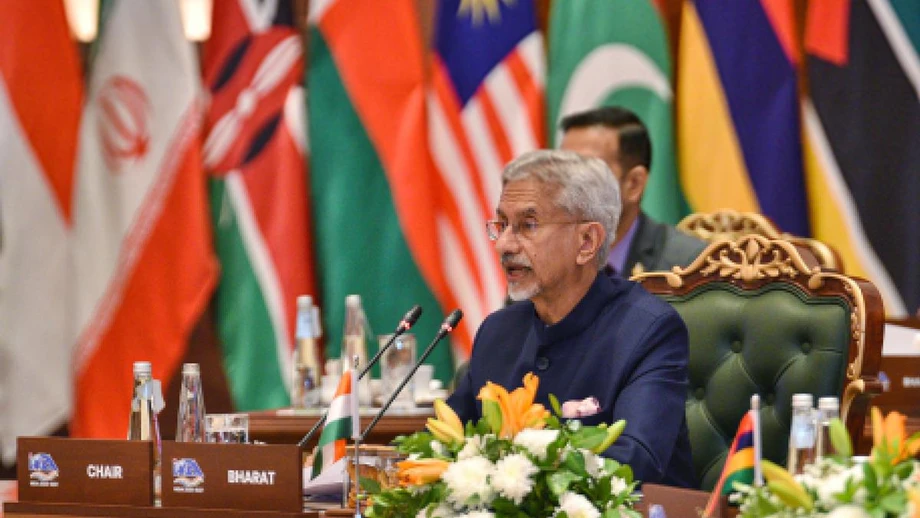
India closed the 25th Council of Ministers meeting of the Indian Ocean Rim Association (IORA) with approval for two new centres of excellence, a promise of $500,000 to strengthen the organisation and the adoption of the Delhi Communique 2026. The meeting in New Delhi on Friday, 27 November 2026, gave India's chairmanship a set of concrete institutional results alongside its broader call for regional cooperation.
Contents
- India pairs regional diplomacy with practical commitments
- How the New Delhi meetings unfolded
- Four bilateral talks, four different agendas
- What India's chairmanship is trying to achieve
- What the two centres and funding will do
- Why consensus matters inside IORA
- Sri Lanka hands over as Mauritius steps up
- Dialogue partners bring outside support and interests
- What changes now for Indian Ocean cooperation
- What to Know
External Affairs Minister S. Jaishankar chaired the ministerial session, which followed the 29th Committee of Senior Officials meeting on 25 and 26 November. Foreign ministers and delegation leaders from IORA's 23 member states attended, together with representatives of its 12 dialogue partners, specialised agencies and observers. The Delhi Communique reaffirmed their commitment to a peaceful, stable and prosperous Indian Ocean region.
Jaishankar told the gathering that the Indian Ocean is central to global trade, energy security and connectivity. He called on the countries along its shores, known as littoral states, to work together more closely and said IORA should strengthen its collective voice as geopolitical conditions change. His argument was that a regional organisation can give its members a stronger common position than they could develop separately.
Around the ministerial programme, he held separate talks with his counterparts from Seychelles, the Maldives, Sri Lanka and Mauritius. Those discussions connected IORA's wide regional agenda with specific national interests, ranging from artificial intelligence and energy cooperation with Seychelles to Mauritius's development programme and Sri Lanka's regional security concerns.
How the New Delhi meetings unfolded
The gathering was the culmination of a leadership handover and several days of diplomatic work. India's initial agenda called for a review of regional cooperation, discussion of IORA's future policy direction and the identification of new areas in which members and dialogue partners could collaborate.
- On 12 November 2025, India took over the IORA chair from Sri Lanka for the 2025 to 2027 term.
- On 25 and 26 November 2026, senior officials met in New Delhi to prepare the ground for their ministers.
- On Thursday, 26 November, Sri Lankan Foreign Minister Vijitha Herath and Seychelles Foreign Minister Barry Faure arrived in New Delhi as bilateral talks began around the ministerial programme.
- On Friday, 27 November, Jaishankar chaired the Council of Ministers meeting. Ministers approved India's two institutional proposals, heard the funding announcement and adopted the Delhi Communique 2026.
Ministers exchanged views on regional and international developments, particularly those affecting the Indian Ocean. They also discussed cooperation with dialogue partners and examined IORA's proposed action plan covering 2028 to 2032. The involvement of senior officials before the ministerial session matters because they prepare documents and test whether proposals can secure agreement before ministers meet.
India's Ministry of External Affairs had framed the occasion as an opportunity to present the Indian Ocean as a region of peace, stability, predictability and sustainable development. It also linked the meeting to India's support for an open and inclusive maritime order based on rules, with countries cooperating rather than treating the ocean as an arena for unrestricted rivalry.
Four bilateral talks, four different agendas
Seychelles produced the widest list of practical subjects. Jaishankar and Barry Faure, its Minister of Foreign Affairs and Diaspora, reaffirmed a partnership centred on people and discussed health, connectivity, skills, energy, cybersecurity and artificial intelligence. They also covered regional issues and cooperation within IORA. For a small island state, that agenda connects domestic services and economic development with the security and resilience of its surrounding waters.
Maldives Foreign Minister Iruthisham Adam and Jaishankar reviewed progress in bilateral relations. Their discussion also covered development, security and cooperation in multilateral forums, where countries can coordinate positions on issues extending beyond their immediate borders. No new assistance figure or signed agreement was announced in the account of their talks.
Sri Lanka's discussion had both a bilateral and regional dimension. Jaishankar and Herath considered relations between the two countries and the regional situation under India's Neighbourhood First policy. The Ministry of External Affairs had identified regional cooperation and maritime security as shared priorities for Herath's visit. Sri Lanka's position carried additional weight because it had just completed its term as IORA chair and remained part of the association's leadership troika.
Mauritius focused on development and the state of its wider strategic relationship with India. Jaishankar and the Mauritian foreign minister reviewed progress under the Special Economic Package and reaffirmed their commitment to the Enhanced Strategic Partnership. Jaishankar said India would support Mauritius's development priorities through Vision MAHASAGAR and Neighbourhood First. The meeting account did not provide a value for the package or announce a new disbursement.
What India's chairmanship is trying to achieve
India's chairmanship theme is Innovation, Openness, Resilience and Adaptability in the Indian Ocean Region. Each part points to a different demand: new methods and technology, greater openness among participants, the ability to withstand shocks and the flexibility to adjust policies as conditions change. Herath later told ministers that the theme suited the challenges facing the region.
The other central idea is MAHASAGAR, which stands for Mutual And Holistic Advancement for Security and Growth for All in the Region. India presented it as an approach that joins security with economic growth rather than treating them as separate tasks. In practice, the New Delhi agenda linked maritime safety with fisheries, trade, tourism, science, disaster preparation and women's economic participation.
Jaishankar's call for meaningful collaboration gave that agenda a diplomatic purpose. He wanted IORA to reinforce its role as a regional platform and develop a stronger collective voice. That objective is especially relevant for island and coastal states whose individual diplomatic resources may be limited but whose shared concerns include sea lanes, energy supplies, ocean resources and exposure to natural disasters.
The meeting also allowed India to place its bilateral relationships inside a regional framework. Support for connectivity, skills or maritime law can then be presented as part of a wider Indian Ocean programme, while member states retain their own priorities and decide how they participate.
What the two centres and funding will do
The first approved institution will be an IORA Digital Innovation Hub at the National Institute of Oceanography in Goa, part of the Council of Scientific and Industrial Research. Its focus will be marine science. Locating the hub within an established ocean research institution gives it a scientific base for work involving digital innovation and the shared study of the sea.
The second will be an IORA Centre of Excellence for Maritime Law at the National Defence University in Gujarat. Maritime law supplies the rules and legal concepts used to address questions such as jurisdiction at sea, lawful activity and the responsibilities of states. A regional centre can provide a common location for developing expertise in those subjects.
India accompanied the proposals with an announcement of $500,000 to build IORA's institutional and financial capacity. The Ministry of External Affairs presented the contribution as part of India's commitment to strengthening the association. The announcement did not set out a payment schedule or divide the money among particular programmes.
The three commitments are different in purpose. The Goa hub concerns science and digital methods, the Gujarat centre concerns law, and the funding concerns IORA's ability to function as an institution. Together, they give India's chairmanship projects that can continue beyond speeches and annual meetings.
Ministers also discussed the action plan covering 2028 to 2032 and possible new cooperation with dialogue partners. Those discussions provide a longer planning horizon, although the meeting accounts did not say that a final action plan had been adopted.
Why consensus matters inside IORA
The Australian Department of Foreign Affairs and Trade's IORA overview records that India assumed the chair on 12 November 2025 and explains how the organisation works. IORA was formed in 1997 to encourage regional economic cooperation. Its Council of Ministers meets annually to set policy and strategic direction, while the Committee of Senior Officials meets twice a year to support that work.
Decisions are reached by consensus and commitments are voluntary. Consensus means that progress depends on agreement across the membership rather than a majority outvoting a minority. Voluntary commitments mean that governments choose how to carry out the agreed cooperation. This helps explain why India's proposals, the communique and the participation of national institutions are central to turning the New Delhi discussions into activity.
IORA has six main priority areas:
- Maritime safety and security.
- Trade and investment facilitation.
- Fisheries management.
- Disaster risk management.
- Academic, scientific and technological cooperation.
- Tourism and cultural exchange.
The sustainable use of ocean resources, known as the blue economy, and women's economic empowerment apply across those areas. Working groups made up of subject specialists meet regularly to develop cooperation and share useful practices. IORA also has a business forum, an academic group and specialised agencies that support its objectives.
Its 23 members include large countries such as India, Australia, Indonesia, Iran and South Africa alongside island states including Seychelles, the Maldives, Mauritius, Comoros and Madagascar. That mixture gives the same meeting very different national perspectives, from continental trade and security to the immediate concerns of island economies.
Sri Lanka hands over as Mauritius steps up
Dhananjay Ramful, the Mauritian foreign minister, praised India's organisation of the council meeting and its chairmanship during the preceding year. He also thanked the IORA Secretariat for preparing the gathering. Mauritius attended the session in a new leadership role, as he explained in his opening remarks.
This is the first council meeting that Mauritius is attending in its capacity as vice chair of IORA.
Ramful said Mauritius would work closely with India and the other member states, support the association's policies and contribute to their implementation. His list of cooperation priorities closely matched IORA's formal agenda: maritime safety, trade and investment, fisheries, tourism, the blue economy, disaster management, science and technology, and women's economic empowerment. He described the Indian Ocean as an important corridor for trade, investment and connectivity and said members could use their combined resources and expertise to create economic opportunities.
Sri Lanka supplied the other side of the leadership story. Herath recalled Jaishankar's visit to Colombo in 2023 and his description of the Indian Ocean as a free, open and inclusive space. He then connected that earlier vision with India's present theme of innovation, openness, resilience and adaptability.
Herath also explained how he viewed Sri Lanka's transfer of the chair to India and its continued work with India and Mauritius in the troika, the leadership grouping connecting the immediate past chair with the present and incoming leadership.
Sri Lanka looks forward to working closely with both India and Mauritius in the troika. Mr. Chair, in IORA, the chair is never owned. It is held in trust for two years on behalf of every member state and then handed on. Sri Lanka held that trust from 2023 to 2025. We handed it to India with complete confidence.
His remarks gave the handover a principle as well as a date: leadership is temporary and exercised on behalf of the full membership. Sri Lanka's experience as chair, India's current agenda and Mauritius's new vice chair role provide continuity across successive work programmes.
Dialogue partners bring outside support and interests
IORA's 12 dialogue partners are China, Egypt, the European Union, Germany, Italy, Japan, Russia, Saudi Arabia, Türkiye, the Republic of Korea, the United Kingdom and the United States. Their participation gives countries outside the core membership a channel for cooperation, while decisions remain within IORA's regional structure.
France was represented by Jean-Claude Brunet, its special envoy for Indian Ocean regional cooperation. He called for a strong and effective regional voice and urged participants to find practical answers to shared challenges. Australia's Special Envoy for Indian Ocean Affairs, Tim Watts, travelled to New Delhi for the meeting. Philip Green, Australia's high commissioner to India, described the Indian Ocean as an area of shared strategic interest for both countries and IORA as an important forum for their cooperation.
Australia also brings established institutional work to the association. A founding member and its chair from 2013 to 2015, it currently leads the Maritime Safety and Security Working Group. That group encourages dialogue and coordinates programmes that build maritime capacity. Australia funds the IORA Blue Carbon Hub, run by the University of Western Australia, which helps members protect and restore coastal and marine ecosystems that store carbon and sustain livelihoods.
Iran was represented by Alireza Toutounchian, its director general for multilateral and international economic cooperation. The presence of France, Australia and Iran illustrated the range of governments participating in the same ministerial setting, even when their wider foreign policy positions differ.
What changes now for Indian Ocean cooperation
The immediate results are institutional. India has approval to establish a marine science and digital innovation hub in Goa, a maritime law centre in Gujarat and a funding commitment intended to improve IORA's capacity. National agencies and IORA's working groups now carry the responsibility for turning those decisions into programmes that members can use.
For member governments, the value will depend on whether the centres support research, legal expertise and cooperation in areas such as fisheries, disaster preparation, maritime safety and trade. For island states, those subjects connect directly with economic security and exposure to ocean hazards. For larger coastal states, they provide a regional setting for managing shared spaces and resources.
No opening dates, staffing plans or individual budgets were announced for the two centres, and no date was given for the next Council of Ministers meeting. India remains chair through 2027, senior officials are due to continue meeting twice a year and ministers have begun considering priorities for the 2028 to 2032 period. Those are the next established stages for measuring how much of the New Delhi agenda becomes regular regional work.
What to Know
- Jaishankar chaired IORA's 25th Council of Ministers meeting in New Delhi on 27 November 2026.
- Ministers approved a digital innovation and marine science hub in Goa and a maritime law centre in Gujarat.
- India announced $500,000 to strengthen IORA's institutional and financial capacity.
- The meeting adopted the Delhi Communique 2026 and discussed an action plan covering 2028 to 2032.
- Jaishankar held separate talks with Seychelles, the Maldives, Sri Lanka and Mauritius on subjects including security, development, energy and technology.
- India took the chair from Sri Lanka in November 2025, while Mauritius attended its first council meeting as vice chair.
- IORA has 23 member states and 12 dialogue partners, takes decisions by consensus and relies on voluntary commitments.