Record October heat sets the stage for a warmer winter
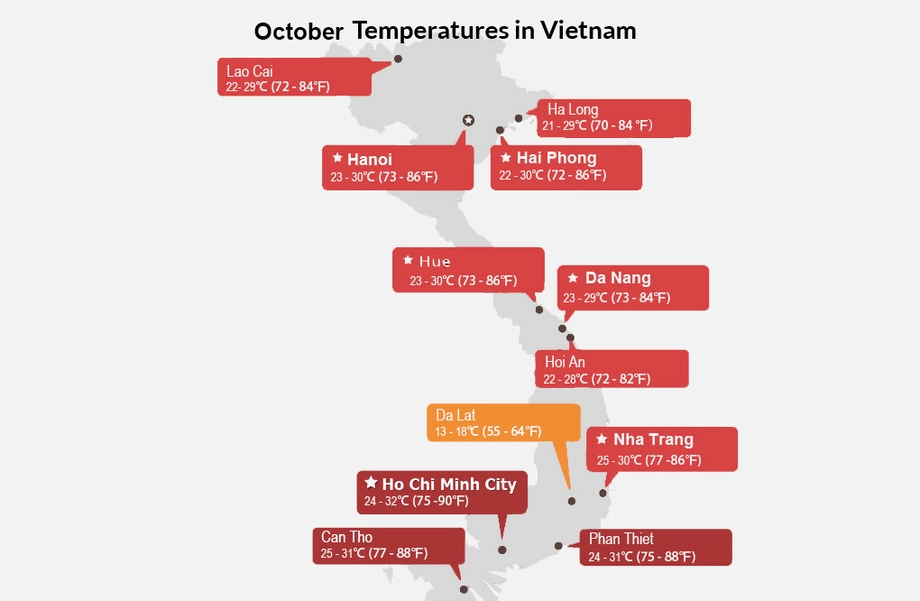
Vietnam recorded an average temperature of 26.3°C in October 2026, the highest October reading in its observation record dating back to 1961, according to the National Center for Hydro-Meteorological Forecasting. The temperature was 1.74°C above the long term average, with unusually strong warmth concentrated in the North.
Contents
- Record October heat sets the stage for a warmer winter
- Northern Vietnam carried most of the temperature records
- A rare October heatwave preceded the record
- What the El Niño forecast means for winter
- November rain will vary sharply by region
- Rainfall is expected to taper into January
- Fewer tropical systems, with local hazards still possible
- Water planning moves from provinces to whole river basins
- Mekong Delta gates need to follow salinity levels
- Key Points
The heat reached far beyond a handful of locations. Monthly average temperatures at 98 weather stations matched or exceeded historical records, including 87 stations in northern Vietnam. Another measure of the month's intensity came from 61 stations where daily maximum temperatures equalled or surpassed previous records for the corresponding period.
The forecasting center expects the warmth to continue. It gives a 96% probability that very strong El Niño conditions will persist from November 2026 through January 2027, alongside forecasts for weaker cold air, fewer days of severe cold and reduced rainfall across several regions.
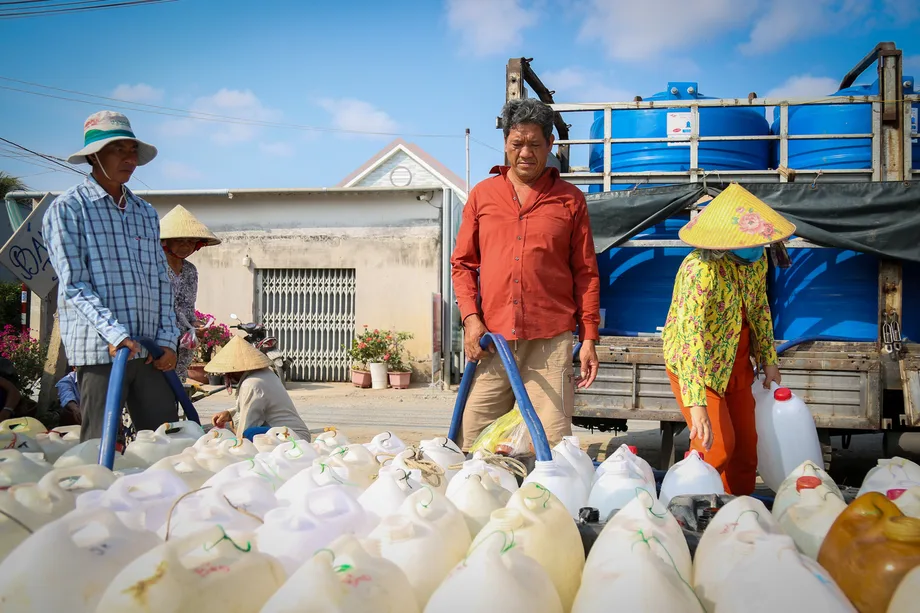
Water supplies are becoming a central concern. The Central Highlands, South Central region and South face risks of drought and shortages, with northern areas also potentially affected. The Ministry of Agriculture and Environment has submitted proposals to the Prime Minister covering irrigation, rural drinking water and preparations for the 2026–2027 dry season.
Northern Vietnam carried most of the temperature records
Average October temperatures were 1–2°C above the long term average across most of Vietnam. Northern Vietnam recorded larger departures of 2–3°C, while some southern areas were 0.5–1°C warmer than usual.
Northern stations accounted for almost 89% of the 98 stations that matched or exceeded monthly average temperature records: 87 out of 98. That concentration shows how strongly the unusual warmth affected the North, even though above average temperatures extended across much of the country.
A monthly average reflects temperatures across the month, while a daily maximum captures the hottest reading on a particular day. The station figures therefore describe both sustained warmth and individual episodes of exceptional heat.
The national figures also allow a simple comparison with the historical reference: subtracting the 1.74°C departure from October's 26.3°C gives an October average of about 24.56°C for the reference period. The announcement did not specify which years were used to calculate that long term average.
A rare October heatwave preceded the record
Northern Vietnam experienced a widespread heatwave from September 28 to October 2. Maximum temperatures commonly reached 35–37°C, with some places exceeding 37°C. It was the region's first widespread October heatwave since 1991.
Cold air activity during October was too weak to sustain a prolonged fall in temperatures. The unusually warm month therefore included both an early burst of intense heat and conditions that allowed warmth to persist afterward.
The sequence now stretches from the end of September into forecasts for early 2027:
- September 28–October 2, 2026: A widespread heatwave affected northern Vietnam, with temperatures commonly reaching 35–37°C.
- October 2026: The national average reached 26.3°C, the highest October figure in the record beginning in 1961.
- November 2, 2026: The Department of Meteorology and Hydrology, under the Ministry of Agriculture and Environment, presented the October temperature figures.
- November 2026–January 2027: Forecasters expect continued above average temperatures, with a 96% probability of very strong El Niño conditions.
What the El Niño forecast means for winter
El Niño is a climate pattern involving unusually warm surface waters in the central and eastern tropical Pacific Ocean. Changes in that ocean warmth can alter atmospheric circulation, affecting rainfall and temperature far from the Pacific itself.
The forecasting center's 96% probability for very strong El Niño conditions is three percentage points higher than its previous monthly forecast. It assigns the remaining 4% probability to strong conditions.
November temperatures are forecast to average 1–2°C above the long term average nationwide. In December and January, most areas are expected to be 0.5–1.5°C warmer than usual, with larger departures of 1–2°C in the Central Highlands and South.
Cold air is expected to be weaker than average. Severe and damaging cold spells in the North and North Central Coast may begin later than usual, and the number of cold days is forecast to be lower.
Brief, intense cold spells can still sharply reduce temperatures. For residents, farmers and livestock keepers, the practical outlook is a generally warmer winter that can still contain short periods requiring protection from severe cold.
November rain will vary sharply by region
Northern Vietnam is forecast to receive 15–30% more rain than the long term average in November. Expected totals are 50–100 millimetres, with higher amounts in some places. A millimetre of rainfall is equivalent to one litre of water spread over one square metre.
Areas from Thanh Hoa to Ha Tinh are expected to receive 40–80 millimetres, near their usual November level. Southern rainfall is also forecast to be near average, at 80–150 millimetres.
Parts of Central Vietnam may receive 20–40% less rainfall than usual. Even so, forecast totals from Quang Tri to Hue and along the South Central Coast remain substantial, at 200–400 millimetres. The Central Highlands are expected to receive 30–50 millimetres.
Central Vietnam can therefore experience heavy rain while finishing the month with a rainfall shortfall. A few intense downpours can deliver large amounts of water over a short time, while the monthly total still falls below the amount normally received during the rainy season.
Moderate to heavy rain remains possible in November and December, especially from Ha Tinh to Hue and along the South Central Coast. That leaves communities managing immediate rain hazards while water operators also prepare for drier conditions later.
Rainfall is expected to taper into January
December forecasts show northern rainfall at 30–60 millimetres, around 10–20 millimetres above average. Areas from Thanh Hoa to Ha Tinh are expected to receive the same range of 30–60 millimetres, close to their usual level.
Farther south, December rainfall from Quang Tri to Hue is forecast to be 20–40 millimetres below average. The South Central Coast faces a larger shortfall of 50–100 millimetres. Both areas are forecast to receive total rainfall of 150–300 millimetres.
The Central Highlands are expected to receive just 10–20 millimetres in December, while the South is forecast to receive 20–40 millimetres. Both regions are expected to be 10–20 millimetres below their usual rainfall.
January brings a further decline. Northern Vietnam is forecast to receive 30–60 millimetres and areas from Thanh Hoa to Ha Tinh 20–40 millimetres, both near average. Quang Tri to Hue and the South Central Coast are expected to receive 50–100 millimetres.
Little rain is expected in the Central Highlands and South in January. Areas outside the North and Thanh Hoa to Ha Tinh may receive 10–30 millimetres less than average, while widespread heavy rain in Central Vietnam is expected to ease.
Fewer tropical systems, with local hazards still possible
The number of storms and tropical depressions over the East Sea, also known as the South China Sea, is forecast to be below average from November through January. Systems making landfall in Vietnam are also expected to be fewer than usual.
The historical averages for that three month period are 2.8 systems over the sea and 1.1 making landfall. Those decimal figures represent averages across many years: some seasons have more systems and others fewer.
The forecast also retains the possibility of thunderstorms, whirlwinds, lightning, hail and strong gusts nationwide. Together with the prospect of heavy rain in central provinces and brief severe cold in the North, these hazards make local weather warnings relevant throughout the season.
Water planning moves from provinces to whole river basins
Nguyen Quoc Dung, chairman of the Vietnam National Committee of Large Dams and Water Resources Development, recommends managing water across entire river basins. A river basin is the area whose rivers and streams drain toward a common outlet, connecting upstream reservoirs with downstream farms, settlements and irrigation networks.
Dung says planning by separate administrative areas can weaken water regulation when those areas share the same supply. Reservoir releases, irrigation withdrawals and household needs must be considered together because a decision upstream changes how much water reaches users downstream.
Early forecasts should be turned into specific plans for taking in, storing and distributing water, he recommends. Operators need estimates of available supplies, demand and storage capacity before reservoirs run low or canals dry out.
The Ministry of Agriculture and Environment has proposed prioritising construction, upgrades and repairs to irrigation infrastructure and rural domestic water systems within the 2026–2031 investment plan. Its recommendations also include support for households to collect, store and safely treat water.
For the coming dry season, the ministry calls for regular water resource inventories, adjustments to reservoir operations and distribution plans, dredging of canals and water intakes, temporary pumping stations and irrigation methods that use less water. The investment proposals have been submitted to the Prime Minister; an approval date and funding total were not given.
Mekong Delta gates need to follow salinity levels
Dung recommends controlling and adapting to salinity in the Mekong Delta, with irrigation gates operated according to measured salt levels. Saltwater intrusion occurs when salty water moves into rivers and canals used for freshwater supplies, making the timing of water intake especially important.
Gates can retain freshwater and block saltwater when necessary, then open to take in water when salinity is suitable. Dung advises maintaining natural flows for much of the time, with gate decisions responding to conditions.
The Cai Lon-Cai Be, Ninh Quoi, Xuan Hoa and Vung Liem salinity control projects provide examples of using forecasts and gate operations to retain freshwater and protect production. Their performance depends on available water and coordination across the connected system.
Temporary dams on rivers with no through outlet can also preserve freshwater in some places. Dung says such measures must suit local terrain, flows, water quality and demand. Monitoring provides another tool: Bac Hung Hai uses water level and water quality measurements, cameras and modernised gate controls, while similar approaches are being introduced in East Cu Chi, which carries water from Dau Tieng Reservoir to Ho Chi Minh City.
Falling water levels also bring higher operating costs. When water can no longer enter a sluice by gravity, operators may need temporary pumps or several pumping stages, increasing electricity and fuel bills. Dung recommends funding support for emergency pumping and drought and salinity responses.
Key Points
- Vietnam's October 2026 average temperature reached 26.3°C, the highest October reading since records began in 1961.
- Monthly averages matched or exceeded records at 98 stations, including 87 in northern Vietnam.
- Forecasters give a 96% probability of very strong El Niño conditions from November 2026 through January 2027.
- A warmer winter and fewer severe cold days are expected, although brief intense cold spells remain possible.
- Central Vietnam may still receive heavy rain before rainfall declines, with little rain expected in the Central Highlands and South in January.
- Water preparations include coordinated reservoir operations, flexible salinity control, canal maintenance and emergency pumping.