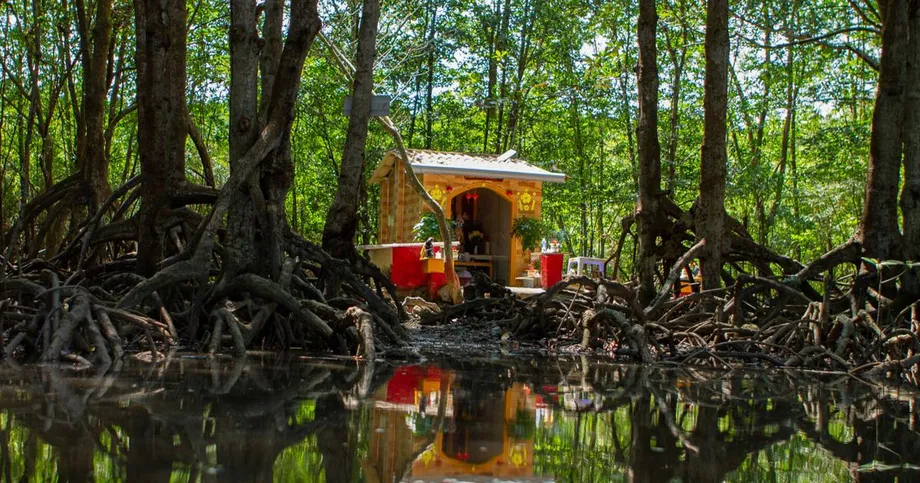
A coastal expansion meets a living flood barrier
A 2,870-hectare coastal development, a planned $4.7 billion port and new transport links are reshaping Can Gio, where mangrove forests help protect Ho Chi Minh City's 10 million people from storms, flooding and erosion. Scientists warn that construction could interrupt the water flows that keep those forests alive, extending the environmental risks beyond the land being built on.
Contents
- A coastal expansion meets a living flood barrier
- Why rivers matter as much as trees
- A forest rebuilt after wartime destruction
- What the coastal development promises
- Fishing families face a changing shoreline
- What the environmental approval said
- The metro brings a separate forest question
- Why the financing also matters
- A development decision with costs on both sides
- Key Points
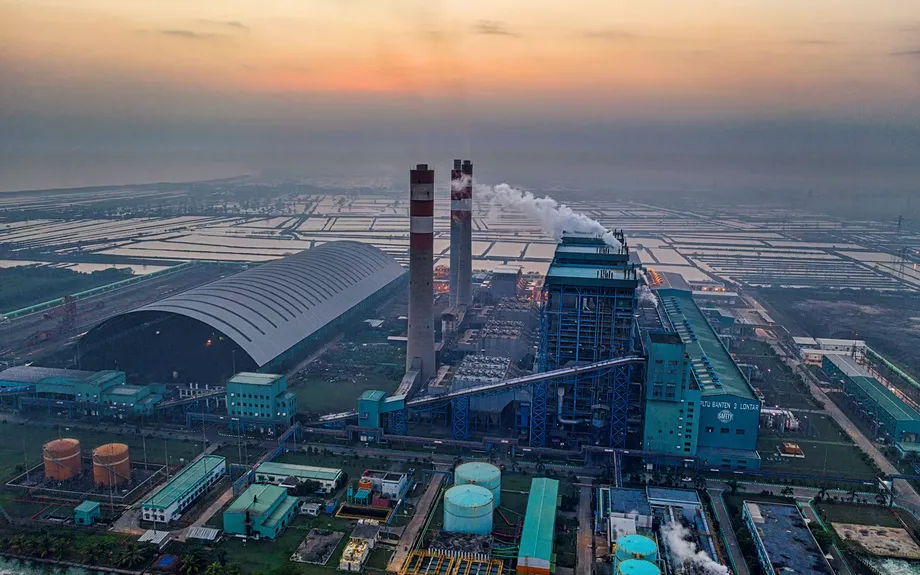
Vinhomes, the property arm of Vietnam's largest company, Vingroup, is building Green Paradise with housing, shopping and entertainment areas. The wider expansion includes roads, bridges, a metro connection and a proposed crossing of 14 kilometres between Can Gio and the port city of Vung Tau.
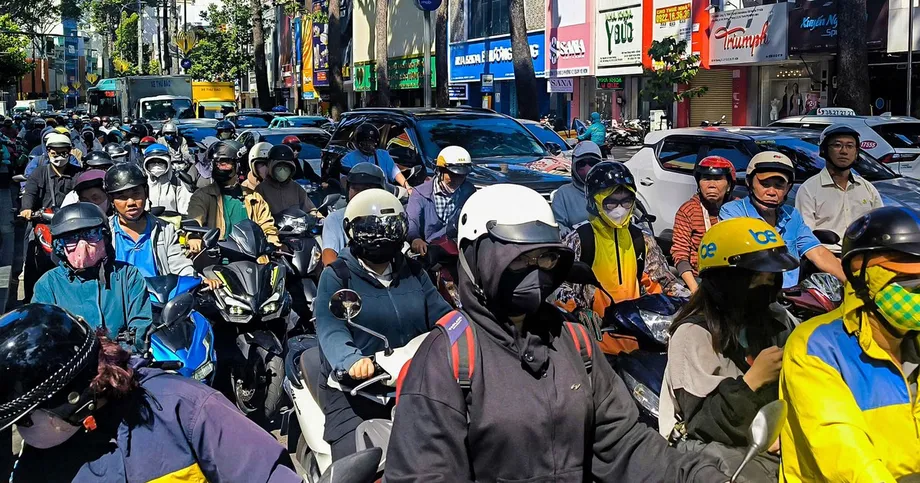
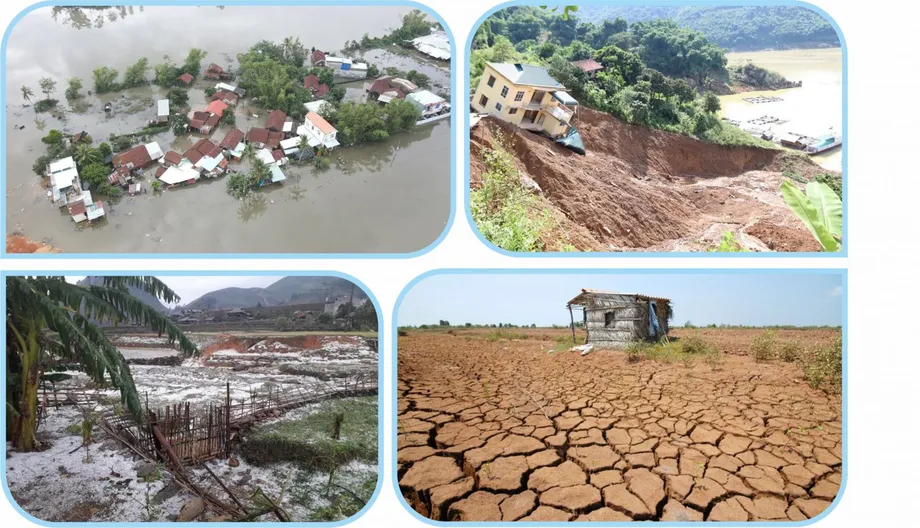
Ho Chi Minh City already faces heavy costs from water. A 2026 study by Vietnamese scientists found that about 80% of its area is vulnerable to flooding. The government estimates that rising seawater costs the city about $57 million annually. Record downpours and the highest tides in its history flooded streets and homes in 2025.
Can Gio's mangroves hold coastal soil together, shelter fish and shellfish, and store carbon in their trees and soils. Their future therefore affects several parts of daily life at once: protection for homes, income from fishing and the city's ability to cope with a changing climate.
Officials have defended the coastal development's environmental approval and its location outside the reserve's most strictly protected core. Researchers are concerned about how roads, embankments and reclaimed land could change the movement of water through the wider ecosystem.
Why rivers matter as much as trees
UNESCO's Can Gio reserve profile lists an area of 75,740 hectares and a population of 71,157. The reserve includes mangroves, wetlands, salt marshes, mudflats and seagrasses, rather than a single continuous stretch of forest.
The Saigon and Dong Nai rivers helped create the soil on which the mangroves developed. UNESCO describes a dense river network carrying plentiful alluvium, the sediment deposited by flowing water, into the estuary. Rainfall and the meeting of fresh and salty water also sustain the habitat.
Roads and embankments can change where that water travels. A forest may retain its trees initially while receiving a different supply of water, salt and sediment. Understanding those changes is central to assessing the construction projects.
Marie Arnaud, a researcher at the French Sustainable Development Institute based at Sorbonne University in Paris, warned that infrastructure can become a barrier to those flows.
"There are examples of mangroves that have disappeared because of hydrological barriers like roads and bridges," she said.
Colombia's Ciénaga Grande offers a concrete example. Roads and dikes disrupted flows of seawater and freshwater from the 1950s onward, contributing to one of the largest recorded losses of mangroves. Arnaud also warned that increased pollution would add pressure in Can Gio, where mature trees and soils rich in carbon store gases that warm the atmosphere.
A forest rebuilt after wartime destruction
Can Gio's mangroves nearly disappeared during the Vietnam War, when US forces sprayed chemicals to remove vegetation used as cover by Viet Cong fighters. Replanting began in the late 1970s. In 2000, the restored landscape became Vietnam's first UNESCO biosphere reserve.
UNESCO describes Can Gio as having the subregion's highest diversity of mangrove plants, invertebrates living among mangroves, and associated fish and shellfish. Its economic activities include fishing, aquaculture, salt production, agriculture, trading and tourism.
The reserve's history places today's construction within a longer sequence of destruction, restoration and development:
- During the Vietnam War, chemical spraying devastated the mangrove forest.
- In the late 1970s, extensive replanting began.
- In 2000, Can Gio received UNESCO biosphere reserve status.
- On July 20, 2020, Vietnam's environment ministry explained its approval of the coastal urban project's environmental impact assessment.
- In 2025, extreme rain and tides flooded Ho Chi Minh City.
- A Vietnamese scientific study in 2026 identified about 80% of the city's area as vulnerable to flooding.
What the coastal development promises
Vingroup broke ground on the new coastal town in April. Authorities see Can Gio as a route to the sea, a logistics centre and a tourism destination. The proposed port is expected to handle millions of shipping containers annually, while new roads and rail would connect the district more closely to Ho Chi Minh City.
Green Paradise sits at the centre of that transformation. Building on reclaimed land means creating usable ground in an area previously covered by water. That requires substantial construction before homes, shops and other facilities can operate.
The Ministry of Natural Resources and Environment's explanation in July 2020 set out the scale of the project's economic ambitions. It projected more than 228,000 residents, about nine million tourist visits annually, jobs for 25,000 workers and roughly 2.9 trillion dong in annual budget revenue once completed.
Those figures were projections presented in 2020. They show why officials supported the development: a larger population, more visitors, employment and public revenue. For existing residents, the immediate experience is construction, changing access to fishing grounds and the possibility of a different kind of work.
Fishing families face a changing shoreline
Can Gio residents describe a divided response to the building boom. Many younger people now work for Vingroup, and some households hope the projects will create more jobs. Others complain that compensation for their land was small compared with the prices at which it is now being marketed.
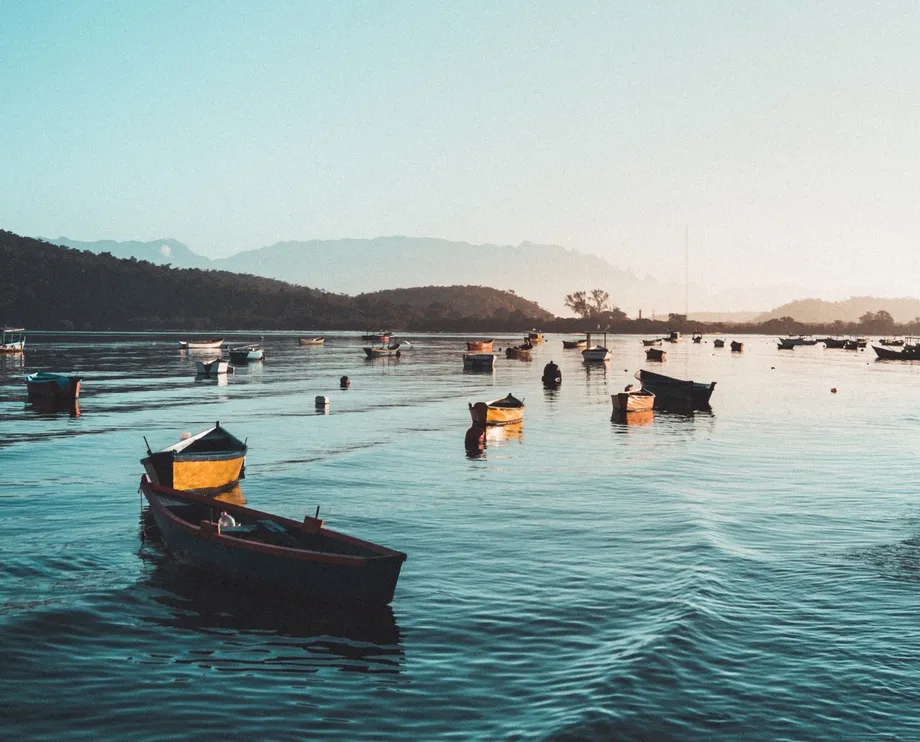
Fishing families say construction has pushed fish into deeper waters beyond the reach of their small boats. Concrete seawalls and embankments are enclosing reclaimed land, while pipes and bulldozers occupy the beach.
Muoi, a resident who gave only one name because he feared reprisals from authorities, said blocked drainage had worsened flooding and polluted the water, killing oysters and wiping out farms. He has stopped fishing and now helps his wife in her shop. Describing the loss of a place he once called magical, he said:
That doesn't exist anymore. They have boarded everything up.
UNESCO lists most communities in the reserve's transition zone, where Vietnamese, Chinese and Khmer residents live in communes and towns. The core and buffer zones have few residents apart from forest protectors, forestry staff, their households and some fishermen using traditional shrimp traps.
Fishing, aquaculture and salt production depend directly on local water conditions. A shift towards construction, retail and tourism changes both the jobs available and the resources that households need to earn a living.
What the environmental approval said
Vietnam's environment ministry defended its approval of the coastal project's environmental impact assessment at a briefing on July 20, 2020. Such an assessment predicts possible environmental damage and sets out measures to reduce it.
Nguyen Xuan Hai, then director of the ministry's environmental impact assessment appraisal department, said an appraisal council had accepted the assessment after several rounds of additions and revisions. The approval carried 15 conditions.
Hai said the review examined mangrove biodiversity, natural currents, sediment buildup, erosion, water pollution and social and economic effects. Modelling also considered pollution movement, salinity changes and rising seas. The ministry said the models predicted only a small effect on the biosphere reserve when combined with advanced construction methods and wastewater treatment meeting Vietnam's highest standards.
The ministry placed the development next to the reserve's transition zone and about 18 kilometres from its core. It said the location complied with Vietnamese law and UNESCO rules.
Le Huy Ba, former head of the Institute of Environmental Science, Engineering and Management at the Industrial University of Ho Chi Minh City, supported the prospect of creating land and improving the area, while calling for careful, objective assessment and protection of the ecosystem over the long term.
The government's position rests on predicted effects and proposed safeguards. Arnaud's concerns focus on how construction and pollution could affect the connected water network as the coastline changes.
The metro brings a separate forest question
Ho Chi Minh City authorities sought approval in September to clear 4.57 hectares of mangroves in the reserve's buffer zone for the metro connection to Can Gio. The request brings forest clearance into the transport plans even as officials point to the coastal development's location outside the protected core.
The buffer zone surrounds and supports the more strictly protected core. A railway route through it requires attention to both the trees removed and the way construction changes drainage and river flows.
Officials have also said that sand for concrete will come from an artificial lake rather than the Mekong River, where sand mining has worsened riverbank erosion and altered the river's flow.
Tuan Vo of Can Tho University said economic development can sometimes require sacrificing forest, but called for expert consultation and an understanding of changes to river flows so that damage can be reduced.
UNESCO said it was monitoring the project and working with Vietnam's government and other stakeholders, but did not say whether it had reviewed the development. No date was given for a decision on the requested buffer zone clearance. The Vietnamese government and Vingroup did not respond to requests for comment.
Why the financing also matters
Le Hong Hiep of Singapore's ISEAS-Yusof Ishak Institute sees a financial gamble alongside the environmental risks. Vinhomes has generally developed properties near large cities that can be sold quickly. Can Gio requires expensive reclamation and extensive infrastructure before residents can move in.
Hiep said slowing demand for expensive property adds pressure, while Vingroup depends on revenue from Vinhomes to support other businesses, including electric vehicle manufacturer VinFast.
Asia Daily's August 2025 coverage of Vingroup's liability burden described $31 billion in total liabilities, equivalent to 86% of assets, and daily interest payments of $3.2 million. Those figures provide an earlier snapshot of the financial demands accompanying the group's expansion.
Hiep described the pressure to maintain a stream of projects, borrowing and reported earnings:
"They need new projects to borrow from banks, to record new revenues and new profits, to boost their share performance on the stock market. And they cannot stop," he said.
Vingroup is also building a $16 billion urban project covering 6,200 hectares near Ha Long Bay, more than twice Green Paradise's 2,870 hectares. It has received approval to sell about 7,000 homes there while construction continues. Both developments require spending before large new communities are established.
A development decision with costs on both sides
Can Gio brings together benefits and risks that fall on different people and at different times. Construction can provide employment now, with tourism, housing and port activity expected later. Fishing households are already describing changes to water access and income, while scientists warn about damage to the natural barrier protecting the wider city.
The global record gives that warning weight. According to the UN Food and Agriculture Organization, the world lost a net 284,000 hectares of mangrove forest between 2000 and 2020. Vietnam has planted new mangroves, but aquaculture, conversion to other land uses and coastal erosion have reduced those gains.
Can Gio's restored forest supports local livelihoods while serving a city where flooding already carries substantial costs. The practical task for authorities and developers is to deliver the promised infrastructure while keeping water, sediment and marine life moving through the ecosystem on which that protection depends.
Key Points
- Vinhomes is building the 2,870-hectare Green Paradise coastal development as Can Gio prepares for a port and new transport links.
- UNESCO lists the Can Gio biosphere reserve at 75,740 hectares, with rivers and sediment supplies central to its mangroves.
- Scientists warn that barriers to water flow and increased pollution could damage the forest.
- Vietnam's environment ministry defended the project's assessment in 2020, citing modelling and 15 approval conditions.
- City authorities have sought permission to clear 4.57 hectares of buffer zone mangroves for a metro connection.
- Residents describe both new employment opportunities and losses affecting fishing, farms and access to the shoreline.
- The development also requires costly reclamation and infrastructure as Vingroup faces continuing demands for financing.