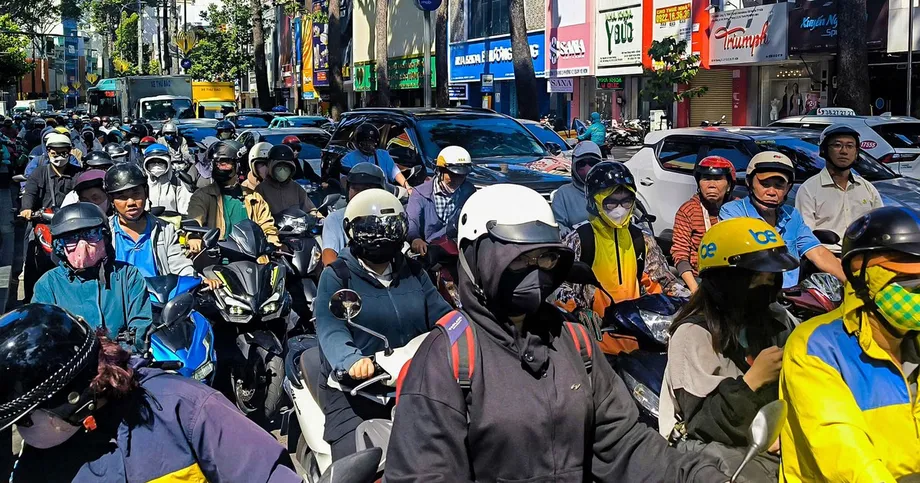
A 15.6 square kilometre pilot with different rules for different vehicles
Ho Chi Minh City is proposing a low emission zone covering its existing central district and Thu Thiem from January 1, 2028, with entry conditions initially targeting taxis, contracted passenger vehicles, buses and small freight trucks. Private cars and motorcycles would face stricter standards later, rather than an immediate ban on all petrol and diesel vehicles.
Contents
- A 15.6 square kilometre pilot with different rules for different vehicles
- Where the restrictions would apply
- Which vehicles would face the first standards?
- A revised timetable replaces earlier proposals
- Public transport coverage is a condition, not a travel forecast
- Seven rail lines, 300 bus routes and new transfer facilities
- Clean energy deadlines extend beyond the centre
- Financial assistance is proposed, but payments are not settled
- Air quality targets reach beyond vehicle exhaust
- Monitoring and the decisions still required
- Key Points
The pilot would run until December 31, 2029, across approximately 15.6 square kilometres. Expansion to the area inside Ring Road 2 is proposed from January 1, 2030, but would depend on the pilot results, infrastructure readiness and public transport coverage.
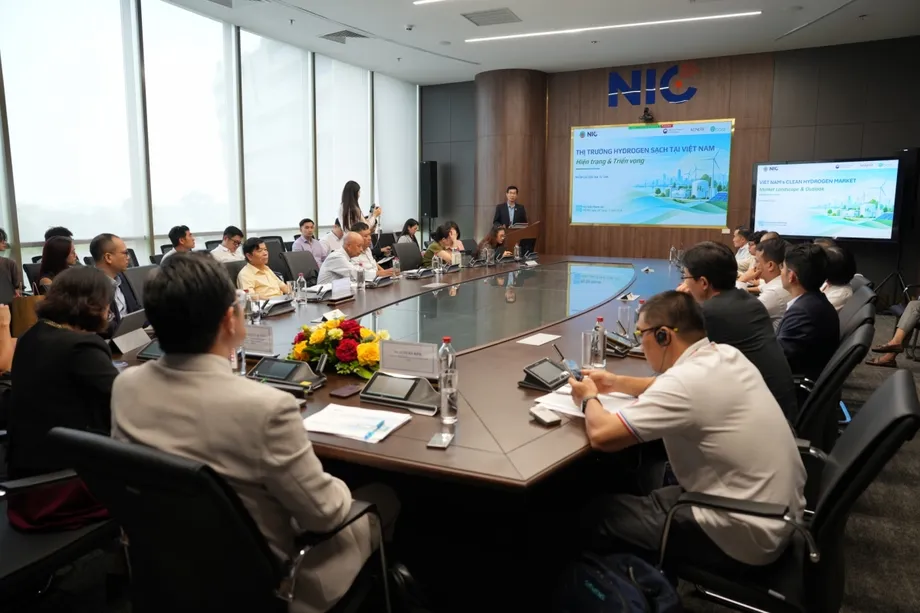
The municipal People's Committee has published a draft consultation notice specifying a public comment period from October 8 through October 17, 2026. The proposal is intended for submission to the municipal People's Council. The notice does not establish that the council has adopted the restrictions or give a confirmed voting date.
The draft cites points d and i of paragraph 1, Article 14 of the Urban Development Law, No. 18/2026/QH16, as its legal basis. It combines three measures that have different effects on residents: emissions standards for entering designated areas, deadlines for switching particular vehicle groups to clean energy, and financial support for conversion.
That distinction matters in a city reported to have 1.28 million registered cars and 11.5 million registered motorcycles. Meeting an emissions standard would initially allow some combustion vehicles to continue operating in the zone. A later clean energy requirement would go further, requiring a change in the energy used to power vehicles.
Where the restrictions would apply
The first zone combines the existing 930 hectare central area with Thu Thiem across the Saigon River. The central area alone represents 9.3 square kilometres of the proposed 15.6 square kilometre pilot.
The proposed boundary follows Saigon Bridge, Nguyen Huu Canh, Van Thanh 2 Bridge, Thi Nghe 2 Bridge, Hoang Sa, Vo Thi Sau, Cach Mang Thang 8, Nguyen Thai Hoc and Vo Van Kiet. It then crosses through the Saigon River Tunnel and Thu Thiem, following Tran Quy Kien, Mai Chi Tho, Luong Dinh Cua and Tran Nao before returning to Saigon Bridge.
The second zone would extend restrictions within Ring Road 2. Descriptions include Do Muoi, Le Duc Anh, Le Kha Phieu, Nguyen Van Linh, Phu My Bridge, Vo Chi Cong, Vo Nguyen Giap and Hanoi Highway.
Reports differ on the detailed eastern boundary. Some list Phu Huu Bridge and Ring Road 2, while others name Nguyen Thi Dinh, Dong Van Cong and Mai Chi Tho. The boundary appendix accompanying the eventual resolution would therefore be essential for determining exactly which streets and journeys are covered.
An earlier consultant proposal put the larger zone at about 280 square kilometres, almost 18 times the 15.6 square kilometre central pilot. That figure belongs to the earlier planning work and should not be treated as a confirmed measurement of the final expanded zone.
Which vehicles would face the first standards?
From the beginning of 2028, taxis, contracted passenger vehicles with fewer than nine seats, and freight trucks carrying loads of up to one tonne would need to meet emissions Level 5 to enter the pilot zone. Contracted vehicles with nine or more seats and passenger buses would need Level 4. Three wheel vehicles collecting rubbish would be required to switch to clean energy.
The levels refer to national technical emissions requirements. A higher level means tighter limits on vehicle pollutants. These requirements concern emissions performance, not simply whether a vehicle uses petrol or diesel.
From 2032, private cars would need Level 5. Motorcycles belonging to individuals and organisations that do not operate transport businesses would need Level 4.
Vehicles below the applicable standard could be restricted to entry between 10 p.m. and 6 a.m. the next morning. That would provide a possible overnight access window rather than necessarily imposing a complete prohibition. The precise conditions for using that window would need to be settled in the adopted rules.
For households, the sequence means that commercial transport would face the first central zone requirements before the proposed 2032 standards for private vehicles. For operators, it means that a vehicle satisfying the 2028 entry requirement might still need replacement or conversion when a later clean energy deadline takes effect.
A revised timetable replaces earlier proposals
The proposed January 2028 start is six months later than a previous July 2027 pilot. Expansion to Ring Road 2 has also been pushed back by one year, from 2029 to 2030. The citywide clean energy target has moved from 2040 to 2045.
Earlier accounts described a 16.6 square kilometre pilot with more than 176,200 residents and public transport coverage of about 96%. The revised proposal describes 15.6 square kilometres and expected coverage above 95% of residents within 500 metres. Those figures describe different versions of the plan and should not be combined into a single estimate.
The vehicle timetable has changed as well. Earlier proposals placed private car standards in 2028, motorcycle standards in 2029, and conversion of most vehicles inside the zone to clean energy by 2035. The revised outline places the specified private vehicle emissions requirements in 2032 and the zone's clean energy requirement in 2040.
The main proposed milestones are:
- October 8 to October 17, 2026: public consultation on the draft resolution.
- January 1, 2027: clean energy requirements for buses operating within the city and newly purchased or replacement government vehicles.
- January 1, 2028: central area and Thu Thiem pilot begins, alongside strict emissions protection zones in Con Dao and Thanh An.
- January 1, 2030: proposed expansion inside Ring Road 2 and clean energy requirements for taxis and app based motorcycle services.
- 2032: specified emissions standards begin for private cars and motorcycles.
- 2040: vehicles operating inside the low emission zone would need clean energy.
- 2045: the clean energy requirement would extend throughout the city, including specialised vehicles.
Public transport coverage is a condition, not a travel forecast
The pilot area was selected partly because public transport is expected to reach more than 95% of its population within a 500 metre radius. Metro Line 1 is already operating there, and the area is considered suitable for traffic signs and camera monitoring.
For the Ring Road 2 expansion, the proposed threshold is more than 85% of residents within 500 metres of public transport. Expansion is therefore tied to service availability rather than being presented as an unconditional change on the calendar.
Access to a nearby service does not mean that the service will carry most journeys. By 2030, the draft projects public transport meeting 15% to 20% of travel demand across the city and 25% to 35% inside Ring Road 2.
These are different measures. Coverage describes how many people live near public transport. The travel share describes how much demand those services are expected to carry. Even at the upper projected share of 35% inside Ring Road 2, roughly 65% of travel demand would still be met by other transport.
The distinction helps explain why the draft combines buses and rail with parking facilities, shared vehicles and cleaner private transport. A nearby stop alone does not establish that a service provides the route, operating hours or capacity needed for every journey.
Seven rail lines, 300 bus routes and new transfer facilities
By 2030, the city aims to operate seven urban railway lines totalling around 255 kilometres and expand its bus network to 300 routes. These are planning targets, not a statement that the networks are already built or that every project has secured funding.
The supporting network would include 11 parking facilities where travellers could leave their vehicles and transfer to public transport. Plans also call for approximately 8,000 shared bicycles, electric bicycles and electric motorcycles, including about 7,300 newly acquired vehicles.
Water buses and flexible passenger services are also under consideration. Flexible transport can adjust routes or departures to passenger demand, potentially connecting areas that are less suited to fixed bus routes.
The longer rail timetable projects approximately 355 kilometres during 2035 to 2039, around 430 to 460 kilometres from 2040, and about 532 kilometres by 2045. Bus services would increasingly collect passengers for rail stations and distribute them from those stations to their destinations.
During 2035 to 2039, the draft also considers charging fees for fossil fuel vehicles entering low emission zones. No fee amount is specified in the described proposal. Such charges would be separate from emissions entry standards and from the later requirement to use clean energy.
Clean energy deadlines extend beyond the centre
The official consultation notice says buses operating within the city would have to use clean energy from January 1, 2027. Cars and motorcycles used by state agencies and public service units would need clean energy when newly purchased or due for replacement.
Some descriptions frame the bus transition around new purchases and replacement vehicles. The official notice uses broader language for buses already operating in the city, while explicitly limiting the government vehicle requirement to purchases and replacements. That difference will matter for fleet operators planning how quickly to replace existing vehicles.
From 2030, taxis and app based motorcycle services carrying passengers or goods throughout the city would need clean energy. The proposed 2045 deadline would then apply to all road vehicles operating across Ho Chi Minh City, including specialised vehicles.
Separate geographical measures would begin earlier in environmentally sensitive areas. Con Dao and Thanh An would receive strict emissions protection zones from 2028. Binh Khanh, An Thoi Dong and Can Gio would receive emissions restriction zones from 2030.
The official notice lists those three places for the 2030 phase. One report refers to four administrative areas while naming only the same three, so it does not establish a fourth location. Earlier proposals also gave Con Dao and Can Gio complete conversion targets of 2035 and 2040 respectively; those older targets should not be confused with the revised zone commencement dates.
Financial assistance is proposed, but payments are not settled
The revised draft proposes using the city budget to support clean energy vehicle purchases and some associated costs, including registration expenses. Priority groups include poor and near poor households, households that have recently escaped poverty, people whose vehicles provide their livelihood, and residents in areas required to convert earlier.
The official notice also proposes assistance with the first emissions inspection for motorcycles. Approved sites could receive temporary free use of roadways and pavements for charging, energy supply and facilities serving green vehicles. Land would be prioritised for charging stations, parking and transfer points connected to public transport.
Earlier consultant work contained more detailed financial estimates: a total programme exceeding VND 10 trillion, proposed electric motorcycle support of VND 14 million for near poor households and VND 20 million for poor households, and first motorcycle inspection assistance of VND 100,000 per vehicle.
That earlier proposal also suggested support of VND 14 million for registration of qualifying new cars and VND 7 million for plug in hybrid cars. Separate proposed amounts included up to VND 18.5 million for ordinary households buying electric motorcycles in Con Dao, up to VND 20 million in Thanh An, and VND 5 million for eligible passenger and delivery riders outside the zones converting by the end of 2029.
These figures are proposals from earlier consultant work, not confirmed entitlements under the revised resolution. The official consultation notice does not settle payment amounts, application procedures or the final budget.
The earlier charging assessment reported about 2,314 car charging points and 1,718 battery exchange cabinets inside the larger proposed zone, with an estimated need for another 3,322 charging points and 8,900 cabinets. Those planning figures show that vehicle assistance and energy infrastructure would have to progress together.
Air quality targets reach beyond vehicle exhaust
The vehicle proposal sits alongside an approved city air quality management plan for 2026 to 2030, with a vision to 2045. That plan seeks annual reductions in average PM2.5 concentrations and aims for 80% of days to have air quality rated good or moderate.
PM2.5 refers to fine particles no more than 2.5 micrometres across. AQI, the air quality index, translates pollution measurements into categories that help the public understand daily conditions. An annual particle concentration and a daily AQI category measure different aspects of air quality.
Monitoring from 2021 to 2025 found that good and moderate days accounted for 68.75% to 85.05% of days, depending on the station. The 80% target is therefore 11.25 percentage points above the lower end of that range, but 5.05 points below its upper end. It is not a uniform improvement benchmark for every monitoring location.
Separate VN_AQI figures from seven automatic stations, covering January 1 through December 13, 2025, recorded good conditions on 53.5% to 88.6% of days and moderate conditions on 8.7% to 36.5%. These ranges cannot be added to produce a citywide rate because their endpoints can come from different stations.
The city identifies dust as its main air pollution concern, with some measurements exceeding limits at busy traffic locations. Pollution tends to be worse in the dry season, with PM2.5 often highest around the end and beginning of the year.
Earlier transport planning attributed about 88% of fine particles generated by transport activities to road transport. That figure describes the transport sector's emissions, not road transport's share of all fine particle pollution in the city.
The air quality plan also targets strict management of all major industrial emissions sources and construction sites, action against unlawful outdoor burning, and at least 500 buildings undergoing greening by 2030. It seeks to give 95% of residents access to air quality information through digital platforms.
Monitoring and the decisions still required
The low emission zone would use signs, number plate recognition cameras, vehicle databases and monitoring software. During the initial phase, these tools would support public information, warnings, supervision and verification.
Matching a number plate to a vehicle record is not the same as measuring exhaust. The system would need reliable information about each vehicle's applicable emissions status and energy type to determine whether it meets entry conditions.
The Department of Construction has been assigned to lead research and implementation of low emission zones under the wider air quality plan. The city also plans to upgrade pollution monitoring and use digital technology and artificial intelligence for forecasting and warnings.
Decisions still needed include the final boundaries, detailed access conditions, financial assistance amounts, any future entry charges and the practical enforcement arrangements. The published consultation dates provide a deadline for comments, but no confirmed council vote date. Until a resolution is adopted, the restrictions remain proposed requirements rather than an enacted prohibition.
Key Points
- A 15.6 square kilometre central area and Thu Thiem pilot is proposed for January 1, 2028, through December 31, 2029.
- Taxis, smaller contracted passenger vehicles and small freight trucks would initially need emissions Level 5; larger contracted vehicles and passenger buses would need Level 4.
- Specified private car and motorcycle standards would begin in 2032, with possible overnight access for vehicles below the required level.
- Expansion inside Ring Road 2 is proposed from 2030, conditional on infrastructure and public transport readiness.
- Clean energy requirements would reach taxis and app based motorcycle services in 2030, vehicles inside the zone in 2040, and all city road vehicles in 2045.
- Purchase and inspection assistance is proposed, but final payment amounts and eligibility procedures are not settled.
- The restrictions remain a draft, while a separate approved air quality plan also addresses industry, construction dust and outdoor burning.