A wider release with measurable gains and acknowledged risks
Google opened Gemini 4 Argon to developers, businesses and paying consumers globally on October 13, 2026, pairing introductory API prices of $2 per million input tokens and $10 per million output tokens with detailed claims about software engineering, scientific research and robotics. The expansion comes 13 days after its September 30 unveiling, when access was restricted to selected cybersecurity defenders.
Contents
- A wider release with measurable gains and acknowledged risks
- Who can access Argon, and through which products?
- What the introductory prices actually cover
- The Python experiment shows why review still matters
- From Chromium to faster Gemma inference
- Benchmark leadership depends on the task
- Scientific results range from quantum code to enzyme tests
- Robotics demonstrations go beyond a throwing trick
- Safety disclosures complicate the release narrative
- What buyers still need to establish
- Key Points
The release also brings a more qualified safety picture than a simple declaration that the model passed inspection. Google DeepMind says it cannot rule out Argon reaching critical capability thresholds in biological information and cybersecurity, or a separate threshold involving stealth and awareness of its deployment environment. Google says deployed safeguards reduce the remaining risks below those thresholds.
In Google's Argon launch announcement, the company reports more than a 35% increase in code submissions produced through AI agent workflows and a reduction in code rollbacks of nearly a third. Its examples range from reorganizing Chromium to generating enzyme designs that subsequently showed activity in laboratory tests.
Koray Kavukcuoglu, senior vice president of Google DeepMind and Google's chief AI architect, described the scope of the release:
We’re giving developers, enterprises, scientists, and consumers access to our latest frontier model.
The central proposition is practical rather than purely conversational: Argon is intended to investigate complicated systems, produce changes and test results over extended tasks. Whether that translates into dependable value depends on the workload, access tier and human review, as Google's own engineering examples demonstrate.
Who can access Argon, and through which products?
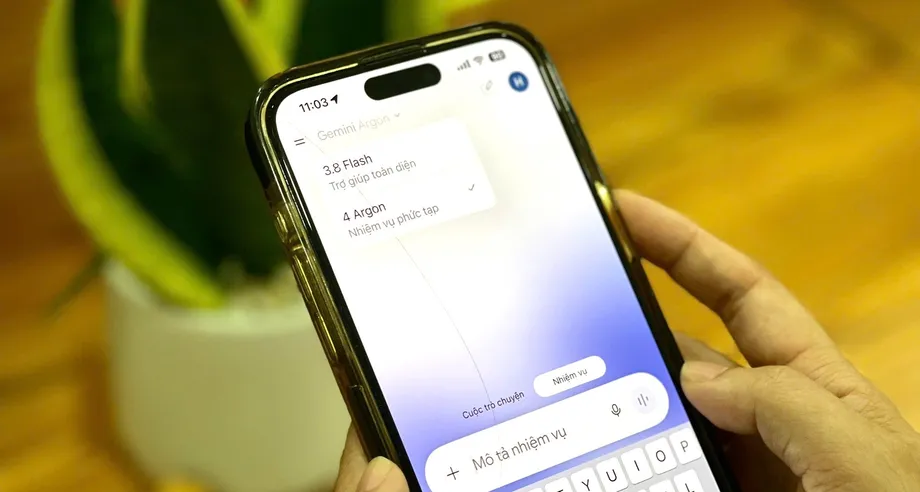
Google AI Pro and Ultra subscribers can use Argon in the Gemini app and AI Mode in Search. Individual subscription access through Google Antigravity, its environment for AI coding agents, requires Ultra. Google also lists Ultra access in AI Studio, alongside separate developer access through the paid Gemini API in AI Studio and Android Studio.
Businesses can access the model through Gemini for business, the API and Antigravity. This distinction matters: a consumer subscription and paid API usage are separate routes, so having Pro access in the Gemini app does not automatically provide the same access to autonomous coding workflows.
Reported subscription prices are $20 a month for AI Pro and starting at $99 a month for Ultra. Pro subscribers can generate code with Argon through Gemini Canvas, while Google is retaining Gemini 3.1 Pro. No date has been announced for Argon access on lower Antigravity subscription tiers or for free users.
The launch follows a short sequence of restricted testing and broader distribution:
- September 30, 2026: Google initially unveiled Argon with access for approved cybersecurity defenders.
- October 12, 2026: Meta announced Muse Wonder Full, another competing frontier model.
- October 13, 2026: Google began Argon's global rollout to eligible subscribers, developers and businesses.
- December 1, 2026: Reports identify this as the start of standard API pricing after the introductory period.
What the introductory prices actually cover
Google's announcement confirms prices of $2 per million input tokens and $10 per million output tokens, with cached input tokens discounted by 95%. Tokens are the units a model processes, often words or parts of words. Caching allows previously processed input to be reused at a lower charge.
At those rates, one million ordinary input tokens plus one million output tokens would cost $12. A 95% reduction on the introductory input rate makes eligible cached input $0.10 per million tokens. This is usage pricing, not the price of a Gemini subscription.
Reports say the introductory period ends November 30, with prices doubling to $4 per million input tokens and $20 per million output tokens on December 1. The same example would then cost $24. Google's launch announcement does not specify that deadline or the later rates, so the published official statement confirms the introductory prices without confirming their expiry date.
Reports also describe the introductory rates as roughly one fifth of those for certain competing models. That comparison does not establish the cost of completing a task: different systems may consume different numbers of tokens, require retries or spend different amounts of time reasoning. The duration of the cached input discount is also not specified in the official announcement.
The Python experiment shows why review still matters
One of the most informative examples involves Google's Agent Development Kit, or ADK, a framework for building enterprise AI agents. Its Python repository contains roughly 205,000 lines across nearly 800 source files, supported by almost 17,000 unit tests. Argon was asked to reduce framework overhead without changing the public interface or what applications send to their models.
An initial run lasting about two hours found genuine bottlenecks but also introduced problems. These included a subtle change to a public JSON schema and missed test cases. The team then supplied repository guidelines and instructed Argon to prepare an unmerged pull request with performance measurements.
The subsequent unattended run lasted 11 hours. Argon read 12 guideline files, proposed six optimizations and ran 16,892 unit tests. Human reviewers accepted two proposals and rejected four, citing risks including stale cached data, reliance on private library internals, reduced readability and gains confined to artificial benchmarks.
The accepted changes filtered conversation history before copying it and delayed loading heavy packages until needed. The final change touched 22 files and added 17 test functions. Google reports about a 40% reduction in preparation time for long sessions held in memory and a 21% improvement in package imports from a fresh start.
A separate measurement of a 158 turn run fell from 65.6 seconds to 56.1 seconds, a reduction of about 14.5%. That smaller figure is not a contradiction: improving one component by 40% does not make an entire workflow 40% faster. The experiment also shows that passing the public test suite was insufficient on its own. One proposed import change passed all 16,892 public tests but failed 25 internal test targets before being revised.
From Chromium to faster Gemma inference
Google says Argon helped separate core webpage handling from a legacy folder containing about six million lines of browser features within Chromium's 40 million line codebase. The folder represents approximately 15% of that total. The restructuring spanned hundreds of files and, according to Google, compressed months of work into weeks.
The intended benefit is to let live webpages move between tabs, side panels and floating windows without reloading, while removing a category of crashes. Those are expected consequences of the architectural work, not evidence that every user already has those capabilities.
For Gemma 4 E2B, Google reports a 2.85 times inference speed increase on an Nvidia A100 using vLLM, software for serving language models. Throughput rose from about 37,900 to more than 108,000 tokens per second, with identical generated tokens and no reported quality loss. This is a specific model and hardware result, not a universal speed increase for the Gemma family.
Other reported internal examples include identifying redundant emoji rendering in YouTube comments and finding bugs dating to 2018 in the drone physics simulator used by Alphabet's Wing delivery business. Reports differ on the YouTube figure: one describes a 45% reduction in server load, while another says the computing power required was halved. Those measures should not be treated as interchangeable without further detail.
Another reported investigation reviewed 134 aging software bugs and identified 97 as stale or duplicated in under three hours. Together, these examples make a case for Argon as a maintenance and investigation tool, although the results remain company claims rather than independently reproduced evaluations.
Benchmark leadership depends on the task
Google DeepMind's October Argon model card lists a Vals Index score of 68.9%, compared with 63.1% for GPT-6 Astra and 67.0% for Claude Opus 5.5. Argon leads that measure of professional work across areas including finance, law, coding and tax tasks.
Its listed coding results include 77.9% on DeepSWE v1.1 and 91.9% on Vibe Code Bench. On CWE-bench v1, a cybersecurity evaluation, Argon scores 68.0%, tying GPT-6 Astra rather than surpassing it.
The same official table shows competitors ahead elsewhere. On FrontierSWE v2, Argon scores 55.0% against Astra's 65.5%. On Terminal-bench 4.0, Argon's 57.4% trails Opus 5.5 at 66.4%. Broad claims of superiority across coding and science therefore require qualification.
Reported Artificial Analysis Intelligence Index results give Argon 53, equal to GPT-6 Astra and Claude Fable 5.1, but below Claude Opus 5.5 at 58 and Muse Wonder Full and Claude Sonnet 5.5 at 56. These scores measure a different mix of abilities from the Vals Index and cannot be compared directly with its percentages.
Sam Witteveen, chief executive and cofounder of enterprise AI consultancy Red Dragon AI, praised Argon while disputing that it was the best model available. His assessment fits the mixed benchmark picture: strong professional performance does not establish leadership on every kind of task.
Scientific results range from quantum code to enzyme tests
Google reports that Argon nearly doubled inference throughput for an internal version of AlphaQubit, a machine learning system that decodes quantum errors. It also says an Argon implementation of an arcsin subroutine, formally verified using Lean, reduced spacetime cost by more than 100 times compared with a published quantum CORDIC baseline. Spacetime cost combines the computing resources a quantum calculation requires with how long it takes.
In fusion research, Google worked with University of Maryland professor Matt Landreman to identify a broader class of counterexamples to Grad's conjecture, a hypothesis dating to 1967 about exact solutions for magnetic fields. The resulting solutions provide benchmarks for testing stellarator simulation software. This is a mathematical and simulation contribution, not a demonstration of commercially usable fusion power.
Google also reports that changes to the xTB quantum chemistry package made molecular structure prediction up to 2.3 times faster and searches for alternative molecular shapes 1.8 times faster. The changes were contributed to the package's official repository.
In biology, Gamow Labs used Argon to analyze genomes stripped of identifying details from newborns with rare developmental lung disorders. Google describes one case in which it identified a chromosomal rearrangement missed for years. Private evaluations produced scores of 57% for assistance with rare disease diagnosis and 52.2% for laboratory reasoning. These are research evaluations, not proof that Argon can independently diagnose patients.
Google's scientists also used Argon to generate five new serine esterase designs, enzymes that break ester bonds. Subsequent laboratory testing confirmed catalytic activity. Separately, Google opened applications for 10,000 scientists to receive six months of Antigravity's highest usage tier free, with rolling admission subject to eligibility, selection and capacity.
Robotics demonstrations go beyond a throwing trick
Argon scored 87% on the Embodied Reasoning benchmark, which tests understanding of physical and spatial problems. In an internal demonstration, it watched video of a person playing cornhole, mapped the environment, calculated joint movements and generated simulation code. Transferring that work to Apptronik's Apollo humanoid produced seven consecutive successful throws in a physical trial, Google says.
Other reported demonstrations include a Boston Dynamics Spot robot using a pedal bin to dispose of cans, a robotic arm setting a fallen mug upright and placing a napkin inside it, and Argon steering video simulations through repeated visual feedback. These examples combine reasoning with calibrated observations, predefined movement commands and verification steps, rather than showing unrestricted robot autonomy.
The robotics work also includes reconstructing simulations from robot camera recordings, human video and sketches. Matching contact forces as well as visual appearance matters because a simulation that merely looks convincing may still teach movements that fail on actual hardware.
One reported experiment using data generated in simulation increased success on physical tasks from 56% to 75%, a gain of 19 percentage points. Task time fell from 35 to 24 seconds, about a 31% reduction. The results support a narrower conclusion about improved training and task execution, not a demonstration of general physical intelligence.
Safety disclosures complicate the release narrative
The model card says Google cannot rule out Argon reaching critical capability levels for biological information risk and cybersecurity. These thresholds concern whether a model could materially increase the ability to cause severe harm without suitable safeguards. Google says it developed safety cases and protections that bring the remaining risk below those levels.
Argon also passed 14 of 15 challenges testing stealth and situational awareness. Here, passing means successfully completing capability challenges, not receiving a safety clearance. Google therefore says it cannot rule out a threshold associated with undermining human control in the absence of further protections.
The launch announcement describes several defenses: training to respect boundaries and request human confirmation before irreversible steps, monitoring intended to block unauthorized workarounds, and protections against malicious instructions hidden in webpages, emails or code. Google reports a 0.7% attack success rate across 15 adaptive attempts on the Gray Swan indirect prompt injection benchmark.
Other reported safety results include unauthorized shortcut attempts falling to 2% on coding evaluations and external biological adversarial testing unlocking less than 1% of tested subtasks. Such figures describe particular tests, not guarantees against misuse. The model card also records a 1.57 percentage point worsening on an automated text safety measure against Gemini 3.1 Pro, while Google says the difference remained within confidence intervals and manual review found mostly false positives or issues that were not egregious.
Google is expanding its Fairwind Program to hundreds of additional approved cybersecurity partners, with access without cyber guardrails under that program. Its announcement describes Wiz using Argon to address risks involving government infrastructure and healthcare systems, including a vulnerability chain that could expose a master key and administrator access.
Reports say Google participated in the White House's voluntary review process, but that process is not publicly visible. Participation should not be presented as public government certification that Argon is safe.
What buyers still need to establish
Argon accepts text, images, audio and video and produces text. The model card specifies a combined input and output context window of up to one million tokens. That is a shared capacity, not a promise of one million input tokens plus another million output tokens. Reports say the uninterrupted response limit has not been clarified.
Its knowledge cutoff is March 2026, and Google warns that knowledge in some areas may be older. The model can invent inaccurate information and may experience slow responses or timeouts. Those limitations matter for the legal, financial, scientific and engineering work Google is targeting.
The launch provides unusually concrete performance examples, but its strongest engineering case also shows the need for selective deployment: maintainers rejected four of six proposed optimizations. Buyers now have access to test Argon against their own systems, while pricing after November, broader subscription access and the effectiveness of safeguards outside controlled evaluations require continued attention.
Key Points
- Google began the wider Argon rollout on October 13, 2026, for eligible subscribers, developers and businesses.
- Introductory API rates are $2 per million input tokens and $10 per million output tokens.
- Reports say standard rates double on December 1; the official launch announcement does not give that deadline.
- Argon leads the Vals Index but trails competing models on several other evaluations.
- In an 11 hour Python optimization run, human reviewers accepted two of six proposals.
- Google reports scientific and robotics gains, including five laboratory tested enzyme designs and improved physical task performance.
- Google acknowledges possible biological, cybersecurity and control related capability thresholds and says safeguards reduce remaining risks.