A $31 Billion Burden Behind Vietnam's Corporate Giant
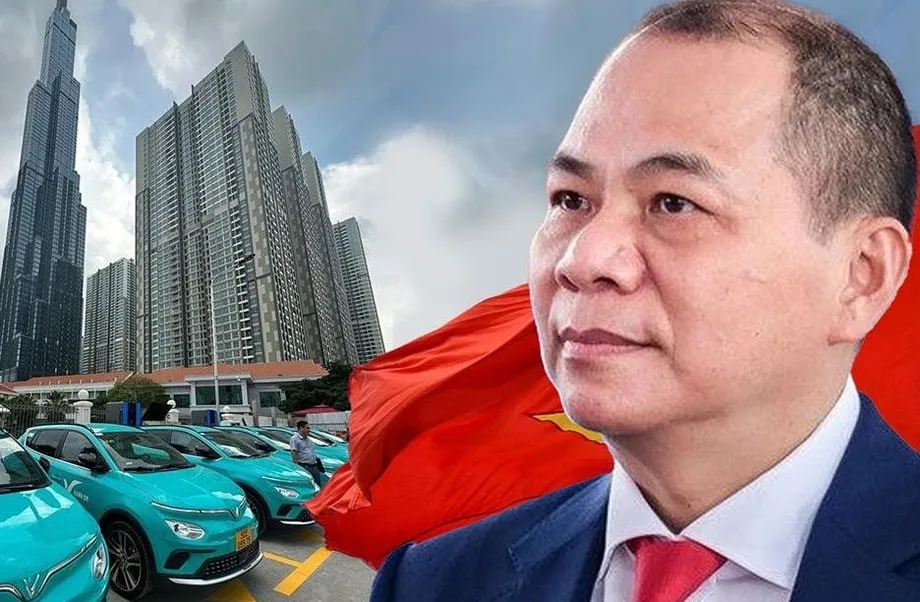
Vingroup entered the second half of 2025 with $31 billion in total liabilities, equivalent to 86% of its assets, and daily interest payments of $3.2 million. Vietnam's largest conglomerate, led by the country's richest man, Pham Nhat Vuong, is confronting a financial squeeze as its costly expansion into electric vehicles places growing demands on its property businesses, lenders and founder.
Contents
- A $31 Billion Burden Behind Vietnam's Corporate Giant
- Asset Sales and New Loans Buy Time
- VinFast's Losses Put Expansion Under Pressure
- A Costly Push Into the United States
- Who Is Buying VinFast's Vehicles?
- Profit Figures Depend on Other Income
- Vuong's Personal Wealth Supports the Business
- Dollar Obligations Add Currency Pressure
- Accounting Scrutiny and Rumors Shake Confidence
- Affordable Cars Lead the Shift Toward Asia
- Property Exposure and the 2026 Profitability Target
- Key Points
By August 25, 2025, the central challenge was how to keep financing VinFast, the group's electric vehicle manufacturer, while meeting obligations across an empire spanning real estate, retail and healthcare. Asset sales, new borrowing and personal funding from Vuong have supported the business, but VinFast's continuing losses have kept the pressure on.
Vingroup's liabilities increased by $4.7 billion in the first half of 2025. More than $19.5 billion, or 63% of the total, consisted of short term liabilities, meaning obligations payable within a year. Total liabilities are broader than bank loans or bonds: they represent the company's financial obligations, while the near term portion shows how much payment pressure is approaching.
Vingroup had just over $3 billion in cash, against substantial repayment requirements and the continuing cost of expansion. Its financial health also matters beyond shareholders. The group employs more than 40,000 people and contributes about 2% of Vietnam's gross domestic product, making its difficulties a concern for the wider economy.
Asset Sales and New Loans Buy Time
Vingroup has sought cash by selling stakes in subsidiaries, including a $1.6 billion sale of shares in Vincom Retail. It has also secured new loans from international lenders, including Deutsche Bank and the Asian Development Bank.
The group faces significant payment deadlines in 2026, including $860 million in credit loans and $1.14 billion in bond interest. Together, those two items amount to $2 billion, compared with cash holdings of just over $3 billion. The company must also fund its operations and other obligations.
Vingroup's repeated use of asset sales and borrowing reflects the strain of financing a business that continues to consume cash. Selling an ownership stake brings money into the group, while new loans bring future repayment and interest costs. Both can provide breathing room without resolving the losses that created the need for funding.
Vuong's expansion strategy made Vingroup a symbol of Vietnam's economic ambitions. Its move into vehicle manufacturing, however, added the expense of factories, product development and international distribution to a group already exposed to the country's troubled property market.
VinFast's Losses Put Expansion Under Pressure
VinFast, launched in 2017, was intended to establish Vietnam as a participant in the global shift to electric mobility. Vingroup has invested billions in developing vehicles, building factories and trying to create an international brand. The manufacturer has never turned a profit.
In the first half of 2025, VinFast's automotive business lost more than 37 trillion dong, about $1.5 billion. Its cumulative losses over the past three years reached $5.7 billion, including a net loss of $2.4 billion in 2023 and nearly $3.2 billion in 2024.
The increase between those two annual loss figures was about $800 million. For Vingroup, the practical consequence is a continuing need to find funding while VinFast works to increase sales and reduce the cost of producing each vehicle.
Vuong has pledged to keep supporting the company. The financial challenge extends beyond manufacturing more cars: VinFast needs enough revenue from those cars to cover production, distribution, financing and the other expenses of running its business.
A Costly Push Into the United States
VinFast's American expansion began with a shipment of 999 VF8 vehicles and plans for a $2 billion factory in North Carolina. The initial shipment was returned for failing to meet safety standards, showrooms were shuttered, and the factory project was postponed until at least 2028.
The company's stock market debut brought a different kind of volatility. After its Nasdaq listing in August 2023, VinFast briefly reached a market capitalization of $23 billion. Its shares then fell by more than 90% within two months. By August 2025, its market capitalization stood at $8.35 billion.
Market capitalization is the stock market value of a company's shares. For a manufacturer seeking outside capital, sharp changes in that valuation can make fundraising more difficult and leave investors wary about committing fresh money.
VinFast's difficulties in the United States and Europe have prompted a strategic shift toward Southeast Asia and other emerging markets. Its main milestones show how quickly the company moved from launch to international expansion and then to a reassessment of where to grow:
- 2017: VinFast launched, beginning Vingroup's major move into vehicle manufacturing.
- August 2023: VinFast made its Nasdaq debut, followed by a steep fall in its share price.
- July 2024: U.S. securities regulators challenged a revenue filing, and VinFast acknowledged accounting errors.
- First half of 2025: Vingroup's liabilities rose by $4.7 billion as VinFast's automotive business lost about $1.5 billion.
- End of 2026: Vuong's target for VinFast to break even.
- 2028 at the earliest: The postponed timetable for the North Carolina factory.
The delay in North Carolina stretches the timetable for VinFast's American manufacturing ambitions while the group continues to carry the financial burden of its broader expansion.
Who Is Buying VinFast's Vehicles?
VinFast sold 35,000 electric vehicles in 2023, below its target of 50,000 and far short of its production capacity of 300,000 vehicles. The reported sales were equivalent to about 12% of that capacity and 70% of the sales target.
Affiliated companies owned by Vuong accounted for most purchases. Xanh SM, also known as Green SM, bought 82% of VinFast's vehicles that year. The company operates a ride hailing service and rents electric taxis and scooters.
Xanh SM spent $839 million on VinFast vehicles in 2023 and signed another agreement worth $419 million for more electric vehicles. Vinhomes and VinBus, both within the Vingroup business network, also bought vehicles.
Heavy discounts and promotions involving other Vingroup businesses have supported this sales model. Analysts have described the arrangement as unsustainable because it masks weak demand from retail customers and leaves production unprofitable. Purchases by affiliated businesses support factory output, but financing those purchases also draws on the wider network surrounding Vuong.
An unnamed analyst described the dependence on affiliated buyers and the difficulty of reaching ordinary consumers:
VinFast's rapid growth has relied on sales to affiliated companies, a trend set to continue as the company struggles to attract retail buyers amid weakening global EV demand.
For VinFast, attracting more independent customers would widen the sources of money flowing into the business. Its sales challenge is particularly acute outside Vietnam, where it has struggled to establish a retail customer base.
Profit Figures Depend on Other Income
Vingroup reported a profit after tax of 2.265 trillion dong, or $85.5 million, in the second quarter of 2025. That result depended entirely on an unexplained 18.516 trillion dong entry recorded as other income. Without that entry, its core business would have posted a loss of more than 13.9 trillion dong.
Other income sits outside the ordinary revenue generated by selling a company's main products and services. At Vingroup, scrutiny has focused on accounting irregularities, limited transparency and entries attributed to sponsorship funds or direct cash injections from Vuong.
In 2024, a personal contribution of around 10 trillion dong from Vuong allowed Vingroup to report a profit. The repeated role of such support means the headline profit figure offers only part of the picture of how the group funds its operations.
Financial analysis platform Alpha Spread has flagged Vingroup as a business carrying high financial risk, calculating that business profits cover only 40% of interest expenses. Put simply, profits on that measure pay less than half the interest bill, leaving the company dependent on other funding sources.
Major foreign investors have sold Vingroup shares, further weakening market confidence. Since VinFast's U.S. listing, Vingroup's net profit margin has nearly halved. That margin measures how much of each unit of revenue remains as profit after expenses.
Vuong's Personal Wealth Supports the Business
Vuong has repeatedly supplied money to sustain Vingroup and VinFast. Capital injections since 2017 have totaled more than $13.5 billion, tying the group's financial position closely to its founder's willingness and ability to keep contributing.
In 2024, Vingroup and Vuong pledged another $3.4 billion in funding for VinFast. Vuong was expected to provide $1.97 billion personally, while Vingroup would supply up to $1.38 billion through loans, dividends and asset sales.
Reliance on personal wealth on this scale is unusual for a company of Vingroup's size and has raised concerns about how long its financing model can continue. The support has helped sustain the expansion, but VinFast's recurring losses require repeated funding decisions.
Vuong has also pledged major assets to secure borrowing. They include production lines in Haiphong, the VinES battery factory in Ha Tinh and the electric vehicle plant under construction in North Carolina. Assets pledged as security give lenders a claim over them under the terms of the financing.
Vingroup acts as guarantor for $2.54 billion of VinFast debt, with more than $1.6 billion of that amount falling due in 2025. A guarantee makes the parent responsible for supporting repayment if the borrower cannot meet the agreed obligations, connecting the vehicle maker's funding pressures directly to the wider group.
Dollar Obligations Add Currency Pressure
About 41% of the interest on Vingroup's total debt is denominated in U.S. dollars. At the same time, 92% of VinFast's revenue comes from Vietnam, where customers pay in dong and the currency has been depreciating.
The mismatch adds another financial strain. When the dong weakens against the dollar, a company collecting revenue in dong needs more local currency to cover the same dollar payment. Vingroup therefore faces exchange rate pressure alongside its interest costs and repayment deadlines.
VinFast's concentration in Vietnam also shows the limits of its international expansion so far. Despite the money spent entering foreign markets, its domestic business remains the main source of revenue.
Vingroup's asset pledges, guarantees and foreign currency exposure link several risks together. Continued losses increase the need for funding, borrowing adds repayment demands, and a weaker dong makes dollar obligations more expensive to meet from Vietnamese revenue.
Accounting Scrutiny and Rumors Shake Confidence
The U.S. Securities and Exchange Commission rebuked VinFast in July 2024 over inflated revenue in a filing. VinFast acknowledged "accounting errors" that had overstated sales by $33.9 million.
Shareholders have also brought a class action lawsuit alleging that the company exaggerated its prospects. The accounting episode and litigation have damaged VinFast's credibility in international markets, where it needs investors as well as customers.
In July 2025, rumors that Vuong had been banned from leaving Vietnam triggered a stock market rout. His net worth fell by $490 million in six hours. The Vietnamese government responded by warning against the spread of false information.
The speed of the market reaction showed how sensitive confidence in Vingroup had become to news about its founder. His personal financial support, controlling role and public commitment to VinFast make perceptions of his position important to the group's investors.
Affordable Cars Lead the Shift Toward Asia
VinFast is redirecting attention toward Southeast Asia and other emerging markets after its costly difficulties in the United States and Europe. The strategy targets growing demand for affordable electric vehicles in markets where competition from established automakers is less intense.
The VF3 mini electric vehicle, priced at $9,200, is central to that effort. It is aimed at consumers moving from motorcycles to cars, giving VinFast a product intended for a different customer group from those targeted during its initial Western expansion.
More than 27,000 people applied to buy the VF3 in the first three days after orders opened. That early interest offers encouragement as the company seeks a broader customer base.
Pham Nhat Vuong, Vingroup's chairman and founder, acknowledged the losses when discussing the pace of expansion at a recent shareholder meeting:
Big loss. So there is no need to rush.
VinFast hopes to build a stronger base in emerging markets before revisiting its wider global ambitions. The company has made progress in expanding charging infrastructure and adapting products to local markets, but it still faces challenges involving local manufacturing, charging access and consumer trust.
Chinese electric vehicle makers, including BYD, remain formidable competitors. Affordable pricing can help VinFast reach new buyers, while sustained profitability also requires controlling manufacturing costs and reducing dependence on discounts and purchases by affiliated companies.
Property Exposure and the 2026 Profitability Target
Vinhomes, Vingroup's real estate arm, has traditionally been the group's profit engine. Vietnam's property sector is now in crisis, facing tighter regulation, high debt and oversupply. That places pressure on a business that has helped support the conglomerate's other activities.
Vingroup has negotiated sales of shopping malls and real estate to foreign investors. Those transactions can generate cash, but the proceeds must compete with VinFast's continuing losses and the cost of international expansion.
The conglomerate's economic importance and close ties to the government have led some observers to describe it as "too big to fail." Their concern is moral hazard: the risk that expectations of government support could encourage financial risks because a rescue might be considered necessary to protect the wider economy. No government bailout commitment has been identified.
Vuong has vowed to "never give up on VinFast" and wants the company to break even by the end of 2026. Breaking even means reaching a point where revenue covers costs. His ambition sits alongside the larger financial task of recouping more than $20 billion in cumulative investment and settling more than $10 billion in debt.
VinFast's route to profitability depends on increasing sales of affordable models such as the VF3, reducing reliance on internal purchases and discounts, attracting independent capital and strategic investors, and improving product quality and brand recognition. It must also manage currency exposure and volatile global markets.
As of August 25, 2025, widening losses at VinFast and substantial obligations at Vingroup make that target highly ambitious. The immediate test is whether sales growth and new funding can keep pace with operating losses, interest bills and approaching repayment deadlines.
Key Points
- Vingroup had $31 billion in liabilities in the second quarter of 2025, equal to 86% of assets, with daily interest payments of $3.2 million.
- More than $19.5 billion in liabilities were payable within a year, while cash holdings stood at just over $3 billion.
- VinFast's automotive business lost about $1.5 billion in the first half of 2025 after annual net losses of $2.4 billion in 2023 and nearly $3.2 billion in 2024.
- Xanh SM bought 82% of VinFast's vehicles in 2023, showing the manufacturer's dependence on affiliated customers.
- Asset sales, loans, guarantees and Vuong's personal funding remain central to supporting the group.
- VinFast is focusing more on emerging Asian markets and its $9,200 VF3, while its North Carolina factory has been postponed until at least 2028.
- Vuong's target is for VinFast to break even by the end of 2026, against continuing losses and major financing demands.