Financial firms would control Taiwan's first stablecoin issuers
Taiwan's Financial Supervisory Commission (FSC) outlined proposed stablecoin rules on November 3, 2026, requiring issuers outside banks and financial holding companies to have at least NT$300 million in paid capital, approximately US$9.4 million. Financial institutions would also need controlling stakes in those businesses, leaving technology companies room to participate through partnerships.
Contents
- Financial firms would control Taiwan's first stablecoin issuers
- Who would qualify for permission?
- Why the ownership thresholds matter
- Which currencies could the tokens track?
- Reserves would have to cover every issue
- Identity checks and legal restrictions
- Security and reporting would be continuing duties
- Consultation comes before applications
- Key Points
The proposed Regulations Governing Permission and Administration of Stablecoin Issuance would allow tokens tied to the New Taiwan dollar or a single foreign currency at a ratio of one to one. Issuers would need reserves worth at least as much as the tokens in circulation, verify customers' identities and maintain systems for security, accounting and regulatory reporting.
The Virtual Asset Service Act, promulgated on July 22, 2026, provides the legal framework. The act and nine related regulations are expected to take effect together, potentially as early as the first quarter of 2027. An exact commencement date has not been set. Issuing stablecoins would require regulatory permission, with the central bank's agreement needed before approval.
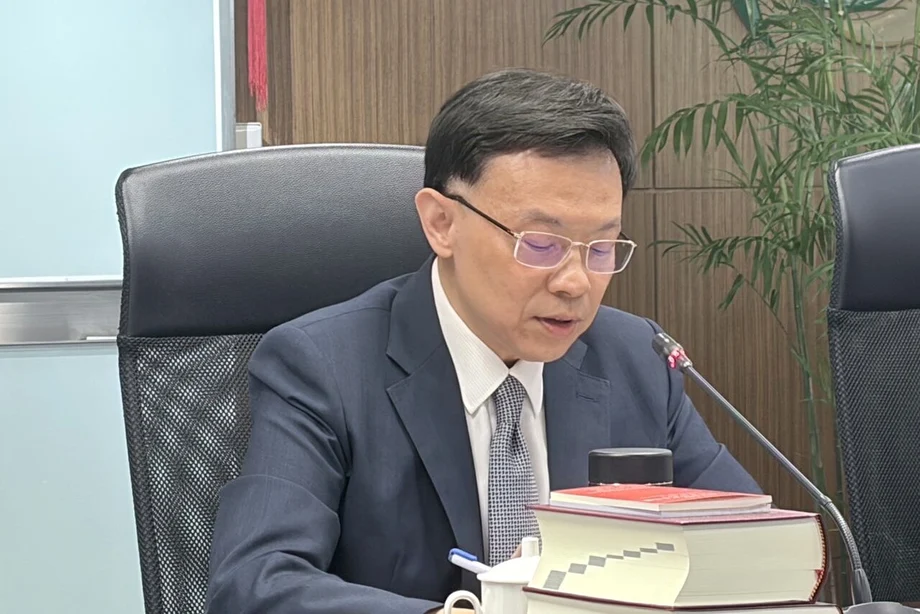
Wang Yun-chung, deputy director of the FSC's Banking Bureau, said the initial approach would center on banks and ventures backed by financial institutions. Several banks and financial holding companies had expressed interest, although their intended currencies and practical uses remained undecided.
A stablecoin is a digital token designed to track a reference currency. A token linked to the New Taiwan dollar would aim to keep a value of NT$1 for each unit. Taiwan's proposal connects that promise to requirements governing who may issue the token, what assets must support it and how the issuer must operate.
Who would qualify for permission?
The draft identifies banks, financial holding companies, companies invested in by banks or financial holding companies, and other institutions specifically designated by the FSC as eligible applicants. Wang's explanation of the initial rollout focused on banks and companies formed with financial industry backing.
Applicants that are neither banks nor financial holding companies would need to be companies limited by shares, issue shares publicly and concentrate exclusively on stablecoin issuance and redemption. Issuance means creating and supplying tokens; redemption means taking them back in exchange for the currency they represent.
The NT$300 million threshold concerns paid capital, meaning money shareholders have actually contributed to the company. Reserves are a separate requirement tied to the value of tokens circulating. A business would therefore need both sufficient shareholder funding to qualify and sufficient reserve assets to support its stablecoins.
For technology businesses, the proposed ownership model creates a route through investment alongside financial institutions. A technology company acting alone would not fit the initial model Wang described. The FSC would retain the ability to designate additional eligible institutions.
Why the ownership thresholds matter
The initial outline of the draft requires banks and financial holding companies together to own more than 50% of a nonbank issuer, with a single bank or financial holding company holding more than 25%. Wang described the joint venture requirement as financial industry ownership of at least 51% and a single institution holding at least 25%. The treatment of a stake exactly at 25% will matter when applicants structure their ownership.
Wang said the approach draws on Taiwan's rules for banks operating entirely online. Its purpose is to give an issuer a major shareholder capable of taking a leading role when the business needs more capital, help with legal compliance or support for its operating systems.
Financial institutions would control the company, while nonfinancial shareholders could still take minority positions. Wang said this leaves space for participation outside the financial sector. The proposal therefore combines access for other businesses with responsibility concentrated in established financial groups.
The initial outline also states that, where a single bank or financial holding company owns more than 25%, the issuer's financial statements must be included in the relevant financial holding company's consolidated accounts. Consolidation brings the issuer's finances into the group's reporting, making its activities part of the financial picture presented by the parent group.
Which currencies could the tokens track?
Issuers could offer stablecoins linked one to one to the New Taiwan dollar or one foreign currency. The proposed structure gives each token a single currency reference, making its intended value straightforward for customers to understand.
Wang identified the Chinese yuan, Hong Kong dollar and Macao pataca as excluded foreign currencies. The initial outline instead named the Australian dollar alongside the yuan and Hong Kong dollar, citing Taiwan's foreign exchange rules. That discrepancy makes the formal currency list a practical point for applicants to check during consultation.
The choice of currency would affect both the customer promise and the issuer's reserve obligations. A token tracking New Taiwan dollars would represent a different currency commitment from one tracking US dollars. Wang said interested institutions had not yet settled on the currencies they intended to issue.
Reserves would have to cover every issue
The proposed reserve rule requires assets supporting each stablecoin issue to have a total fair value at least equal to the outstanding balance of that stablecoin. Fair value means valuing assets at a current assessed market value, rather than simply using the amount originally paid for them.
For example, an issue with NT$100 million worth of tokens circulating would require reserve assets with a fair value of at least NT$100 million. This is an illustration of the proposed rule, not an announced issuance. If the assessed value of those assets fell below the required amount, the issuer would need to restore coverage.
Issuers would also have to commission regular checks by accountants. Reserve coverage and outside accounting review serve different purposes: the first sets the financial requirement, while the second adds scrutiny of the issuer's records and compliance.
Customers would rely on this framework when exchanging money for tokens and seeking redemption. The proposal ties the volume of circulating tokens to an asset requirement that must be maintained as the business operates.
Identity checks and legal restrictions
Issuers would have to verify the identities of people subscribing for stablecoins and people requesting redemption. The checks would cover both the point at which customers obtain tokens from the issuer and the point at which they return them.
The FSC is also preparing amendments to bring stablecoin issuers within financial institution rules against money laundering. Wang identified related changes covering internal controls and audits for preventing money laundering and combating the financing of terrorism.
Judicial and police authorities could lawfully require an issuer to restrict the transfer or disposal of stablecoins. The issuer would need the ability to respond quickly. For customers, this means transactions involving the tokens could be subject to legal restrictions carried out through the issuing business.
Identity verification, financial crime controls and the ability to act on lawful requests would be operating duties alongside reserve management. Applicants would need systems that can carry out those duties in practice.
Security and reporting would be continuing duties
Licensed issuers would need internal control and audit systems, policies and procedures for business continuity, and information security management. Business continuity means having arrangements to keep essential services running, or restore them, when operations are disrupted.
These requirements address different parts of the business. Internal controls govern how decisions and transactions are handled. Audits check whether those controls work. Information security focuses on protecting systems and data, while continuity planning addresses interruptions.
Issuers would also submit financial and business information to both the FSC and Taiwan's central bank and disclose information as required by law. Permission to enter the market would therefore be followed by recurring reporting and oversight obligations.
The combination places demands on staffing, systems and governance as well as capital. Wang's preference for a major financial shareholder reflects the regulator's expectation that an issuer may need support across all those areas.
Consultation comes before applications
The FSC plans a public comment period lasting 40 days, beginning the day after formal notice of the draft. Feedback would inform the final rules, whose implementation is intended to coincide with the Virtual Asset Service Act.
The timetable described by officials includes several stages:
- July 22, 2026: The Virtual Asset Service Act was promulgated.
- November 3, 2026: The FSC outlined the proposed stablecoin licensing and management requirements.
- After formal notice: A public consultation period lasting 40 days would begin the following day.
- First quarter of 2027 at the earliest: The act and nine related regulations could take effect together, opening the application process.
Wang said several financial institutions had shown interest during the regulator's discussions with banks and financial holding companies. Their interest has not yet produced concrete plans for currencies or applications. The immediate task is to complete the legal framework that would allow those businesses to seek permission.
Key Points
- Nonbank issuers would need at least NT$300 million in paid capital and controlling ownership by financial institutions.
- The initial rollout would focus on banks and ventures backed by the financial industry.
- Tokens could track the New Taiwan dollar or a single permitted foreign currency at a ratio of one to one.
- Reserve assets, measured at fair value, would have to cover the outstanding balance of each stablecoin issue.
- Issuers would face identity checks, financial crime rules, security requirements and continuing regulatory reporting.
- A consultation lasting 40 days would precede final rules, with implementation possible from the first quarter of 2027 at the earliest.