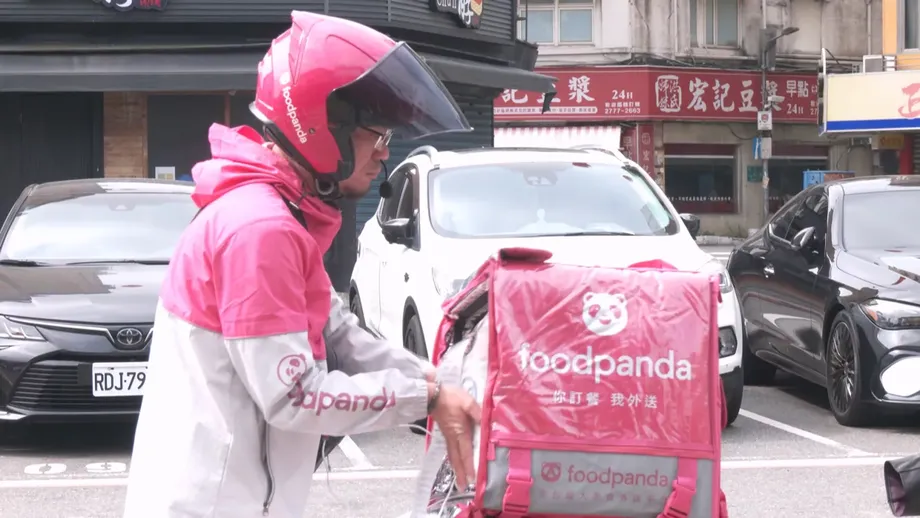
A new owner, but concerns about weaker competition
Taiwan's Fair Trade Commission blocked Grab's proposed US$600 million purchase of foodpanda's Taiwan operations on October 21, 2026, concluding that Uber's stake in Grab could weaken competition between the island's two dominant food delivery platforms.
Contents
- A new owner, but concerns about weaker competition
- What Grab planned to buy
- Why a 13.1 percent stake mattered
- Past cooperation added to the concern
- Why a third competitor would struggle to enter
- Why Grab's proposed safeguards fell short
- Workers welcomed the ruling; Grab expressed disappointment
- Two blocked sales and a review lasting months
- What happens to foodpanda now?
- Key Points
The decision came at the commission's 1,825th meeting. Three commissioners voted to prohibit the acquisition, one supported approval with conditions and a fifth recused themselves. The FTC acted under Article 13, Paragraph 1 of Taiwan's Fair Trade Act, finding that the harm from restricting competition outweighed the transaction's economic benefits.
Singapore headquartered Grab does not operate in Taiwan. Buying foodpanda from Germany's Delivery Hero would have brought it into the market as Uber Eats' main rival. Yet Uber Technologies, the parent company of Uber Eats, owns approximately 13.1 percent of Grab, giving it a financial interest in the company that would replace its principal Taiwanese competitor.
FTC Commissioner and spokesman Shin Chih-chung said the commission considered that ownership link alongside former board representation and years of business cooperation between Grab and Uber. Together, those connections could reduce both companies' willingness to compete aggressively.
The ruling stops Grab's planned first expansion beyond Southeast Asia through this acquisition. It also leaves Delivery Hero facing another blocked attempt to sell its Taiwan business, after the FTC prohibited a sale to Uber Eats in December 2024.
What Grab planned to buy
Grab announced the agreement on March 23, 2026, offering US$600 million in cash for foodpanda's Taiwan operations. The company operates services including food delivery, ride hailing and digital finance across eight Southeast Asian countries.
At the time of the announcement, Grab said the acquisition would give it just over 50 percent of Taiwan's food delivery market and a presence in 21 cities. Instead of building a restaurant network and recruiting customers from the beginning, it would acquire an established operation.
Foodpanda had operated in Taiwan for about 12 years, with between 3 million and 4 million users and approximately 100,000 merchants. Its Taiwan business generated US$1.8 billion in gross merchandise value in 2025.
Gross merchandise value measures the value of transactions handled through a platform. A food order includes money that goes to the restaurant and other participants, so that figure is different from the platform's own revenue or profit.
The size of the operation helps explain the attraction for Grab. The purchase offered immediate scale in a new market. For Delivery Hero, it offered a way to turn its ownership of the Taiwan business into cash. Both plans depended on regulatory approval.
Why a 13.1 percent stake mattered
Uber's economic interest in Grab was central to the FTC's reasoning. Although Uber owns about 13.1 percent of Grab's shares, its voting rights amount to only 3.9 percent under Grab's share structure.
Voting rights determine how much influence an investor has over shareholder decisions. An ownership stake also gives an investor a financial interest in a company's performance. The FTC examined both, rather than focusing solely on whether Uber could control Grab.
The commission described a tension in Uber's incentives. Uber Eats could attract customers in Taiwan by cutting prices or offering more discounts. If those promotions took orders away from Grab, however, they could also reduce the profits of a company in which Uber holds shares.
Uber would therefore have a reason to consider the effect of competition on its investment as well as on Uber Eats' own business. The FTC also concluded that the ownership relationship could change Grab's approach to competing with Uber Eats.
Taiwan would still have had two major platforms after the purchase. The commission's concern was how independently and aggressively those platforms would behave when one platform's parent company held a financial stake in the other.
Past cooperation added to the concern
Grab and Uber have a business relationship stretching back years. In 2018, Grab acquired Uber's ride hailing and delivery operations in Southeast Asia, while Uber received approximately 27.5 percent of Grab.
The FTC referred to that transaction when assessing the companies' past conduct. It said they had proceeded in a manner that was difficult to reverse despite knowing, or having reason to know, that the transaction breached competition law.
Uber's chief executive also previously served on Grab's board. Shin said the commission considered those former board connections together with ownership ties and commercial cooperation in other markets.
Years of interaction, the FTC reasoned, had given the companies a close understanding of each other's operations and strategies. That familiarity could make it easier to anticipate a rival's next move and sustain less aggressive competition.
The commission's concern about coordination covered how the companies might respond to each other's prices, promotions and business decisions. Its assessment combined the financial link, the history of cooperation and the structure of Taiwan's delivery market.
Why a third competitor would struggle to enter
Taiwan's delivery market is dominated by foodpanda and Uber Eats, a structure the FTC described as a duopoly. In simple terms, two companies account for the main competitive choices.
A new delivery service needs substantial funding and enough restaurants, couriers and customers at the same time. Customers want a wide choice of restaurants and dependable delivery. Restaurants want access to customers. Couriers need enough orders to make the work worthwhile.
The FTC pointed to these network effects as a barrier to entry. A platform becomes more useful as more people and businesses join it, giving established operators an advantage that a newcomer must spend time and money to overcome.
Restaurants and consumers also lacked sufficient bargaining power to counter the major platforms, the commission said. Its assessment was that new entrants and existing customers would provide too little pressure to disrupt coordination between Grab and Uber Eats.
For people ordering dinner, the competitive pressure matters through delivery charges, promotions and service quality. For restaurants, it affects commission fees and access to customers. For couriers, it affects the number of platforms competing for their work and the earning opportunities they offer.
Why Grab's proposed safeguards fell short
Grab discussed possible remedies with the FTC several times during the review. Its proposed commitments included diluting Uber's shareholding, restricting Uber personnel from serving on Grab's board and limiting exchanges of competitively sensitive information.
Those measures addressed different parts of the commission's concerns. A smaller stake would reduce Uber's financial exposure to Grab. Board restrictions would limit formal involvement in management oversight. Information controls would restrict access to business details that could affect competitive decisions.
The FTC concluded that the commitments were insufficient and that their effective implementation could not be assured. It found that the proposed safeguards would leave too much risk of weaker competition.
Shin said Uber would need to reduce its stake further, potentially selling it entirely, to ease those concerns. He declined to specify an acceptable ownership percentage, saying the companies were responsible for proposing measures that would address the risks.
Grab can submit another merger application, Shin said, because the law does not limit companies to one or two filings. Grab did not announce whether it would return with a revised proposal.
Workers welcomed the ruling; Grab expressed disappointment
The National Delivery Industrial Union and the Taiwan Delivery Industry Rights Alliance welcomed the decision in a joint statement. Both groups had repeatedly protested against the acquisition and said they would closely examine any future buyer.
National Delivery Industrial Union Chairman Arery Chen said weaker competition could give dominant platforms greater influence over courier pay, restaurant commissions and consumer choice. Asked whether blocking the deal could discourage foreign investment, Chen rejected that concern.
We don't think so,
Chen argued that other companies could enter Taiwan if they met regulatory requirements and demonstrated a willingness to compete. His position framed the dispute around the proposed ownership structure rather than the nationality of the buyer.
Grab said the decision would prevent it from bringing planned innovations, reasonable earning opportunities and improved service standards to Taiwan's consumers, delivery workers and merchants.
In a company statement responding to the rejection, Grab said its investment focus would remain on Southeast Asia.
Grab's core business across Southeast Asia remains robust. We will continue to focus our capital and resources on executing our growth roadmap and empowering communities across our regional footprint.
Foodpanda and Uber Eats declined to comment when approached following the ruling. Delivery Hero subsequently said it retained the right to appeal and had protections under the transaction agreement, including a break fee arrangement subject to conditions.
Two blocked sales and a review lasting months
The October decision followed an earlier attempt to combine Taiwan's leading delivery operations directly under Uber. That proposed acquisition was prohibited in December 2024, and Uber abandoned it in March 2025.
Grab's proposal presented a different ownership structure because it had no existing Taiwan operation. The FTC nevertheless concluded that its relationship with Uber created an unacceptable risk to competition.
- December 2024: The FTC blocked Uber Eats' proposed acquisition of foodpanda's Taiwan operations over competition concerns.
- March 2025: Uber abandoned that transaction.
- March 23, 2026: Grab announced its agreement to buy the Taiwan business for US$600 million in cash.
- June 16, 2026: The FTC formally accepted Grab's merger application.
- October 21, 2026: The commission voted to prohibit the acquisition, ahead of its extended October 27 review deadline.
The two decisions show how the FTC assessed different routes to the same business. The Uber proposal would have brought the two leading platforms under one owner. The Grab proposal would have transferred foodpanda to a company with an ownership and business relationship with Uber.
What happens to foodpanda now?
Delivery Hero's statement preserved its right to appeal the ruling. The company also referred to a conditional break fee arrangement, a contractual protection that can require payment when a transaction fails in specified circumstances. It did not disclose a fee amount or say that payment had been triggered.
Taiwan Delivery Industry Rights Alliance spokesman Su Po-hao said Delivery Hero could seek another buyer. He named DoorDash and Bolt as possible candidates the worker groups would welcome for consideration, rather than as announced bidders.
Su also argued that foodpanda could continue operating because its Taiwan business remained profitable. That was his assessment. Asked about a possible withdrawal from Taiwan, Shin described it as hypothetical and said the FTC reviews mergers using existing market conditions rather than speculation about future business decisions.
No appeal timetable, revised Grab application or confirmed alternative buyer was announced. The immediate result is that the proposed transfer to Grab cannot proceed under the rejected application, while Delivery Hero must decide how to respond.
Any future proposal will face a central issue identified in this review: whether the buyer can operate foodpanda as an effective competitor to Uber Eats. The FTC's decision places financial incentives and business relationships alongside market share in answering that question.
Key Points
- Taiwan's FTC blocked Grab's US$600 million purchase of foodpanda's Taiwan business on October 21, 2026.
- Three commissioners voted to prohibit the deal, one supported conditional approval and one recused themselves.
- Uber owns approximately 13.1 percent of Grab's shares and holds 3.9 percent of its voting rights.
- The FTC said ownership ties, past cooperation and high barriers to entry could weaken competition with Uber Eats.
- Grab's proposed safeguards were judged insufficient and difficult to ensure in practice.
- Delivery Hero retained its right to appeal; Grab did not announce a revised application.
- Worker groups supported the ruling and called for close scrutiny of any future buyer.