Election Commission sets dates and RM174.94 million budget
Sarawak will hold its 13th state election on December 12, 2026, with 2,058,781 registered voters eligible to choose representatives for all 82 seats in Malaysia's largest state legislative assembly. The Election Commission (EC) has set November 28 for nominations and December 8 for early voting.
Contents
- Election Commission sets dates and RM174.94 million budget
- From dissolution to polling day
- Who is eligible to vote?
- Postal voting deadlines arrive before nominations
- Thousands of polling streams and election workers
- Identification scans will record voter attendance
- GPS enters with a large majority and a changed opposition
- Control over Sarawak's economy shapes the contest
- Another state test after setbacks for Pakatan Harapan
- Key Points
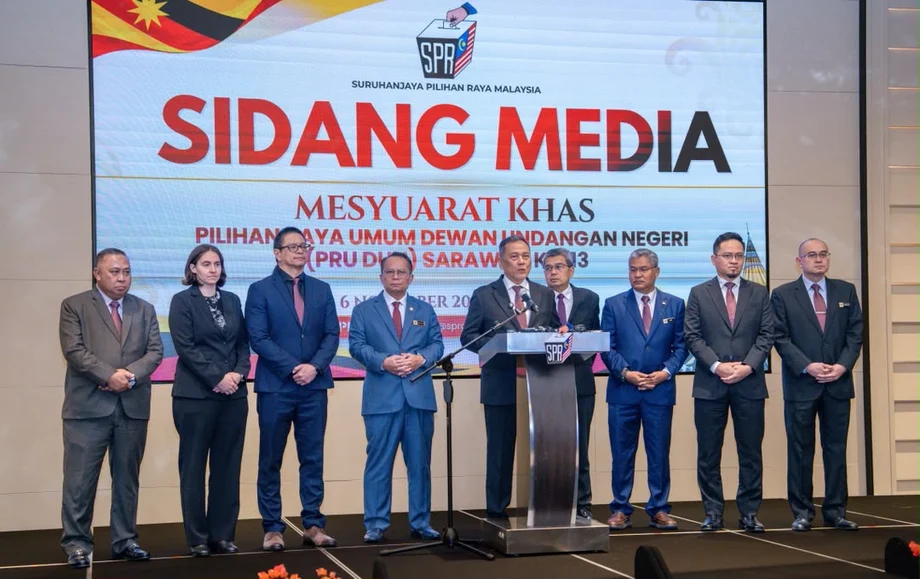
EC chairman Ramlan Harun announced the timetable on November 6 after a special meeting on election arrangements. The commission estimates the election will cost RM174.94 million and involve 40,505 election workers, with 2,027 polling centres and 4,588 voting streams across the state.
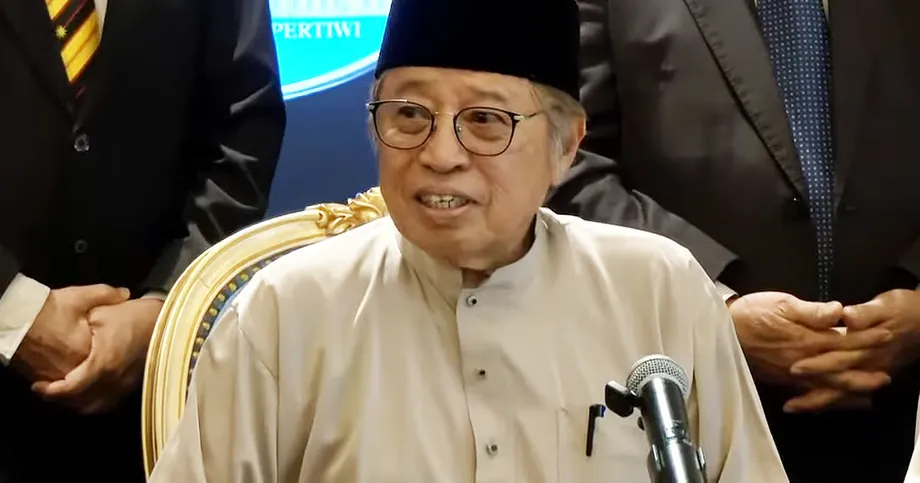
The contest comes as Premier Abang Johari Openg's Gabungan Parti Sarawak (GPS) seeks another mandate after winning 76 seats in December 2021. Sarawak's campaign for greater control over its economy, including oil and gas regulation, forms a central part of the political setting.
Voters will also encounter a wider rollout of technology at polling stations. The EC plans to use its Optical Character Recognition Voter Attendance system at every polling stream in all 82 constituencies, recording attendance by scanning identification documents while retaining the existing voting procedure.
From dissolution to polling day
Abang Johari announced the assembly's dissolution on October 23, effective October 26. Its mandate had been due to end in February 2027. Article 21(4) of the Sarawak State Constitution requires an election within 60 days of dissolution, placing the December 12 vote inside that deadline.
The EC received formal notification from the assembly speaker before setting the election dates. Ramlan said the election writ, the formal instruction that starts the election process, was dated November 6. The commission has announced a campaign period of 14 days.
- October 23: Abang Johari announced the assembly would be dissolved.
- October 26: Dissolution took effect and postal voting applications opened.
- November 6: The EC announced the timetable and dated the election writ.
- November 20: Postal voting applications close for Categories 1B and 1C.
- November 25: Postal voting applications close for Category 1A.
- November 28: Candidates submit their nominations.
- December 8: Early voting takes place.
- December 12: Ordinary polling takes place.
Who is eligible to vote?
The EC will use the electoral roll incorporating the September 2026 supplementary roll, updated as of October 25. An electoral roll is the official list of people registered to vote, and it provides the basis for checking eligibility during the election.
Of the 2,058,781 registered voters, 2,034,373 are ordinary voters. Another 13,575 are military personnel and their spouses, while 10,833 are police and General Operations Force personnel and their spouses. The General Operations Force is part of the police.
Ordinary voters make up about 98.8 per cent of the electorate. The two listed military and police categories together account for 24,408 people, or about 1.2 per cent. Those shares are calculated from the EC's figures and show how heavily the election's administration will centre on ordinary polling.
The registration total gives the size of the electorate before voting begins. The number of people who actually cast ballots will depend on turnout.
Postal voting deadlines arrive before nominations
Postal voting applications for all domestic and overseas categories opened on October 26. The deadlines fall before nomination day, making November 20 and November 25 the immediate dates for eligible voters seeking to use this route.
Category 1A applications close on November 25. This category covers election workers, EC members and officers, police and military personnel, and media workers. Postal voting allows eligible people to participate through a separate ballot process when their duties or circumstances place them in an approved category.
Applications for Category 1B, covering Malaysian citizens living overseas, close on November 20. Category 1C, covering eligible agencies and organisations, has the same deadline.
These are application deadlines. The EC's announcement did not give the deadline for returning completed postal ballots, a detail that applicants will need when arranging delivery. For Malaysians abroad, the November 20 application cutoff is the first firm date in the announced timetable that requires action.
Thousands of polling streams and election workers
The EC plans 1,945 ordinary polling centres containing 4,482 voting streams. A voting stream is a separate voting channel within a centre, allowing groups of voters to be processed in parallel rather than through a single queue.
Early voting will take place at 82 centres with 106 streams. Together, the ordinary and early voting facilities bring the statewide totals to 2,027 centres and 4,588 streams. The commission also announced 97 centres for nominations and official vote tallying.
Ramlan said 82 returning officers, assisted by 305 assistant returning officers, had been appointed. Returning officers manage the election in their assigned constituencies, overseeing the formal process from nominations through counting and the declaration of results. They form part of an operation involving 40,505 election workers.
The commission will establish 82 campaign enforcement teams to monitor activity during the official campaign period. Ramlan described their purpose at the election announcement:
"To monitor election campaign activities throughout the official campaign period, the EC will establish 82 election campaign enforcement teams," he said.
Each team will include representatives from the Royal Malaysia Police, local authorities and contesting candidates. The estimated RM174.94 million budget covers the election operation, although the announcement gave no detailed breakdown of spending.
Identification scans will record voter attendance
The EC will expand its Optical Character Recognition Voter Attendance pilot, known as OCRVA, across all polling streams in Sarawak's 82 constituencies. Optical character recognition is technology that reads printed information from an image or scan and converts it into data a computer can use.
At polling centres, the system will scan identification documents to record voter attendance automatically. The planned benefit is faster checking at the stage when officials confirm a voter's identity and record their arrival.
Ramlan, explaining the reach of the expanded pilot, said:
"It will be used at all polling streams in every polling station across the 82 state constituencies in Sarawak," he said.
The EC says the existing voting procedure will remain in place. For voters, the announced change concerns the attendance check: identification details will be captured through scanning, while the process for casting a vote continues under the established arrangements.
GPS enters with a large majority and a changed opposition
GPS won 76 of the assembly's 82 seats at the December 18, 2021 election. Parti Sarawak Bersatu (PSB) took four seats and the Democratic Action Party (DAP) won two. GPS therefore secured about 92.7 per cent of the seats, calculated from its 76 victories out of 82 contests.
PSB's dissolution in 2024 changed the political field. Three of its former assembly members joined the Progressive Democratic Party (PDP), a GPS component. Batu Lintang representative See Chee How became an independent and expressed support for Abang Johari.
GPS comprises Parti Pesaka Bumiputera Bersatu (PBB), Parti Rakyat Bersatu Sarawak (SUPP), Parti Rakyat Sarawak (PRS) and PDP. Abang Johari, who chairs the coalition as well as serving as premier, has said GPS plans to contest all 82 seats.
DAP, a member of Prime Minister Anwar Ibrahim's Pakatan Harapan (PH) coalition, plans to contest seven seats in the Kuching and Bau areas and is considering an eighth. The final candidate field will be settled through nominations on November 28.
The announced plans point to different campaign scales. GPS intends to compete throughout Sarawak, while DAP's stated effort is concentrated in a small group of constituencies. PSB, which won more opposition seats than DAP in 2021, will no longer appear as a party in this election.
Control over Sarawak's economy shapes the contest
Sarawak's push for greater autonomy gives the election a wider economic setting. The state government has sought more control over its affairs through the acquisition of an airline and the takeover of a port and a bank.
Those moves concern practical parts of the economy: transport connections, the movement of goods and financial services. They place more commercial assets under Sarawak's control as the government argues for a larger role within the Malaysian federation.
Oil and gas regulation is another major issue. The state is seeking greater regulatory control over its reserves through Petroleum Sarawak Bhd, known as Petros, which is wholly owned by the Sarawak government.
Petros' role challenges the position of national oil company Petronas in regulating and managing Malaysia's hydrocarbon resources. In simple terms, the dispute concerns which authorities and companies set the rules for valuable oil and gas activity in Sarawak.
The election will choose the representatives who oversee the state government as it pursues that agenda. GPS is asking voters for a new mandate while these efforts to expand Sarawak's economic control continue.
Another state test after setbacks for Pakatan Harapan
Sarawak's vote follows several state elections that have brought difficult results for Anwar's PH coalition. Sabah voted on November 29, 2025, followed by Johor on July 11, 2026, and Negeri Sembilan on August 1. Melaka is scheduled to vote on November 14, before Sarawak's nomination day.
In Sabah, PH won one of the 22 seats it contested. Its electoral partner, Gabungan Rakyat Sabah (GRS), won the most seats, allowing GRS chairman Hajiji Noor to remain chief minister.
In Johor, Barisan Nasional (BN), a PH partner in the federal government, won 48 of the 56 seats, leaving PH with eight. In Negeri Sembilan, BN and its electoral partner Perikatan Nasional won a combined 25 of 36 seats, while PH secured 11.
PH's Negeri Sembilan total fell from 17 seats at the previous election to 11, a loss of six. Sarawak presents a different contest because GPS already holds a commanding position and DAP has announced plans for only seven or possibly eight constituencies.
For Sarawak's voters, the immediate decisions are local: which candidates will represent their constituencies and which political forces will shape the next state government. The next steps are postal application deadlines, nominations on November 28 and voting in December.
Key Points
- Sarawak will vote on December 12, 2026, with nominations on November 28 and early voting on December 8.
- The EC lists 2,058,781 eligible voters across 82 state constituencies.
- Postal applications close on November 20 for Categories 1B and 1C, and November 25 for Category 1A.
- The election will use 2,027 polling centres and 4,588 voting streams, with an estimated budget of RM174.94 million.
- Identification scanning for voter attendance will extend to every polling stream.
- GPS plans to contest all 82 seats after winning 76 in 2021; DAP plans seven contests and may add an eighth.
- Sarawak's pursuit of greater economic autonomy, including oil and gas regulation through Petros, forms part of the political setting.