A strong attachment, but an uncertain future
Nearly half of young Sri Lankans surveyed across all 25 districts say they would leave the country if given the opportunity, including more than four in 10 of those who feel a strong sense of national belonging. The findings put jobs, living costs and confidence in the future at the centre of the country's challenge in retaining its younger generation.
Contents
- A strong attachment, but an uncertain future
- Belonging reaches beyond a decision to stay
- Financial strain is widespread and uneven
- Discrimination adds to the pressure to leave
- An earlier survey found a similar pull among youth
- Wanting to go and preparing to go
- Political disappointment was part of the earlier picture
- A warning from the study's organisers
- Key Points
The My Sri Lanka | Next study, conducted by Global Unites South Asia with the Centenary Movement, gathered responses from 2,418 people and included 22 provincial consultations. It focused on Gen Z and younger Millennials, generations facing decisions about employment, financial independence and where to build their lives.
Among respondents, 80 percent identified primarily as Sri Lankan and 73.7 percent reported strong national belonging. Yet 49.1 percent said they would leave if they had the chance. Among Gen Z respondents, willingness to migrate reached 52.7 percent.
The study identified worsening living conditions, scarce jobs and economic uncertainty as the main reasons for wanting to go. Its central finding is that attachment to Sri Lanka and the search for a future abroad exist together for many young people.
Belonging reaches beyond a decision to stay
Among respondents who felt strong national belonging, 42.4 percent were willing to leave. For this group, feeling connected to the country sits alongside concern about whether it offers a workable future.
National identity, emotional attachment and migration intentions measure different parts of a person's life. Someone can identify as Sri Lankan, feel close to their community and still look overseas for employment or greater financial security.
The Gen Z figure was 3.6 percentage points above the 49.1 percent recorded across the study. A percentage point measures the gap between two percentages. Here, the youngest generation expressed an even greater willingness to leave than the wider group of young respondents.
For organisations seeking to engage young Sri Lankans, the findings place practical opportunity alongside civic belonging. Many respondents already feel attached to the country. Their concerns centre on whether they can afford to live and work there.
Financial strain is widespread and uneven
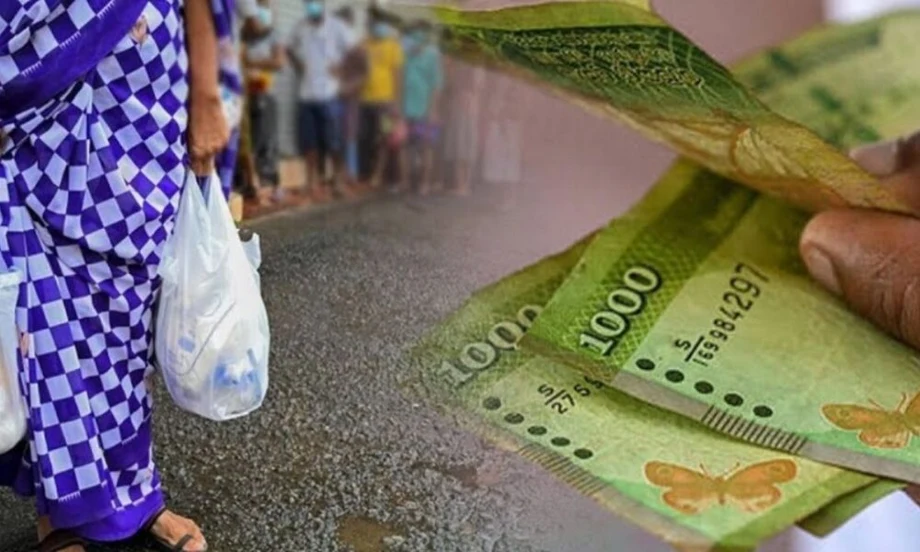
Financial pressure affected 69.8 percent of respondents, who described themselves as financially stressed or struggling. A further measure of hardship showed that 16.6 percent struggled to afford basic essentials, roughly one person in six.
The provincial figures show how unevenly that pressure is felt. Financial stress reached 84.3 percent in the Northern Province and 78.3 percent in the Eastern Province, compared with 63.5 percent in the Western Province.
The Northern Province's rate was 20.8 percentage points higher than the Western Province's. The Eastern Province's rate was 14.8 points higher. Even in the Western Province, the comparison area with the lowest figure among these three, almost two thirds reported financial strain.
Those differences matter for any response to youth migration. A national programme addressing employment or household finances would be operating in places where the reported level of pressure varies substantially. The northern and eastern figures point to particularly urgent needs.
Job scarcity adds another layer to the problem. Young people deciding where to live must consider both whether work is available and whether their income can support basic needs. The study places those everyday calculations at the heart of migration intentions.
Discrimination adds to the pressure to leave
Respondents who had experienced discrimination were more willing to emigrate than those who had not. Among the former group, 55.8 percent said they would leave, compared with 37 percent among the latter.
The gap was 18.8 percentage points. Put simply, willingness to leave was expressed by more than half of those reporting discrimination, against a little over one third of those who reported none.
The finding broadens the discussion beyond pay and prices. Experiences of fair treatment also form part of how young people judge their prospects in Sri Lanka. Economic opportunity and treatment within society both feature in the study's picture of why a future elsewhere can appeal.
The survey describes an association between discrimination and migration intentions. Its practical message is that efforts to make staying attractive need to address the experiences young people have in their communities as well as their financial circumstances.
An earlier survey found a similar pull among youth
The desire to migrate among young adults was already prominent in 2021. In the SLOTS migration report, published on November 17, 2021, researcher Ravi P. Rannan-Eliya found that 27 percent of Sri Lankan adults would like to emigrate if given the chance.
That Sri Lanka Opinion Tracker Survey report, numbered 2021-01, drew on interviews with 746 adults conducted between September 21 and November 14, 2021. Around half of respondents aged 18 to 29, and around half of university graduates, wanted to emigrate. In the Northern and Eastern provinces, the proportion was around two in five.
The two studies provide a useful sequence of findings, with different populations:
- Before the 2019 presidential election, 56 percent expected the economy to improve over the following year, according to the earlier polling cited in the SLOTS report.
- From September 21 to November 14, 2021, SLOTS surveyed 746 adults and found migration interest especially high among young people and graduates.
- On November 17, 2021, SLOTS released its analysis linking migration interest with economic pessimism and political disenchantment.
- The My Sri Lanka | Next study surveyed 2,418 young respondents across all 25 districts and found 49.1 percent willing to leave.
The 2021 figure of 27 percent covered adults of all ages, while the newer study focuses on younger generations. The closest comparison is therefore the youth finding: around half of adults aged 18 to 29 wanted to leave in 2021, alongside 52.7 percent of Gen Z respondents in the newer study.
The newer study's fieldwork dates, full sampling details and precise age boundaries have not been specified. Those details would help assess how closely its respondents can be compared with the earlier survey.
Wanting to go and preparing to go
The 2021 SLOTS report offers a further insight into how migration decisions develop. Among people who wanted to emigrate, one in four had plans or had started preparations, equivalent to roughly one in 16 adults in that survey.
Money and education affected the move from interest to preparation. Better off respondents and those with more education were more likely to have begun taking practical steps, the report found. Moving abroad requires resources, so the people under the greatest pressure to leave may have fewer means to act.
The My Sri Lanka | Next figure measures willingness to leave if an opportunity arises. Actual departure depends on further decisions and arrangements, including securing work, funding travel and obtaining permission to enter or live in another country. The study's authors presented migration intentions as a signal of the need to make a viable future possible within Sri Lanka.
The earlier report also estimated that migration desire had probably doubled compared with surveys conducted three to five years before 2021. Its author acknowledged the difficulty of historical comparisons and based that assessment on earlier surveys using the same questions.
Political disappointment was part of the earlier picture
SLOTS found that economic expectations and dissatisfaction with the government's COVID-19 response were linked to political disenchantment in 2021. Among people who had voted for Gotabaya Rajapaksa, disenchanted voters were three times as likely as loyal voters to want to emigrate.
The report defined disenchanted voters as previous Rajapaksa supporters who no longer selected him when asked how they would vote in a hypothetical election. Many said they would not vote or declined to answer, rather than choosing an opposition candidate.
Economic pessimism was widespread. Among disenchanted Rajapaksa voters, 66 percent expected the economy to worsen over the following year, compared with 59 percent of loyal voters and 72 percent of adults generally.
Views of the pandemic response also diverged: 47 percent of disenchanted voters rated the government's response as good, against 74 percent of loyal voters. The earlier research places migration interest within a broader loss of confidence about both economic prospects and government decisions.
A warning from the study's organisers
At the My Sri Lanka | Next launch, Global Unites founder and president Prashan De Visser urged action on young people's grievances. He said the organisation's initial studies identified cycles of violence roughly every 15 to 18 years and described Sri Lanka as being at an 18 year point in that pattern.
De Visser connected his warning with an appeal to the civic leaders assembled at the launch. He called for an environment in which younger people could thrive:
Sri Lanka deserves better. Our children deserve better. We have the power to be part of that change, and that is what today is all about.
The survey gives that appeal concrete priorities: employment, affordable essentials, relief from financial pressure and fair treatment. Its most striking finding remains the overlap between belonging and willingness to leave. Many young respondents feel strongly connected to Sri Lanka while seeking a more secure future elsewhere.
Key Points
- The study surveyed 2,418 people across all 25 districts and included 22 provincial consultations.
- Some 49.1 percent would leave Sri Lanka if given the opportunity, rising to 52.7 percent among Gen Z respondents.
- Strong national belonging was reported by 73.7 percent. Within that group, 42.4 percent were willing to leave.
- Financial stress affected 69.8 percent, reaching 84.3 percent in the Northern Province.
- Willingness to migrate was 55.8 percent among respondents who had experienced discrimination, compared with 37 percent among those who had not.
- The 2021 SLOTS survey also found migration interest among around half of young adults, with personal resources shaping who began preparing to go.