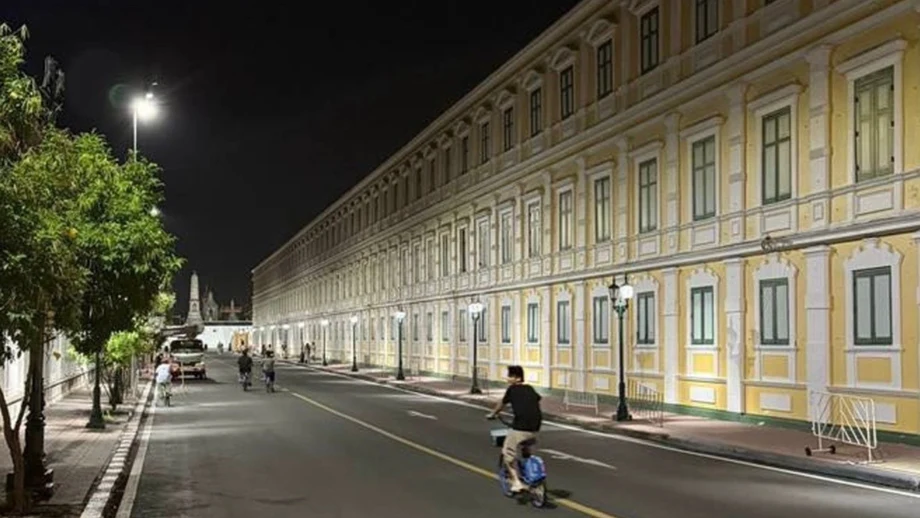
October trips jump 60% as riders explore Bangkok after dark
Bangkok recorded 171,492 public bicycle trips in October 2026, up from about 107,000 in September, as young riders and tourists increasingly used rented bicycles to explore the illuminated streets around Rattanakosin Island. The increase of roughly 64,500 trips, or 60%, has brought queues to some popular bicycle stations and prompted operators to replenish bicycles more frequently.
Contents
- October trips jump 60% as riders explore Bangkok after dark
- How quickly has bicycle use grown?
- Why the old town attracts night riders
- What a rental costs and where demand is highest
- A tourism trend with a daily transport purpose
- More bicycles and parking are planned
- What riders could bring to local businesses
- Safety rules apply to every ride
- The next target is one million trips
- Key Points
Aekvarunyoo Amrapala, an adviser to the Bangkok governor, outlined the growth on November 4, 2026. He identified the Night Ride trend, in which people cycle through the historic city after sunset, as an important contributor to rising use. Teenagers, university students and people beginning their careers are sharing their outings on social media, turning a short bicycle rental into a social activity.
The Bangkok Metropolitan Administration (BMA) is also pursuing a more practical purpose: connecting homes, schools and workplaces with trains, buses and boats. Its network now covers 719 docking stations across 35 districts, while Hello Ride and Anywheel are adding bicycles and increasing deliveries to busy locations.
October's total was about 101 times the 1,700 trips recorded when the programme began in January 2024. Alongside that growth, Bangkok plans another 850 racks for privately owned bicycles and is converting space beneath pedestrian overpasses and around transport connections into bicycle parking.
How quickly has bicycle use grown?
BMA figures show that demand expanded well before the October surge. Monthly use rose from 45,645 trips in January 2026 to 82,285 in June and 116,438 in August. September then recorded about 107,000 trips before October reached a new high.
The figures trace a rise with a dip in September, rather than uninterrupted growth every month. October's total was about 3.8 times January's, adding 125,847 monthly trips over that period.
The main dates and figures are:
- January 2024: the programme began with about 1,700 trips during its first month.
- January 2026: monthly use reached 45,645 trips.
- June 2026: use increased to 82,285 trips.
- August 2026: the network recorded 116,438 trips.
- September 2026: monthly use stood at about 107,000 trips.
- October 2026: use reached 171,492 trips, approximately 60% above September.
- November 4, 2026: Aekvarunyoo described the latest growth and the city's response.
These totals count journeys. A person who rents a bicycle several times contributes several trips, so the figures describe how frequently the service is used rather than the number of individual customers.
Why the old town attracts night riders
Rattanakosin Island and the surrounding Phra Nakhon district combine historic buildings, riverside views, food stops and streets that look different after sunset. The Grand Palace walls, Giant Swing, Ministry of Defence building and Wat Arun's illuminated temple tower are among the sights drawing riders.
A five stop route attracting interest connects Phut Bridge, Pak Khlong Talat flower market, the Wat Arun viewpoint on the Maha Rat side of the river, Wat Phra Kaew and Kanlayana Maitri Road. The Wat Arun stop offers a view from across the river, allowing riders to see the temple as part of a route through the old town.
Cooler temperatures after the daytime heat and lighter traffic on some streets add to the appeal. Riders can stop for photographs, visit food stalls or change direction without organising an entire evening around a car journey.
Social media helps spread the activity among younger residents. Aekvarunyoo described Night Ride as a growing lifestyle activity, extending the audience for public bicycles beyond students and commuters making routine journeys.
What a rental costs and where demand is highest
Hello Ride and Anywheel let users locate bicycle parking points through mobile applications and scan to unlock a bicycle. Starting prices are described as 10 to 20 baht, with a rate of 10 baht per 30 minutes also listed for the services. Riders should check the applicable price in the operator's app before unlocking.
Popular stations include MRT Sanam Chai, Bangkok City Hall near the Giant Swing, MRT Sam Yot, Suankularb Wittayalai School and Debsirin School. Together, those locations serve historic attractions, rail passengers and school communities.
On some busy nights, people have queued for bicycles outside City Hall. Operators have responded by bringing additional bicycles to the area. Hello Ride and Anywheel are also increasing their fleets and the frequency of replenishment at stations with heavy demand.
Moving bicycles between stations matters because customers do not necessarily return them to where they started. A busy departure point can run short even while bicycles are available elsewhere. The queues show why the location of the fleet matters alongside its size.
A tourism trend with a daily transport purpose
Bangkok's transport plan places bicycle sharing between the front door and the main public transport network. Officials describe it as a feeder service: a short connecting journey that brings someone to a bus, train or boat, or takes them from that service to their destination.
The terms first mile and last mile refer to the beginning and end of a journey, rather than a fixed distance. For a student, that might mean cycling from a rail station to school. For a worker, it could mean reaching a station from a home on a secondary street.
The 719 stations reach beyond the main sightseeing area. Historic districts include Phra Nakhon, Samphanthawong, Pom Prap Sattru Phai and Dusit. Business and employment areas include Pathum Wan, Sathon, Watthana, Ratchathewi and Khlong Toei.
The network also serves education areas in Thung Khru, Lat Krabang, Prawet and Chatuchak. Expansion along BTS and MRT lines, into communities and onto secondary streets is intended to make those short connections easier. The popularity of stations at Suankularb Wittayalai and Debsirin schools shows how everyday travel and leisure use share the same system.
More bicycles and parking are planned
A fleet snapshot dated September 23, 2026, listed 4,592 public bicycles operating across Bangkok and partner universities. That figure describes the bicycles available at that point, while the October total measures trips taken over a month.
BMA is also planning parking for people who own bicycles. It intends to add 850 racks to an existing 4,888. Adding those figures gives 5,738 racks, consistent with the city's stated plan for more than 5,500. The proposed addition represents an increase of about 17%.
The expanded parking provision is intended to accommodate more than 48,000 private bicycles. Those racks serve a different need from rental docking stations: they give owners somewhere to leave a bicycle while continuing by public transport or visiting a destination.
Space beneath pedestrian overpasses and at transport connections is being adapted for accessible, secure bicycle parking. These locations put parking near places where people change transport modes, making it easier to combine cycling with a longer journey.
What riders could bring to local businesses
Restaurants, dessert shops and small businesses along old town routes could gain customers when cyclists stop between landmarks. The flexibility to pause at a market or food stall is part of the attraction of travelling by bicycle.
Food tours and photography outings after dark are possible extensions of the trend. The route through Pak Khlong Talat and the riverside viewpoints already combines places to explore with opportunities to eat and take pictures.
No figures for additional business revenue were given. The immediate opportunity is more visits to shops and food stalls along cycling routes, rather than a measured increase in sales.
Residents share those streets with visitors, however. Aekvarunyoo has asked cyclists to keep noise down near homes at night. As more people use the old town for recreation, quiet riding and orderly parking become part of keeping the activity compatible with daily life in the neighbourhood.
Safety rules apply to every ride
BMA says each public bicycle is designed for one rider, with a combined weight limit of 100 kilograms. Carrying a passenger, sitting in the basket or on a mudguard, and transporting large luggage are prohibited.
Aekvarunyoo urged riders to follow traffic laws, control their speed and avoid racing or playing around on the road. Bicycles must be returned to designated stations and parked without blocking pavements, entrances or exits.
Practical precautions include checking the brakes, front and rear lights and general bicycle condition before departure. Helmets and clothing that other road users can easily see are recommended, along with avoiding isolated routes and roads where vehicles travel at high speed.
Riders should travel with the direction of traffic, use hand signals before turning and take care at junctions where vehicles cross their path. Groups should leave space between bicycles and avoid riding side by side in a way that obstructs traffic. Lighter traffic after dark still leaves cyclists sharing streets with motor vehicles.
The next target is one million trips
BMA's longer term ambition is one million bicycle sharing trips. Officials have not specified whether that target refers to a monthly total or cumulative use, and no deadline was given. The next operational steps described are more bicycles, more frequent replenishment and additional parking.
Connected cycling routes, sufficient lighting and safer road conditions are also needs identified as night riding grows. Temporary painted lane markings have been suggested as a way to test street changes before committing to larger construction. No approved timetable for such a trial was announced.
October's surge brings both uses of the network into focus: a bicycle can carry someone between a station and school during the day, then take another rider past the illuminated Giant Swing at night. Keeping bicycles available at busy locations, providing usable parking and managing shared streets will determine how conveniently those journeys can happen.
Key Points
- Bangkok recorded 171,492 bicycle sharing trips in October 2026, about 60% more than September.
- Night rides around Rattanakosin Island are helping attract young residents and tourists.
- The network covers 719 docking stations across 35 districts.
- Hello Ride and Anywheel are expanding fleets and replenishing busy stations more frequently.
- BMA plans 850 additional racks for private bicycles, bringing the calculated total to 5,738.
- Public bicycles are limited to one rider and a combined weight of 100 kilograms.
- The city has set an ambition of one million trips without specifying a deadline or counting period.