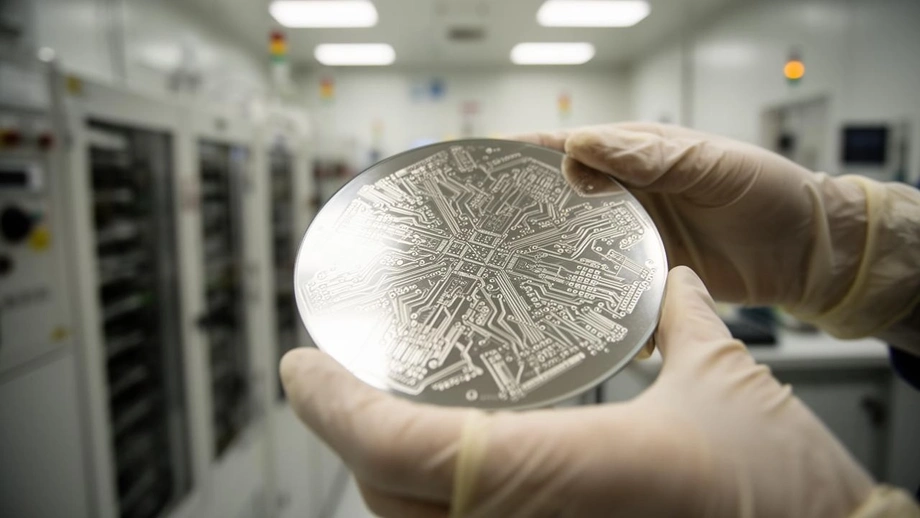
A chip business with growing sales and a reported listing target
Alibaba's chip design subsidiary T-Head is planning a Hong Kong initial public offering in 2027 that could raise $2 billion to $3 billion, according to market reports citing people familiar with the plans. The proposed listing would give investors a direct stake in a business whose annualized revenue has exceeded 10 billion yuan and whose processors are already supporting Alibaba Cloud and outside customers.
Contents
- A chip business with growing sales and a reported listing target
- What Alibaba has disclosed about demand
- Why outside usage and outside revenue matter differently
- How much could T-Head be worth?
- The products behind the proposed listing
- What the next Zhenwu chip promises
- Cloud growth and higher computing prices
- A listing market with competitors and precedents
- The dates that frame the plan
- Key Points
The fundraising target comes as Alibaba prepares another expansion of its artificial intelligence hardware. Its Zhenwu V900 accelerator, unveiled in September 2026, is scheduled for mass production and commercial launch in the first quarter of 2027. Alibaba says the chip offers about three times the performance of its predecessor, the M890.
Alibaba chief executive Eddie Wu, also known as Wu Yongming, had previously said an independent listing was possible. On the company's March 19 earnings call, however, management gave no definite timetable. The 2027 target remains a reported plan, with the final ownership structure, offering terms and allocation of proceeds still undisclosed.
For prospective investors, the central issue is how much of T-Head's commercial strength can stand apart from its parent. Alibaba provides a large customer base, a platform for renting computing capacity and demand from its own AI development. A listing would put a public price on that relationship, including how the two companies charge each other.
What Alibaba has disclosed about demand
Wu said T-Head had delivered about 470,000 chips by February 2026 and reached annualized revenue of more than 10 billion yuan. Annualized revenue expresses sales as a yearly pace; investors will also want completed financial statements showing revenue, expenses and profit over a defined accounting period.
On the March earnings call, Wu said more than 60% of T-Head chips used in Alibaba Cloud's public and hybrid cloud products served external commercial customers. Public cloud customers rent shared computing infrastructure, while hybrid cloud arrangements combine cloud services with a customer's own systems.
Those customers operate in areas including internet services, intelligent driving, manufacturing and financial services. At that stage, Alibaba said the chips supported AI tasks for more than 400 enterprise customers. Its later description of the Zhenwu series put the customer count above 650, including businesses in automotive, finance, energy and manufacturing.
The figures describe expanding use across several industries. They also reveal how T-Head reaches customers: companies can consume its computing power through Alibaba Cloud rather than buy processors directly. For a bank or manufacturer, the immediate purchase may therefore be a cloud service, with T-Head hardware working underneath.
Why outside usage and outside revenue matter differently
Alibaba's statement that external customers use more than 60% of the relevant chips provides a measure of demand beyond the group's own applications. The share of T-Head revenue earned from customers outside Alibaba has not been disclosed.
A customer renting computing capacity pays Alibaba Cloud. T-Head's income then depends on its commercial arrangements with the cloud business, including chip prices and any associated services. Investors evaluating an independent T-Head would need to understand both the outside customer's spending and the revenue that reaches the chip subsidiary.
JPMorgan identified external customer revenue, independent governance and the pricing of transactions with Alibaba as key issues for a potential separation. Related party transactions are deals between connected businesses, such as a subsidiary selling chips to its parent. Their prices help determine where revenue and profit appear within a corporate group.
Earlier restructuring reports suggested employees could receive partial ownership before a listing. Such a change would introduce another group of shareholders alongside Alibaba. The eventual governance arrangements would determine who appoints directors, approves major contracts and represents investors when the parent and subsidiary have different commercial priorities.
How much could T-Head be worth?
JPMorgan estimated a standalone valuation of $25 billion to $62 billion, using revenue assumptions for 2026 and valuation multiples drawn from comparable companies. A revenue multiple values a business as a number of times its annual sales, making both the sales forecast and the choice of comparison companies important.
Against that range, raising $2 billion to $3 billion would equal roughly 3% to 12% of the company's value. The low end comes from dividing $2 billion by $62 billion; the high end comes from dividing $3 billion by $25 billion. The eventual percentage of shares sold would depend on the offering valuation and structure.
The bank's valuation range is wide, spanning almost two and a half times from bottom to top. That leaves considerable room for the market to judge T-Head's growth prospects, customer relationships and financial independence. JPMorgan also cautioned that a listing in the near term could be difficult without more external customers, independent governance and clearer finances for the business on its own.
Alibaba has pledged more than $53 billion for AI infrastructure and development over the following years. A $2 billion to $3 billion share sale would be less than 6% of that commitment. Its practical contribution would depend on whether the offering involves new shares funding T-Head, existing shares sold by shareholders, or a combination.
The products behind the proposed listing
T-Head, founded in 2018, designs more than AI accelerators. Its portfolio covers server processors, AI processors, networking and storage, alongside processor designs licensed to other companies. These products serve data centers, AI infrastructure and devices that process information closer to where it is collected.
The Yitian 710 server processor is used in Alibaba Cloud data centers. General purpose server processors handle a broad range of computing work, while accelerators concentrate on tasks that benefit from many calculations happening at once. T-Head's Hanguang 800 supports AI inference, the stage when a trained model produces an answer or prediction.
Its XuanTie business supplies processor intellectual property based on RISC-V, an open instruction set that defines how software gives commands to a processor. Shipments of chips using XuanTie processor designs have surpassed 6 billion units. T-Head also develops the Zhenyue 510 controller for solid state drives, which has been adopted by Alibaba Cloud and storage suppliers.
That breadth gives the proposed listing several business lines to evaluate. A processor design licensed to another chipmaker earns money differently from an accelerator supplied to a cloud operator. Separate revenue and profitability figures would help investors understand which products generate cash and which require continued development spending.
What the next Zhenwu chip promises
The Zhenwu 810E accelerator has 96GB of HBM2e memory and interchip bandwidth of 700GB per second. High bandwidth memory keeps large amounts of data close to the processor, while interchip bandwidth determines how quickly processors exchange information when working together.
Alibaba has deployed the 810E in large cloud clusters for training and running Qwen models. Training adjusts a model using data; inference uses the resulting model to respond to requests. Alibaba Cloud has also made instances based on the M890 available in super nodes, arrangements that group computing resources for demanding workloads.
The V900 raises the stated memory capacity to 216GB and interchip bandwidth to 1,200GB per second. Compared with the 810E specifications, those figures represent 2.25 times the memory and about 71% more bandwidth. Alibaba's separate claim of approximately three times the performance uses the M890 as its comparison.
Alibaba says the V900 supports FP8 and FP4 computing and can scale to clusters of as many as 500,000 chips for frontier model training. FP8 and FP4 use fewer bits to represent numbers, allowing some AI calculations to use less memory and computing capacity. The company describes the V900 as China's most powerful AI chip by computing performance; that ranking is Alibaba's assessment.
Cloud growth and higher computing prices
Alibaba Cloud reported revenue of 43.284 billion yuan for the third quarter of Alibaba's 2026 financial year, corresponding to the final quarter of calendar 2025. Revenue rose 36% from a year earlier, while AI related product revenue recorded growth of at least 100% for the tenth consecutive quarter.
The group's total revenue for the same quarter was 284.843 billion yuan, up 2%. Cloud revenue therefore represented about 15.2% of group revenue, calculated from those two figures. Its faster growth helps explain why securing computing capacity has become a major concern for Alibaba.
Alibaba Cloud announced on March 18 that prices for Zhenwu 810E computing services would rise by 5% to 34% from April 18, citing rising AI demand and supply chain costs. Customers using the affected services face higher computing bills, with the increase depending on the service purchased.
Wu said global AI computing capacity would remain in very tight supply for the next three to five years, with particular pressure in China. He also said T-Head's capacity to produce high quality AI chips would expand through 2026 and 2027. Management sees the subsidiary as a way to secure computing supply as well as reduce costs.
A listing market with competitors and precedents
T-Head's plans place it alongside other Chinese chip businesses seeking public capital. Moore Threads completed an IPO in December 2025, raising more than $1.1 billion and reaching a valuation as high as $40 billion. Baidu disclosed on January 2 that its Kunlunxin chip unit had confidentially submitted a Hong Kong listing application on January 1, 2026.
T-Head also competes for domestic AI hardware customers with companies including Huawei and Cambricon. A reported agreement with China's second largest wireless carrier would put its accelerators into use alongside products from MetX Integrated Circuits and Biren Technology. Such deployments offer a route into customers beyond Alibaba's cloud ecosystem.
Alibaba's own history gives investors a reason to wait for formal steps. The group previously shelved plans to separate its cloud business and list its logistics subsidiary Cainiao. T-Head's reported fundraising target is consequently one stage in a process that still requires corporate decisions and a listing application.
The dates that frame the plan
T-Head's development combines an operating history stretching back to 2018 with a proposed listing window in 2027. The key milestones show how production, customer demand and corporate plans have developed at different speeds.
- 2018: Alibaba establishes T-Head as its chip design subsidiary.
- 2019: T-Head announces its first AI accelerators, later making computing access available through cloud platforms.
- February 2026: Cumulative chip deliveries reach about 470,000, according to Wu's subsequent disclosure.
- March 19, 2026: Alibaba management discusses a possible IPO on its earnings call without setting a timetable.
- April 18, 2026: Announced price increases for Zhenwu 810E computing services take effect.
- September 2026: Alibaba unveils the Zhenwu V900.
- First quarter of 2027: Alibaba expects V900 mass production and commercial launch.
- 2027: Market reports place the proposed Hong Kong IPO in this year, targeting $2 billion to $3 billion.
The commercial launch would bring a new processor to customers during the same year targeted for the listing. Investors would be evaluating both an established cloud supply relationship and the costs and sales prospects of another hardware generation.
Key Points
- T-Head reportedly plans a Hong Kong IPO in 2027 to raise $2 billion to $3 billion.
- Alibaba management previously said an independent listing was possible, without a definite timetable.
- Wu disclosed about 470,000 chip deliveries by February 2026 and annualized revenue above 10 billion yuan.
- External customers use more than 60% of the relevant chips deployed through Alibaba Cloud, while T-Head's external revenue share remains undisclosed.
- JPMorgan estimated a standalone value of $25 billion to $62 billion and identified governance and transactions with Alibaba as key issues.
- The Zhenwu V900 is scheduled for mass production and commercial launch in the first quarter of 2027.