A 309 person inquiry moves closer to launch
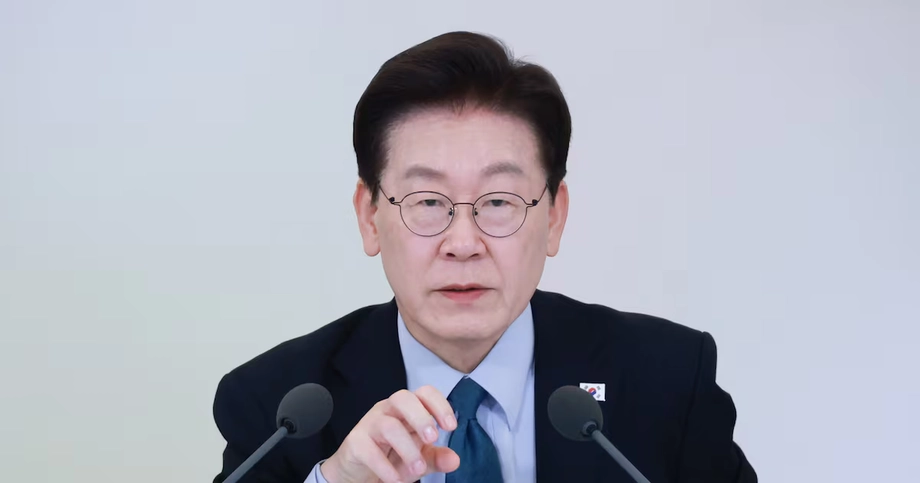
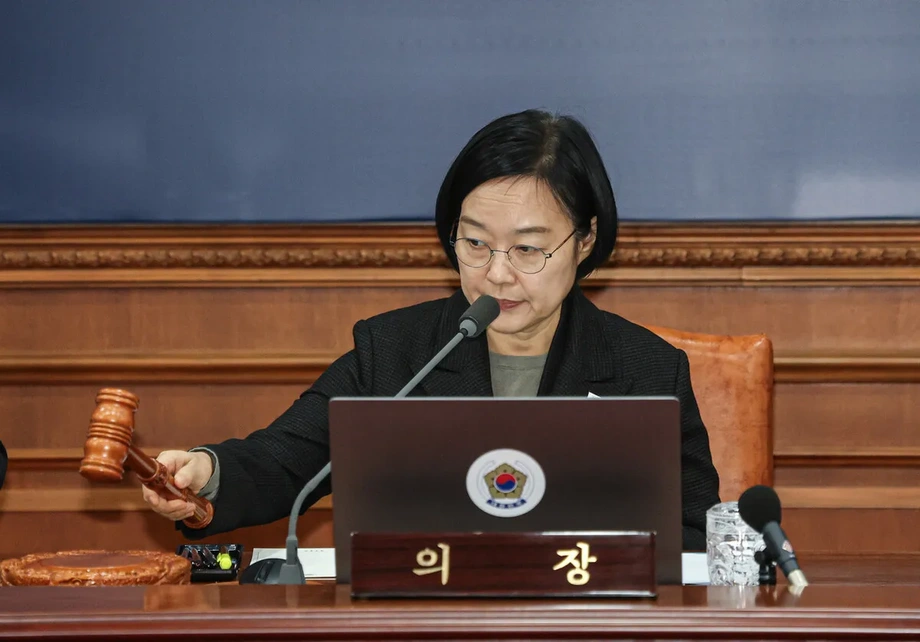
South Korea's Cabinet on November 17, 2026, approved a motion to promulgate a special counsel law authorizing up to 309 investigators and staff to examine allegations of fabricated investigations and prosecutions. Six of its 12 categories concern cases involving President Lee Jae-myung, who would make the final appointment of the investigator.
Contents
- A 309 person inquiry moves closer to launch
- What would the special counsel investigate?
- How the bill reached the Cabinet
- Who chooses the investigator?
- Why removing withdrawal powers did not end the dispute
- Investigative powers and cooperation deals face scrutiny
- Opposition lawmakers take the fight outside parliament
- Democrats call for scrutiny of state power
- The confrontation reaches the budget debate
- Key Points
Prime Minister Han Seong-sook chaired the meeting at the Government Complex Seoul while Lee was abroad for regional summits. Thirteen Cabinet members attended. The decision came 11 days after the Democratic Party led the bill through the National Assembly, bringing closer an inquiry that could operate for as long as 200 days.
The legislation still requires presidential approval and publication in the official gazette, when it takes effect. Lee faces a November 21 deadline to promulgate the bill or return it to parliament for reconsideration, the procedure commonly described as a presidential veto.
The ruling Democratic Party welcomed the decision as a step toward uncovering abuses of investigative power. The opposition People Power Party demanded a veto and sent lawmakers marching from the presidential compound toward the government offices, arguing that Lee would be choosing someone to investigate the prosecutors behind his own criminal cases.
The dispute turns on two competing demands for accountability: investigating whether state agencies manufactured cases against political opponents, and protecting criminal proceedings involving a sitting president from political interference. The bill removes an explicit power to withdraw existing indictments, but its appointment process and other investigative powers remain deeply contested.
What would the special counsel investigate?
The law targets alleged misconduct by prosecutors, the National Intelligence Service and the Board of Audit and Inspection under former President Yoon Suk Yeol. Investigators would examine allegations that officials fabricated evidence, concealed material or induced false statements while pursuing the then opposition Democratic Party and other political opponents.
The six categories concerning Lee cover several different kinds of allegations. They include the Daejang-dong, Wirye and Baekhyeon-dong development projects; election law allegations involving statements about development projects; Seongnam FC sponsorship money; alleged inducement of perjury by Kim Jin-seong; Ssangbangwool payments to North Korea; and alleged misuse of a Gyeonggi Province corporate card.
Breach of trust allegations in the development cases concern whether officials improperly handled responsibilities entrusted to them. Inducing perjury means persuading someone to give false testimony under oath. The special counsel would examine how investigators assembled and prosecuted these cases, including whether officials abused their authority.
The remaining categories extend to cases involving former President Moon Jae-in's administration. They include the killing of a South Korean fisheries official, the return of North Korean sailors, alleged manipulation of government statistics, employment allegations involving Moon's former son-in-law, a case concerning allegedly false reporting about Yoon, and the economic assessment of Wolseong nuclear power plant Unit 1.
Lee's trials have been suspended since he took office in June 2025. The underlying accusations arose from his periods as mayor of Seongnam and governor of Gyeonggi Province. Their connection to the new inquiry makes its findings personally consequential for the president as well as institutionally consequential for prosecutors.
How the bill reached the Cabinet
The Democratic Party advanced the proposal through a parliamentary committee on November 4, removing two provisions at the center of opposition complaints. The changes preceded the Assembly debate and filibuster that began on November 5.
A filibuster allows lawmakers to prolong debate to delay a vote. The People Power Party used that procedure, but the Democratic Party and its allies ended it and passed the bill on November 6.
- November 4: The judiciary committee removed explicit powers to withdraw indictments and demand transfers of existing cases.
- November 5: The Assembly began debating the bill, and the People Power Party launched a filibuster.
- November 6: The Assembly passed the legislation under Democratic Party leadership.
- November 16: Opposition leaders held a meeting outside Cheong Wa Dae to press against Cabinet approval.
- November 17: The Cabinet approved the promulgation motion.
- November 21: Lee faces the deadline to promulgate the bill or request parliamentary reconsideration. The opposition also plans a rally in Daegu.
The presidential office had announced on November 9 that the promulgation motion would reach the following week's Cabinet meeting, citing the procedures for receiving and scheduling legislation. Opposition leaders argued that the timing allowed Lee to avoid chairing the decision himself.
Who chooses the investigator?
The Democratic Party, People Power Party and Rebuilding Korea Party are each entitled to recommend one candidate. Lee then selects one as special counsel. The law requires appointment within three days of receiving the recommendations.
Six of the 12 investigative categories, exactly half, involve Lee. That gives the appointment mechanism particular weight: the president would select the person examining whether officials acted unlawfully in building cases against him.
Former Seoul Central District Prosecutors' Office chief Song Kyung-ho and former Suwon district chiefs Hong Seung-wook, Kim Yu-chul and Shin Bong-su issued a statement criticizing that arrangement. They said it:
runs directly counter to the core principle of the rule of law that no one can be a judge in their own case.
People Power Party floor leader Jeong Jeom-sik said his party would not recommend a candidate. The Democratic Party, meanwhile, plans to submit a recommendation quickly and says it has been considering candidates with help from lawmakers on the judiciary committee and those with legal backgrounds. No investigator or launch date has been announced, and how the appointment process would proceed without an opposition nomination remains unresolved.
Why removing withdrawal powers did not end the dispute
The November 4 revision deleted language explicitly allowing the special counsel to decide whether existing prosecutions should continue. It also removed authority to demand the transfer of cases from other investigative bodies.
Withdrawing an indictment means a prosecutor stops pursuing a charge already brought before a court. The combination of taking over a case and deciding whether to continue it had been central to opposition concerns about the original proposal.
The Democratic Party says those deletions answer claims that the inquiry is designed to end Lee's prosecutions. Its leaders have criticized the opposition for continuing street protests after the changes.
A legal concern identified during the committee review of powers nevertheless remains part of the dispute. Judiciary committee specialist adviser Choi Gi-do had warned that a general clause applying criminal procedure rules to the special counsel could be interpreted as importing withdrawal authority under Article 255 of the Criminal Procedure Act. The disagreement now concerns the legal effect of the remaining provisions, rather than the explicit authority removed from the draft.
Investigative powers and cooperation deals face scrutiny
The law permits prosecutors assigned to the inquiry to exercise investigative and supervisory powers under the previous version of the Criminal Procedure Act. That is an exception to changes that took effect on October 2 and removed investigative authority from prosecutors in the reorganized Public Prosecution Office.
The exception also applies earlier rules to the admissibility of records and documents prepared by those prosecutors. Admissibility determines whether a court may use material as evidence, making the provision consequential beyond the investigation itself.
An Mi-hyun, a deputy chief prosecutor at the Cheonan branch of the Daejeon District Public Prosecution Office, criticized where lawmakers placed the exception. She said the authority:
should have been written into the main text of the Criminal Procedure Act, not into supplementary provisions.
Other disputed provisions allow sentence reductions or exemptions for people who cooperate with the inquiry. Opposition spokesperson Park Chung-kwon argued that such incentives could encourage witnesses to reverse statements. Critics also object to broad wording defining the investigation's scope and to provisions allowing media briefings about the investigative process. Those arguments concern how investigators obtain testimony, how far they can extend their work and what information they can disclose publicly.
Opposition lawmakers take the fight outside parliament
About 70 People Power Party lawmakers attended the November 17 gathering outside Cheong Wa Dae, according to the party. They then walked to the Government Complex Seoul carrying placards condemning the legislation.
Party leader Jang Dong-hyeok accused Han and the Cabinet of helping Lee escape accountability. Jeong argued that the bill violated equality before the law and judicial independence. Both warned that officials involved in approving or implementing it could face legal responsibility.
The opposition campaign began before the Cabinet decision. The party held a Seoul rally on November 7, followed by a gathering in Busan and the November 16 meeting outside the presidential compound. Its next announced rally is in Daegu on November 21.
Lee's overseas travel became another target of the campaign. Opposition leaders accused him of shifting political responsibility to Han by allowing the prime minister to chair the meeting. Presidential approval and appointment of the special counsel would still rest with Lee, including if he approves the promulgation motion electronically while abroad.
Democrats call for scrutiny of state power
The Democratic Party says the inquiry should establish the facts behind allegations of coerced statements, distorted evidence and politically directed prosecutions. Party spokesperson Kim Seong-hoe said the investigation should uncover abuses and provide a basis for preventing investigative authority from becoming a political tool.
The presidential office has also defended an outside inquiry on the grounds that prosecutors cannot investigate their own alleged misconduct. Its position is that the legislation addresses abuses under the previous administration rather than providing protection for Lee.
Democratic Party floor leader Han Byung-do accused the opposition of fearing what an investigation might reveal about the Yoon administration. The party has promised to recommend a candidate the public can trust and pursue institutional changes based on the inquiry's findings.
The law authorizes a substantial operation, but staffing could prove difficult. Its ceiling of 309 people includes 20 prosecutors assigned from their regular posts. Prosecutors face pressure from shortages following the October restructuring of the justice system, while some are reluctant to investigate current and former colleagues. This would be the seventh special counsel inquiry launched under Lee's administration.
Access to evidence presents another practical issue. Records in cases already before courts are held within ongoing judicial proceedings. Investigators may need permission to inspect and copy those files, creating the possibility of disputes over access before substantive questioning can advance.
The confrontation reaches the budget debate
The special counsel fight is already affecting parliamentary work. People Power Party members of the judiciary committee announced a boycott of its schedule, including budget scrutiny. Democratic Party lawmakers subsequently approved budget proposals for six bodies, including the Justice Ministry and Supreme Court, without opposition members present.
The broader dispute coincides with scrutiny of a proposed 2027 budget of 820.9 trillion won. A central disagreement concerns a proposed Future Response Fund of 162.3 trillion won, equivalent to roughly one fifth of that budget figure.
The Democratic Party wants the fund to use additional revenue associated with the semiconductor boom for advanced industries, young people, education and regional support. The People Power Party wants it scrapped and is demanding more than 27 trillion won in budget reductions. It also objects to a structure it says would allow 30% of fund project spending to be changed without another parliamentary vote.
The Democratic Party aims for a budget committee vote on November 30 and passage by the statutory December 2 deadline. The special counsel dispute adds another point of conflict to negotiations already divided over spending priorities and parliamentary control of public money.
Key Points
- The Cabinet approved the special counsel promulgation motion on November 17, 2026.
- The inquiry could employ up to 309 people and run for as long as 200 days.
- Six of its 12 investigative categories concern President Lee Jae-myung.
- Explicit powers to withdraw indictments and demand case transfers were removed during committee review.
- Lee would select the investigator from party recommendations. The People Power Party says it will not nominate a candidate.
- November 21 is the deadline for promulgation or a request for parliamentary reconsideration.
- The confrontation has reached budget scrutiny ahead of the December 2 budget deadline.