A welfare debate reaches the presidency
South Korea's multicultural households grew from 299,241 in 2015 to 451,492 in 2025, an increase of 50.9%. Now President Lee Jae-myung is questioning whether benefits created to help those families settle should continue to give them priority regardless of their financial circumstances.
Contents
- A welfare debate reaches the presidency
- Why South Korea introduced the support
- Childcare priorities bring the argument home
- Housing support includes places and cheaper loans
- Education assistance follows different rules
- Local governments are trying to keep families
- Household incomes and locations have changed
- Online anger mixes real concerns with broad claims
- A proposal to shift from settlement to integration
- Key Points
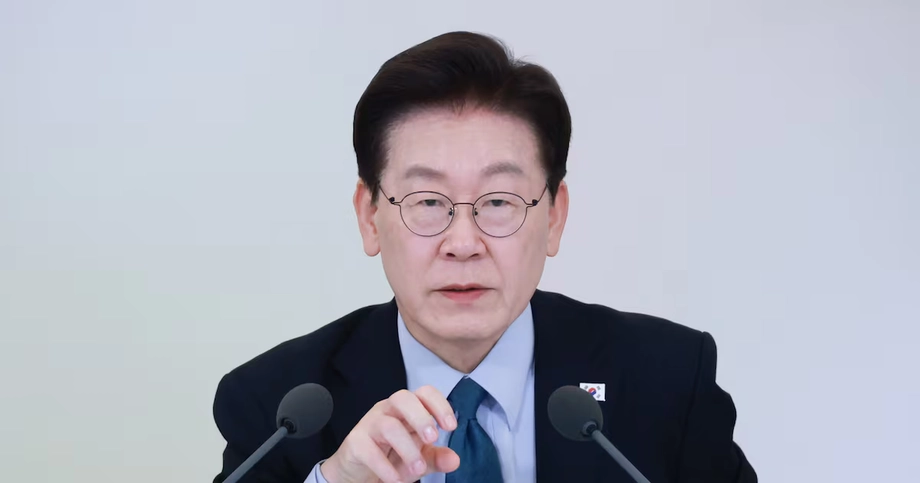
Lee raised the issue on October 28, 2026, then returned to it in social media posts on October 29 and 30. His comments have sharpened a debate over access to childcare, care after childbirth, housing and education, particularly when other families are competing for the same limited places.
Lee, South Korea's president, wrote that assistance should stay within its original purpose:
Some policies must not go beyond their original purpose and become excessive preferential treatment or reverse discrimination against domestic families.
He also pointed to the different financial circumstances within the group:
There are plenty of multicultural families that are not struggling financially.
The dispute concerns how South Korea distributes help across roughly 1.255 million people living in multicultural households. Some benefits depend on family status, while others already require applicants to meet income limits or additional conditions. Families can therefore qualify for one programme and be ineligible for another.
Lee's comments have prompted discussion of changing or ending preferences, but no final reform package, implementation date or legislative timetable has been announced. For parents seeking childcare or students preparing university applications, the immediate issue is which existing rules might eventually change.
Why South Korea introduced the support
South Korea began expanding support in 2006 as international marriages increased, especially in rural communities. Foreign women arriving through marriage faced difficulties including poverty, discrimination and problems adjusting to life in a new country.
Around 90,000 foreign women and others who had moved through international marriage were part of the population addressed at that time. The government introduced measures for the social integration of female marriage immigrants and their families in 2006. Parliament followed with the Multicultural Families Support Act in 2008, providing a legal basis for assistance.
Education and childcare support were later joined by financial assistance and preferential borrowing rates. Municipal governments also developed their own programmes, particularly in places trying to retain residents as their populations declined.
The main developments span two decades:
- 2006: The government began a major expansion of support for marriage immigrants and their families.
- 2008: Parliament enacted the Multicultural Families Support Act.
- 2015: Multicultural households numbered 299,241.
- 2024: Andong began providing eligible families with support for flights to visit their home countries, worth up to 4 million won.
- 2025: Multicultural households reached 451,492, with about 1.255 million members.
- October 28 to 30, 2026: Lee repeatedly questioned preferential policies and called for fairness toward other households.
Childcare priorities bring the argument home
Childcare is a sensitive part of the debate because a place at a nursery can determine whether a parent can work. Multicultural families receive first priority in admission categories at public and private childcare centres. Families with children aged 12 or younger can also receive priority when care workers are assigned, alongside preferential access to community children's centres and learning support after school.
Priority affects a family's position in the queue when demand exceeds available places. Parents outside the preferred categories have expressed frustration about competing for services that are difficult to secure.
Facilities providing care after childbirth use several arrangements. Some place mothers from multicultural families in a second priority category for admission lotteries, the same category used for people recognised for service to the nation. Public facilities in Yeoju, Pocheon and Siheung hold separate lotteries for groups eligible for fee reductions, including multicultural families.
The comparison with people recognised for national service has added to criticism of the policy. The practical concern is about access to a particular service: which mother receives a place when several families need care at the same time.
Housing support includes places and cheaper loans
Housing programmes offer another example of how family status can affect access. Special allocations of national housing are available to eligible multicultural households without a home that have lived together as spouses for at least three years.
In Pyeongtaek, the Hillstate Godeok Elist apartment development allocated seven homes to multicultural families living in Gyeonggi Province. In Suwon, Gwanggyo Jayeon & Centreville planned three such homes for a sales launch in November 2026. These are designated opportunities to apply for housing, with eligibility conditions attached.
Some government policy loans for home purchases and jeonse deposits carry an annual interest rate reduction of 0.2 percentage points for multicultural households. Jeonse is a rental arrangement in which the tenant pays a large deposit rather than a conventional monthly rent. Commercial banks also offer preferential loan products.
A reduction of 0.2 percentage points means, for example, that a rate of 4% becomes 3.8%. On an unchanged loan balance of 100 million won, the difference would be about 200,000 won in interest over a year. Actual savings depend on the balance, repayments and loan terms.
One 30 year old employee of a large company, identified only by the surname Kim, brought the fairness argument into focus. He had 400 million won in cash and was seeking a loan to buy an apartment with his Chinese partner. After learning about the interest discount, the couple registered their marriage sooner. His experience illustrates why critics want financial circumstances to play a larger role in eligibility.
Education assistance follows different rules
Korea University introduced a multicultural admissions route selecting 20 students, including one in medicine, four in business and three in electrical and electronic engineering. Applicants through that route do not face a minimum score requirement in the national university entrance examination.
Cheongju National University of Education also operates a special multicultural admissions route without that minimum examination score requirement. Those arrangements have drawn objections from students and parents concerned about fairness in university access.
Financial help with school activities already uses an income test. A multicultural household of four with monthly income no higher than 6.495 million won can qualify for annual educational activity assistance of 400,000 to 600,000 won. The money can be used for expenses such as learning materials, study rooms and education costs.
University admission routes and educational activity payments therefore address different needs through different rules. One concerns access to a competitive institution; the other helps eligible families pay for children's learning. Any review would have to decide separately how each programme should operate.
Local governments are trying to keep families
Andong has offered eligible multicultural families help with flights to visit their countries of origin since 2024, with support worth up to 4 million won. Boeun County and Samcheok provide assistance worth up to 3 million won. Across selected municipal programmes, including those in Gimje and Sinan, flight support ranges from about 2 million to 5 million won.
These local programmes select recipients rather than providing an identical payment to every multicultural household. Their scale and conditions vary by municipality.
Busan also selects five high school students from multicultural families for scholarships of 4 million won each. Other local assistance includes practical help after childbirth, such as bathing newborns, supporting a mother's nutrition and doing laundry. A programme described in Gwangju provides up to 70 hours of free help, delivered in daily visits lasting five and a half hours.
Municipalities facing population decline have a reason to support families beyond relieving immediate poverty: they want residents to stay. National debate about household fairness therefore intersects with a local concern about sustaining communities. A change to national eligibility rules would still leave officials needing to examine the purposes and conditions of individual municipal programmes.
Household incomes and locations have changed
The Ministry of Gender Equality and Family's national multicultural family survey puts 65.8% of these households at monthly income of at least 3 million won. Another 22.8% reported monthly income of at least 5 million won.
In 2018, 58.2% earned less than 3 million won a month, meaning 41.8% were at or above that threshold. Compared with the later figure of 65.8%, the share reaching that income level rose by 24 percentage points. These are amounts in won at the time of each survey; rising prices also affect what that money can buy.
National income figures provide another reference point. Households in the lowest fifth of the income distribution averaged 1.29 million won a month, while those in the second fifth averaged 2.98 million won. A fifth, also called a quintile, is one of five equally sized groups ranked by income.
The multicultural household figures show a broad spread of financial circumstances. Alongside families earning at least 5 million won, 34.2% earned less than 3 million won. Household size, housing expenses and care responsibilities also matter when deciding how far a given income stretches.
Where families live has changed too. Although the original support effort focused heavily on rural settlement, 56.3% of multicultural families now live in the Seoul metropolitan region. The majority are therefore navigating metropolitan housing and childcare markets rather than the rural circumstances that helped shape the policy in 2006.
Online anger mixes real concerns with broad claims
An online table listing 22 supposed welfare benefits circulated on Instagram and other platforms as the debate intensified. It grouped together claims about assistance ranging from marriage expenses to mobile phone bills, encouraging the impression that a multicultural family could receive the entire package.
Eligibility is programme specific. Educational activity assistance has an income ceiling, housing allocations have conditions, and municipal flight programmes select recipients. Some service priorities operate without an income test, which is where much of the argument about wealthier beneficiaries is concentrated.
Online discussion also focused on an unnamed actor who married a foreign woman in 2023. Users questioned whether a wealthy celebrity household should qualify for assistance. Whether that household had applied for or received a particular benefit was not identified.
Parents shared more immediate complaints about childcare competition. One anonymous parent said three of the six children in a nursery class for children aged one came from multicultural families. Such posts help explain the intensity of the debate, while the national figures describe the much wider population that a policy revision would affect.
A proposal to shift from settlement to integration
Kim Hak-joo, a professor of social welfare at Dongguk University, argues that the purpose of support should change as families become more established. He called for moving from helping newcomers settle toward helping families live together within the wider community:
It is time to change the goal of the multicultural family support system from 'settlement support' to 'integration,' living together with domestic residents.
Kim also called for closer examination of household circumstances when distributing limited assistance:
Since jobs and welfare benefits are limited, it is necessary to examine multicultural families' living circumstances, including income, in detail and identify those who truly need support.
People with experience assisting multicultural families have urged continued attention to education and adjustment difficulties. An online contributor who described years of volunteering at a multicultural centre supported keeping educational help while reducing unnecessary assistance. A marriage broker identified by the surname Lee, aged 60, said that despite growing financial comfort among some households, many still struggle to adjust to Korean society.
The concrete policy choice is how to separate financial need, access to scarce public services and help with integration. Income limits could change who receives money or preferential borrowing rates. Childcare admission rules determine who gets priority for a place. Educational support addresses another set of needs. Reviewing those measures individually would answer more practical questions than treating two decades of programmes as a single benefit.
Key Points
- President Lee Jae-myung questioned multicultural family preferences on October 28 to 30, 2026.
- Multicultural households increased by 50.9% between 2015 and 2025, reaching 451,492.
- Benefits include childcare priorities, housing allocations, interest discounts and educational assistance, with different eligibility rules.
- Some support already has income limits, including annual educational activity payments of 400,000 to 600,000 won.
- The national survey found 65.8% of multicultural households earned at least 3 million won a month, while 34.2% earned less.
- No final reform package or implementation timetable has been announced.