Two campaign denials bring lasting legal and financial consequences
The Seoul High Court on November 4, 2026, upheld former South Korean President Yoon Suk Yeol's conviction for making false statements during his campaign for the 2022 presidential election. The decision leaves his People Power Party facing the possible return of about 39.7 billion won in public election funding, roughly one third of its assets.
Contents
- Two campaign denials bring lasting legal and financial consequences
- Why the lawyer introduction mattered
- The court traced the shaman relationship to 2013
- What an ordinary voter would have understood
- Two Lee Jae-myung rulings shaped the argument
- Why the suspended sentence still matters
- A repayment approaching one third of party assets
- How the case reached this point
- The Supreme Court challenge comes next
- Key Points
The court maintained a sentence of 18 months in prison, suspended for three years, for two violations of the Public Official Election Act. One concerned Yoon's denial that he had introduced a lawyer to a former tax official. The other concerned his account of his relationship with shaman Jeon Seong-bae, including whether they had met together with Yoon's wife, Kim Keon-hee.
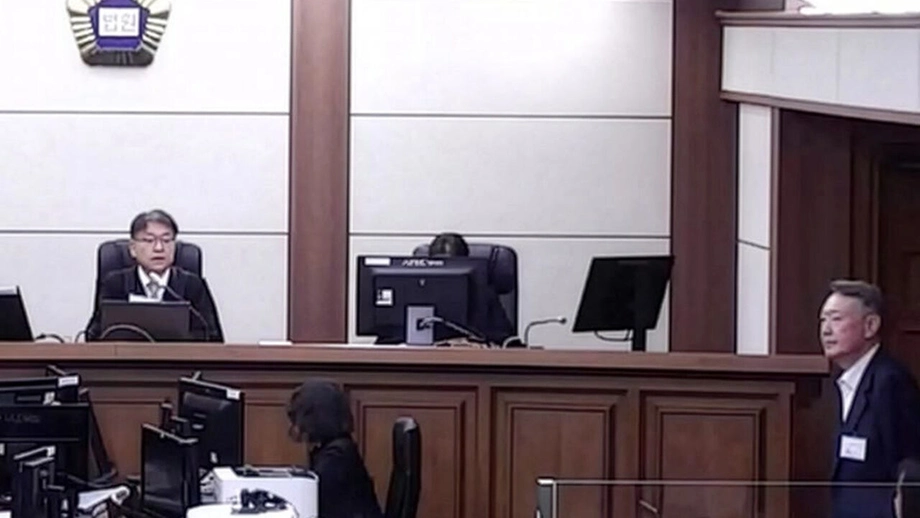
Criminal Division 2-1, presided over by Judge Baek Seung-yeop, dismissed Yoon's appeal in case 2026No1944. His lawyers said they would challenge the decision in the Supreme Court. If the qualifying conviction becomes final, Yoon's 2022 election victory will be invalidated and the party will have to return the election funds.
Yoon had already left office in April 2025, when the Constitutional Court upheld his impeachment following his December 2024 declaration of martial law. The election case now carries a separate consequence: a potentially substantial financial obligation for the party that nominated him.
The appeals court said Yoon, as a presidential candidate, had a duty to give voters accurate information. Explaining the harm caused by the statements, the court said:
Voters' right to make an informed choice was infringed, and the fairness of the election and the lawfulness of its procedures were undermined.
Why the lawyer introduction mattered
Yoon's first conviction concerned remarks at a Kwanhun Club event on December 14, 2021. He denied introducing a lawyer to Yoon Woo-jin, a former chief of the Yongsan Tax Office who had faced a criminal investigation. The former tax official is the older brother of Yoon Dae-jin, a former senior prosecutor and close associate of the former president.
Yoon Suk Yeol's defense rested partly on what it meant to introduce a lawyer. His lawyers argued that he had denied arranging a formal legal representation agreement, rather than simply connecting two people. Yoon Dae-jin also testified that he, rather than the former president, had made the introduction.
The court rejected that narrow reading. It found that an ordinary voter would understand Yoon's campaign answer to mean he had not connected the former tax official with the lawyer at all. Judges considered the surrounding questions and answers, rather than treating the phrase as a technical legal expression.
The evidence included an interview Yoon gave in 2012, in which he acknowledged the introduction, as well as telephone and text message records involving the former tax official. The court found that the campaign denial conflicted with those facts.
The judges said the matter was relevant to assessing Yoon's integrity and impartiality as a public official. For voters evaluating a former prosecutor, whether he helped someone under investigation obtain a lawyer could affect their judgment about his conduct and professional relationships.
The court traced the shaman relationship to 2013
Yoon's second conviction concerned an interview following the launch of the Buddhist Leaders Forum on January 17, 2022. Asked whether he and Kim had met Jeon Seong-bae together, Yoon, then the People Power Party presidential candidate, replied:
No, that's not the case.
Yoon also said a party official had introduced Jeon as a Buddhist who supported his candidacy. Jeon is also known as Geomjinbeopsa.
The court found that Yoon first met Jeon through Kim in December 2013 and that the couple subsequently met him together several times. It also found that Yoon received advice from Jeon about political circumstances while serving as a prosecutor.
Yoon argued that he had understood the question to concern a particular occasion, rather than whether the couple had ever met Jeon together. His defense said the answer referred to a party New Year event on January 1, at which Kim was absent.
The judges concluded that the interview conveyed a broader denial: that Yoon had encountered Jeon through party activity and had never met him together with his wife. They found that Yoon knew how the relationship began and which meetings he had attended because those were events he had personally experienced.
What an ordinary voter would have understood
The Seoul High Court assessed both sets of statements by asking what impression their words and context would leave on an ordinary voter. In simple terms, the judges considered what a person listening to the answer would reasonably take it to mean.
That approach was central to rejecting Yoon's explanations. A technical distinction between connecting someone with a lawyer and arranging a representation agreement carried little weight when the public answer sounded like a denial of any introduction. Likewise, the court interpreted the Jeon interview through its wording and setting.
The judges also considered why the information mattered. The lawyer allegation concerned Yoon's conduct as a prosecutor. The Jeon allegation concerned whether a person outside formal government structures might influence someone seeking the presidency.
The court noted that Yoon and Democratic Party candidate Lee Jae-myung were within the margin of error in opinion polling when the statements were made. That means their measured support was close enough for normal polling uncertainty to affect which candidate appeared ahead.
Special counsel Min Joong-ki's team argued that the denials helped quiet allegations and preserve Yoon's standing as a leading candidate. The court judged their potential reach to have been substantial in that closely contested race, which Yoon ultimately won.
Two Lee Jae-myung rulings shaped the argument
Yoon's lawyers sought an acquittal using reasoning from a Supreme Court ruling issued in July 2020 in a different election case involving Lee Jae-myung. That case concerned Lee's remarks during a televised candidate debate in the 2018 local elections about efforts to have his brother admitted to a psychiatric hospital.
The 2020 decision allowed room for the imperfect wording that can arise when candidates exchange questions, answers and rebuttals under tight time limits. Yoon's defense argued that this reasoning should apply to his campaign explanations.
The appeals court found the settings different. Although the Kwanhun Club gathering was called a debate, Yoon was the only candidate invited and answered questions from a panel of journalists without special time or format restrictions. His Buddhist Leaders Forum remarks likewise came during an interview with reporters.
The judges instead upheld the lower court's use of reasoning from a May 2025 Supreme Court ruling in another Lee election case, concerning his remarks about Kim Moon-gi. That decision reaffirmed that courts should examine the full impression on ordinary voters, including context, objective content, everyday word meanings and how phrases connect.
Lee's cases therefore featured on both sides of Yoon's appeal. The legal issue was which precedent fitted the circumstances in which Yoon spoke. The appeals court chose the approach focused on how voters would understand a public interview.
Why the suspended sentence still matters
The 18-month prison term is suspended for three years. A suspended sentence means the court has imposed imprisonment but delayed carrying it out, subject to legal conditions. The conviction and sentence still carry consequences under election law.
The Public Official Election Act provides for invalidation of a candidate's election when a conviction for a relevant election offense becomes final and carries imprisonment or a fine of at least 1 million won. Yoon's sentence meets that threshold despite its suspension.
Yoon's lawyers asked the appeals court to reduce the punishment, arguing that the consequences included both invalidation of his election and a large repayment obligation for the People Power Party.
The court rejected that request. It said lawmakers decide the consequences attached to election offenses. Giving excessive weight to those consequences when deciding guilt or punishment could distort the court's judgment.
Judge Baek also criticized Yoon's response to the prosecution. Describing his conduct from the investigation through the trial, the presiding judge said:
From the investigation stage through to the trial proceedings, the defendant has consistently resorted to excuses.
A repayment approaching one third of party assets
The People Power Party could have to return about 39.7 billion won to the National Election Commission if the conviction becomes final. The amount covers reimbursed campaign expenses and a refunded election deposit.
South Korea provides full reimbursement of eligible presidential campaign expenses when a candidate wins or receives at least 15 percent of the vote. The arrangement helps candidates and parties meet election costs. A final qualifying conviction triggers repayment, with the nominating party responsible in a presidential election.
The potential obligation is roughly one third of the People Power Party's assets, according to election commission filings. That comparison shows the scale of the exposure for the party's finances, beyond the legal consequences for its former candidate.
Democratic Party spokesperson Park Sung-joon urged the opposition party to accept responsibility for nominating Yoon. In a statement welcoming the ruling, Park said:
It is time for the PPP to take responsibility. The party nominated a candidate who distorted voters' choices through lies.
People Power Party floor leader Jeong Jeom-sig stressed that the appeals process was unfinished. Asked about the decision, he called it:
just an appellate ruling.
How the case reached this point
The case connects statements made before Yoon's election with proceedings that continued after his removal from office. The main dates are:
- December 14, 2021: Yoon denied the lawyer introduction at the Kwanhun Club event.
- January 17, 2022: He made the disputed statements about Jeon following the Buddhist Leaders Forum launch.
- 2022: Yoon defeated Lee Jae-myung in the presidential election.
- December 3, 2024: Yoon declared martial law.
- April 2025: The Constitutional Court upheld his impeachment and removed him from office.
- July 27, 2026: The Seoul Central District Court imposed the suspended prison sentence in the election case.
- October 13, 2026: At the final appeal hearing, the special counsel team asked the court to uphold that sentence.
- November 4, 2026: The Seoul High Court dismissed Yoon's appeal.
Lee won the subsequent presidential election after Yoon's removal. The election conviction concerns the legality of Yoon's earlier victory, while the impeachment decision had already ended his presidency.
The Supreme Court challenge comes next
Yoon's legal team said it would appeal, describing the ruling as unjust and arguing that the court had failed to give sufficient consideration to the context of his answers and key evidence. The special counsel team welcomed the result as a verdict the public could understand.
The special counsel law calls for a Supreme Court ruling within three months of the preceding court's judgment. That provision does not guarantee the actual timing, and no Supreme Court hearing or decision date was announced.
If the conviction becomes final, the invalidation of Yoon's election would take effect at that point. The prevailing legal interpretation is that actions he took while president, including appointments, would retain their legal effect.
Yoon also faces separate proceedings arising from his martial law declaration. In February 2026, he received a life sentence for leading an insurrection, a judgment that is also under appeal. The election case adds a distinct question for the Supreme Court: whether his campaign statements justify the conviction and the election consequences attached to it.
Key Points
- The Seoul High Court upheld Yoon's 18-month prison sentence, suspended for three years, on November 4, 2026.
- The two convictions concern false campaign statements about a lawyer introduction and his relationship with shaman Jeon Seong-bae.
- Yoon's lawyers said they would appeal to the Supreme Court.
- A final qualifying conviction would invalidate his 2022 election victory.
- The People Power Party would have to return about 39.7 billion won, roughly one third of its assets.
- The special counsel law calls for a Supreme Court decision within three months, but no decision date has been announced.