A draft motion puts the Democratic Party under pressure
South Korea's Rebuilding Korea Party unveiled a draft motion on October 19 to impeach Chief Justice Jo Hee-de, accusing him of breaching political neutrality, obstructing judicial appointments and misusing public money. The Democratic Party, which holds 161 National Assembly seats, began gathering lawmakers' views but had not adopted impeachment as its official position.
Contents
- A draft motion puts the Democratic Party under pressure
- How the campaign developed
- Why Lee's election case is central
- A dispute over who recommends Supreme Court justices
- What auditors found about public spending
- Who approved the payments?
- Two investigative agencies are handling complaints
- What an Assembly vote would change
- Legal disagreement and political risk
- Key Points
The smaller party's 12 lawmakers cannot introduce the motion alone. In an Assembly of 300 members, they need at least 100 signatures to introduce it and 151 votes to pass it. Democratic Party participation would therefore turn a demand for Jo's resignation into a measure capable of immediately suspending the head of the judiciary.
The confrontation widened on the same day when the Seoul regional office of the Serious Crimes Investigation Agency assigned a complaint concerning Jo's official expenses to its anticorruption investigation bureau for review. Spending allegations now form part of both the political campaign for impeachment and complaints before investigative agencies.
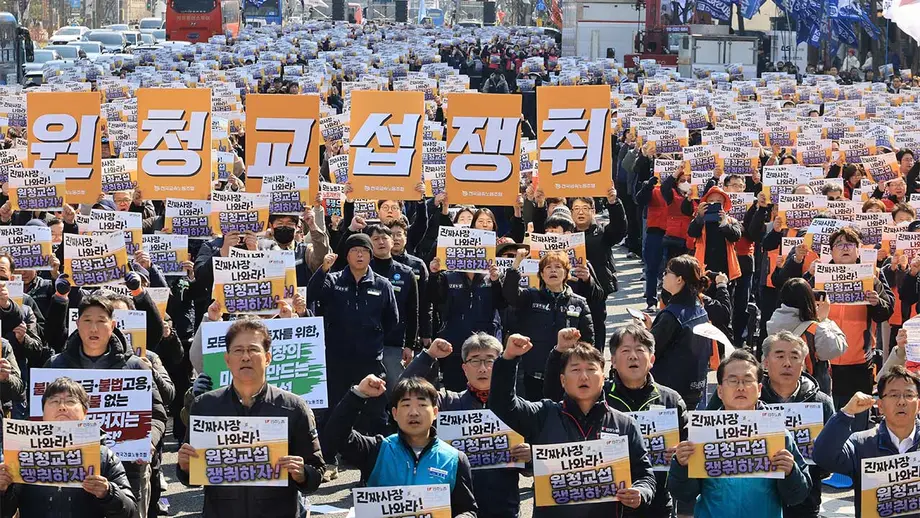
The Rebuilding Korea Party proposed a joint task force and an emergency meeting of lawmakers with the Democrats. Its leader, Shin Jang-sik, presented the campaign as a matter of enforcing the law:
Chief Justice Cho Hee-dae is merely a symbol of illegality and legal trickery. If we leave him as he is, there is no way we can tell the public to abide by the law.
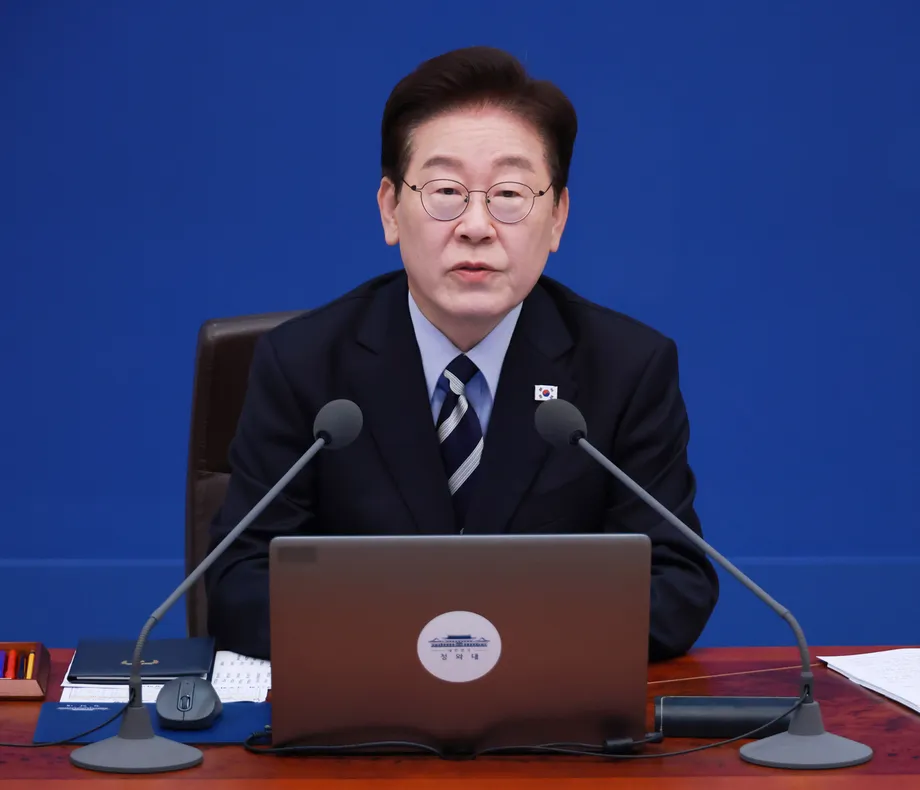
The People Power Party rejected that argument, accusing the ruling bloc of trying to prevent the resumption of President Lee Jae-myung's election law trial. The dispute now combines questions about judicial conduct, control over court appointments and the consequences of removing a chief justice from active duty.
How the campaign developed
Democratic Party leader Kim Min-seok brought impeachment into leadership discussions on October 16. Until then, demands had largely come from individual lawmakers and calls for Jo to resign voluntarily.
The following sequence shows how quickly the initiative moved from discussion to a published draft:
- October 13: Corruption Investigation Office for High-ranking Officials chief Oh Dong-woon told a parliamentary audit that his agency had received at least six complaints involving Jo.
- October 16: Kim said the Democratic Party had begun discussing methods and routes for responding to Jo, including impeachment. Civic complainants also filed an expenses case with the Serious Crimes Investigation Agency.
- October 18: Democratic Party spokesperson Lee Yong-woo said the party was considering several options, including impeachment, while continuing to demand Jo's resignation.
- October 19: The Rebuilding Korea Party unveiled its draft motion and proposed joint action. The Serious Crimes Investigation Agency assigned the expenses complaint for review.
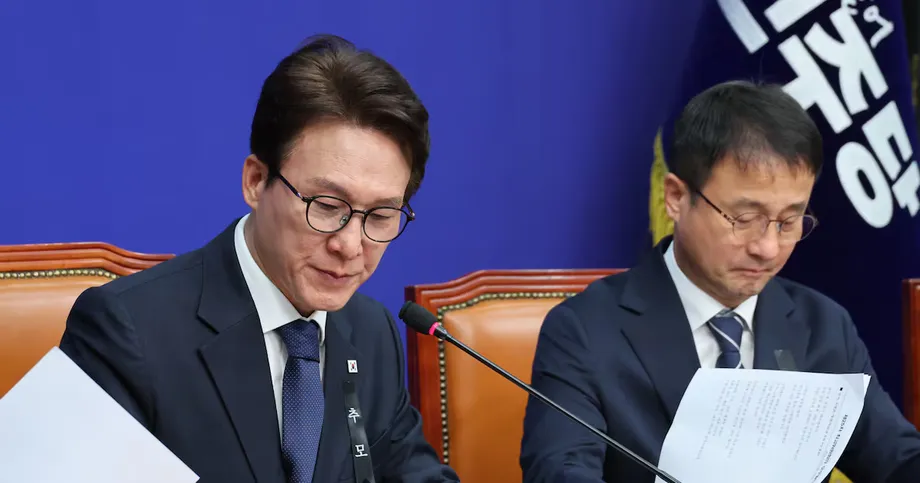
Democratic Party spokesperson Cho Gye-won said the party would concentrate on collecting lawmakers' opinions. Its stated approach was to decide its response after gathering views following the parliamentary audit. No date for introducing the motion or holding a plenary vote was announced.
Why Lee's election case is central
The draft motion challenges the Supreme Court's decision to overturn and send back a ruling in Lee's Public Official Election Act case. The full bench issued that decision in May of the previous year, taking the view that the case should return to a lower court with a finding pointing toward guilt.
A remand sends a case back for further proceedings under the higher court's legal reasoning. Here, the political stakes are unusually direct because the defendant subsequently became president, while the chief justice's handling of the proceedings is now being cited as a reason for impeachment.
The Rebuilding Korea Party alleges that Jo breached the duty of political neutrality and Lee's right to a fair trial. Lee Yong-woo also raised an allegation that justices had been asked to examine the case before it was formally assigned, shortly before the presidential election.
The People Power Party argues that protecting Lee from renewed proceedings is the real purpose of the impeachment campaign. Its leader, Jang Dong-hyeok, said the ruling bloc wanted to suspend Jo ahead of regular judicial appointments in February of the following year. That claim concerns the ruling bloc's motives and is contested by the parties seeking impeachment.
A dispute over who recommends Supreme Court justices
The draft also invokes Article 104, paragraph 2, of the Constitution in challenging Jo's refusal to recommend a Supreme Court justice candidate again after a presidential request. Supreme Court appointments involve both the chief justice's recommendation and the president's appointment authority, making the disagreement a contest over how those powers fit together.
The ruling parties argue that Jo's refusal interfered with Lee's constitutional authority and left vacancies that affected the public's right to prompt hearings. Lee Yong-woo described the refusal as a failure to perform an official duty.
Lee also alleged that Jo dismissed Court Administration Office advice about considering another recommendation and refused parliamentary demands for documents relating to the dispute. Other grounds raised by Democratic Party figures include his response to parliamentary witness requests and an alleged refusal to take a witness oath during an audit.
The Rebuilding Korea Party plans to deliver its draft and letters signed by all 12 lawmakers to Democratic Party legislators, followed by consultations between the parties' floor leaders. Shin's proposed wider joint campaign also included abolishing the Ministry of Government Legislation, although the chief justice's impeachment would require its own parliamentary and constitutional procedures.
What auditors found about public spending
The Board of Audit and Inspection's findings give the expenses controversy specific amounts and dates. Its regular audit, announced in August, found that 12 Supreme Court justices received cash encouragement payments averaging 2 million won per person each month from 2022 through April 2024, without a legal basis.
The audit also identified 108.92 million won in wine purchases from 2022 through 2025 with inadequate supporting records. Purchase documents described the purpose simply as supplies for Supreme Court events, while details such as the date of use, location and recipients were unclear.
The board said 99.5 million won of those wine purchases occurred after 11 p.m., on weekends or on public holidays. That amounts to about 91% of the 108.92 million won total. The spending records have become a central part of the ruling parties' demand for an explanation of how official funds were used.
According to the board's written response to Democratic Party lawmaker Kim Eui-kyeom, the Court Administration Office did not provide requested records showing the actual events, explaining that it did not maintain the relevant material. The audit also identified approximately 16.25 million won spent at drinking establishments without the required explanation procedure.
Who approved the payments?
Jo's personal involvement is a disputed issue. The Court Administration Office has said he was not involved in the matters under complaint and that incorrect numbers of meal participants resulted from staff mistakes. Ruling party lawmakers allege that attendance figures were inflated when official funds were used to pay for meals.
The encouragement payments produced a more specific clash during parliamentary scrutiny. At the October 6 audit, Jo said a separate spending officer handled the payments and that the chief justice did not participate in them.
Court Administration Minister Noh Kyung-pil subsequently corrected that explanation, saying the chief justice makes the final decision on encouragement payments. In a written answer disclosed through Kim Eui-kyeom's office on October 12, the Board of Audit and Inspection said accounting documents and a finance office confirmation showed that the chief justice had paid encouragement money to justices and the Court Administration Minister.
Investigators will need to examine the authorization records, the purpose of individual expenses and Jo's role in approving them. Those questions place the accounting trail at the center of the case, alongside the political argument over whether the conduct warrants removal.
Two investigative agencies are handling complaints
The Serious Crimes Investigation Agency's October 19 assignment followed a complaint filed on October 16 by the civic group Citizens' Action for Judicial Justice. The complaint named Jo, Noh and others, alleging offenses including abuse of authority, breach of trust and losses to state funds.
The Corruption Investigation Office for High-ranking Officials is separately handling complaints involving judicial recommendations, encouragement payments and official expenses. It assigned the recommendation matter to its first investigation division.
Oh Dong-woon told lawmakers on October 13 that at least six complaints involving Jo had been received. Asked whether his office had requested Supreme Court documents about delayed judicial recommendations, he said it had not made a specific request. The office later declined to confirm whether it had sought documents concerning expenses, citing the investigation.
Kang Sung-shin, managing lawyer at Haenae Law Office, said investigators first needed to determine whether the spending served a private purpose or a legitimate work purpose. Kim Seung-hyun, managing lawyer at JR, said establishing Jo's personal criminal responsibility would require evidence of his intent and involvement, including examination of whether staff handled transactions independently.
What an Assembly vote would change
A successful National Assembly vote would immediately suspend Jo's powers while the Constitutional Court considers whether to remove him. An acting leadership arrangement would continue during that period.
The Democratic Party's 161 seats are 10 more than the 151 votes required in an Assembly of 300. If its lawmakers voted together, the party could pass the motion without the Rebuilding Korea Party or opposition support. The smaller party's immediate task is therefore persuading the Democratic leadership to commit its votes.
After passage, the chair of the Assembly's Legislation and Judiciary Committee would submit the impeachment resolution to the Constitutional Court as the parliamentary representative pursuing the case. The court would assign a justice to lead its examination and hold public oral hearings.
The law sets a decision period of 180 days from receipt of the case. Removal requires the support of at least six of the Constitutional Court's nine justices. The justices would examine whether Jo violated the Constitution or law and whether any violation was serious enough to justify ending his tenure.
Lee Chang-hyun, a professor at Hankuk University of Foreign Studies Law School, warned that major full bench proceedings could be delayed during a suspension. For people awaiting decisions, the practical concern is how an extended absence at the top would affect the court's work.
Legal disagreement and political risk
Named constitutional scholars disagree about the strength of the proposed case. Lee Chang-hyun said he found it difficult to identify constitutional or legal violations in the refusal to recommend a justice again or in the remand of Lee's election case. Kim Dae-hwan of the University of Seoul Law School also questioned whether the allegations met the legal standard.
Sogang University Law School professor Lim Ji-bong took a different view of the vacancies, saying they infringed the right to a prompt trial. He nevertheless considered rejection of impeachment a strong possibility because the known conduct might fall short of the seriousness required for removal. Korea University emeritus professor Kim Sun-taek regarded the declared refusal to make another recommendation as a constitutional violation that could meet that standard.
The Constitutional Court first set out its serious violation test in the 2004 impeachment case against President Roh Moo-hyun. For judges, confidence in independent and fair proceedings is also relevant: three justices supporting impeachment in the 2021 case involving former judge Lim Seong-geun discussed serious damage to that confidence. That case ended without a removal decision because Lim's term had expired.
Democratic Party lawmakers are divided over the political cost. Kim Gi-pyo, a member of the Assembly's judiciary committee, has argued that the grounds are sufficient and that impeachment should proceed now. Other party lawmakers have warned that an initiative aimed at rallying supporters could alienate voters concerned about the separation of powers.
A Gallup Korea telephone survey conducted October 13 to 15 found that 47% wanted opposition candidates to win more seats in the 2028 general election, compared with 34% favoring ruling party candidates, a gap of 13 percentage points. The question measured preferences for a future election rather than support for Jo's impeachment, but it helps explain the leadership's concern about political backlash.
Internal tensions also surround Kim Ji-yong's nomination to lead the Serious Crimes Investigation Agency. Meanwhile, former first lady Kim Keon-hee's detention period is due to expire on October 31, and special prosecutors have requested an additional arrest warrant. Some ruling bloc figures expect her release, if it occurs, to intensify demands for action against Jo.
The Rebuilding Korea Party is pressing for a firm timetable. Cho Kuk, head of its policy institute, has demanded a plenary vote date, while senior party member Hwang Hyun-seon argues that failing to act would disappoint supporters. People Power Party floor leader Jeong Jeom-sik has pledged to use every available means to resist impeachment. The next decisive step rests with the Democratic Party's consultations and whether its leadership turns discussion into a formal motion.
Key Points
- The Rebuilding Korea Party unveiled a draft impeachment motion against Chief Justice Jo Hee-de on October 19.
- The Democratic Party is consulting lawmakers and has not adopted impeachment as its official position.
- The proposed grounds concern Lee Jae-myung's election case, judicial recommendations, encouragement payments and official expenses.
- Auditors identified 108.92 million won in wine purchases with inadequate supporting records.
- An Assembly vote would require 151 supporters in a chamber of 300 and would immediately suspend Jo's powers.
- Permanent removal would require agreement from at least six Constitutional Court justices.
- Investigative agencies are handling complaints concerning appointments and spending, while the Court Administration Office disputes Jo's involvement in alleged accounting misconduct.