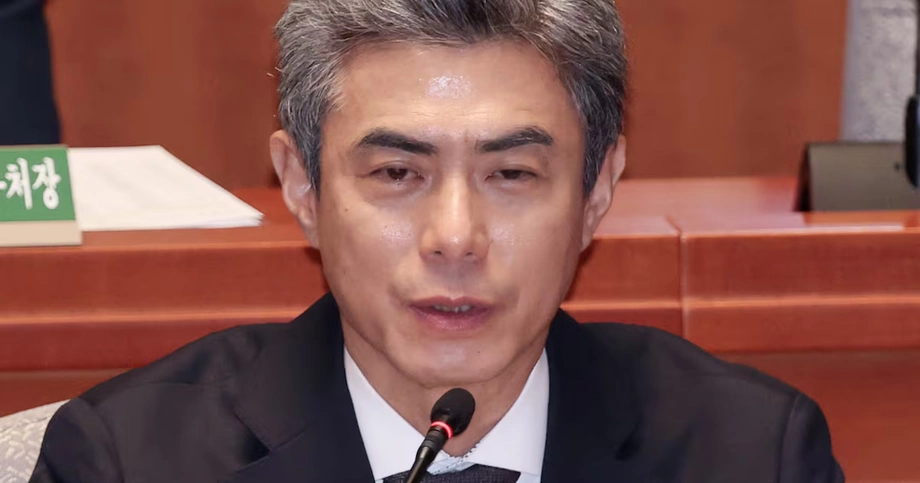
Kang says handover could happen immediately
South Korean Defense Minister Kang Shin-chul said on November 12, 2026, that all three conditions for transferring wartime operational control from American to South Korean leadership had been met, putting a stronger claim of military readiness behind Seoul's push to complete the handover before President Lee Jae Myung leaves office in 2030.
Contents
- Kang says handover could happen immediately
- What would change in a war?
- The three tests the allies agreed
- How readiness becomes a joint decision
- Why the timetable kept changing
- Military gaps remain disputed
- A disagreement over alliance strength
- Regional missions and defense spending
- The next diplomatic step
- Key Points
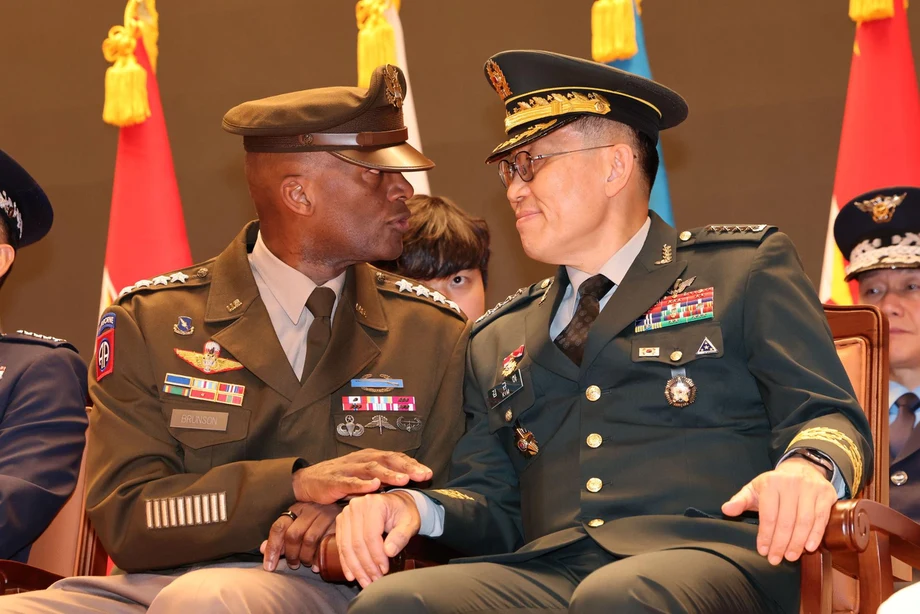
Speaking before the National Assembly's Budget and Accounts Committee, Kang answered questions from People Power Party Representative Bae Joon-young about military preparedness and whether changing command could affect victory in a war. Kang said the transfer was possible immediately, while also saying the allies must continue their assessments.
Kang, whose ministry is responsible for preparing South Korea's forces for the transition, described the timing this way:
It is possible immediately, but since we are continuously evaluating the military conditions, the transfer should proceed once the evaluation confirms the conditions are met.
The statement brings together two parts of a dispute that has stretched across successive governments: South Korea's desire to lead its own wartime defense and the bilateral process for deciding when the combined force is ready. The allies have agreed on conditions, rather than a target year, for making that change.
Washington reiterated on October 27 that the transfer should happen when the agreed conditions are fulfilled, citing the safety of South Korean people and American forces stationed there. Kang's latest comments also follow his October 14 acknowledgment that Seoul and Washington had different perspectives on readiness.
What would change in a war?
Wartime operational control, usually shortened to OPCON, is the authority to direct designated military units during a particular operation. It covers how those forces carry out their assigned missions within a defined time and area.
The South Korean government's wartime command explainer, last updated on February 7, 2024, describes a combined structure operating under instructions from both countries' presidents. Those instructions pass through bilateral defense and military bodies to the Combined Forces Command.
South Korea has exercised peacetime operational control through its own Joint Chiefs of Staff since December 1, 1994. Wartime control over designated South Korean and American units rests with the Combined Forces Command, led by an American commander.
Under the future structure agreed in October 2018, the allies would keep the combined command and appoint a South Korean general with four stars to lead it. South Korean leadership would therefore operate inside a continuing alliance command structure, with American military support.
Kang argued that this arrangement would make operations more efficient. Asked whether the transfer would create problems in winning a war, he answered, "No." He then explained his reasoning:
A system where South Korean military commanders, who know Korea well, lead operations with support from the world's most powerful U.S. military is more efficient.
The three tests the allies agreed
South Korea's Ministry of National Defense sets out the requirements in its OPCON transition policy. The Conditions-based OPCON Transition Plan makes readiness depend on three connected judgments:
- South Korea must possess the military capabilities needed to lead combined defense.
- The alliance must have comprehensive capabilities to counter North Korea's nuclear and missile threats.
- The security environment on the Korean Peninsula and in the region must support a stable transfer.
The first condition includes intelligence, operations, logistics and communications, as well as the future command's ability to direct a campaign across the Korean theater. In plain language, commanders need to know what is happening, issue workable orders, keep units connected and supply them throughout a conflict.
The second condition concerns the alliance's combined ability to detect threats, make decisions, defeat attacks and defend against them. The ministry describes American capabilities as supplementing and sustaining South Korea's contribution.
The third condition requires a broader assessment. Intelligence authorities examine North Korea's nuclear, missile and conventional forces, its intentions and internal stability, alongside developments elsewhere in the region. This makes the transition partly a judgment about the surrounding security situation, as well as a test of equipment and military skills.
How readiness becomes a joint decision
South Korea and the United States assess the conditions annually using methods and criteria they have mutually agreed. Results go through the Military Committee Meeting and the Security Consultative Meeting, the regular forum for the two defense chiefs.
The government explainer says the two countries' national leaders decide the appropriate transfer timing on the basis of those assessments and a recommendation from the Security Consultative Meeting. Kang also said closer cooperation was needed on the various military assessment criteria.
The allies completed revisions to the transition plan's appendices and annexes in August 2022. According to the Defense Ministry, those documents fixed the lists of capabilities to be evaluated and established methods and standards for assessing each one. At the 55th Security Consultative Meeting in 2023, the allies assessed that substantial progress had been made toward fulfilling the conditions.
Training assessments follow three stages: initial operational capability, full operational capability and full mission capability. These stages move from testing the future command's basic ability to perform major tasks toward testing its ability to carry out all major missions.
The ministry records an initial operational capability assessment in August 2019 and a full operational capability assessment during the Ulchi Freedom Shield exercise in August 2022. Its policy page also describes further full operational capability verification after joint assessments reach agreed levels. On October 27, Kang said the allies were coordinating on completing that certification and choosing a target year, which he called "year X."
No jointly approved transfer date or date for the final full mission capability assessment has been announced. The immediate decision facing the allies is how to turn the latest readiness judgments into agreed certification and a timetable.
Why the timetable kept changing
Seoul and Washington have revised both the timing and the command structure over nearly two decades. The Defense Ministry attributes earlier delays to changes in the security environment, including North Korean nuclear tests and the 2010 sinking of the South Korean warship Cheonan.
The major steps show how the policy moved from a fixed deadline to a process built around readiness:
- September 2006: The two presidents agreed on basic principles for transferring wartime operational control.
- 2007: The allies set April 17, 2012, as the transfer date and approved a strategic transition plan.
- June 2010: The target moved to December 1, 2015.
- 2014: The allies agreed to pursue transfer when mutually agreed conditions were fulfilled.
- 2015: The governments formalized the conditions framework. The Defense Ministry dates the plan's signing to November; the government policy explainer records an agreement in October.
- October 2018: The allies agreed to retain the combined command under a South Korean general.
- August 2019 and August 2022: The initial and full operational capability assessments took place.
- November 12, 2026: Kang told lawmakers that all three transfer conditions had been met.
Lee's administration wants the transfer completed before its term ends in 2030, or earlier. Washington continues to frame the timing around fulfillment of the conditions. A target year would give planners a deadline, while the existing agreement makes the readiness assessments central to the decision.
Military gaps remain disputed
Kang's assessment faces challenges over specific capabilities. People familiar with the preparations say South Korea remains below agreed levels in missile air defense, countering North Korean artillery with long range, wartime special operations, and surveillance and reconnaissance.
Those functions affect different parts of a battle. Surveillance and reconnaissance help commanders locate threats. Missile defense protects forces and populated areas. Counterfire aims to suppress or destroy weapons firing from the other side. Special operations involve selected missions carried out by specially trained units.
The Defense Ministry describes substantial investments across these areas. Its equipment list includes F-35A stealth fighters, Global Hawk reconnaissance aircraft, aerial refueling aircraft, early warning aircraft, Aegis destroyers and submarines of about 3,000 tonnes. It also lists Patriot defenses, ballistic missile warning radars, Cheongung air defense systems and Hyunmoo missiles.
The ministry's defense plan for 2024 through 2028 allocated approximately 113.9 trillion won for improving military capabilities. The transition assessments examine how forces, equipment and command systems work together, including their ability to sustain operations during a war.
Kang's November statement is stronger than his position a month earlier. On October 14, he said discussions with Washington were continuing and acknowledged differences in perspective. On November 3, National Security Office First Deputy Director Kang Geon-jak said continuing strategic and situational assessments could take an agreement beyond simply meeting conditions.
A disagreement over alliance strength
Joseph Yun, a former acting American ambassador to South Korea and former special representative for North Korea, warned at a November 10 forum hosted by the Korea-U.S. Parliamentarians' Union that the transfer was unlikely to move quickly.
Yun described the issue as political in South Korea and technical in the United States. He argued that Seoul would have to make a political choice about accepting some weakening of the alliance structure:
In South Korea, people want to have the OPCON back with no weakening of the alliance. That is impossible.
Kim Jung-sup, president of the Sejong Institute, offered a different assessment at the forum. He said the conditions had already been met and warned that objections based on changing threats could postpone the transfer indefinitely.
Kim also suggested reconsidering the proposed command arrangement if American commanders objected to serving under a South Korean commander. That proposal would reopen a structural issue the allies addressed in their 2018 agreement.
People Power Party Representative Kim Gunn focused on the risk that a conflict could spread beyond the peninsula. He told the forum that foreign intervention could turn a Korean war into an international conflict and potentially a nuclear one, arguing that preparations must reflect those possibilities.
The disagreement reaches beyond who gives orders. Kang sees local knowledge and continued American support as a basis for greater efficiency. Yun questions how the shift would affect American commitment, while Kim Jung-sup argues that evolving threats can become a permanent reason for delay.
Regional missions and defense spending
Beomchul Shin, a principal research fellow at the Sejong Institute, examined the wider alliance setting in a June 2025 policy brief. He recommended keeping the conditions framework and an integrated command while strengthening capabilities for directing operations across the Korean theater.
Shin identified command systems, surveillance, reconnaissance, firepower and the ability to sustain a war as essential areas of preparation. He also called for greater use of drones and artificial intelligence, and for Seoul and Washington to narrow differences in their assessment of threats.
His analysis linked the transfer to the strategic flexibility of United States Forces Korea. That term concerns the possible use of American forces based in South Korea for missions beyond the peninsula, including a Taiwan crisis. Shin argued that discussions about those missions could affect both transfer timing and the future command arrangement.
South Korea is also seeking to raise defense spending from 2.4 percent of gross domestic product in 2026 to 3.5 percent by 2035. That would be an increase of 1.1 percentage points in the share of the economy devoted to defense. The proposed budget for 2027 is 8.2 percent larger than the current year's budget and is due for a parliamentary vote in December.
Democratic Party Representative Kim Young-bae told the November forum that Seoul should demonstrate its commitment to alliance stability and ensure both governments keep their promises. Yun also said Washington lacked consensus on Seoul's separate ambitions for civilian uranium enrichment and submarines powered by nuclear reactors, illustrating the wider set of alliance negotiations surrounding the command debate.
The next diplomatic step
The Security Consultative Meeting is a key venue for resolving the readiness assessments and discussing timing. In October, the defense chiefs were expected to meet in Washington in December. By November 12, a military source said the meeting had been postponed until 2027.
Kang's statement now puts a concrete task before the two governments: reconcile their assessments of military capabilities, finish the relevant command certification and decide when South Korean leadership can take over within the agreed structure. The December budget vote will separately determine the next year's defense resources.
For South Korean forces and American troops assigned to the combined command, the practical issue is a functioning chain of command during a crisis. The agreed process connects that leadership change to operational preparedness, continued military support and a shared judgment about regional threats.
Key Points
- Defense Minister Kang Shin-chul said on November 12, 2026, that all three conditions for wartime command transfer had been met.
- The conditions cover South Korean military leadership capabilities, allied responses to North Korean nuclear and missile threats, and the regional security environment.
- The planned structure retains the combined command under a South Korean general with four stars.
- Seoul wants the transfer before President Lee Jae Myung's term ends in 2030; the allies have announced no agreed target year.
- Readiness disputes concern missile defense, counterfire, special operations, surveillance and reconnaissance.
- A military source said the defense chiefs' meeting expected in December had been postponed to 2027.