Expanded Investigation Clears a Key Parliamentary Stage
South Korea's parliamentary Legislation and Judiciary Committee approved a bill on November 4, 2026, that would create a special counsel with up to 309 staff and 200 days to investigate allegations of fabricated investigations and indictments under former President Yoon Suk Yeol. The revised proposal covers 12 groups of cases, including criminal proceedings involving President Lee Jae Myung and newly added matters involving former President Moon Jae In's administration.
Contents
- Expanded Investigation Clears a Key Parliamentary Stage
- What Changed in the Prosecution Powers?
- Why a Legal Warning Survived the Revision
- Twelve Case Groups, More Allegations
- Who Would Choose the Investigator?
- How the Bill Moved Through Parliament
- A Large Team During a Staffing Shortage
- Court Independence and Overlapping Investigations
- The Next Vote Could Delay Other Legislation
- Key Points
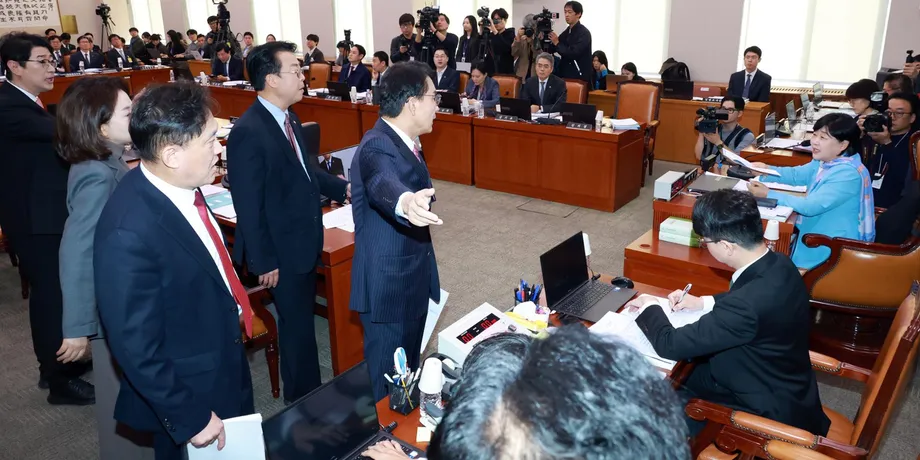
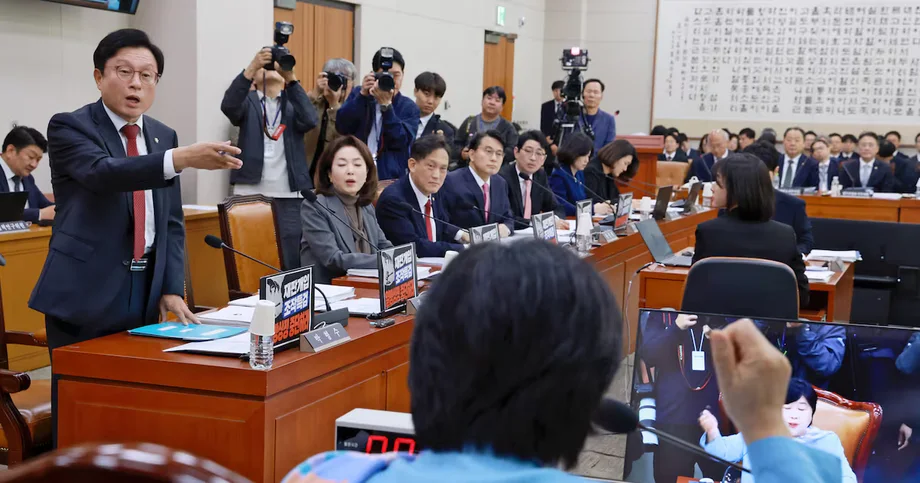
The ruling Democratic Party pushed the measure through a subcommittee, a dispute resolution panel and the full committee in one afternoon. People Power Party lawmakers walked out before votes, arguing that the legislation would allow Lee to choose an investigator to examine the prosecutors responsible for cases against him.
Democrats removed wording allowing the special counsel to decide whether prosecutions should continue, along with a provision allowing it to demand the transfer of cases. A parliamentary legal specialist nevertheless warned that another provision could still permit the withdrawal of indictments under the Criminal Procedure Act.
The Democratic Party planned to seek a full National Assembly vote on November 5. The People Power Party threatened a filibuster, an extended parliamentary debate used to delay a vote, and said its response could extend to every bill placed before that session.
What Changed in the Prosecution Powers?
The original April proposal gave the special counsel responsibility for investigating cases, bringing charges, maintaining prosecutions and deciding whether to maintain them. The committee revision removed the final decision wording while retaining investigation, indictment and prosecution functions.
Democratic Party lawmaker Kim Eui-kyeom said the changes also removed the provision allowing the special counsel to demand cases from other prosecutors. Critics had argued that the combination could let the new investigator take over an existing prosecution and then end it.
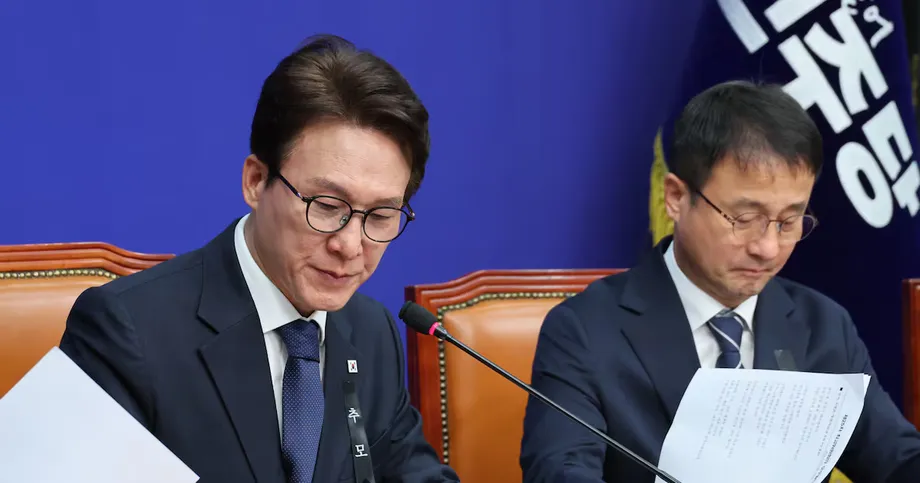
Kim, who chaired the bill review subcommittee, described the revision to reporters:
All clauses related to the cancellation of the indictments have been deleted.
Democratic Party floor leader Han Byung-do said the party had removed both provisions concerning the cancellation of indictments and provisions that could produce the same effect. Committee chair Seo Young-kyo also rejected the opposition's description of the measure as a bill to cancel the president's prosecutions.
The remaining disagreement concerns the legal effect of the revised text. Withdrawing an indictment means the prosecutor stops pursuing that charge in court. For defendants whose cases are already before judges, the power to make that decision is central to the dispute.
Why a Legal Warning Survived the Revision
Choi Gi-do, a specialist adviser to the judiciary committee, identified a separate route through which the special counsel might retain withdrawal powers. His review of the April proposal pointed to a clause applying provisions governing prosecutors under the Criminal Procedure Act to the special counsel.
Article 255 of that act concerns the withdrawal of indictments. Choi's assessment was that the special counsel could be interpreted as having that power through the general application clause, even without a separate provision granting it. The clause remained in the committee's revised bill.
Choi recommended discussing an explicit exclusion of the power if lawmakers judged it unfair for a special counsel appointed by the president to withdraw charges in a case in which that president is the defendant.
The practical choice is between deleting language that expressly grants a power and writing language that expressly prohibits it. Democrats said their deletions resolved the concern. Choi's review identified a reason the legal argument could continue after those changes. The committee approved the bill without settling that interpretation.
Twelve Case Groups, More Allegations
The revised bill retains 12 categories of cases, but increases the number of allegations within them. Lawmakers combined several development and corruption matters involving Lee while adding investigations connected to the Moon administration. The West Sea official shooting case was already in the earlier proposal; the revision grouped it with the forced repatriation of North Korean fishermen.
The expanded remit covers how prosecutors and other state bodies investigated or prosecuted the following matters:
- Alleged breach of trust involving the Daejang-dong, Wirye and Baekhyeon-dong development projects, with related allegations involving former Democratic Research Institute deputy head Kim Yong grouped into this category.
- Alleged election law violations connected to the Daejang-dong and Baekhyeon-dong developments.
- Allegations involving the inducement of Kim Jin-seong to give false testimony.
- Alleged payments to North Korea through the Ssangbangwool group.
- Alleged bribery involving sponsorship of Seongnam FC.
- Alleged misuse of corporate cards and breach of trust during Lee's time as Gyeonggi governor.
- Allegedly false reporting intended to defame Yoon.
- Alleged manipulation of statistics under the Moon administration.
- The shooting of a South Korean official in the West Sea and the forced repatriation of North Korean fishermen.
- Bribery allegations connected to employment obtained by Moon's former son-in-law.
- Alleged leaks of classified information concerning the THAAD missile defence system.
- Alleged manipulation of the economic assessment of Wolsong nuclear reactor No. 1.
The fishermen's repatriation, the employment matter involving Moon's family, the THAAD allegations and the Wolsong assessment were added during the committee revision. THAAD is a system designed to intercept incoming missiles. The Wolsong matter concerns an assessment of whether operating the reactor made economic sense.
The bill would investigate allegations of misconduct by the Prosecution Service, National Intelligence Service, Board of Audit and Inspection and other state bodies under Yoon. Its focus is how those institutions handled the listed cases, including claims of targeted investigations, distorted evidence and fabricated charges.
Who Would Choose the Investigator?
The appointment procedure remained unchanged. The Democratic Party, People Power Party and Rebuilding Korea Party would each recommend one candidate. Lee would then appoint one of the three as special counsel.
People Power Party lawmaker Yoon Sang-hyun argued that this arrangement created a conflict because Lee is a defendant in cases whose handling would come under investigation. At the full committee meeting, Yoon accused the judiciary committee of becoming a legal office for the president and described the appointment arrangement as a private use of public power.
Kim Eui-kyeom responded that widening the investigation and deleting provisions related to the cancellation of prosecutions had removed much of the conflict associated with the president's appointment role. He said the purpose was to address coercive, targeted and political investigations under Yoon.
Lee had himself requested changes at a September news conference. He asked lawmakers to remove provisions concerning case transfers or dispositions and concentrate on establishing what happened. That request preceded the committee's November revision, although the president's authority to make the final appointment survived.
The dispute comes after Lee's snap election victory in June 2025, which followed Yoon's removal after the martial law crisis. Lee entered office with unresolved criminal cases, making the relationship between presidential power and those prosecutions a continuing political issue.
How the Bill Moved Through Parliament
Democratic Party lawmaker Cheon Jun-ho introduced the proposal in April. The party later adopted passage as its formal position at a November 3 meeting of its lawmakers, then completed the committee stages the following day.
The main steps were:
- April 2026: Cheon introduced the special counsel bill.
- September 2026: Lee requested the removal of transfer and disposition provisions and a focus on fact finding.
- November 3, 2026: Democratic Party lawmakers adopted passage of the bill as party policy.
- November 4, 2026: The bill passed the review subcommittee, a dispute resolution panel and the full judiciary committee.
- November 5, 2026: Democrats planned to seek a vote in the full National Assembly.
The People Power Party requested the dispute resolution panel, which can examine a contested bill for up to 90 days. That period is a maximum, rather than a required waiting time. Four of its six members can approve returning a bill to the standing committee for an immediate decision.
This panel consisted of three Democrats, two People Power Party lawmakers and one Progressive Party lawmaker. The Democrats and Progressive Party member supported the measure after roughly an hour of discussion. The subcommittee's revised text then returned to the full committee and passed.
A Large Team During a Staffing Shortage
The bill allows a team of up to 309 people, including 20 seconded prosecutors, up to 70 special investigators and up to 210 other seconded public officials. It provides 20 days for preparation and 180 days for investigation, making a maximum of 200 days.
Compared with the initial proposal, the prosecutor allocation fell from 30 to 20, and the ceiling for special investigators dropped from 150 to 70. The allowance for other public officials rose from 170 to 210. Those changes reduce two specialist groups while increasing the number of staff drawn from other government bodies.
Lee Jin-soo, the vice justice minister serving as acting justice minister, sought a further reduction below 20 prosecutors during the subcommittee discussion. His recommendation was not included in the revision. He also urged improvements to provisions allowing objections when the special counsel acts outside its assigned duties.
The staffing debate comes as ordinary casework has accumulated. At the end of September 2026, prosecution offices nationwide had 186,207 unresolved cases, compared with 164,822 a month earlier. That is an increase of 21,385 cases, or about 13 percent, in one month.
The Serious Crime Investigation Agency opened with around 1,900 staff against an authorised workforce of 2,874, leaving 974 positions unfilled. Another special counsel team investigating election administration received 18 of its allotted 20 prosecutors. Recruiting for a new investigation would place another demand on institutions already operating below their intended strength.
Court Independence and Overlapping Investigations
The proposed investigation would be the seventh special counsel operation under Lee's administration if the bill becomes law. It would also be the first formed after reforms replaced the former prosecution service with an office focused on prosecuting cases while assigning investigation elsewhere.
Lee Jin-soo linked his staffing concerns to that separation. Sending prosecutors into the special counsel's investigation, he argued, could create fairness concerns and conflict with the purpose of keeping investigation and prosecution apart. The proposed special counsel would exercise both functions.
Korea University law professor Cha Jin-a criticised the bill as a threat to democracy and the rule of law. The concern raised in legal circles is that a powerful new investigation into the handling of cases already before courts could put pressure on prosecutors and judges while those proceedings continue. Judges retain responsibility for deciding guilt and whether evidence was lawfully obtained.
The special counsel's remit also overlaps with the prosecution's human rights and future reform commission. Both would examine matters involving Ssangbangwool payments to North Korea, the Daejang-dong, Wirye and Baekhyeon-dong developments, corporate card use and Seongnam FC sponsorship.
The commission may need to reduce or pause work on overlapping cases, or consider recommendations after the special counsel announces findings. No decision on how the two bodies would divide that work was announced. The practical task would be to allocate responsibility for examining the same investigations while managing limited staff.
The Next Vote Could Delay Other Legislation
People Power Party floor leader Jeong Jeom-sik said his party would refuse to participate in the November 5 plenary session if the special counsel bill appeared on its agenda. The party also announced plans for filibusters against all legislation brought before that sitting.
A filibuster uses prolonged debate to delay parliamentary action. By extending that response beyond the special counsel proposal, the opposition could disrupt other measures Democrats hoped to pass, including legislation on recognition for democracy activists, urban redevelopment and Yongsan Park.
The confrontation also coincides with scrutiny of the government's proposed budget of 820.9 trillion won for the following year. Democrats supported maintaining the proposal, while the People Power Party sought substantial reductions. The special counsel dispute therefore adds another point of conflict during an already contested period of legislative and budget work.
The immediate decision is whether the full Assembly approves the committee's revised bill. Its central unresolved legal issue is whether the deletion of express prosecution withdrawal provisions leaves that power available through Article 255. Its central political issue is who should choose an investigator examining how cases against the sitting president were brought.
Key Points
- The judiciary committee approved the expanded special counsel bill on November 4, 2026, with a full Assembly vote sought for November 5.
- The bill retains 12 case groups while adding allegations involving the Moon administration, THAAD information and Wolsong reactor No. 1.
- Democrats removed express provisions concerning decisions to continue prosecutions and demands to transfer cases.
- A committee legal specialist warned that Article 255 could still provide a basis for withdrawing indictments.
- Three parties would each nominate a candidate, with President Lee making the appointment.
- The proposed team could employ up to 309 people and operate for up to 200 days, including preparation.
- The People Power Party threatened filibusters and a boycott of the plenary session.