Two candidates prepare for a historic flight
One of two Pakistani astronauts, Muhammad Zeeshan Ali or Khurram Daud, is set to become the first foreign visitor to China's Tiangong space station aboard Shenzhou-24. Both studied Chinese at the Islamabad Confucius Institute before preparing for a mission that will require them to understand technical instructions, operate research equipment and work alongside Chinese astronauts.
Contents
- Two candidates prepare for a historic flight
- From an Islamabad agreement to training in Beijing
- Why their Chinese lessons matter
- What the Pakistani astronaut will do in orbit
- Why he will return in a different spacecraft
- A national milestone for Pakistan
- China presents the flight as a diplomatic first
- Cooperation reaches beyond Tiangong
- What happens before departure
- Key Points
The China Manned Space Agency says the selected astronaut will fly as a payload specialist, spend a short period in orbit and return aboard Shenzhou-23. Its mission announcement describes the flight as the first joint mission involving Chinese and foreign astronauts in the history of China's human spaceflight programme.
The arrangement connects several developments: an astronaut cooperation agreement signed in Islamabad in February 2025, a selection process that produced two candidates, language education in Pakistan and scientific experiments chosen for the visit. It will also change the usual crew rotation at Tiangong, allowing one Chinese astronaut to remain aboard for a planned year in space.
Pakistan's planning minister, Ahsan Iqbal, said in October that the mission would take place on November 25. China's space agency has not announced a launch date or identified which Pakistani candidate will fly; the mission is expected before the end of November 2026. The agency says one candidate will receive the flight assignment after completing training and passing assessments in China, while the other will serve as backup.
From an Islamabad agreement to training in Beijing
China and Pakistan formally began the astronaut selection effort with their February 2025 agreement covering selection, training and participation in Chinese space station missions. Pakistan's Space and Upper Atmosphere Research Commission, known as SUPARCO, and the China Manned Space Agency are the partners in that cooperation.
The Chinese agency describes three stages of assessment: an initial selection, a second selection and a final selection. Two Pakistani reserve astronauts emerged from that process. Ali and Daud, both military pilots, were selected from a group of around 20 finalists and have been training at the Astronaut Centre of China in Beijing.
Keeping two candidates in preparation gives the mission a replacement who is ready to take over. Both must complete the required training and assessments before one receives the operational assignment. The backup remains available if a change becomes necessary before departure.
The main steps announced or described so far are:
- February 2025: China and Pakistan signed the astronaut selection, training and flight agreement in Islamabad.
- April 2026: The two selected candidates were publicly identified, and Prime Minister Shehbaz Sharif met them to congratulate them.
- May 24, 2026: Shenzhou-23 arrived at Tiangong, beginning the crew stay that will overlap with the Pakistani visit.
- October 2026: Planning Minister Ahsan Iqbal named November 25 as the intended mission date.
- November 2026: China's human spaceflight agency confirmed the Pakistani astronaut's place on Shenzhou-24.
- November 13, 2026: Beijing Language and Culture University official Qu Zhaowei disclosed that both candidates had studied Chinese at its partner institute in Islamabad.
Why their Chinese lessons matter
Qu Zhaowei, Party secretary of Beijing Language and Culture University, discussed the candidates during an interview at the 2026 World Chinese Language Conference. He said both had studied at the Islamabad Confucius Institute, jointly established by his university and Pakistan's National University of Modern Languages.
The institute was Pakistan's first Confucius Institute and has operated for 21 years. Its connection to both candidates gives the mission a link to an educational partnership that predates the astronaut agreement by roughly two decades.
Qu explained that work in a specialised field such as spaceflight requires accurate understanding of technical concepts, professional instructions and operating procedures. For an astronaut, language preparation can mean understanding exactly which piece of equipment to check, which step comes next and what a colleague is asking during a demanding task.
Qu also described Chinese as a language increasingly used for scientific knowledge, technology and international cooperation, alongside everyday communication. His account places the candidates' classroom experience within their wider preparation for working inside a Chinese spacecraft and station.
What the Pakistani astronaut will do in orbit
The selected Pakistani astronaut will travel with two Chinese colleagues as a payload specialist. A payload is equipment carried into space for a particular purpose. In this mission, the specialist's work will centre on research equipment and experiments rather than commanding the spacecraft.
SUPARCO says the astronaut will be responsible for four research payloads selected from more than 300 proposals. Four choices from a pool exceeding 300 represent less than 1.4 percent of the proposals, showing how narrow the final selection was.
The visit is expected to last roughly a week, during the period when an arriving crew overlaps with the astronauts preparing to leave. The research work must fit into that short stay alongside station activities and preparations for the journey home.
The four payloads give Pakistan a direct role in scientific work aboard Tiangong. Their selection also makes the visit more than a ceremonial appearance: the astronaut has an assigned set of research responsibilities to carry out while living and working with the station crew.
Why he will return in a different spacecraft
Shenzhou-24 will carry the Pakistani astronaut to Tiangong, but Shenzhou-23 will bring him home. Spacecraft remain docked at the station during crew stays, making them available for the return journey. That allows an astronaut to arrive on one vehicle and leave on another when the crew and seating arrangements have been planned accordingly.
China usually rotates Tiangong crews with three astronauts arriving and three departing. Under the planned arrangement, the Pakistani visitor will return with two Chinese members of the Shenzhou-23 crew, while the third remains at the station.
The two Chinese astronauts arriving on Shenzhou-24 are expected to begin a stay of about six months. Their colleague remaining from Shenzhou-23 will continue toward China's first stay in orbit lasting a year.
The difference in duration is substantial. The Pakistani astronaut's planned week is a brief research visit, while the Chinese astronaut staying behind will spend about twice the usual six months aboard. Assigning the visitor that astronaut's seat on the returning spacecraft makes both plans possible within the same crew change.
A national milestone for Pakistan
Prime Minister Shehbaz Sharif met Ali and Daud in April and congratulated them on their selection. He described the planned mission in terms of national achievement:
matter of pride for the entire nation
Sharif also praised the candidates' sustained preparation, calling it:
round-the-clock efforts
The prime minister said he hoped the mission would deepen cooperation between the countries. For Pakistan, the immediate milestone is a place for one of its astronauts inside an operating space station, with training and research responsibilities attached to the flight.
Ali and Daud have followed the same preparation route, but only one will make this visit. The other candidate's assignment will be to support the mission as backup, a role built into the agreement and the selection process from the outset.
China presents the flight as a diplomatic first
Chinese Foreign Ministry spokesperson Guo Jiakun described the flight on November 9 as a new step in the countries' strategic partnership. He linked it to the 75th anniversary of diplomatic relations between China and Pakistan.
Guo set out the milestone in China's human spaceflight history:
Having the Pakistani astronaut on board China's spaceships will mark the first-ever joint mission of Chinese and foreign astronauts in the history of China's manned space program.
Guo also presented peaceful exploration and use of space as a shared human pursuit. His remarks placed the astronaut's visit within China's wider policy of cooperation with other countries in space.
China is Pakistan's largest trading partner and a major foreign investor. Their space cooperation already includes Pakistani satellites launched by China, including a small lunar satellite. The astronaut programme extends that relationship from spacecraft and equipment to people working together in orbit.
Cooperation reaches beyond Tiangong
Pakistan also has a rover planned for China's Chang'e-8 lunar landing mission. A rover is a vehicle designed to move across the surface of another world, carrying instruments and examining places beyond the reach of a stationary lander.
The planned rover, the satellite missions and the Tiangong visit involve different kinds of participation. Satellites operate in space, a rover works on the lunar surface, and an astronaut can carry out tasks directly inside a station. Together, they show the range of projects in the bilateral space relationship.
China separately aims to land astronauts on the Moon by 2030. The Pakistani astronaut's announced assignment is the short visit to Tiangong, while the rover belongs to the countries' planned robotic exploration work.
China's development of its own station also sits within a divided international space system. United States restrictions introduced in 2011 sharply limited NASA's direct cooperation with Chinese space agencies. Tiangong now provides a separate destination for China's human spaceflight partnerships, with Pakistan scheduled to supply its first foreign visitor.
What happens before departure
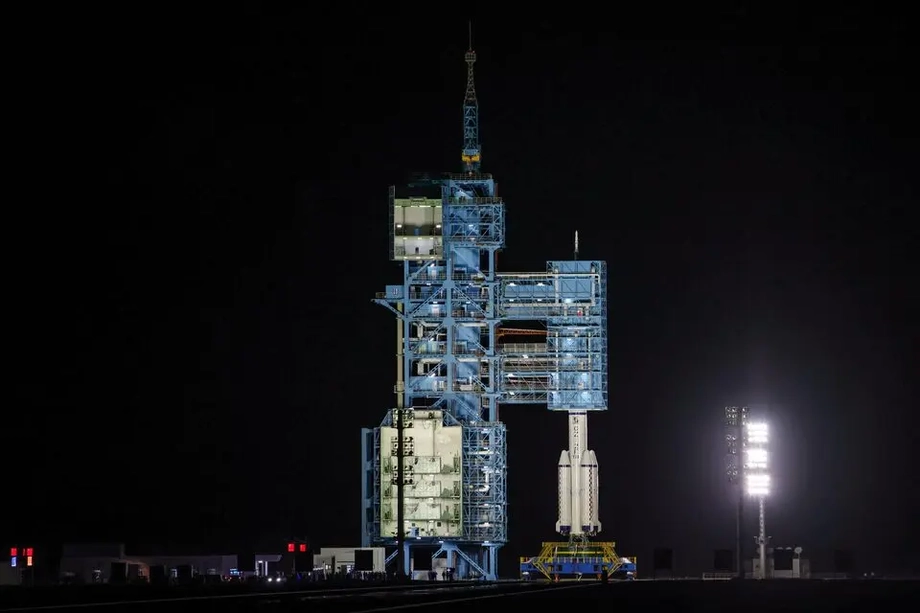
Shenzhou-24 is expected to launch from the Jiuquan Satellite Launch Center in the Gobi Desert on a Long March 2F rocket, the vehicle used for China's Shenzhou crew flights. The rocket is expected to move to the launch pad around a week before departure.
China typically reveals the names of its human spaceflight crews at a press conference one day before launch. That announcement will identify which Pakistani candidate receives the flight seat and which remains on standby, alongside the Chinese crew members.
The next operational steps are the completion of training and assessments, final crew assignments and launch preparations. After arrival at Tiangong, the Pakistani astronaut's schedule will combine four research payloads with the activities needed for a short visit and a return aboard Shenzhou-23.
The mission brings a long educational connection into a new setting. Both candidates studied Chinese at an institute established through cooperation between universities in Beijing and Islamabad. One is now preparing to use that experience during the first foreign visit to China's space station, while a carefully arranged crew rotation will also support China's first stay in orbit lasting a year.
Key Points
- Muhammad Zeeshan Ali and Khurram Daud are the two Pakistani candidates; one will fly and the other will serve as backup.
- The selected astronaut will become Tiangong's first foreign visitor and join China's first joint flight with a foreign astronaut.
- He will launch aboard Shenzhou-24 and return aboard Shenzhou-23 after roughly a week.
- Both candidates studied Chinese at the Islamabad Confucius Institute.
- SUPARCO says the visitor will handle four research payloads selected from more than 300 proposals.
- One Chinese astronaut will remain aboard for a planned year in orbit under the revised crew arrangement.
- Pakistan's planning minister named November 25 as the intended mission date; China's space agency has yet to announce the launch date.