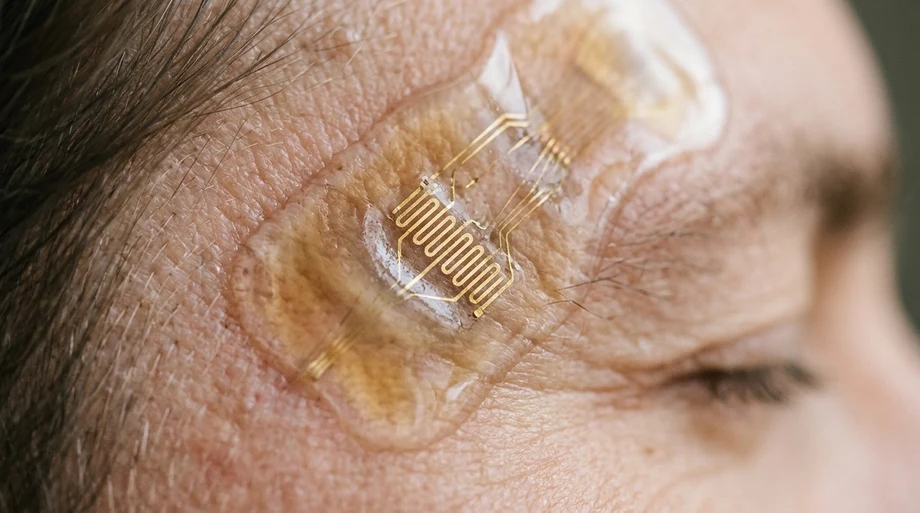
A softer scalp connection keeps brain signals readable for longer
Researchers from Guangxi University, Guangxi Medical University and Tsinghua University have developed hydrogel electrodes that supported more than 94% accuracy in a visual typing task during testing over 14 hours at rest. In another experiment, the electrodes recorded stable brain signals for eight hours while a participant walked, ate, read and slept.
Contents
- A softer scalp connection keeps brain signals readable for longer
- What the typing test actually involved
- Why conventional electrodes lose performance
- How the hydrogel changes from soft to firm
- What happened during eight hours of daily activity
- From a laboratory batch to a wearable device
- Where the design fits in China's BCI research
- Why longer recordings matter for health care
- Key Points
The device, described in npj Flexible Electronics, tackles a practical problem for brain-computer interfaces (BCIs): keeping sensors in reliable contact with a moving person for much of the day. Conventional electrodes can lose signal quality as their conductive gel dries or their contact with the scalp shifts.
The researchers call their device a skin-mimetic adaptive gradient electrode. Its structure changes gradually, with a soft surface against the scalp and a firmer end connecting to electronic equipment. Pores inside the material also vary in size, helping it release the electrolyte needed to maintain electrical contact.
The strongest typing result came from a task in which a participant looked at a flashing virtual keyboard. A different task involving moving visual targets achieved accuracy above 90%. Together with the recording experiment during everyday activities, the results point toward equipment that could work beyond tightly controlled laboratory sessions.
For people who might eventually use such systems to communicate or undergo prolonged monitoring, reliable contact matters as much as a successful demonstration lasting a few minutes. A sensor must keep collecting usable information while its wearer changes position, rests or moves through ordinary activities.
What the typing test actually involved
The team fitted the electrodes into a commercial electroencephalography (EEG) cap. EEG measures electrical activity associated with the brain through sensors on the scalp. In a BCI, computer software processes those measurements and turns selected patterns into commands.
The resting experiment lasted 14 hours, with a participant completing tests at hourly intervals. During the stationary typing task, the participant looked at flashing keys on a virtual keyboard to enter the numbers one through nine and dates. Accuracy exceeded 94%.
A visually guided BCI uses the brain's response to what the person is watching. The keyboard provides a structured set of possible choices, and the system uses the recorded response to identify the intended selection. The participant therefore communicates through attention to a display rather than by physically pressing keys.
In the other task, colored lines swept across virtual squares while the participant concentrated on designated targets. Accuracy exceeded 90%. Here, the moving element was part of the visual task; the eight hours of recording during everyday physical activity came from a separate experiment.
The distinction helps explain the results in practical terms. The study examined both whether the electrodes could preserve brain recordings during ordinary movement and whether they could support accurate selections during repeated BCI tests over a long resting session.
Why conventional electrodes lose performance
Traditional wet EEG electrodes commonly combine a rigid metal component with conductive gel. The gel helps electrical signals cross the contact between skin and sensor. As water evaporates, that connection becomes less reliable.
The researchers describe a typical stable operating period of about two to four hours for conventional wet electrodes. In their comparison with commercial gel electrodes, some conventional recording channels became almost unusable after roughly four to five hours because of dehydration. A channel is an individual recording connection within the EEG system.
Movement creates another difficulty. A rigid electrode rests against soft, flexible skin, and the two surfaces respond differently when the wearer moves. Small shifts can introduce unwanted electrical changes, called motion artifacts, that make the brain signal harder to identify.
Making the entire electrode soft addresses only part of that problem. The scalp needs a flexible contact surface, while the connection to the recording equipment needs mechanical support. The new design gives different parts of the same electrode different properties.
How the hydrogel changes from soft to firm
Hydrogels are networks of polymers that hold water. In this electrode, the researchers used a precursor mixture containing a conductive polymer and silver nanosheets, poured it into molds and froze it to establish an initial structure.
During subsequent freezing and thawing cycles, they applied heat on one side and cooling on the other. The resulting temperature difference helped create an uneven internal structure rather than a material with identical properties throughout.
The manufacturing mechanism involves the Marangoni effect, in which differences in surface tension drive movement within a liquid. The researchers used a temperature gradient to induce uneven crosslinking, the formation of connections within the polymer network. Some regions consequently developed a denser network than others.
The finished electrode has a gradual change in stiffness. Its softer end follows the scalp more closely, while the firmer end supports the connection to the circuit. The design draws inspiration from skin, whose layers have different mechanical properties.
The internal pores also change gradually across the electrode. According to the researchers, this structure supports sustained electrolyte release. Electrolytes contain mobile charged particles that help conduct electricity, so maintaining their supply at the contact surface helps preserve the recording connection over time.
The material therefore addresses two related needs within one structure: physical contact that tolerates movement and a conductive interface that lasts longer as the device is worn.
What happened during eight hours of daily activity
The human recording experiment used a cap with eight EEG channels that transmitted data wirelessly to a computer. A participant wore it while walking, eating, reading and sleeping, with stable recordings maintained for eight hours.
Those activities place different demands on the contact between electrode and scalp. Walking introduces repeated motion, eating moves muscles around the head, and sleep changes the position in which the head rests. Keeping recordings usable across that range is central to the team's effort to make EEG less dependent on stillness.
The reported testing periods can be understood through three concrete milestones:
- After about four to five hours, some channels using commercial gel electrodes had become almost unusable in the comparison experiment.
- Across eight hours of ordinary activities, the gradient electrodes maintained stable EEG recordings.
- Across a resting session lasting 14 hours, repeated visual typing tests achieved accuracy above 94%, while the moving visual target task exceeded 90%.
The eight hours of stable recording during daily activities were about twice the upper end of the two to four hours the researchers describe as typical for conventional wet electrodes. The longer resting session tested performance under a different condition, with less physical movement.
The findings concern prolonged recording and specified selection tasks. The practical benefit for a future user would be fewer interruptions caused by a deteriorating sensor connection during a monitoring or communication session.
From a laboratory batch to a wearable device
The manufacturing process can produce 300 electrodes at once, according to the team, with dimensions adjusted to fit commercial EEG caps. Compatibility with existing caps gives the design a route into equipment already used to position sensors around the head.
The researchers describe the process as suitable for production at a reasonable cost. No price per electrode, commercial release date, full participant count or typing speed was given in the descriptions of the study. Those details would help establish affordability, how consistently the results apply across users and how quickly someone could communicate.
Before the human experiments, the team tested biocompatibility in mice and reported no adverse reactions. Biocompatibility refers to how a material interacts with living tissue, including whether contact causes an unwanted response.
The manufacturing and compatibility findings matter alongside the accuracy figures. A wearable electrode intended for repeated use needs a reproducible structure, a suitable fit and acceptable contact with skin, as well as a strong electrical signal.
Where the design fits in China's BCI research
The China Academy of Information and Communications Technology describes electrode quality and wearing comfort as key areas of development in its 2025 BCI research report. Its examples show that researchers are pursuing several ways to improve contact between sensors and the body.
At Sun Yat-sen University, researchers developed a dry electrode patch using microneedles. The academy's report says the design improved signal quality compared with a conventional flat structure and achieved signal precision at the level of an individual microneedle.
Germany's Ilmenau University of Technology developed dry electrodes with inclined pins arranged like a flower. According to the report, that arrangement improves comfort while sitting and lying on the back, making it relevant to people who spend long periods in bed.
The hydrogel team's approach concentrates on a different combination of properties: a gradual change in stiffness and a sustained supply of electrolyte. Across these designs, the shared practical aim is to collect useful signals without making prolonged wear uncomfortable or unreliable.
The academy reports that more than 80% of BCI companies worldwide pursue noninvasive technology, while close to 20% work on invasive approaches. It links the larger noninvasive share to safety advantages, greater market acceptance, lower development costs and shorter commercialization cycles.
Why longer recordings matter for health care
Older people and patients with chronic conditions are among the groups that could benefit from longer wearable recordings. The academy's report identifies continuous data collection as a good match for care that requires stable monitoring over extended periods.
Sleep is one concrete example. The report lists consumer sleep monitoring devices among existing noninvasive brain health products and includes sleep disorders among medical applications being pursued. An electrode that stays connected while someone lies down and changes position addresses a practical need in this setting.
The hydrogel researchers also identify neurological research and clinical monitoring as potential uses, including possible warnings related to epilepsy. Reliable EEG acquisition supplies the data such a system needs; a clinical warning service would also require methods for interpreting that data and evaluating warnings in patients.
Communication is another potential use. The academy describes BCI products intended to help people with amyotrophic lateral sclerosis and other movement disabilities type or control equipment. For someone relying on a display to select characters, a stable connection could help preserve access throughout a longer session.
The study brings those possibilities closer to the practical question of wear: whether an electrode can stay useful as hours pass and a person goes about daily life. Its central contribution is a material structure that maintained recordings during movement and supported accurate visual selections across prolonged testing.
Key Points
- Researchers at Guangxi University, Guangxi Medical University and Tsinghua University developed hydrogel electrodes with gradually changing stiffness.
- Visual typing accuracy exceeded 94% during repeated testing over a resting session lasting 14 hours.
- A separate experiment maintained stable EEG recordings for eight hours during walking, eating, reading and sleeping.
- The soft scalp contact, firmer circuit connection and varying pore structure address movement and drying at the electrode interface.
- The process can produce 300 electrodes simultaneously in sizes compatible with commercial EEG caps.
- Potential uses include communication, sleep monitoring and neurological care, with further evaluation needed for specific clinical applications.