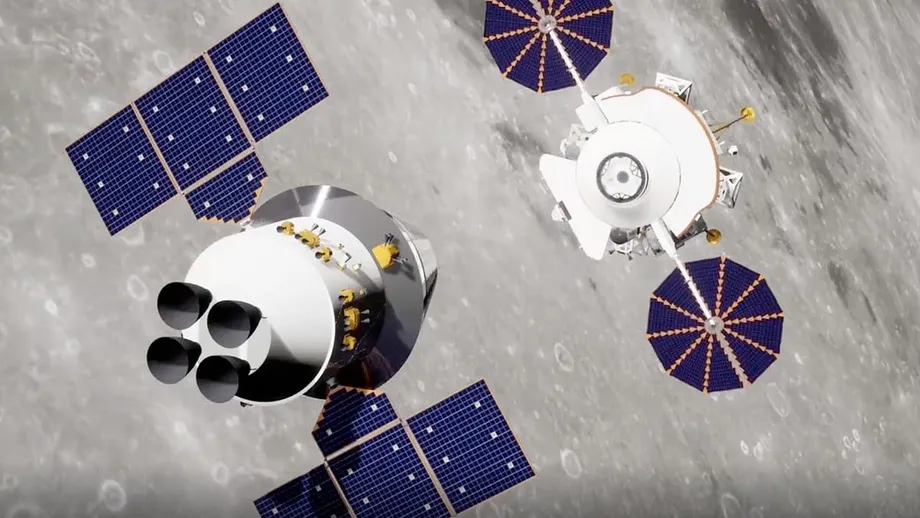
Two rockets, three astronauts and a landing before 2030
China plans to fly its Mengzhou spacecraft and Lanyue lunar lander without astronauts before attempting its first crewed moon landing, adding a major testing step to a mission that will use two Long March-10 rockets and carry three people to lunar orbit. Two astronauts would then travel down to the surface, while Mengzhou serves as their transport between Earth and the moon.
Contents
- Two rockets, three astronauts and a landing before 2030
- How the journey would work
- What has been tested, and what comes next
- Prototypes are giving way to system testing
- Lanyue must land, then launch again
- Finding a safe place to touch down
- Mengzhou's emergency routes home
- Returning to Earth and recovering the crew
- Space station operations continue alongside lunar work
- Key Points
The plans were outlined in an October 31 update from the seventh academic conference on human spaceflight in Beijing, attended by more than 800 specialists and scholars. The conference account set the goal of putting Chinese astronauts on the moon before 2030, conducting scientific investigations and technology experiments, and bringing the crew home.
China Manned Space Agency spokesperson Zhang Jingbo has also outlined progress across five central pieces of equipment: the Long March-10 rocket, Mengzhou spacecraft, Lanyue lander, Wangyu lunar spacesuit and Tansuo rover. An official program update published by China Aerospace Science and Technology Corporation says preliminary prototyping of that hardware has been completed. It describes the landing target as by 2030, while the conference account uses before 2030.
The practical challenge is to make those vehicles work together, from separate launches on Earth to docking near the moon, landing, taking off again and returning safely. The test campaign therefore covers much more than the moment astronauts step onto the surface.
For the crew, each stage depends on the next vehicle being ready: Mengzhou must reach the lander, Lanyue must return from the surface, and Mengzhou must then carry everyone back to Earth. The planned uncrewed flights will put the new spacecraft into flight before people depend on them.
How the journey would work
Two Long March-10 rockets would launch separately, one carrying Lanyue and the other Mengzhou. The vehicles would meet and dock in lunar orbit. Docking means joining two spacecraft so people and equipment can move between them.
Mengzhou is designed to carry three astronauts between Earth and lunar orbit. Two would transfer into Lanyue for the descent to the moon and the later climb back to the orbiting spacecraft. This divides the journey between a vehicle built for travel to and from Earth and one built for operations near and on the moon.
Lanyue would reconnect with Mengzhou after the surface visit, allowing the landing crew to rejoin the spacecraft that brings them home. The mission therefore requires successful docking near the moon both before and after the landing.
The conference account describes the planned work as landing, traveling across the surface, collecting samples, conducting research and returning. Its stated technical goals include travel between Earth and the moon, short stays on the lunar surface, and exploration that combines astronauts with robotic equipment.
What has been tested, and what comes next
The conference update says a Long March-10 demonstration at low altitude and a Mengzhou escape flight under maximum dynamic pressure had succeeded earlier in the year it describes. Maximum dynamic pressure is the point during ascent when the combination of speed and air density puts the greatest aerodynamic load on the vehicle.
Zhang's briefing lists other completed work: testing of the Long March-10 second stage propulsion system, a captive firing test with the rocket held in place, a Mengzhou escape test from ground level, and a Lanyue landing and takeoff verification test. Together, these examine propulsion, emergency escape and movement between orbit and the surface.
The milestones span several stages, although the calendar year of the October 31 conference is not specified in its account:
- Earlier in the conference account's year: successful Long March-10 demonstration at low altitude and Mengzhou escape flight under maximum dynamic pressure.
- October 31: an update in Beijing describes planned uncrewed flights for Mengzhou and Lanyue before a crewed landing.
- March 2026: technical coverage describes a dedicated journal issue explaining spacecraft systems and emergency procedures.
- Before the crewed landing: further Long March-10 verification flights and first flights of Mengzhou and Lanyue are planned.
- Before 2030: the conference account's target for the first Chinese astronaut landing.
No exact launch dates for the uncrewed flights or the first crewed landing were given. The forthcoming mission list also includes the robotic Chang'e-7 mission, alongside the work on vehicles that will carry astronauts.
Prototypes are giving way to system testing
Zhang said the program had completed preliminary prototyping of its major flight hardware. In simple terms, this is the stage at which initial versions of the equipment have been developed so engineers can test their design and operation. Flight testing then examines how the vehicles perform under the conditions of an actual mission.
The official update lists integrated testing for Lanyue, thermal testing and escape testing for Mengzhou, and demonstration and technology verification flights for Long March-10. Integrated testing checks several connected systems together, rather than examining each part separately. Thermal tests check how equipment handles temperature conditions.
Zhang also said scientific research and application payload designs had been finalized. A payload is the equipment carried to perform a mission's work, such as instruments used for scientific measurements. At the same time, construction is advancing on the launch site, tracking network and Earth landing site.
Those facilities connect the flight hardware to the people operating it. Tracking stations help determine where spacecraft are and maintain contact with them. Landing and recovery facilities support the final stage of the journey. Zhang described a heavy workload, with many new technologies still requiring validation within a tight flight testing schedule.
Lanyue must land, then launch again
A dedicated second issue of Chinese Space Science and Technology in 2026 contains 14 papers across 150 pages on the crewed lunar mission. Technical details described in March coverage of those papers give a closer view of how Lanyue is intended to descend, avoid hazards and return its passengers to orbit.
The design uses a propulsion module powered by a YF-58-1 engine and a lunar module powered by four YF-36 engines. The propulsion module handles major maneuvers before the lunar module completes the descent. The spacecraft mass described is about 26,000 kilograms, with about 6,000 kilograms of propellant for the lunar module's propulsion system.
Lanyue's four engines must support both a controlled landing and the later ascent. The technical account describes a surface stay lasting a few days, followed by a return to lunar orbit and a rendezvous with Mengzhou within several hours.
Engine trouble would change that sequence. If the propulsion module's engine failed before descent, Lanyue would remain in orbit and abandon the landing attempt. If one YF-36 engine failed, the opposite engine would also shut down to keep thrust balanced. Depending on the flight stage, the response could involve returning to orbit, delaying touchdown or taking longer to climb back.
Heat is another design concern. The propellant tank sits beneath the crew area, close to the landing engines. The technical description includes thermal protection and cooling measures, as well as the ability to reduce engine thrust during operation.
Finding a safe place to touch down
Lanyue's navigation system brings together several kinds of sensors. Star trackers help determine orientation, an inertial measurement unit tracks motion, and radar measures distance and speed. Optical navigation and a laser sensor help the vehicle identify hazards as it approaches the surface.
The technical papers describe greater autonomous control and backup capability drawing on equipment used in earlier Chang'e lunar missions and the Tianwen-1 Mars lander. Autonomous control allows the vehicle to make some decisions itself, which is useful when a landing requires rapid adjustments.
Guidance simulations described in the technical account achieved accuracy within 100 meters when approaching a safe target. Work at a facility in Huailai County used a test space measuring 50 meters by 35 meters by 42 meters, with hardware positioning errors below one meter. The first figure concerns simulated flight guidance toward a target; the second concerns equipment positioning inside the test facility.
Astronauts are also training in a Lanyue simulator. That work feeds into refinements of landing software and predictions of vehicle behavior. Inside the lander, redundant optical connections are intended to keep computers and other systems exchanging information even if a connection fails.
Mengzhou's emergency routes home
Mengzhou's safety design covers emergencies from the launch pad to lunar orbit. The spacecraft uses an escape tower intended to pull the crew capsule away from danger during an emergency before or during ascent.
The technical account explains that engineers selected a tower rather than an integrated escape system because the alternative would have placed greater structural demands on the service module under pressure and vibration. The tower arrangement also allows the service module to sit inside an aerodynamic fairing, the protective outer covering used during launch.
Eight explosive bolts connect the capsule to its service module, and six connect the escape tower to the capsule. These are designed to separate components quickly when commanded, allowing the escape sequence to proceed.
Emergency plans change after the spacecraft heads toward the moon. For some serious problems following departure from Earth orbit, Mengzhou could travel around the moon and return toward Earth without firing its main engines. For failures while in lunar orbit, it could use either four engines or two to begin the journey home.
The return from lunar orbit is described as taking between two and five days, depending on the problem and trajectory. Even the shorter journey requires supplies and functioning equipment for days after an emergency begins. Some failures involving Lanyue before descent could instead lead to an extended mission in lunar orbit, using supplies originally intended for surface exploration.
Returning to Earth and recovering the crew
Mengzhou's return capsule is described as weighing about 6,000 kilograms and using six airbags to cushion touchdown on land after its heat shield is released. The stated landing targets are a vertical speed below eight meters per second and a horizontal speed below 15 meters per second.
The capsule can land upright or on its side. Controlled airbag deflation is intended to help it remain upright when horizontal motion is sufficiently low. This places recovery planning alongside heat protection and flight control as part of the return system.
A completed search and recovery operation at sea for a crew spacecraft return capsule also appears among the reported development milestones. The brief account gives no further operational detail. Recovery work matters because emergency return paths can bring a capsule down away from its intended landing area.
Mengzhou is being developed primarily for lunar missions but is also designed to support space station missions in low Earth orbit. Zhang said the Mengzhou-1 mission would join the public mission logo solicitation campaign alongside space station flights.
Space station operations continue alongside lunar work
China's space station has entered routine operation, according to the conference account, with more than 200 scientific and application projects deployed or implemented in orbit. They cover space life science, materials research, fundamental physics, fluid behavior and combustion under microgravity conditions.
Microgravity describes the near weightlessness experienced aboard an orbiting spacecraft. Studying materials, fluids and flames there lets researchers observe behavior that gravity on Earth can mask or alter. The conference placed station operations, lunar science and digital technology within the same discussion of human spaceflight development.
The account also anticipates visits by the station's first foreign astronaut and a cargo transport system designed to lower costs. These are additional demands on a program already operating an orbital laboratory while preparing a much more distant destination.
The lunar plan now connects three kinds of work: building spacecraft, testing how they behave in normal and emergency conditions, and preparing the facilities that launch, track and recover them. The next major milestones are the verification flights and uncrewed spacecraft missions that will move that plan into a broader flight test campaign.
Key Points
- China plans uncrewed Mengzhou and Lanyue flights before its first crewed lunar landing.
- Two Long March-10 rockets would launch the spacecraft separately for docking in lunar orbit.
- Mengzhou would carry three astronauts to lunar orbit, with two using Lanyue to reach the surface.
- The conference account targets a landing before 2030; the official published update describes the goal as by 2030.
- Preliminary prototyping of the rocket, spacecraft, lander, lunar suit and rover has been completed, according to the official update.
- Further flight tests, integrated lander tests and spacecraft safety testing remain central to the program.
- Technical papers describe backup engine procedures, emergency journeys home and airbags for Mengzhou's landing on Earth.