Final Rehearsal Clears Path for Liftoff
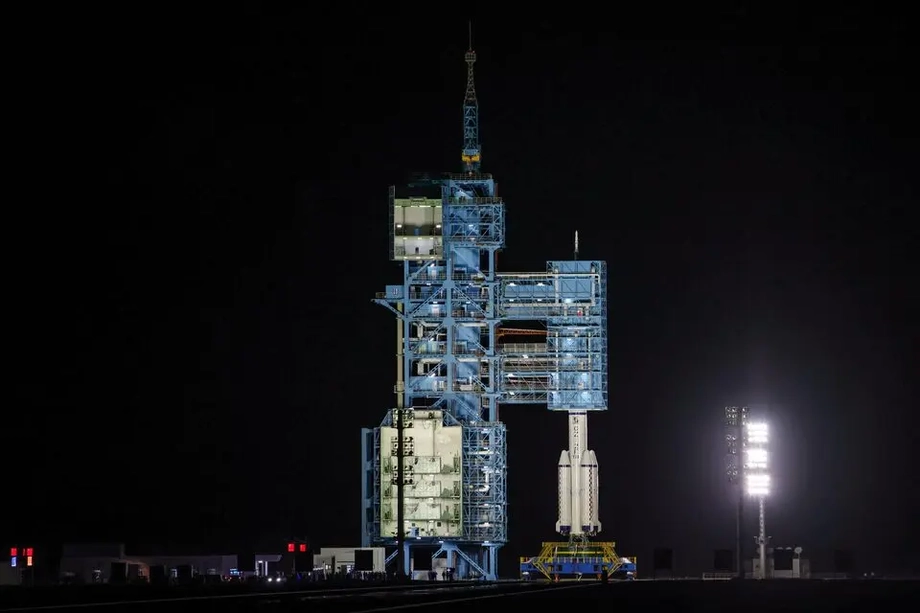
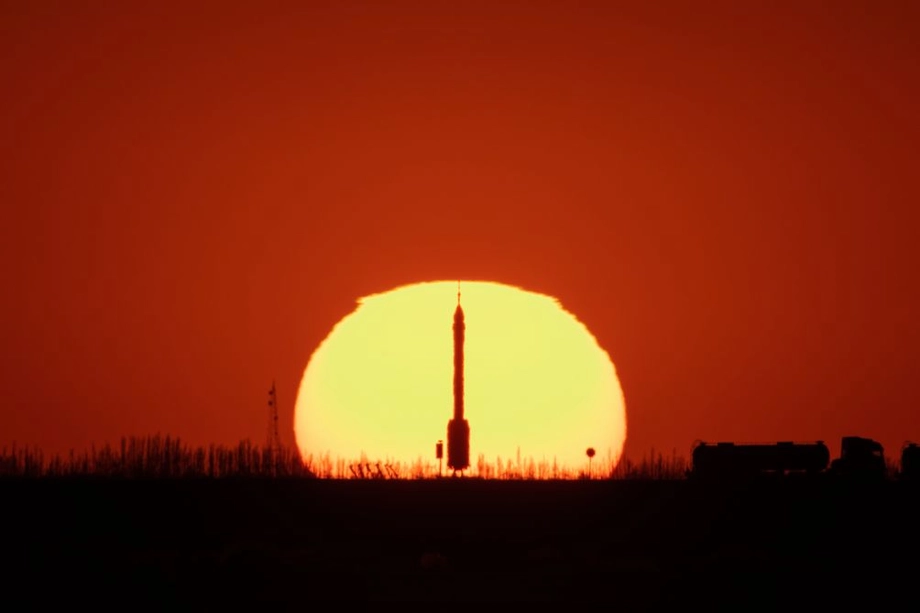
The launch site for China's Shenzhou XXIV crewed spaceflight mission has completed all preparations, with equipment, personnel and systems ready. The Shenzhou XXIV mission completed its final full-system joint rehearsal on Saturday, marking the last such exercise before liftoff. The rocket, spacecraft and all systems of the launch site are in good condition, according to the launch site. Functional checks, joint tests and propellant loading will proceed as scheduled ahead of the launch. On Nov 17, the combination of the Shenzhou XXIV spacecraft and its Long March-2F carrier rocket was transferred to the launch area. This vital transfer involved moving the nearly 60-meter-high assembly along 1.5 kilometers of seamless steel rails, a careful process lasting an hour and a half at a speed of one kilometer per hour to protect delicate internal electronics and guidance systems.
Contents
During the final rehearsal at the Jiuquan Satellite Launch Center, the entire launch and test workforce participated under the unified coordination of the Beijing Aerospace Control Center, alongside the Xi'an Satellite Control Center and various telemetry tracking posts. The exercise simulated every phase from pre-flight preparation and ignition to spacecraft and rocket separation. The three-person crew practiced full 1-to-1 operational workflows, including departure ceremonies and hatch operations. Ground teams also incorporated specific dietary customs for the incoming international flight crew, ensuring that Halal space food products were fully prepared alongside bilingual operational manuals written in English and Chinese.
Understanding the Roll-Out and Winter Preparations
Winter conditions at the Jiuquan launch site present significant challenges, with temperatures dropping close to one degree Celsius alongside brisk northwest winds. The Long March-2F carrier rocket relies on storable liquid propellants known as unsymmetrical dimethylhydrazine and dinitrogen tetroxide, which remain stable at ambient temperatures. However, the sensitive electronic brains, navigation systems, and delicate mechanical linkages cannot withstand the freezing desert drafts. Technicians addressed this by manually attaching white flame-retardant polyethylene foam insulation to the staging and tail sections of the rocket. This special thermal layer requires no mechanical release mechanism because the sheer force and vibration of liftoff simply tear the foam away as the vehicle climbs.
To maintain absolute operational readiness, launch infrastructure underwent targeted upgrades prior to this campaign. Launch site systems fully replaced all propellant injection pumps and installed voltage stabilization equipment to guarantee steady electrical power through the cold winter tests. Furthermore, smart monitoring systems track temperature and humidity data in real time to ensure every parameter meets strict pre-flight requirements.
The entire operation represents a significant evolution from the early days of China's space program. Twenty-seven years ago, the uncrewed Shenzhou I spacecraft launched from the same desert facility on November 20, 1999, to prove that a vehicle could reach orbit and return safely. Today, the scale and frequency of missions reflect a mature, routine cadence. According to official mission schedules for 2026, the year includes two crewed flights with Shenzhou XXIII and Shenzhou XXIV, plus a cargo resupply mission via Tianzhou X, which previously delivered nearly 6.2 tons of vital supplies to support both flight crews.
A Historic First With an International Astronaut
This upcoming flight breaks new ground by welcoming the first foreign national to visit the Chinese space station. One payload specialist from Pakistan will join the Shenzhou XXIV crew for a short-term scientific research stay. After completing their assigned duties in orbit, the Pakistani astronaut will return to Earth alongside members of the currently stationed Shenzhou XXIII crew. This cooperation stems from a formal agreement signed in Islamabad in February 2025 between China and Pakistan, which established the framework for selecting and training foreign astronauts. Candidates underwent a rigorous three-round selection process before training in China.
The current orbiting crew aboard the Tiangong space station consists of Zhu Yangzhu, Zhang Zhiyuan, and Li Jiaying, who launched aboard the Shenzhou XXIII spacecraft on May 24, 2026. Over the past six months, this trio has maintained continuous research operations. Their recent duties included recovering samples from the variable gravity scientific experimental cabinet, replacing and processing high-temp material cabinet samples, conducting online repairs, and installing microbial rapid detection and protection material samples. They also performed comprehensive health checks, including bone density measurements and muscle ultrasound scans, to counteract the physiological effects of weightlessness.
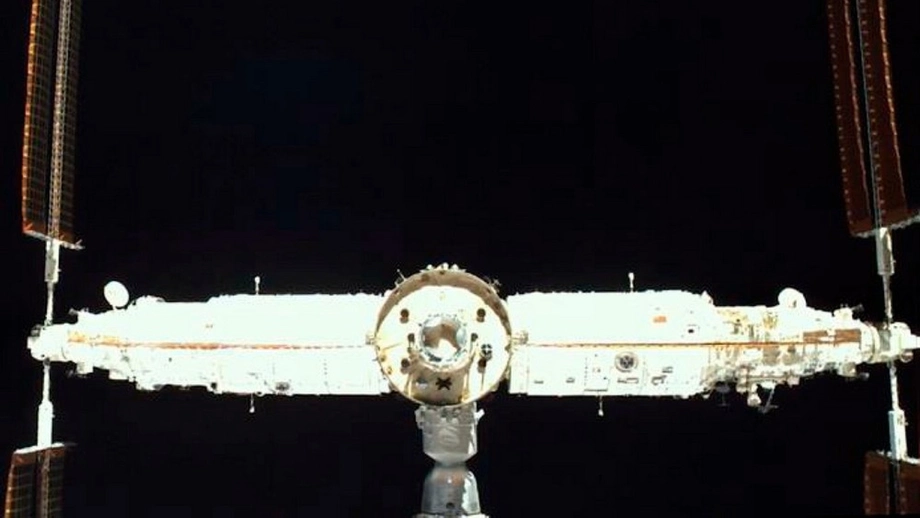
When the Shenzhou XXIV spacecraft docks with the station, the facility will briefly host six people simultaneously. This temporary doubling of the population serves as a practical test for the station's regenerative life support systems, which must handle increased oxygen consumption, water recycling, and waste management demands without a drop in performance. Such smooth crew handovers ensure that ongoing scientific experiments continue uninterrupted.
The Dual-Rocket Safety Net and Rollout Backup Strategy
Behind the visible excitement of a crewed launch lies a sophisticated safety net known as the roll-up backup mode, or the one-ready-one-backup strategy. While the Shenzhou XXIV vehicle stands ready on the pad, an identical combination featuring a Long March-2F rocket and a Shenzhou rescue spacecraft remains on standby inside the vertical assembly building. This parallel infrastructure guarantees that a rescue vehicle is always prepared if an emergency arises in orbit.
This redundancy strategy was proven during a real orbital incident on November 5, 2025, when the Shenzhou XX spacecraft experienced a delayed return due to a suspected impact from a tiny space debris fragment. Mission controllers immediately triggered China's first-ever emergency launch sequence. Ground teams activated the backup Shenzhou XXII vehicle using a 16-day emergency protocol, sending an uncrewed ship to the station to provide a fresh ride home. The stranded crew ultimately spent 204 days in orbit before returning safely, breaking previous duration records.
Experts break down China's multi-layered emergency rescue architecture into four distinct operational gradients:
- First gradient: Space station autonomous emergency handling, utilizing system redundancy and on-board repairs to resolve issues before evacuation
- Second gradient: Emergency return using the currently docked spacecraft if severe hazards threaten the station
- Third gradient: A 16-day emergency launch of a backup vehicle if the station remains safe but the docked return ship fails
- Fourth gradient: An 8.5-4-day rapid emergency launch protocol designed for the most critical situations
The roll-up backup model offers four major advantages. It boosts safety by adding an escape route, shortens rescue preparation times by keeping hardware assembled, maintains uninterrupted space station operations, and maximizes resource efficiency since unused backup ships can transition into standard missions later.
The Path Ahead for Long-Duration Spaceflight
Beyond the immediate excitement of the international partnership, the mission highlights a shift toward extended human space habitation. Space agencies recognize that standard six-month stays incur high operational costs and frequent launch cycles. To gather essential physiological data for future deep space exploration and potential crewed missions to Mars, Chinese mission planners have scheduled a one-year long-duration stay test.
Selecting the candidate for this year-long test has involved complex logistical planning. Because a standard Shenzhou return capsule holds only three people, the arrival of the foreign payload specialist aboard Shenzhou XXIV requires careful seat allocation for the return trip aboard Shenzhou XXIII. To accommodate the visiting specialist on the journey back, one of the three current station residents must remain behind to begin the year-long habitation trial, while the other two return to Earth alongside the visiting guest.
Officials have not yet publicly finalized the exact roster for the year-long assignment, as medical teams weigh health metrics, psychological endurance, and specialized task requirements. Meanwhile, the launch window details and final crew announcements remain pending ahead of the official pre-launch press conference.
At a Glance
- The Shenzhou XXIV mission completed its final full-system joint rehearsal at the Jiuquan Satellite Launch Center on Saturday.
- The mission features the first-ever inclusion of a foreign astronaut, with a Pakistani payload specialist joining the flight.
- A parallel rescue vehicle, including a Long March-2F rocket and a Shenzhou spacecraft, remains on standby in the assembly building.
- The current Shenzhou XXIII crew has spent nearly six months in orbit conducting material and medical experiments ahead of their upcoming return.
- Ground crews installed special thermal insulation foam on the rocket and updated propellant pumps to counter freezing winter conditions at the launch site.