Reaching the Deepest Cold in Space
Chinese researchers operating aboard the Tiangong space station have achieved a milestone by cooling a cloud of rubidium atoms to an equivalent temperature of 9.7 picokelvin. Announced on November 6, 2026, the breakthrough was detailed in an online publication of the journal Science. The measurement places the atomic cloud just trillionths of a degree above absolute zero, the theoretical lower limit of temperature where thermal motion ceases entirely. Absolute zero corresponds to minus 273.15 degrees Celsius. The newly reported equivalent temperature amounts to 0.0000000000097 kelvin, establishing a new benchmark for artificial matter in space.
Contents
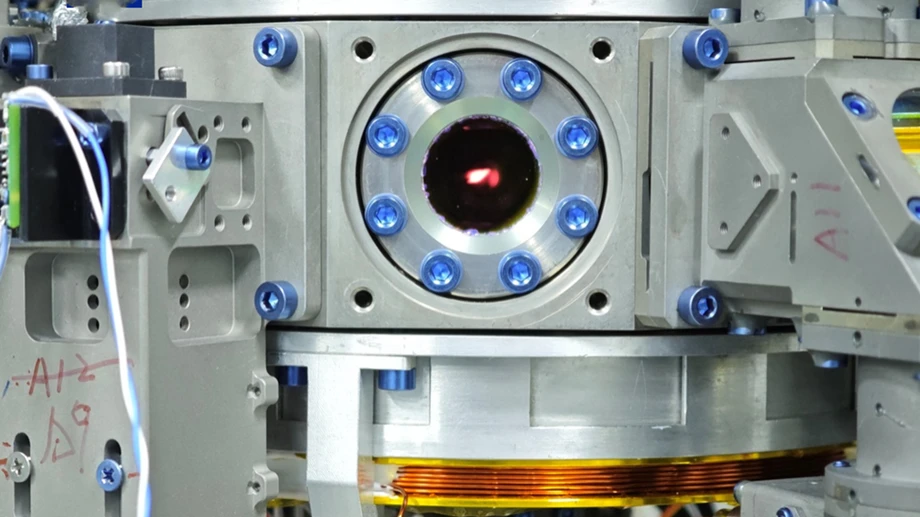
The experiment took place inside the ultra-cold atom physics rack located within the Mengtian laboratory module of the Tiangong spacecraft. Planning for the project began in 2011, culminating after fifteen years of collaborative engineering and scientific development. The effort was organized by the Technology and Engineering Center for Space Utilization under the Chinese Academy of Sciences, with contributions from Peking University and the Shanghai Institute of Optics and Fine Mechanics. The resulting apparatus successfully integrated equipment that traditionally occupies twenty cubic meters and weighs ten metric tons into a compact rack measuring just 0.7 cubic meters and weighing approximately 500 kilograms.
Wang Qiang, chief commander of the space application system of China's manned space program, spoke about the collaborative effort required to build the facility. Wang Qiang noted that the achievement reflected the dedication of multiple teams working toward a common goal. Following the successful deployment, officials announced plans to welcome international researchers to utilize the orbital platform.
This is the result of close collaboration between the overall system, the science team and the engineering team.
How Scientists Chilled Atoms Below Past Records
Creating such extreme conditions requires slowing down atoms, which constantly move and collide in random thermal motion at room temperature. The research team began the process with approximately two million rubidium-87 atoms, an isotope frequently chosen for quantum research due to its favorable properties under laser manipulation. Researchers used laser cooling to reduce the velocity of the particles, followed by an optical dipole trap that used focused laser beams to hold the atoms in place. Through a technique called evaporative cooling, scientists systematically lowered the laser power to allow higher-energy atoms to escape while retaining the colder particles.
Unlike many international laboratories that rely on magnetic traps formed by atomic chips, the Chinese team chose an all-optical trapping method. According to researchers, this optical approach offers distinct advantages for space-based operations. It remains less sensitive to magnetic interference, provides greater flexibility for complex optical setups, and allows for more precise control over the quantum gases. A magnetic-field gradient assisted the initial cooling phase, helping to produce a stable condensate less vulnerable to external disturbances. Ultimately, the team created a Bose-Einstein condensate containing approximately 23,000 atoms at a temperature of 3.1 nanokelvin before further expanding the cloud and shutting off the lasers entirely.
Li Tang, a researcher at the Shanghai Institute of Optics and Fine Mechanics, described the rigorous engineering hurdles involved in preparing the equipment for orbital flight. Li Tang explained that the hardware had to meet strict aerospace standards while housing multiple advanced technologies in a confined space.
The engineering challenge was to concentrate multiple cutting-edge technologies under strict aerospace requirements.
Comparing the New Benchmark to Previous Milestones
The newly established 9.7-picokelvin figure surpasses previous benchmarks achieved in ground and orbital laboratories. The prior record was 38 picokelvin, set in 2021 by a German research team utilizing a drop tower that subjected atoms to brief periods of free fall. Meanwhile, the Cold Atom Laboratory aboard the International Space Station previously achieved an equivalent temperature of 52 picokelvin using magnetic trapping and matter-wave lensing techniques. The Tiangong experiment pushed the equivalent temperature substantially lower than both previous milestones.
Scientists emphasize that the 9.7-picokelvin figure represents an equivalent temperature rather than a conventional thermodynamic reading. At such extreme scales, traditional thermometers cannot measure the thermal state of the system directly. Instead, researchers determine the equivalent temperature by observing how rapidly the atomic cloud expands in three dimensions after release from the trap. A slower expansion rate indicates lower kinetic energy within the particles. Measurements included an uncertainty range spanning from 7.0 to 12.9 picokelvin, reflecting the precision limits inherent in tracking expanding quantum gases.
The atomic cloud created inside Tiangong is approximately 280 billion times colder than the cosmic microwave background radiation pervading the universe, which maintains a temperature of about 2.7 kelvin. The achievement builds directly upon methods explored in earlier studies, expanding humanity's capacity to investigate matter under extreme conditions as detailed in this site's reporting on atomic cooling.
Extending the Window for Quantum Observation
Temperature reduction represents only one aspect of the breakthrough, as the duration of observation is equally critical for advanced physics research. When researchers release a trapped atomic cloud to study its expansion, gravity pulls the particles downward, causing them to fall out of the field of view within fractions of a second in standard terrestrial laboratories. Ground-based drop towers typically provide an observation window of approximately 0.05 seconds, whereas the International Space Station has maintained observation windows of roughly one second.
Operating within the microgravity environment of the Tiangong space station allowed researchers to track the freely expanding atomic cloud for a full seven seconds. This extended window provides a slower, more detailed view of quantum behavior, granting scientists more time to analyze delicate physical phenomena. Xiong Wei, a co-first author of the research paper, highlighted the importance of this extended timeframe.
The longer we can observe, the more likely we are to find new and fainter physical phenomena.
Longer observation periods directly benefit instruments such as atom interferometers, which measure gravity, acceleration, and subtle physical forces by exploiting the wave-like properties of atoms. Because the sensitivity of these devices scales with the square of the observation time, a seven-second window significantly enhances measurement precision. The extended timeframe allows researchers to study complex interactions that would normally be obscured by rapid thermal movement, continuing developments noted in earlier coverage of space station atomic cooling.
Unlocking New Frontiers in Fundamental Physics
Reaching picokelvin temperatures stretches the de Broglie wavelengths of atoms to observable macroscopic scales, making quantum mechanical effects clearly visible and controllable. A Bose-Einstein condensate forms when large numbers of atoms occupy the exact same quantum state, acting collectively as a single giant matter wave rather than a collection of independent particles. This unique state of matter serves as a versatile platform for quantum simulation, allowing scientists to investigate complex systems without the interference of random thermal collisions.
Researchers intend to use the Tiangong facility to explore exotic quantum phases, including Bose-glass and fractal Mott phases, which describe disordered quantum systems and particle correlations. Another planned research direction involves studying Tomonaga-Luttinger liquids, which are one-dimensional quantum systems exhibiting collective particle behavior unlike anything found in standard three-dimensional materials. Chen Weibiao, a researcher at the Shanghai Institute of Optics and Fine Mechanics, explained that the platform could support investigations into phase transitions and early universe simulations.
The technology also holds potential for testing foundational physical principles, such as the equivalence principle underlying Einstein's theory of general relativity. By employing space-based atom interferometers with high sensitivity, scientists hope to examine the relationship between gravity and acceleration with unprecedented accuracy. While these applications remain future research goals, the current experiment has successfully demonstrated that ultracold quantum gases can be maintained and observed in orbit for extended durations.
Global Collaboration and Future Prospects
Lyu Congmin, chief designer of the space application system of China's manned space program, emphasized the open nature of the facility following the successful publication of the findings. Lyu Congmin stated that international researchers are invited to utilize the ultra-cold atom physics rack aboard the Tiangong space station to advance global scientific understanding.
Beyond foundational physics, the mastery of ultracold atoms could eventually influence practical technologies on Earth. High-precision atomic clocks, advanced quantum sensors, and space-based measurement systems may improve inertial navigation, satellite orbit determination, and the monitoring of environmental changes such as global ocean currents and ice sheet dynamics. By combining microgravity with advanced optical trapping techniques, the Tiangong facility has established a new operational standard for space-based quantum experimentation.
At a Glance
- Chinese researchers cooled a cloud of 20,000 rubidium-87 atoms to an equivalent temperature of 9.7 picokelvin aboard the Tiangong space station.
- The achievement was announced following publication in the international journal Science on November 5, 2026.
- The experiment utilized an all-optical trapping system inside the Mengtian laboratory module's ultra-cold atom physics rack.
- The observation window for the expanding atomic cloud reached seven seconds, surpassing previous space and drop-tower records.
- Future applications of the platform include quantum simulation, precision gravity measurements, and tests of the equivalence principle.