A cloud of 20,000 atoms sets a new benchmark
Chinese researchers have cooled about 20,000 rubidium atoms aboard the Tiangong space station to an equivalent temperature of 9.7 picokelvin, or 9.7 trillionths of a degree above absolute zero. The team then followed the released cloud as it expanded for seven seconds, gaining a longer window for studying quantum physics and developing precise measurements of gravity.
Contents
- A cloud of 20,000 atoms sets a new benchmark
- What does 9.7 picokelvin mean?
- How atoms begin behaving as one wave
- Cooling with light and controlled escape
- Why orbit makes seven seconds possible
- A laboratory compressed into a cabinet
- Longer observations could improve gravity measurements
- Laser traps offer routes to other quantum experiments
- The next challenge is a useful instrument
- Key Points
The result, described in the paper Quantum gases below 10 picokelvin in space, published online in Science on November 5, 2026, lowers the previous reported benchmark of 38 picokelvin from a German experiment in 2021. NASA's Cold Atom Lab aboard the International Space Station had previously reached 52 picokelvin.
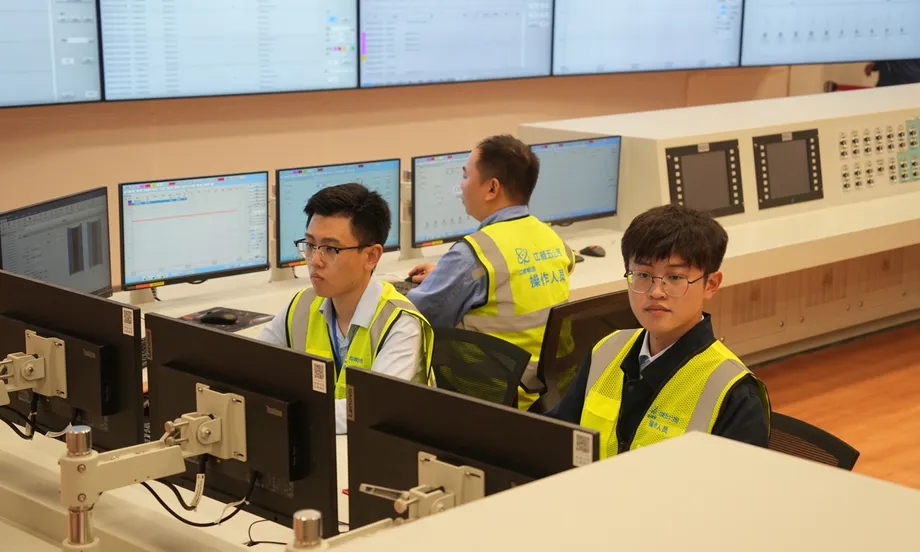
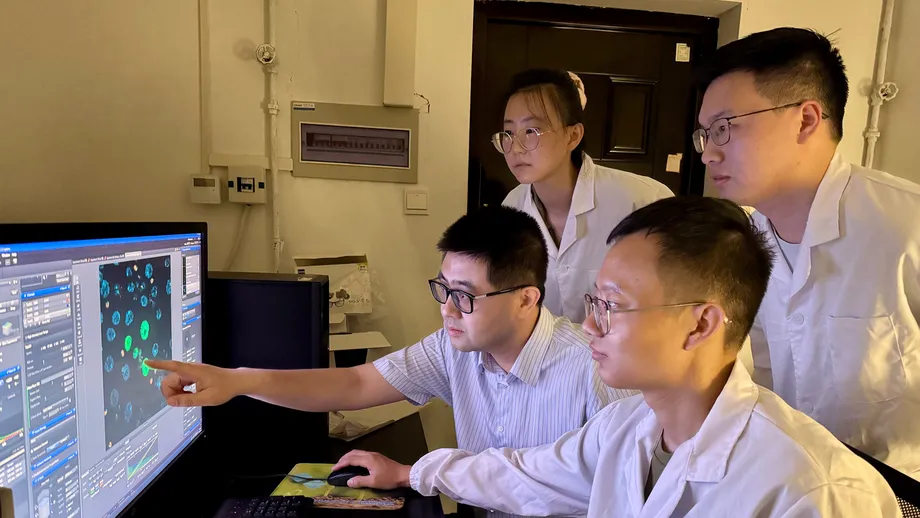
The Chinese Academy of Sciences describes the achievement in its atomic cooling announcement as a record according to the research team. Researchers from Peking University, the Shanghai Institute of Optics and Fine Mechanics, and the academy's Technology and Engineering Center for Space Utilization carried out the work inside Tiangong's Mengtian laboratory module.
The central estimate comes with an uncertainty range of 7.0 to 12.9 picokelvin. Scientists calculated it from the speed at which the cloud spread after release. The temperature belongs to the atoms' expansion motion; the rack, spacecraft and surrounding equipment operated at much higher temperatures.
Seven seconds may sound brief, but atoms released inside an ordinary laboratory quickly fall out of view. Tiangong's environment allowed the cloud to expand slowly while floating relative to the apparatus, giving researchers time to measure behavior that is difficult to follow on Earth.
What does 9.7 picokelvin mean?
Absolute zero is zero kelvin, equivalent to minus 273.15 degrees Celsius. The kelvin scale begins at this lower limit, making it useful for comparing extremely small temperatures. A picokelvin is one trillionth of a kelvin.
The reported 9.7 picokelvin is an effective, or equivalent, temperature. Researchers photographed the expanding cloud from two directions, measured how quickly it spread through three dimensions, and expressed the energy associated with that motion as a temperature. A cloud that expands more slowly has a lower equivalent temperature.
The faint radiation left from the Big Bang has a temperature of about 2.7 kelvin. Dividing that figure by 9.7 trillionths of a kelvin gives roughly 280 billion, the basis for describing the atomic cloud as about 280 billion times colder than the universe's background radiation.
The previous 38 picokelvin benchmark is about 3.9 times the new central estimate. The experiments used different traps and cooling procedures, so their numerical comparison is approximate. The Tiangong result has yet to be independently reproduced.
How atoms begin behaving as one wave
The researchers prepared rubidium-87, a particular form of the element rubidium, in a Bose-Einstein condensate. Often called the fifth state of matter, this state appears when many atoms occupy the same quantum state and behave collectively.
Satyendra Nath Bose and Albert Einstein developed the ideas behind the phenomenon in the 1920s. Scientists first produced a Bose-Einstein condensate in a dilute atomic gas in 1995. Such condensates now let physicists examine quantum behavior across collections of atoms large enough to image.
Quantum mechanics describes matter as having wave properties as well as particle properties. In a condensate, those wave properties become organized across the cloud. Researchers can then manipulate a shared matter wave instead of trying to track thousands of unrelated atomic motions.
Cooling with light and controlled escape
The Tiangong experiment began with about 2 million rubidium atoms. Crossed laser beams formed an optical dipole trap, a region where the light held the atoms in place. Reducing the laser power weakened the trap and allowed the most energetic atoms to escape.
This process is called evaporative cooling. It follows the same broad principle that cools a drink as its most energetic molecules leave through evaporation: the particles that remain have less energy on average.
The experiment produced roughly 20,000 atoms at about 3 nanokelvin before the final cooling stages. More detailed intermediate figures put the sample at about 23,000 atoms and 3.1 nanokelvin, with approximately 89 percent occupying the condensate's shared quantum state. These figures describe an earlier stage of preparation than the final expansion measurement.
Microgravity introduced its own difficulty. On Earth, gravity helps direct energetic atoms toward an escape route in the trap. Evaporation becomes less efficient without that downward pull relative to the apparatus. The researchers added a weak magnetic gradient, a magnetic field that changes with position, to help remove energetic atoms.
The remaining cloud moved into a wider, weaker optical trap. The final procedure reduced the confinement over about 1.175 seconds and included a non-adiabatic expansion, a change in the trap that reshaped the cloud's motion. After release, the atoms spread with the energy equivalent of 9.7 picokelvin.
Why orbit makes seven seconds possible
Tiangong remains under Earth's gravity. Its apparent weightlessness comes from continuous free fall around the planet: the station, apparatus and atoms fall together. Scientists call this environment microgravity.
On the ground, a very weak trap struggles to hold atoms against gravity. Strengthening the confinement helps keep them inside, but makes the final cooling harder. In orbit, researchers can loosen the trap much further while keeping the cloud within their experimental space.
Wolfgang Ketterle, a professor of physics at the Massachusetts Institute of Technology and a 2001 Nobel laureate, explained the practical problem posed by a seven second observation on Earth:
On Earth, it would fall down by about 250 meters, so it would actually crash to the ground unless you have a vacuum chamber, which is 250 meters high,
The useful comparisons depend on the apparatus. Ordinary ground experiments described by the researchers could observe a released cloud for about 0.05 seconds. The earlier experiment using a drop tower achieved about two seconds of free expansion. Tiangong's seven seconds is therefore about 140 times the ordinary laboratory figure and 3.5 times the earlier tower observation.
The 2021 record experiment at the University of Bremen used a drop tower to provide temporary weightlessness. Orbit extends that opportunity because the experiment continues falling around Earth rather than reaching the bottom of a tower.
A laboratory compressed into a cabinet
The Cold Atom Physics Rack occupies about 0.7 cubic metres and weighs roughly 500 kilograms. Its ground counterpart occupied around 20 cubic metres and weighed about 10 tonnes. The space instrument uses approximately one twenty-ninth of the volume and one twentieth of the mass.
The rack combines lasers, precision optics, an ultrahigh vacuum system and automated controls. The vacuum keeps stray gas particles from colliding with the ultracold atoms, while the controls maintain the carefully timed sequence needed to prepare and release the cloud.
Li Tang, a researcher at the Shanghai Institute of Optics and Fine Mechanics, described an alignment task involving more than 20 laser beams. They had to meet at an atomic cloud only tens of micrometres across, with an error of no more than five micrometres. A micrometre is one thousandth of a millimetre.
The instrument also had to survive launch, operate within spacecraft power limits and retain its precision in orbit. Development stretched across about 15 years, from initial feasibility work to the published result.
- 2011: Initial assessment of the space facility began.
- 2021: An experiment using the Bremen drop tower reached the previous benchmark of 38 picokelvin.
- 2022: The Chinese facility launched aboard the Mengtian laboratory module.
- November 5, 2026: The Tiangong team's paper was published online in Science.
Longer observations could improve gravity measurements
Atom interferometers are among the instruments that could benefit from the experiment. They split an atom's matter wave into different paths, then bring the paths together. Differences accumulated along the way produce an interference signal that can reveal tiny accelerations or gravitational effects.
Ernst M. Rasel, a professor of physics at Leibniz University Hannover in Germany whose team achieved the previous temperature record, described the combination needed for such measurements:
Atom interferometers highly benefit from sources providing a large number of atoms in an ultracold ensemble and long observation times,
Rasel explained that sensitivity increases with the square of the time atoms spend in the interferometer. Longer measurement times can therefore bring a much larger gain than the same proportional increase in time alone.
The next step he identified is an interferometer in orbit that keeps atomic waves coherently split for several seconds. Coherence means the waves retain the relationship needed to produce a useful signal when reunited. The seven seconds of cloud observation provides a starting point for developing that capability.
Such instruments could measure variations in Earth's gravitational field or improve measurements of spacecraft motion. They could also compare how different types of atoms fall, testing the equivalence principle, a foundation of Einstein's general theory of relativity. This principle says objects fall in the same way under gravity regardless of their mass or composition when other forces are removed.
Laser traps offer routes to other quantum experiments
The Tiangong team chose optical trapping rather than the atom chip magnetic traps used in earlier record experiments. Holding atoms with light reduces some constraints associated with magnetic trapping and provides room to arrange more complicated laser patterns.
An optical lattice is one possible arrangement. Intersecting laser beams create a repeating pattern that can hold atoms in an orderly structure resembling a crystal. Researchers can change that structure and control how the atoms interact.
This approach supports quantum simulation: using one controllable quantum system to investigate another that is harder to study directly. Instead of calculating every interaction in a complicated material, scientists can build an atomic model and observe its behavior.
The Chinese Academy of Sciences also identifies investigations of dark matter models as a possible direction. Some proposals concern hypothetical ultralight particles whose effects might be sought with sensitive quantum measurements. Gravity mapping, navigation, quantum simulation and dark matter searches are proposed uses for further development.
The next challenge is a useful instrument
Peking University researchers Xiong Wei and Jin Shengjie, the paper's co-first authors, describe longer observation as a way to improve the chances of detecting weaker physical phenomena. Keeping a cloud cold and visible is the foundation for experiments that must also manipulate it precisely.
Atom number will matter alongside temperature. A cloud of about 20,000 atoms is useful for studying collective quantum behavior, while many precision measurements benefit from larger samples. Researchers still need to determine how routinely the facility can combine larger clouds, very slow expansion and lasting coherence.
The optical system gives the team several adjustable tools: trap strength, laser geometry, magnetic gradients and release timing. Turning those controls into a reliable measuring instrument will require repeated experiments and careful measurement of disturbances.
Ketterle described the achievement as "an excellent starting point to advance atomic thermometry and precision measurements." The immediate advance is concrete: a slower expanding atomic cloud, measured for seven seconds, inside an experimental system that operates in orbit.
Key Points
- Researchers aboard Tiangong reported an equivalent atomic temperature of 9.7 picokelvin, with an uncertainty range of 7.0 to 12.9 picokelvin.
- The result came from the expansion of about 20,000 rubidium atoms prepared as a Bose-Einstein condensate.
- The previous reported benchmark was 38 picokelvin in a German experiment using a drop tower.
- The team observed the freely expanding cloud for seven seconds in microgravity.
- The facility launched with Mengtian in 2022 after development work that began in 2011.
- Future research could develop atom interferometers, gravity measurements, quantum simulations and tests of fundamental physics.