Driving permits open on Monday, the vehicles must wait
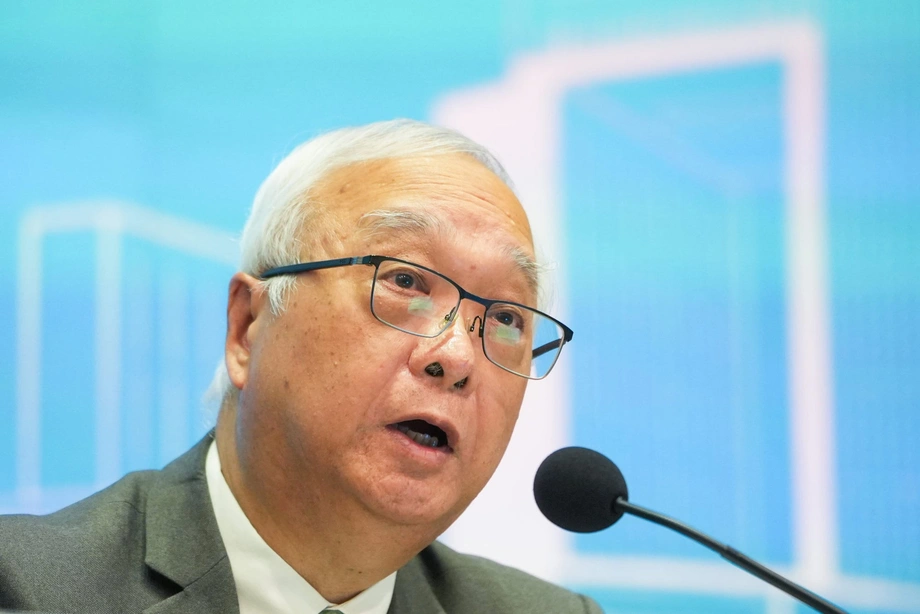
The Transport Department will accept applications for ride-hailing vehicle driving permits from 10am on Monday, November 30, Commissioner for Transport Winnie Tse Wing-yee announced on November 26. The permits carry no quota, applications run all year, and the department says the process is not first come, first served, so no driver needs to file in the first minute.
Contents
- Driving permits open on Monday, the vehicles must wait
- Dates that set the pace
- Who can hold a driving permit, and what it costs
- What the combined written test asks
- Ten thousand vehicle permits and a weighted ballot
- Insurers line up as premiums take shape
- Eight platform applications under review
- Drivers doubt 10,000 cars are enough
- Key Points
What will not be ready is the second half of the system. A private car can only carry paying passengers once it holds a ride-hailing vehicle permit, and the law caps those at 10,000. The department now plans to invite applications in early 2027, months after the fourth quarter of 2026 that this year's Policy Address named as the point when drivers and vehicles would begin receiving their licences.
The consequence is plain. Platforms that win service licences cannot start taking bookings under the new regime before the end of 2026. Tse did not give a reason for the shift in timing on vehicle permits, saying only that her department is pressing ahead on every front.
Our ultimate goal is for Hong Kong to have compliant, safe ride-hailing services as soon as possible. All the work is going ahead at full speed," she said. "The platform applications closed only last month, and we are examining what they contain without pause.
Her advice to drivers was to ignore calendar pressure. "What opens on Monday is the driving permit. It has no cap, it is accepted all year and it is not first come, first served, so applicants do not need to rush to submit at the first moment," Tse said.
Dates that set the pace
The rules reached this point in stages, and each stage left work for the next one.
- October 2025: the Legislative Council passes the regulatory framework for ride-hailing services.
- August 3, 2026: the first batch of legal provisions takes effect, and applications open for the taxi and ride-hailing combined written test.
- Mid September 2026: the first candidates sit the combined test.
- September 25, 2026: enrolment opens for the pre-service course for ride-hailing drivers, a course of 12 hours.
- October 2026: 11 designated training schools begin teaching the course.
- October 30, 2026, noon: the application period for platform licences closes, with eight applications received.
- November 30, 2026, 10am: driving permit applications open online.
- Early 2027: vehicle permit applications, capped at 10,000, with a ballot if demand runs above the cap.
The department's ride-hailing page sets out the three legs of the regime: a car with a valid vehicle permit, a driver with a valid driving permit, and a booking made through a platform that holds a service licence. All three must be in place before a trip counts as legal.
The vehicle permits sit behind that queue. Officials are still working through the eight platform licence applications and finishing technical details for both the driving permit and the vehicle permit. The department says it will announce the vehicle permit application window and deadline in due course.
Who can hold a driving permit, and what it costs
The qualifications for a driving permit track those for commercial vehicle drivers. An applicant must meet a list of conditions that the department's ride-hailing page spells out in full:
- Be at least 21 years old on the day of application.
- Hold a Hong Kong permanent identity card, or an identity card with no condition of stay other than a limit of stay.
- Have held a full private car or light goods vehicle driving licence for at least one year before applying.
- Have passed the combined written test within the three years before applying, and have completed the pre-service course within the previous year.
- Have no conviction in the past five years for the serious traffic offences named in the Road Traffic Ordinance (Cap 374), a list that covers dangerous driving and drink driving.
- If aged 70 or above, submit a doctor's certificate confirming fitness to drive and control a ride-hailing car.
- Not have had a driving permit cancelled in the previous three years.
The fee is HK$82 a year, and part of a year counts as a full year. A permit runs with the expiry date of the applicant's private car or light goods vehicle licence and cannot last more than five years. Approved applicants receive an electronic permit through the department's electronic driving licence mini app rather than a paper document.
Holders of a valid full taxi driving licence can skip both the test and the course and apply directly, a concession the department has repeated in its announcements. Applications go through the GovHK portal using iAM Smart for login, with an identity card upload, contact details and payment. Enquiries go to 2804 2600.
Money follows the vehicle, and those fees are larger. A vehicle permit costs HK$540 where it is valid for four months or less, HK$1,560 for more than four months up to a year, and HK$2,100 beyond a year, with the period tied to the car's own licence expiry. A vehicle certificate costs HK$245 and a duplicate HK$125, while changing the car on a permit costs HK$1,500. A platform pays HK$16,250 to apply and HK$1.2 million a year for its licence.
What the combined written test asks
The taxi and ride-hailing combined written test has run since August 3 and comes in two parts, both of which must be passed before the overall result counts. Part A, on taxi and ride-hailing operations, has 30 multiple choice questions in 45 minutes, with 25 correct answers needed. Part B, on the road users' code, has 35 questions with a pass mark of 30. Part A also tests knowledge of Hong Kong places and route planning, drawing on a booklet and the Lands Department's Hong Kong street guide.
Exams take place on computers at the written test centre in the Cheung Sha Wan Government Offices, where candidates can warm up on practice machines. They choose traditional Chinese, simplified Chinese or English on screen, and must bring an identity document, a full Hong Kong driving licence and the appointment letter. The Transport Department has said it will add test sessions as needed.
Demand has been heavy. Secretary for Transport and Logistics Mable Chan said more than 15,000 people have sat the combined test and more than 9,000 have passed. The written test page for candidates is available through the department's driving test booking service, and the 11 designated schools have offered the pre-service course since October.
Ten thousand vehicle permits and a weighted ballot
A car needs more than a willing driver. The applicant must already hold a driving permit, must be the registered owner of the car, and the car must have a valid vehicle licence and have been built less than 12 years before the application date. Where it was built six years or more before applying, it needs a certificate of roadworthiness issued within the previous year, and it must carry a valid third party risk insurance policy under the Motor Vehicles Insurance (Third Party Risks) Ordinance (Cap 272). Anyone holding a hire car permit must agree in writing to surrender it.
Some of that can wait for the draw. At the moment of applying, the owner must satisfy the requirements on ownership, the vehicle licence, the car's age, the roadworthiness certificate and any earlier cancellation. Only after the ballot results are published does a winner have to obtain the driving permit, buy the insurance and pay the vehicle permit fee.
Every eligible applicant starts with at least one basic chance in the draw. Two groups get extra chances, and the department has not said how many. The first covers people who have passed the combined test or hold a valid driving permit, including taxi licence holders converting their licences, by the time vehicle permit applications close. The second covers people who owned a private car for some period before August 3, 2026, the day the first provisions took effect.
A government spokesman framed the weighting as a way to speed up the rollout and to cool the market for cars bought purely for hire.
Using a ballot and giving designated people extra chances is meant to give a better chance to those who meet the vehicle permit requirements early, to speed up the whole issuing process so compliant ride-hailing can start service sooner. It also helps avoid drawing a rush of applicants buying cars for operating purposes, which would add to the load on Hong Kong's road system.
Ben Chan Han-pan, who chairs the Legislative Council panel on transport, made the practical case for the August 3 cut off in terms of timing on the driver side. "We need to give more people time to get the licence before they can have a chance in the ballot, so everyone gets a month to get the licence," he said. He also warned that the value of extra chances depends on how crowded the draw becomes.
Ringo Lee Yiu-pui, honorary life president of the Hong Kong, China Automobile Association, called priority for experienced drivers reasonable given tourist demand for ride-hailing in an international city, and said seasoned operators help steady the market. He expected younger part time taxi drivers who already own private cars to be the most likely group to move across.
Insurers line up as premiums take shape
Cover is the step that turns a winning applicant into a licensed car. More than 10 insurers are preparing products, offering either a standalone policy or an endorsement added to an existing private car policy, according to the Hong Kong Federation of Insurers. The federation says insurers will cover the same car for commercial ride-hailing use and private use so that every trip is protected.
On price, the federation expects competition to push the ride-hailing endorsement to as low as HK$10,000 to HK$13,000. That figure covers the added protection only and excludes what the owner already pays for private car cover. Insurers set their own rates on factors including the car's model and age, the driver's age and experience, claims history and traffic offence records, so two identical cars can attract different quotes. The federation says the market could move to sharper pricing on risk once platforms share real operating and trip data.
Eight platform applications under review
Platform licences closed to new applicants at noon on October 30 with eight bids on file. A panel drawn from the Transport and Logistics Bureau, the Transport Department and the Digital Policy Office is assessing them on experience running legal ride-hailing services elsewhere, financial capacity, the operating model proposed for Hong Kong, how the service would be regulated and how drivers would be matched to cars.
The government has set no ceiling on how many drivers or vehicles a platform may recruit, and no limit on how many platforms a licensed driver may join. An approved platform must carry out checks on the cars and drivers using it, including confirming that permits are valid and that only the registered owner drives the car, the rule that binds a driver to a single vehicle. A platform licence applicant must be a company registered in Hong Kong.
Drivers doubt 10,000 cars are enough
Among drivers considering the new permits, the 10,000 figure is the sore point. Some say the quota is too small for a city of Hong Kong's size, and some passengers worry that booking a car will become harder rather than easier once the rules bite. Added to that, holding a driving permit is no guarantee of work, because a driver without a vehicle permit has no car to drive for hire.
Uber, which filed its platform application in October, has moved to hold its driver base together through the transition. It is offering discounts at four local driving schools, a HK$500 cash rebate for certain drivers who finish a course and the exam, a vehicle purchase scheme with Carro, a one off resale support payment of HK$20,000 for drivers who ultimately miss out on a vehicle permit, vehicle loan arrangements with banks and finance companies, a doubled support team and briefing sessions on the new rules. The company says it is not a party to any car purchase or loan arrangement and that the offers carry conditions.
The company's general manager for Hong Kong, Macau and Taiwan said Uber treats Hong Kong as an important market and will stand with its driver partners during the transition, helping them obtain permits in a lawful and compliant way.
Key Points
- Applications for ride-hailing vehicle driving permits open at 10am on November 30, 2026, with no quota, all year round, and no first come, first served rule.
- Ride-hailing vehicle permits, capped at 10,000, will be open to applications only in early 2027, so licensed platforms will not operate in the fourth quarter as the Policy Address targeted.
- A driving permit costs HK$82 a year and requires age 21 or above, a full private car or light goods vehicle licence held for a year, the combined written test and a 12 hour pre-service course.
- Valid taxi licence holders can apply directly without the test or the course.
- Vehicle permits require a car under 12 years old, a valid vehicle licence, registered ownership and third party risk insurance.
- If applications exceed 10,000, a ballot decides, with extra chances for those who passed the test or hold a driving permit, and for people who owned a private car before August 3, 2026.
- More than 10,000 vehicle permits cannot be issued, and the department has not said how many extra ballot chances the two priority groups will get.
- Eight platform licence applications are under review by a panel from the Transport and Logistics Bureau, the Transport Department and the Digital Policy Office.
- More than 10 insurers are preparing cover, with the ride-hailing endorsement expected to cost from HK$10,000 to HK$13,000.
- More than 15,000 people have sat the combined test and more than 9,000 have passed.