A new allocation for Hong Kong residents already waiting
Canada plans to accelerate permanent residence processing for thousands of Hong Kong residents in 2027, with an allocation of 32,000 places under a temporary measure, according to Hong Kong Watch. The announcement follows warnings to Parliament that 34,150 people were waiting while only 800 admissions were planned for 2026.
Contents
- A new allocation for Hong Kong residents already waiting
- How the temporary measure fits Canada's immigration plan
- Why applicants faced such a long queue
- What the application figures show
- How the pathway reached this point
- What waiting means for families
- Work permits remain available during processing
- What advocates sought and what comes next
- How the wider admissions numbers fit together
- Key Points
The measure accompanies Canada's 2027–2029 Immigration Levels Plan, which maintains a regular target of 380,000 permanent resident admissions annually. Hong Kong Watch says the government will provide up to 100,000 additional humanitarian admissions in 2027, including the 32,000 places for the Hong Kong Pathway, commonly called the lifeboat scheme.
The pathway closed to new applications on August 31, 2026. People who submitted applications by the deadline remain eligible for processing. The new allocation is intended to move existing cases through the system, while the application window stays closed.
For families already living in Canada, the central change is the prospect of a decision after years of uncertainty about careers, education and where to settle. Immigration, Refugees and Citizenship Canada, known as IRCC, aims to complete the accumulated Hong Kong cases in 2027.
Hong Kong Watch welcomed the announcement on November 6, 2026, while calling for faster processing and a clear timetable. The government's published plan describes additional processing space for people already in Canada, including those waiting under humanitarian commitments. Its supplementary page gives the broad framework, while Hong Kong Watch's announcement supplies the specific allocation for Hong Kong applicants.
How the temporary measure fits Canada's immigration plan
IRCC's immigration levels plan sets a permanent residence target of 380,000 for each year from 2027 through 2029, with an operating range of 352,500 to 422,000 annually. The range gives the department room to adjust admissions as needs and processing demands change.
The plan also introduces a measure lasting through 2027 for two groups. One consists of workers already in Canada and their accompanying family members, with provinces and territories involved in addressing regional labour needs. The other consists of people already in Canada who have waited many years under humanitarian commitments.
IRCC says moving these residents to permanent status will improve immigration administration, support the economy and keep families together. Because the people concerned already live in Canada, the department says the change will not increase pressure on services and infrastructure.
The regular Humanitarian and Compassionate and Other category remains at 5,000 admissions annually, with a range of 4,500 to 8,000. That category covers people selected on humanitarian grounds, through public policies and under the permit holder class. The additional processing space is therefore central to the effort to clear a queue much larger than the regular annual allocation.
Why applicants faced such a long queue
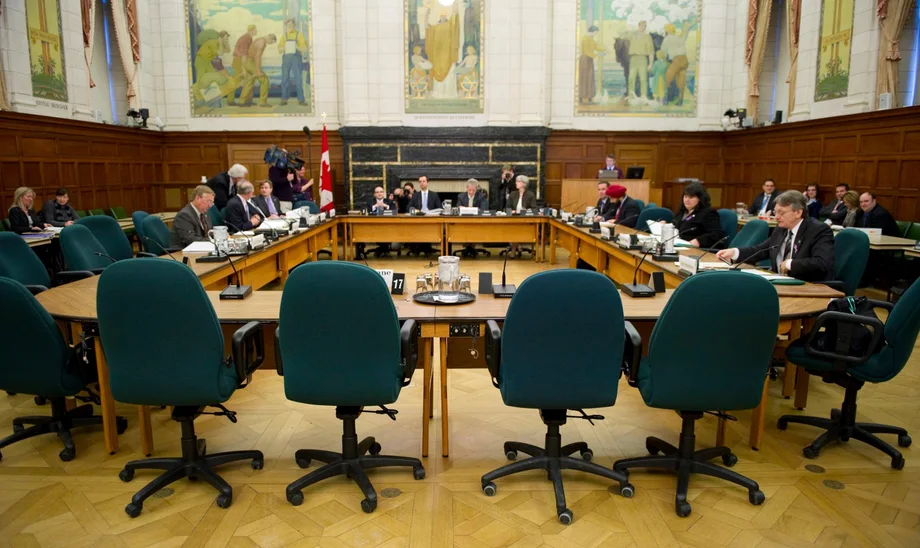
Landson Chan of Hong Kong Watch told the House of Commons immigration committee on October 29 that 34,150 applicants were waiting, against an admission target of 800 for 2026. Dividing that queue by 800 produces more than 42 years of admissions at an unchanged rate.
Chan described the problem to the committee in direct terms:
At that rate, curing the queue would take more than 40 years," he said. "Meanwhile, the open work permit that supports these applicants ends in May 2029.
The proposed allocation of 32,000 Hong Kong places is 40 times the 800 admissions cited for 2026. It is also about 94% of the 34,150 people Chan said were waiting in October. Those figures show the scale of the planned increase and the importance of the final caseload when processing begins.
Before the announcement, IRCC briefing material had indicated that most Hong Kong pathway applicants would be processed after 2027. The new initiative brings forward the intended completion period to 2027, although an individual processing schedule has yet to be published.
What the application figures show
A March 31 tally put the pathway's intake at roughly 46,000 applications, with about 32,000 still waiting. IRCC's June 30, 2026 figures gave a more detailed breakdown: 30,315 applications covering 48,560 people, including family members.
By June 30, more than 8,600 applications representing 13,485 people had been approved, and about 13,370 people had become permanent residents. Approval is the decision on an application; admission records the person obtaining permanent resident status.
IRCC's January 31 snapshot recorded 31,900 people in the processing inventory and about 14,000 people with final decisions, with a 98% approval rate. By October 29, Chan was citing 34,150 waiting applicants. The application and person totals in the March and June counts have not been reconciled publicly.
The June figures mean about 28% of the 48,560 people covered by applications had obtained permanent residence at that point. The department still had substantial work ahead as the pathway approached its closing date.
How the pathway reached this point
Canada introduced the Hong Kong pathways in 2021 following China's imposition of the National Security Law in 2020. Canadian authorities cited declining civil and political rights, including freedoms of expression and assembly, and later raised concerns about further national security legislation enacted under Article 23 in 2024.
The programme offered two routes for eligible Hong Kong residents already in Canada. Stream A focused on graduates of Canadian institutions. Stream B focused on Canadian work experience. Canada removed Stream B's education requirement in 2023, widening access for residents who had established themselves through work.
The main developments span several years:
- 2021: Canada launched the Hong Kong permanent residence pathways.
- 2023: The education requirement for Stream B was removed.
- August 31, 2026: The pathways closed to new applications, with existing cases continuing through processing.
- Early October 2026: Hong Kong Watch met the immigration minister's office and subsequently submitted policy recommendations.
- October 29, 2026: Chan gave evidence about the backlog to the House immigration committee.
- November 6, 2026: Hong Kong Watch welcomed the announced allocation of 32,000 places for 2027.
- May 2029: The separate application window for eligible pathway applicants seeking an open work permit is scheduled to close.
Applicants under both permanent residence streams had to meet conditions covering language ability, status in Canada and an intention to live outside Quebec. Both streams required applicants to be in Canada when applying and when permanent residence was granted.
What waiting means for families
Roger Yeung, who has lived in Vancouver since April 2023, applied for permanent residence in October 2024. Before the new announcement, he said his application had made no progress. His experience reflects the difficulty of making lasting plans while an immigration decision remains pending.
Jenny Kwan, the New Democratic Party's immigration critic, said processing appeared faster during the programme's first year and slowed later. She pointed to the placement of Hong Kong applications within the Humanitarian and Compassionate and Other category, alongside commitments involving Ukraine and Sudan.
Kwan called for changes to admission allocations and the restoration of immigration staffing levels. She urged the government to deliver on the commitment it had made to Hong Kong residents:
"Rebuild the trust. Honour what you promised Hong Kongers, and deliver on the program. Change the quota now," Kwan said.
Chan also described a family from his casework whose application dated from 2024. He said an administrative error had left the father unable to work and the children unable to attend school, while their immigration file remained stalled. His testimony connected the national queue to immediate problems involving work and education.
Work permits remain available during processing
IRCC's open work permit guidance allows eligible Hong Kong pathway applicants in Canada to seek a permit valid for up to three years while their permanent residence application is processed. Applications for this permit remain available until May 2029.
Applicants must already have applied through one of the Hong Kong permanent residence pathways, have held a work or study permit within the three years before that application, be eligible to apply for a work permit and be in Canada. An open permit allows work for most employers rather than tying permission to one employer.
People whose temporary status expired less than 90 days earlier may still qualify if they also apply to restore their status and pay the required restoration fee. Applicants whose permanent residence case has been refused, withdrawn or returned cannot obtain this permit under the policy.
A spouse, common law partner or dependent child older than 18 may apply for an open work permit alongside the main applicant if included in the permanent residence application. Study permit requirements vary by family member and circumstances.
IRCC also says someone who applies to extend a work permit before it expires can continue working under the original conditions while awaiting a decision. This is called maintained status. The May 2029 deadline concerns applications under the temporary work permit policy; each person's permit has its own validity period.
What advocates sought and what comes next
Hong Kong Watch had proposed shifting admission space from the refugees and protected persons category into the humanitarian category, setting that category's target at 31,000 in both 2027 and 2028 and prioritising existing Hong Kong applicants. Chan told the committee that this approach would keep the total immigration level unchanged.
Chan also sought a dedicated selection round for doctors trained in Hong Kong and changes to Express Entry, Canada's selection system for certain economic immigration programmes. His proposals included giving pathway applicants 80 to 100 additional ranking points or holding a selection round with a score threshold of 460.
The announced measure instead centres on additional space in 2027. In its November 6 statement, Hong Kong Watch said the announcement closely matched its recommendations and called for transparent communication with applicants.
Aileen Calverley, the organisation's cofounder and chair of Hong Kong Watch Canada, described the practical stakes:
Clearing the backlog will give Hong Kongers the certainty they need to plan their careers and family lives. The focus now must be on delivery, with faster processing and clear timelines.
The House immigration committee adopted a motion for the immigration minister and officials to appear on the 2027–2029 levels plan by December 11. That meeting provides a scheduled opportunity for lawmakers to seek details about implementation, staffing and the handling of outstanding cases.
How the wider admissions numbers fit together
Canada's regular annual target of 380,000 covers several categories. Economic immigration accounts for 244,700 places, family immigration for 81,000, refugees and protected persons for 49,300, and humanitarian and other admissions for 5,000.
IRCC is also continuing initiatives announced in Budget 2025 to accelerate permanent residence for up to 115,000 protected persons in Canada and their dependants in Canada, plus 33,000 work permit holders. Those initiatives span 2026 and 2027.
Estimates that permanent resident admissions could exceed 600,000 in 2027 depend on how much of that earlier work is completed during the year, alongside the regular programme and new temporary measure. The published figures distribute the earlier initiatives across two years rather than assigning all of those admissions to 2027.
Canada separately plans 370,000 new temporary worker and international student arrivals annually from 2027 through 2029. People already in Canada moving from temporary to permanent residence are changing immigration status, while the temporary arrival target counts specified new arrivals. For Hong Kong families awaiting decisions, delivery of the 2027 allocation is the immediate issue.
Key Points
- Hong Kong Watch says Canada has allocated 32,000 permanent residence places to Hong Kong pathway applicants in 2027.
- The allocation sits within an announced temporary humanitarian measure of up to 100,000 additional admissions.
- The Hong Kong pathways closed to new applications on August 31, 2026; existing applications remain in processing.
- Chan told Parliament that 34,150 applicants were waiting against 800 planned admissions for 2026.
- Eligible applicants in Canada can seek an open work permit valid for up to three years, with applications available until May 2029.
- The regular permanent residence target remains 380,000 annually for 2027–2029.
- Advocates are seeking clear processing timelines as Canada aims to complete the Hong Kong backlog in 2027.