A briefing interrupted by a presidential call
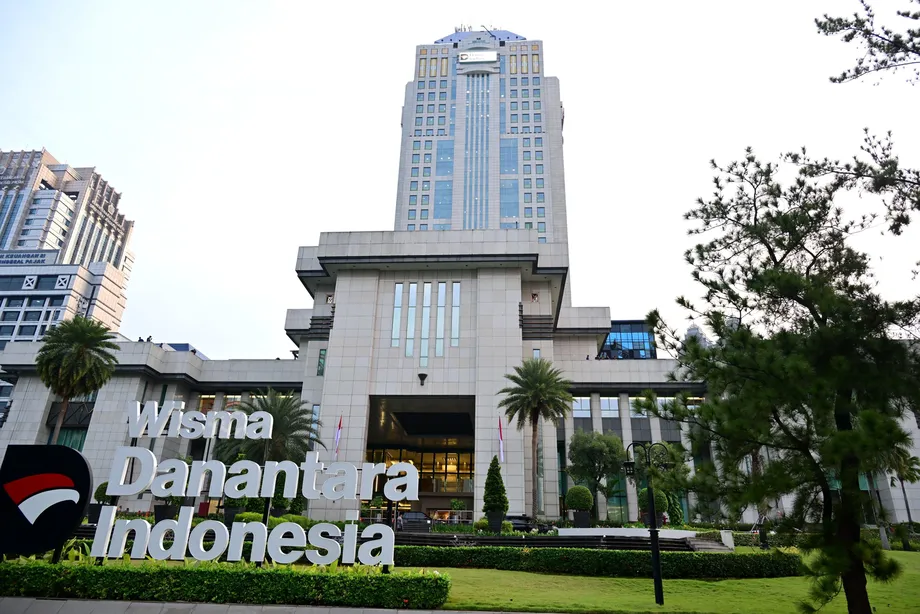
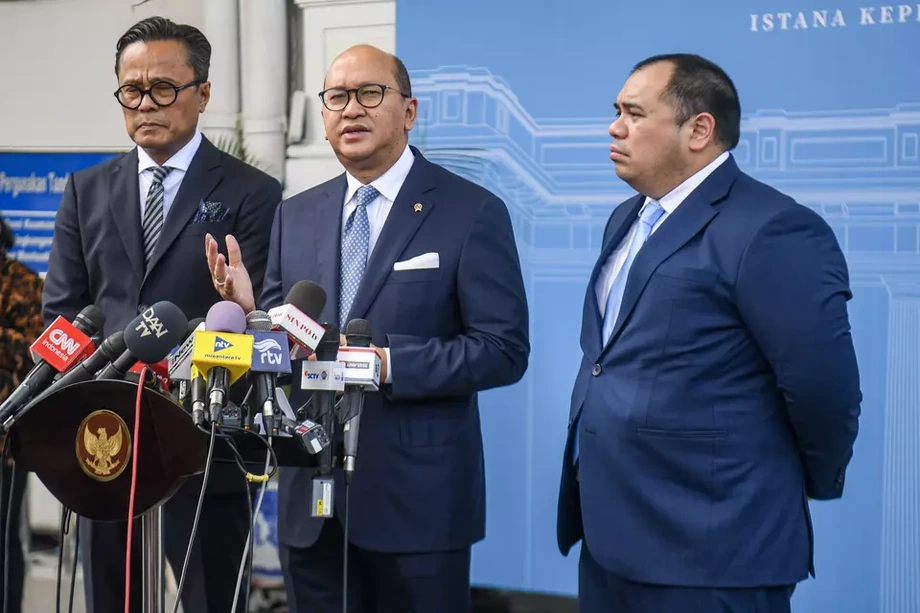
Jakarta's Wisma Danantara in South Jakarta was presenting a Rp259.6 trillion full year net profit figure on Wednesday, 25 November 2026, when its two most senior operating leaders abruptly left. Rosan Perkasa Roeslani, chief executive of BPI Danantara, Indonesia's state investment agency, and Dony Oskaria, chief operating officer, had just gone through headline indicators, including profit and dividends. They then answered a telephone call, stepped out of the room and returned long enough to ask the audience to continue without them.
Contents
- A briefing interrupted by a presidential call
- What the leaders said as they walked out
- What Danantara said it earned in 2025
- How does Danantara's return compare with its capital base?
- Why did the report take months to prepare?
- What did the auditor's opinion add?
- How did the story unfold?
- How little state capital did Danantara receive in 2025?
- What do the dividend numbers mean for the state treasury?
- Why does the palace summons matter for Danantara?
- What remains unknown after the palace meeting?
- Key Points
The reason was brief. Rosan said President Prabowo Subianto had summoned them to the Presidential Palace in Jakarta. A moderator told the room that the two had a duty call to see the President. Arief Budiman, chief financial officer, and Pandu Sjahrir, chief investment officer, stayed to carry on the briefing. Rosan and Dony paused for photographs with other senior executives before leaving. When journalists asked about the urgent agenda, neither gave a topic.
At the palace, the pair gave the same short answer. Rosan said they had been called for a discussion and did not know what would be discussed. Another state company leader, Garuda Indonesia chief executive Glenny Kairupan, was also summoned to the palace that day.
What the leaders said as they walked out
Rosan Perkasa Roeslani, chief executive of BPI Danantara, spoke in Indonesian as he excused himself. He asked the moderator to hand the briefing to Arief and Pandu and said the President wanted him and Dony at the palace immediately.
Mohon izin, saya dengan Pak Dony, mohon izin, karena dipanggil bapak Presiden sekarang untuk ke Istana, mohon dilanjutkan dengan pak Arif, Pak Pandu, terima kasih
In plain terms, Rosan was asking permission to leave because the President had called them to the palace, and he wanted the briefing to continue under two other directors. His statement was brief and did not name the subject of the meeting.
Rosan, again as chief executive, gave an equally short answer when reporters met him at the palace. He said only that it was a discussion and that he did not yet know the subject.
Diskusi aja. Belum tahu, belum tahu (apa yang mau dibahas). Ini juga saya baru selesai paparan konpers laporan keuangan juga
The palace visit added a new question to an already unusual financial briefing. Danantara had just published a consolidated report for 2025, and its two most senior operating leaders were gone before the question and answer session ended.
What Danantara said it earned in 2025
Danantara presented Rp259.6 trillion as net profit for a full 12 months in 2025. The audited period was shorter. The agency said the audited result for April to December 2025 was Rp203.4 trillion, and it annualized that figure to reach Rp259.6 trillion.
Annualizing means stretching a shorter result to look like a full year. In Danantara's case, the agency was created in March 2025, so it had about nine months of operations in that calendar year. The full year figure is a way to compare those nine months with a normal year, while the Rp203.4 trillion figure is the audited period actually covered.
Rosan said the net profit for the nine months came from Rp2,385.2 trillion in revenue, Rp390.4 trillion in operating profit and Rp292.7 trillion in profit before tax. For the full year presentation, Danantara listed Rp3,073.0 trillion in revenue, Rp520.1 trillion in operating profit and Rp367.4 trillion in profit before tax.
The agency also reported earnings before interest, taxes, depreciation and amortisation, often shortened to EBITDA, of Rp552.5 trillion for the nine months and Rp704.7 trillion for the full year. EBITDA is a broad measure of business performance before financing costs, tax and accounting charges for the wear of assets. It is useful for scale, but it is not the same as cash in the bank or profit after all costs.
How does Danantara's return compare with its capital base?
Rosan put return on equity at 8.7 percent for the 12 months. Return on equity, often called ROE, shows how much profit a business generates from the money invested in it by owners. For a state investment agency, it helps readers see whether the huge balance sheet is producing a return on the public capital behind it.
Rosan said Danantara calculated ROE using the common method applied by sovereign wealth funds. A sovereign wealth fund is an investment vehicle owned by a government. The comparison matters because Danantara is being presented as Indonesia's version of such a fund, with a mandate covering many state companies.
The balance sheet behind that return was large. Danantara reported total assets of Rp11,607 trillion, up 5.0 percent since the agency was formed on 31 March 2025. Total equity stood at Rp2,980 trillion, up 5.6 percent from the formation point. Those figures consolidate more than 1,000 state companies, meaning they combine company accounts into one group picture.
Why did the report take months to prepare?
The delayed release was explained by the scale of the task. Danantara manages around 1,000 companies, many linked to each other through ownership or business dealings. Combining their accounts required consolidation, the accounting process that turns many company reports into one group report.
Dony Oskaria, chief operating officer, said the consolidation had to remove transactions between companies inside the group first. In simple terms, if one state company sells goods to another state company under the same umbrella, that sale cannot be counted again as new income for the whole group. The removal prevents double counting and makes the final numbers more accurate.
Dalam proses konsolidasi dilakukan eliminasi dulu karena ada 1.000 perusahaan yang satu sama lain saling berkaitan
Dony Oskaria, the chief operating officer, said Badan Pemeriksa Keuangan, Indonesia's audit board, had checked the preparation of the report since February 2026 with 200 auditors. He said the figures shown to the public had passed a long and strict process.
Jadi, performance yang kami tampilkan sudah melalui proses yang ketat dan panjang
Rosan Perkasa Roeslani, chief executive, said consolidation covered more than 1,000 companies from finance, infrastructure, telecommunications, services and other fields. He called it the first time in Indonesia that so many companies with such varied businesses were brought into one report.
What did the auditor's opinion add?
Danantara said the 2025 financial report received a Wajar Tanpa Pengecualian opinion from Badan Pemeriksa Keuangan. In English, that means an unqualified opinion. It is the audit board's statement that the financial statements were presented fairly under the accounting framework used.
Rosan, chief executive, said the agency received the audited consolidated report on the day of the briefing. He said Danantara wanted speed, but accuracy and accountability were more important because the numbers would be presented to the public.
Yang kami ingin sampaikan walaupun kita juga ingin ini lebih cepat, tapi yang paling penting adalah akurasi dan integritas dari data itu sendiri, dan tanggung jawab dari angka-angka itu. Nah, oleh sebab itu, karena angka yang dihadirkan dan ditampilkan di sini adalah angka-angka yang memang bisa kita pertanggungjawabkan sepenuhnya
Rosan Perkasa Roeslani, chief executive, also described the first six months as institution building. Danantara began with only three people appointed directly by the President, then hired a team and built its internal structure. He thanked the audit board for its work and the opinion it gave.
Kami mengapresiasi BPK yang sudah bekerja sama dan memberi opini wajar tanpa pengecualian
How did the story unfold?
The sequence runs from the creation of a new investment agency to an audit, a delayed public release and an abrupt departure. A short timeline helps place the numbers in order.
- 31 March 2025: Danantara was formed, giving it about nine months of operations in 2025.
- April to December 2025: The audited operating period generated Rp203.4 trillion in net profit.
- February 2026: Badan Pemeriksa Keuangan began checking the preparation of the report with 200 auditors, according to Dony.
- 25 November 2026: Danantara presented the 2025 results at Wisma Danantara in South Jakarta, then Rosan and Dony left for the Presidential Palace.
- 25 November 2026: Rosan and Dony arrived at the palace, where they said they did not yet know the meeting topic.
The timing matters because the public saw the financial numbers and the political summons on the same day. The briefing was meant to explain how a young agency managed a vast portfolio, yet its ending focused attention on what President Prabowo wanted to discuss.
How little state capital did Danantara receive in 2025?
Rosan said state capital participation, known in Indonesian as PMN, reached only Rp4.7 trillion in 2025. PMN is money the government injects into state companies or state investment bodies to support projects or strengthen capital. It is different from revenue earned by companies.
The 2025 amount was far below earlier years. Data presented at the briefing showed Rp54.6 trillion in 2022, Rp46.7 trillion in 2023 and Rp35.2 trillion in 2024. The drop from Rp35.2 trillion to Rp4.7 trillion was Rp30.5 trillion, or about 87 percent.
Rosan said the 2025 allocation was earmarked for Pelni, Kereta Api Indonesia and Industri Kereta Api. Pelni is the state shipping company, Kereta Api Indonesia is the state railway operator and Industri Kereta Api is the state train maker. The money was intended to support several project assignments.
What do the dividend numbers mean for the state treasury?
Arief Budiman, managing director of finance at BPI Danantara, said state companies generated Rp143 trillion in dividends in 2025. A dividend is a payment from company profits to its owners. Because the state owns these companies, dividends are one way company performance reaches the public budget.
Of the Rp143 trillion, Rp11 trillion had already been remitted to the state treasury. That means the rest had not yet reached the treasury at the time of the briefing. Arief projected dividends of Rp100 trillion to Rp160 trillion for 2026, with two months remaining in the period he described.
Arief Budiman, managing director of finance at BPI Danantara, gave the projection while speaking at the same briefing in Jakarta. His figure gives a rough range, not a final result. Dividends can change with company earnings, board decisions and payment schedules.
For 2026, it will range between Rp100 trillion and Rp160 trillion, with two months remaining
Taken with the capital injection data, the dividend figures show two different flows. The state put Rp4.7 trillion into companies through PMN in 2025, while state companies generated Rp143 trillion in dividends and had sent Rp11 trillion to the treasury by the briefing.
Why does the palace summons matter for Danantara?
Danantara is not a normal private investment firm. It holds a vast portfolio of state companies, and the 2025 report put a number on that portfolio: Rp11,607 trillion in assets and Rp2,980 trillion in equity. A presidential summons after the report gives the meeting practical weight, because the President is the appointing authority and the report concerns public assets. Rosan also said the financial report had been delivered to President Prabowo.
The briefing also showed how young the institution still is. Rosan said the first six months were spent building the agency, and the report covering more than 1,000 companies was the first of its kind in Indonesia by scope. A new institution with such a broad base needs systems for reporting, auditing and investment decisions, and the audit process was part of that foundation.
For ordinary readers, the key point is simple. Danantara is managing companies involved in finance, infrastructure, telecommunications, services and other fields. Those businesses affect transport, shipping, trains, state revenues and the money that can be paid to the treasury. The numbers released on 25 November 2026 give one picture of how that portfolio performed.
The sudden exit did not change the published figures. It changed the setting. A press conference about accounts ended with the top two executives heading to the palace, and the public was left waiting to learn whether the discussion concerned the report, appointments, projects or another matter.
What remains unknown after the palace meeting?
Rosan told reporters at the palace that he did not know the subject of the discussion. The other leaders who arrived, including Dony and Glenny, did not give a detailed agenda. No decision was announced at the palace, and no date was given for a further briefing or statement.
That silence leaves several practical questions. Readers do not yet know whether President Prabowo wanted a briefing on the 2025 report, an update on state company projects, or a discussion about individual companies. They also do not know whether any instruction was given after the meeting.
The known facts are limited to the sequence and the numbers. Danantara published a consolidated report, Badan Pemeriksa Keuangan gave an unqualified opinion, the agency reported Rp203.4 trillion in audited net profit for April to December and Rp259.6 trillion on a full year basis, and Rosan and Dony left the briefing after a call from the President.
Key Points
- Rosan Perkasa Roeslani and Dony Oskaria left Danantara's 2025 results briefing on 25 November 2026 after being summoned to the Presidential Palace.
- Danantara reported Rp203.4 trillion in audited net profit for April to December 2025 and Rp259.6 trillion on a full year basis.
- The consolidated report covered more than 1,000 state companies and received an unqualified opinion from Badan Pemeriksa Keuangan.
- State capital participation fell to Rp4.7 trillion in 2025 from Rp35.2 trillion in 2024.
- State companies generated Rp143 trillion in dividends in 2025, with Rp11 trillion remitted to the state treasury by the briefing.
- Rosan said he did not know the topic of the palace discussion, and no further briefing date was given.