Building a Mega Fertilizer Complex in West Papua
PT Pupuk Kalimantan Timur signed formal agreements with two international engineering firms to accelerate the creation of a massive production facility in the Kawasan Industri Pupuk Fakfak located in West Papua. The development involves constructing an integrated ammonia and urea complex designed to bolster domestic food production and expand the country footprint in the global petrochemical market. Pupuk Indonesia President Director Rahmad Pribadi noted that rising global food demand and supply chain challenges make expanding domestic manufacturing critical for safeguarding food security.
Contents
- Building a Mega Fertilizer Complex in West Papua
- Collaborating with Global Engineering Leaders
- Advancing Ammonia Production with Danish Technology
- Boosting Urea Capacity with Japanese Engineering
- Understanding Basic Engineering Design
- Project Timeline and Milestones
- Environmental Goals and Sustainable Transformation
- At a Glance
Food security is the starting point of this project. Building with Topsoe technology also advances our ambition to transform Pupuk Indonesia from a regional fertilizer champion into a globally competitive petrochemical player, said Rahmad Pribadi.
The initiative forms part of a broader industrial agenda that includes constructing and revitalizing eight manufacturing plants across the country over a five-year period. State leaders expect the new facility to transform natural gas reserves into higher value products while spurring economic growth in eastern Indonesia. Pupuk Indonesia Group currently operates with a combined annual fertilizer production capacity of approximately 14.8 million tonnes, targeting a urea production volume of 7.8 million tonnes.
Collaborating with Global Engineering Leaders
PT Pupuk Kalimantan Timur selected Denmark-based Topsoe and Japan-based Toyo Engineering Corporation following rigorous technical and commercial evaluations. The selection process aligned with procurement rules established by Pupuk Indonesia Group and relied on the proven track records of both international firms. Toyo brings extensive experience in fertilizer plant construction, having engineered and commissioned more than 110 urea plants worldwide. Topsoe contributes advanced processing methods recognized across the global energy and chemical sectors.
TOYO has long contributed to global food security through its urea technology. This project is a meaningful undertaking that will support agricultural development in Eastern Indonesia. We are honored that Pupuk Indonesia and Pupuk Kaltim, with whom we have built a long-standing relationship of trust, have now selected our ACES21 technology, said TOYO President and CEO Eiji Hosoi.
The partnership builds on earlier collaborative efforts between the state-owned enterprise and Japanese firms, including work on green initiatives in Aceh. Company executives view the collaboration as a strategic step to modernize domestic manufacturing standards.
Advancing Ammonia Production with Danish Technology
The ammonia plant in Fakfak will utilize Topsoe proprietary SynCOR Ammonia technology, marking the first time this lower emissions system is deployed in Indonesia. The process relies on oxygen-fired autothermal reforming, a chemical method that uses pure oxygen instead of air to convert natural gas into synthesis gas. Operating with a steam-to-carbon ratio close to 0.6 allows the facility to reduce natural gas feedstock requirements by 10 percent compared to conventional manufacturing methods.
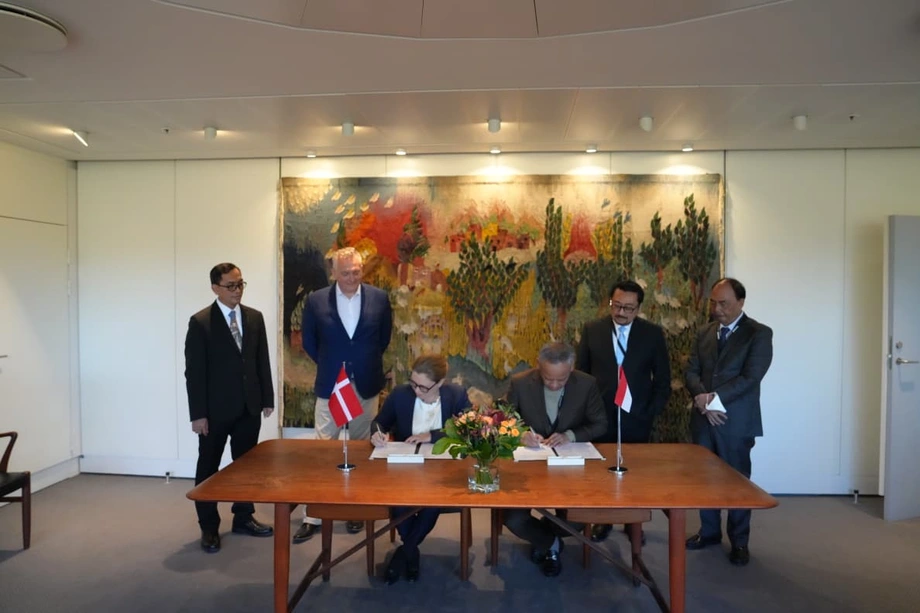
Topsoe Chief Commercial Officer Yassir Ghiyati highlighted the regional impact of the technology deployment during discussions in Copenhagen.
Topsoe has a proud history of supporting food security around the world. This project will supply fertilizers to farmers in eastern Indonesia, where there is a real need. We were proud to be working with Pupuk Indonesia on delivering a technologically leading facility in West Papua, said Yassir Ghiyati.
Project estimates indicate that implementing the SynCOR system will decrease carbon dioxide emissions by 19 to 24 percent compared to standard production techniques. The facility is also engineered with a ready-to-blue concept, which prepares the infrastructure for future integration with carbon capture and storage or carbon capture, utilization, and storage systems.
Boosting Urea Capacity with Japanese Engineering
The urea production facility will integrate Toyo ACES21 technology to maximize energy efficiency and minimize capital investment costs. ACES21 stands for Advanced Cost and Energy Saving, a proprietary process that recycles unconverted reactants to streamline production while generating high-quality granular urea. The resulting product is tailored to meet demanding agricultural standards across domestic and international markets.
Pupuk Indonesia and TOYO Advance 1.15 Million Tonnes of Annual Urea Capacity in Fakfak, West Papua, published by Pupuk Indonesia, details that the facility is engineered to yield 1.15 million tonnes of urea annually alongside 825,000 tonnes of ammonia. The combination of advanced ammonia and urea units creates a balanced operational ecosystem capable of supporting regional farming communities.
Company leaders emphasize that satisfying domestic agricultural demand remains the primary objective. Surging production capacity will subsequently allow the state enterprise to supply regional markets in the Asia-Pacific region and contribute to broader food stability.
Understanding Basic Engineering Design
The recent contract signings mark the commencement of the Basic Engineering Design phase, which serves as the technical blueprint for the entire construction project. Pupuk Kaltim Managing Director Rafli Yandra explained that establishing a rigorous design foundation is mandatory before proceeding to commercial procurement and physical construction.
We want to ensure that from the planning stage, all technology aspects and operational reliability have been comprehensively calculated. With the support of experienced technology partners, we are optimistic this project can be prepared with a strong foundation, said Rafli Yandra.
The design document functions as a technical reference for subsequent engineering, procurement, and construction tenders. It also acts as a prerequisite for securing final investment approvals from corporate boards and government regulators. Quality design remains a priority alongside strict adherence to project schedules and operational safety standards.
Project Timeline and Milestones
The development schedule spans multiple international locations and specific regulatory deadlines over the coming years. Company executives finalized agreements in Europe and Asia before moving toward regional execution phases in Indonesia.
- 13 November 2026: Pupuk Kaltim signs the Topsoe license agreement in Copenhagen
- 17 November 2026: Pupuk Kaltim signs the TOYO BED agreement in Tokyo
- May 2027: Target completion date for the basic engineering design documents
- 2027: Expected final investment decision and subsequent engineering, procurement, and construction tender
- 2030: Target completion and commercial operation date for the complex
Environmental Goals and Sustainable Transformation
The Fakfak industrial development aligns directly with Indonesia national commitment to achieve net-zero emissions by 2060 or sooner. Integrating energy-efficient technologies allows the state enterprise to advance its internal decarbonization strategy extending through 2050. Lowering carbon intensity in fertilizer manufacturing addresses environmental concerns while maintaining high output levels required by modern agriculture.
Pupuk Indonesia and Topsoe Advance Lower-Carbon Ammonia Project to Strengthen Indonesia's Global Petrochemical Ambitions, detailed by Topsoe, points out that deploying advanced processing equipment positions the corporation to explore emerging international markets such as clean hydrogen transport and maritime fuels. Transforming natural gas into cleaner chemical derivatives generates higher domestic economic value for the region.
Regional development in West Papua is expected to accelerate as infrastructure construction proceeds following design approvals. Policymakers anticipate that job creation and industrial diversification will foster more balanced economic growth across eastern Indonesia.
At a Glance
- Project name: Fakfak Ammonia-Urea Complex in West Papua
- Annual production capacity: 825,000 tonnes of ammonia and 1.15 million tonnes of urea
- Technology partners: Topsoe from Denmark and Toyo Engineering Corporation from Japan
- Key environmental feature: SynCOR Ammonia technology reduces carbon dioxide emissions by 19 to 24 percent
- Project completion target: 2030 following a final investment decision expected in 2027