Kazakhstan Champions Global AI Regulation
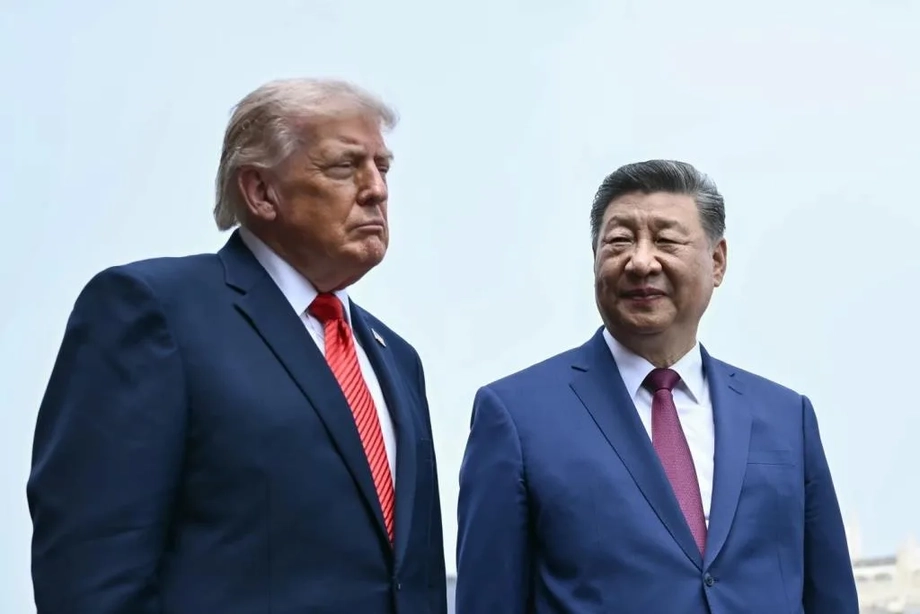
President Kassym-Jomart Tokayev chaired the third meeting of the Council for Artificial Intelligence Development at the Akorda Presidential Palace on October 2, 2026. The meeting brought together senior officials and international technology figures to discuss the integration of machine intelligence into traditional industries. During the session, the President announced that Kazakhstan supports the safe and responsible development of artificial intelligence technologies. He highlighted a voluntary agreement signed in Washington, D.C., by U.S. President Donald Trump and major technology leaders on September 29, 2026. According to the Head of State, that accord could serve as a model for a global treaty under the auspices of the United Nations. The initiative aims to bridge divergent approaches between major technological powers and establish baseline safety protocols for advanced systems.
Contents
The international proposal builds upon domestic legislative steps taken within the country. Kazakhstan has already enacted a specialized Law on Artificial Intelligence and established a dedicated Ministry of Artificial Intelligence and Digital Development to oversee the digital transformation. Policymakers have also approved a national Digital Code to govern digital assets and online services. While the nation builds its internal regulatory framework, the government emphasizes that international cooperation remains essential to prevent technological fragmentation. Officials plan to present their shared vision for global governance at the upcoming G20 Summit in Miami this December, where the country will participate as a guest.
Bridging Global Divides Through Diplomacy
The proposal to elevate the U.S. tech agreement to an international level addresses a complex diplomatic puzzle in technology governance. In late September 2025, the United Nations General Assembly adopted a resolution establishing an independent scientific panel and a global dialogue on artificial intelligence governance. However, major powers have often pursued disparate paths. While twenty nations and the European Commission previously backed a declaration on international standards, the United States initially rejected overarching global control systems, later opting for voluntary industry commitments. Meanwhile, Washington and Beijing established bilateral communication channels for technical incidents outside formal multilateral bodies. Experts note that using the American agreement as a drafting template could satisfy major commercial hubs while engaging developing economies.
Kazakhstan offers its capital as a neutral diplomatic venue for these discussions, drawing on its experience hosting prior international talks. The country previously facilitated diplomatic meetings on regional conflicts and ministerial negotiations between neighboring states. By proposing that the voluntary accord be reviewed by international experts before adoption, the government seeks to ensure that developers from other regions, including Asia, contribute to the eventual framework. This inclusive approach reflects the principle that middle powers can successfully mediate between larger technology ecosystems. The resulting text from these discussions is scheduled to feed into the second session of the UN Global Dialogue in New York in May 2027.
Transforming Industrial Production With Digital Tools
Manufacturing and industrial output form a central pillar of the nation's economic strategy. Official statistics show that industrial output reached approximately 46 trillion tenge during the first eight months of the year, while manufacturing grew by 8.4 percent compared to the same period in the previous year. Despite this growth, policymakers emphasize that factory automation remains uneven across different sectors. Many facilities still operate with fragmented digital tools that fail to capture the full potential of modern computing systems. To overcome this limitation, the government and the sovereign wealth fund have been instructed to identify key enterprises where core business processes will undergo comprehensive technological overhauls.
The integration of machine learning into physical factories requires careful coordination between engineers and software developers. When an automated model takes control of a production line, plant operators must verify its safety and reliability without necessarily inspecting its underlying proprietary code. Officials noted that thousands of enterprises already utilize digital tools, representing a growing share of the commercial sector. By establishing standardized industrial datasets and streamlining the transition from pilot projects to commercial deployment, the government intends to help businesses increase productivity and expand the domestic production of high value-added goods.
Building Domestic Capabilities and Talent
Educational institutions are adapting their curricula to supply the engineers needed for a technology-driven economy. The newly established Qazaq AI Research University began operations in October 2026 to serve as a specialized center for applied research and advanced training. Researchers have also developed native natural language models, named KazLLM and AlemLLM, designed to process local languages and cultural contexts. These academic efforts run alongside practical student programs that have already yielded tens of thousands of technical projects implemented across agriculture, healthcare, and energy sectors.
International partnerships play a vital role in expanding local technical capacity. Through a collaboration with OpenAI, all university educators across the country have received access to ChatGPT Edu tools. Representatives from global technology firms, including NVIDIA and various international research institutions, maintain active cooperative programs with local technical universities. Furthermore, ongoing initiatives such as the AI Challenge mechanism encourage multidisciplinary teams to solve concrete industrial problems directly on factory floors, ensuring that scientific research translates directly into commercial utility.
Expanding the Digital Economy and Infrastructure
The current technology push builds upon foundational digital services that citizens already use for daily banking, public administration, and commerce. Millions of residents interact with government portals and commercial marketplaces daily, while the country's IT service exports have surpassed the billion-dollar threshold. Building on this established consumer base, authorities are expanding physical infrastructure, including data centers, supercomputing capacity, and cross-border fiber optic networks beneath the Caspian seabed. These investments aim to secure sufficient computing power and reliable electricity supplies to sustain long-term digital growth.
Economic policy also addresses the broader social impact of technological change. As outlined in Kazakhstan's digital strategy, the government is preparing simplified legal frameworks for online employment and freelance labor to protect digital workers. Rural communities form another priority, with upcoming pilot projects designed to connect small producers directly with digital supply chains and financial services. These measures parallel recent legislative debates regarding progressive taxation and wealth distribution, ensuring that the economic gains of digitalization benefit a broad cross-section of society rather than isolated urban centers.
At a Glance
- President Kassym-Jomart Tokayev proposed the Washington model of artificial intelligence development as a potential basis for a United Nations treaty during the third meeting of the Council for Artificial Intelligence Development on October 2, 2026.
- Industrial output reached 46 trillion tenge during the first eight months of the year, with manufacturing expanding by 8.4 percent year-on-year.
- Kazakhstan recently enacted a specialized Law on Artificial Intelligence and launched the Qazaq AI Research University to train specialized technical talent.
- The country's international proposals on AI governance will be formally presented at the G20 Summit in Miami in December 2026, ahead of the UN Global Dialogue in May 2027.