A 162 km start for a much larger railway
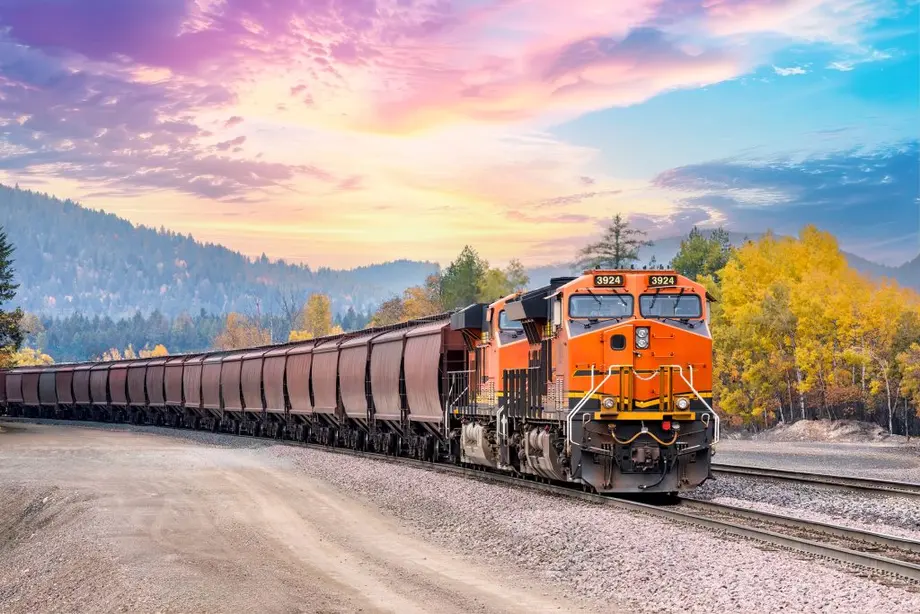
PT Nusa Investama Utama (NIU) and China Railway Engineering Corporation (CREC) signed a framework agreement in Jakarta on 25 November 2026 to begin preparing a railway in East Kalimantan. The initial plan is a 162 km line with two tracks, designed to carry 100 million tonnes of coal a year, with potential to raise capacity to 200 million tonnes annually. For Indonesian Kalimantan, which has no operational public railway network, the agreement starts a detailed preparation process involving studies, financing, route planning and regulatory approvals.
Contents
- A 162 km start for a much larger railway
- Who is behind the partnership?
- Private funding and a long list of studies
- Why coal and other freight need a new route
- Where the 2,772 km vision would reach
- A railway idea discussed since 1997
- Earlier tenders show why permits and preparation matter
- Whoosh shapes the debate over Chinese financing
- Terrain, forests and local benefits will shape the final plan
- What to Know
The ceremony took place at Jakarta Marriott Hotel Gelora in Central Jakarta before around 300 businesspeople. Transportation Minister Dudy Purwagandhi and Chinese Ambassador to Indonesia Wang Lutong witnessed the signing. Zhang Yongkang, president of CREC International Engineering Company, and Li Hongwei, the Chinese Embassy's Minister Counsellor for Economic and Commercial Affairs, also attended.
Dudy welcomed the agreement in a written statement released by the Transportation Ministry. He connected it with President Prabowo Subianto's directive to expand railways beyond Java, improve connections between regions, reduce logistics costs and strengthen national competitiveness.
"The signing of the framework agreement between China Railway Engineering Corporation (CREC) and PT Nusa Investama Utama today marks an important first step in developing the railway network on the island of Kalimantan," Dudy said.
The immediate proposal is much smaller than the Trans-Kalimantan network eventually envisaged, but its coal capacity is substantial. Dudy said China's experience with freight railways carrying large volumes would be an important asset. He also asked the partners to follow the agreement with careful planning and implementation stages that are measurable and realistic.
Who is behind the partnership?
Haji Andi Syamsuddin Arsyad, better known as Haji Isam, attended as leader of Jhonlin Group and an NIU shareholder. Dewi Kam, who leads PT Sumberenergi Sakti Prima (SSP) Group, was also identified as an NIU shareholder. Both were listed in the company's management. Haji Isam is a prominent businessman from South Kalimantan, while CREC is a railway construction group owned by the Chinese state.
The legal advisers for the preliminary agreement were also identified. Dentons HPRP acted for CREC through a team led by partner Winda Tania, supported by associates Aletheia Christy Hutabarat, Frederick Dominic Sebastian and Maichle Delpiero. Junaidi Tirtanata & Co. and ABNR acted for NIU.
Private funding and a long list of studies
The project is planned through a B2B investment scheme, meaning a direct commercial arrangement between the companies. NIU said it would use private investment without drawing on Indonesia's state budget, known as APBN. The project has also been included in the National Strategic Projects programme, or PSN, which is intended to support coordination and accelerate development.
The framework agreement covers technical assessments, a feasibility study, spatial planning, environmental considerations, safety and arrangements for construction. A feasibility study examines whether a proposed project can be built and operated successfully. In this case, that work must address the route, ground conditions, expected freight demand, costs, environmental effects and the commercial structure.
No total project cost, construction start date or opening date was announced. The announcement also did not identify the endpoints of the 162 km line or provide a breakdown of the proposed financing. Those details will be needed before the capacity targets can become an operating railway.
Dudy said the Transportation Ministry's Directorate General of Railways would assist within its official remit.
"The Ministry of Transportation, through the Directorate General of Railways, is ready to support the project preparation process in accordance with its duties and authority," he said.
Why coal and other freight need a new route
Trucks and river barges currently handle much of Kalimantan's inland coal transport, carrying it to terminals or offshore loading points. Road distribution also dominates the movement of many other goods. Historical research describes the capacity of the existing road and river networks as limited, leaving heavy commodity movements dependent on routes that can be expensive to expand and maintain.
An academic study hosted by Kyoto University's Center for Southeast Asian Studies records that Kalimantan supplied more than 93 percent of Indonesia's thermal coal production in 2011. It also records that no coal railway had been built there by early 2016, despite years of proposals. The 2011 figure is historical, but it explains why rail has repeatedly attracted mining companies and governments.
The new plan initially targets 100 million tonnes of coal a year, with the later 200 million tonne target representing a doubling of that capacity. The wider network is also intended to carry passengers and industrial goods. For businesses, rail could reduce dependence on lorries and ease pressure on roads. For travellers, it could provide scheduled intercity journeys as an alternative to road transport.
Where the 2,772 km vision would reach
Indonesia was already exploring foreign investment in September 2026 for a proposed Trans-Kalimantan network extending 2,772 km. The plan forms part of railway development through 2045 and would connect areas across the resource-rich island, including Nusantara, the planned new capital. Dudy said both China and Russia had expressed interest.
The 162 km East Kalimantan proposal equals about 5.8 percent of the proposed 2,772 km network. That comparison shows the limited scope of the present agreement. Under the phasing described for the wider project, development would begin in East Kalimantan, connect towards Central Kalimantan and then extend to South Kalimantan and other provinces.
West Kalimantan has also entered the discussion, with attention focused on a possible corridor through Pontianak, Mempawah and Singkawang, continuing to Sambas. No construction schedule or financing commitment for that corridor was announced. At national level, Prabowo's railway agenda also covers Sumatra, Java and Sulawesi.
A railway idea discussed since 1997
The Kyoto study shows that the current signing follows nearly three decades of proposals, feasibility work and changing plans. CREC itself had an earlier role in Kalimantan, while Japanese, Russian, Indonesian and other international companies also examined routes.
- 1997: A trans-Borneo railway was discussed within BIMP-EAGA, a regional economic cooperation grouping involving Brunei, Indonesia, Malaysia and the Philippines.
- April 2000: Keretapi Trans-Borneo Berhad and Business Focus Sdn Bhd signed a memorandum of understanding in Kota Kinabalu for a 3,640 km railway.
- 2007: Central Kalimantan Governor Agustin Teras Narang signed an agreement with Itochu for a feasibility study into a 300 km railway in the Barito region. He separately signed an agreement with China Overseas Engineering Group, a CREC subsidiary, for a proposed 517 km railway to a port in Seruyan District via Palangka Raya.
- 2011: The Trans-Kalimantan railway entered the MP3EI economic corridor programme, which run from 2011 to 2025. Mining companies were expected to share railways and roads developed through a consortium involving public and private participants.
- February 2012: East Kalimantan Governor Awang Faroek Ishak and Andrey Shigaev, a director of Kalimantan Rail, signed an agreement for a 275 km railway and associated infrastructure. Total investment was then estimated at US$2.4 billion.
- September 2026: Indonesia was exploring potential Chinese and Russian participation in the 2,772 km network.
- 25 November 2026: NIU and CREC signed the present framework agreement in Jakarta.
The earlier consortium model differed from the private B2B approach now announced. The repeated studies and agreements also make the forthcoming route, permit and financing decisions especially important.
Earlier tenders show why permits and preparation matter
Railway Law No. 13/1992 previously allowed only the state railway company PT Kereta Api Indonesia, or PT KAI, to construct railways. Railway Law No. 23/2007 subsequently established three requirements: a business licence, a construction permit and an operations permit. The central government has authority over business licences. Provincial governments can issue construction and operations permits for networks connecting districts and cities within one province, with central government approval.
Central Kalimantan sought bids for a 185 km railway from Puruk Cahu to Bangkuang as the first phase of its Route 1 proposal. The winner was to receive a construction permit and a concession to operate the line for 30 years. Sixteen consortiums had participated by 2008. Four passed prequalification at the end of 2011, and the tender was awarded in 2014 to a consortium comprising China Railways Group, a CREC subsidiary, together with PT Mega Guna Ganda Semesta and PT Royal Energi.
The Kyoto study records changes to plans and delays in approvals across these projects, with no coal line built by early 2016. The Russian proposal examined a first phase between Balikpapan and West Kutai, followed by a connection towards Central Kalimantan. In April 2012, Kalimantan's four governors agreed that each province would first develop its own network before provincial systems were interconnected.
Whoosh shapes the debate over Chinese financing
Whoosh, the 142.8 km railway between Jakarta and Bandung that operates at high speed, is the main benchmark in the financing debate. Its construction demonstrated Chinese railway engineering in Indonesia, but its debt, running into billions of US dollars, has also made commercial risk a central concern for future infrastructure.
Siwage Dharma Negara, a senior researcher at the ISEAS-Yusof Ishak Institute, said China can offer a complete railway ecosystem covering financing, engineering expertise, technology and experienced personnel. He regarded Whoosh as evidence of technical capability and as a lesson in project financing. That experience could encourage Indonesia to examine more carefully which party bears commercial risk.
Paramitaningrum, an international relations lecturer at Bina Nusantara University in Jakarta, raised the geographical, technical and financial risks facing Trans-Kalimantan. She questioned whether Chinese investors would follow the Whoosh method and whether such a large project could be completed on time with good quality.
Chinese participation in Kalimantan could extend across financing, engineering, technology and construction. The B2B label identifies the intended funding approach, while the remaining commercial task is to allocate construction, operating and revenue risks among the companies and their financiers.
Terrain, forests and local benefits will shape the final plan
David Feng, an independent railway expert, said Chinese contractors have experience across varied terrain in their home market and could bring an integrated supply chain, from feasibility studies to construction. He also identified Kalimantan's higher humidity and unstable soil as challenges. Those conditions can influence the design of foundations, drainage and slopes, making soil investigations and route selection central to the technical work.
Environmental planning already has a place in Kalimantan's railway history. The Russian route examined in 2012 was expected to cross a protected forest in the Muller-Schwanner mountain range in Murung Raya District, an area described as a water catchment. For the NIU and CREC proposal, Dudy requires a comprehensive feasibility study covering spatial plans, environmental protection, safety and compliance with legislation.
Communities along a completed corridor could gain intercity mass transport, employment and training. The government also wants Indonesian workers to acquire new skills and technology from the partnership, although no employment estimate was announced. Industrial estates, warehouses and distribution centres could develop near stations, while heavier use of rail freight could reduce road congestion and maintenance demands.
A separate road project on the Trans-Kalimantan route linking Samarinda and Mahakam Ulu Regency is already underway to improve access to remote inland areas. NIU and CREC must now determine how their railway would connect with industrial areas and other transport networks. The next concrete milestones will be the feasibility results, route decisions, financing arrangements and regulatory pathway for the 162 km proposal.
What to Know
- NIU and CREC signed a framework agreement in Jakarta on 25 November 2026.
- The initial East Kalimantan plan covers 162 km with two tracks.
- Coal capacity is targeted at 100 million tonnes a year, with potential to reach 200 million tonnes.
- The project is presented as private B2B investment without use of the state budget, and it has PSN status.
- The wider Trans-Kalimantan vision extends 2,772 km and forms part of railway planning through 2045.
- Development is intended to progress from East Kalimantan towards Central and South Kalimantan, with other provinces also discussed.
- No project cost, construction schedule or endpoints for the initial line were announced.
- Feasibility work, environmental assessments, safety planning, financing and permits are the next major tests.