A firm date for a China only fuel car exit
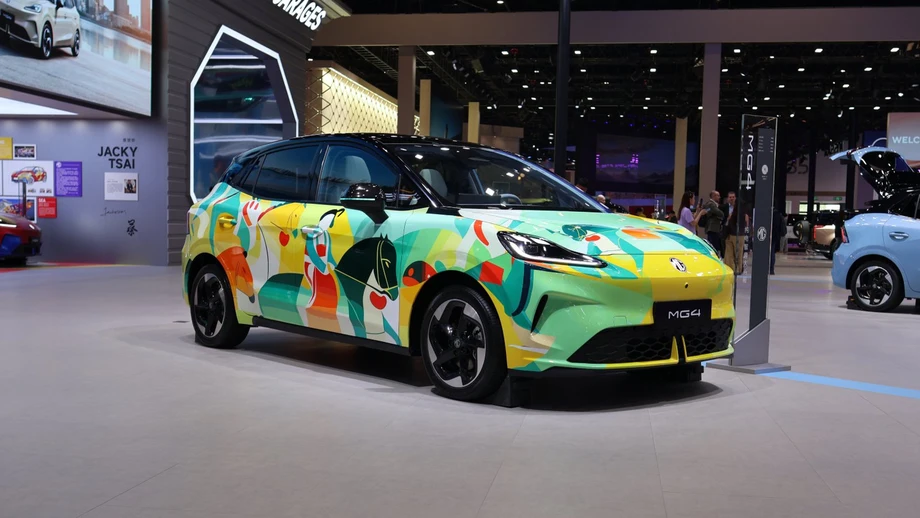
SAIC Motor's MG brand said on November 27 at Auto Guangzhou 2026 that it will stop producing currently sold pure internal combustion engine models for mainland China from Jan. 1, 2027. The affected cars are the MG5, MG6 and MG7, the brand's combustion only models in the mainland market. An internal combustion engine burns petrol or diesel instead of drawing power mainly from a battery.
Contents
- A firm date for a China only fuel car exit
- What changes on Jan. 1, 2027?
- Why MG says the time is right
- China's market is nearing a 70 percent NEV share
- A timeline of the shift away from fuel models
- What MG owners and buyers will notice
- Why overseas markets are outside this halt
- Why BYD is the comparison that matters
- The wider industry signal
- What to watch before 2027
- Key Points
MG said owners of existing fuel powered cars will keep access to maintenance and spare parts throughout the life of their vehicles. The company also said it will expand its new energy vehicle range and related services in mainland China. New energy vehicle, or NEV, is the broad category used in China for cars powered by electricity, including battery electric, plug in hybrid and fuel cell models.
The announcement gives the clearest date yet in MG's shift in one of the world's largest car markets. It also sets a practical deadline for a brand known globally for models with conventional engines: from the start of next year, its mainland production will be focused on new energy vehicles.
What changes on Jan. 1, 2027?
Mainland China is the specific scope of the change. MG's decision is a mainland production decision, not a worldwide halt. The company said its approach in other markets will follow local conditions, energy supplies, consumer habits and policy settings.
The cars named in the change are the MG5, MG6 and MG7. Those are the brand's current pure combustion only models in the mainland. Pure combustion means the car uses a petrol or diesel engine as its only source of driving power, unlike a hybrid that can also use an electric motor and battery.
MG has not said when sales of those existing models will end. It has not said how remaining inventory will be handled. Those two questions are central for buyers comparing a new fuel MG with the expanding NEV range.
Why MG says the time is right
October was a strong month for MG's NEV sales. The company said global NEV sales exceeded 85,000 units in October 2026, with more than 31,000 of those in China. Using the minimum figures, 31,000 of 85,000 is about 36 percent, so China was more than one third of the total at those levels.
The company also disclosed at Auto Guangzhou 2026 that its monthly battery electric vehicle sales in China had exceeded 30,000 units for three consecutive months. Battery electric vehicles run only on stored electricity and have no exhaust pipe. That run gives MG a sales base for the shift away from cars such as the MG5, MG6 and MG7.
Overseas, MG said it had passed 1 million cumulative deliveries in Europe and was the first Chinese automotive brand to reach that mark there. The figure is about accumulated sales over time, not a single year. It shows why MG has to balance a China production change with a different pace in markets where its fuel models still sell.
China's market is nearing a 70 percent NEV share
October's passenger car data show how quickly the market has moved. Data from the China Passenger Car Association (CPCA) showed passenger NEV retail penetration reached a record 67.5 percent in October. Penetration means the share of retail passenger vehicle sales made up by NEVs. A 67.5 percent rate means that, in that month, roughly two of every three passenger cars sold to retail buyers were new energy vehicles.
The China Passenger Car Association forecast 70.6 percent for November. If that forecast holds, November will be the first month with NEVs above 70 percent of passenger car retail sales in China. The forecast was for the same month in which MG made its announcement.
Gas powered cars remain on roads and in many households, but their share of new sales is shrinking. A carmaker that keeps producing only combustion models for mainland China aims at a smaller part of the showroom each month.
A timeline of the shift away from fuel models
MG is not the first automaker to set a date for leaving combustion cars in China. The move follows a sequence of decisions by Chinese and global brands that began years earlier and accelerated in 2026.
- March 2022: BYD halted combustion engine vehicle production to focus on battery electric and plug in hybrid models.
- December 2025: Jaguar's last combustion engine car rolled off the production line, ending the brand's fuel model production worldwide.
- March 2026: Chery Jaguar Land Rover stopped producing domestically made combustion engine vehicles in China.
- October 2026: MG's global NEV sales exceeded 85,000 units, including more than 31,000 in China, while China's passenger NEV retail penetration reached 67.5 percent.
- November 27, 2026: MG announced at Auto Guangzhou 2026 that mainland production of its current pure combustion models will end.
- November 2026 forecast: CPCA projected passenger NEV retail penetration of 70.6 percent.
- Jan. 1, 2027: MG's production halt for the MG5, MG6 and MG7 versions sold in mainland China is scheduled to begin.
Other brands have also stepped back from conventional models. Great Wall Motor's WEY and SAIC-GM-Wuling's Baojun have exited the traditional fuel vehicle market. Together with BYD's 2022 decision and Jaguar's worldwide ending, those dates show that MG's announcement belongs to a change already under way across several types of carmakers.
What MG owners and buyers will notice
For current MG owners in mainland China, the promise is about continuity. Maintenance service and spare parts will remain available through the life of their vehicles, according to MG. That means an MG5, MG6 or MG7 bought before the change should still be supported when it needs routine service or replacement parts.
MG framed the pledge as protecting normal use and after sales rights, language aimed at reassuring drivers who plan to keep their cars for years. A car often outlives the sales period of a particular model, so a long service promise matters to people who do not replace their vehicle every few years.
For new buyers, the practical change is more about what MG will build after the date than what happens at a service centre. MG has said it will expand its NEV portfolio and supporting services in mainland China. Customers looking at MG after Jan. 1, 2027 should expect the brand's mainland production story to centre on electrified models rather than the three current pure combustion cars.
Why overseas markets are outside this halt
MG's decision is anchored to mainland China. The company said it will use different electrification strategies in international markets based on local conditions. Its overseas combustion engine lineup is not directly affected by the mainland production halt for now.
MG, the SAIC Motor brand making the announcement, described its approach to regional markets in language about local energy supplies and customer behaviour. The company said it will:
respect the energy structure, consumer habits, and policy environment of each regional market, advancing its new energy transition in accordance with local conditions.
The wording leaves room for MG to keep selling combustion models where fuel infrastructure, buyer preference or regulation makes the change slower. It also fits the brand's global position: MG is a Chinese brand with a large European footprint, and Europe alone accounts for more than 1 million cumulative MG deliveries by the company's count.
Why BYD is the comparison that matters
BYD is the most direct comparison in China. BYD halted combustion engine vehicle production in March 2022 to focus on battery electric and plug in hybrid models. MG's date, Jan. 1, 2027, comes nearly four years later and applies only to current pure combustion models built for mainland China.
The comparison has limits. BYD stopped making combustion vehicles across its operations. MG's announcement names the mainland market and leaves overseas lines untouched for now. The two decisions point in the same direction, but they differ in scope and timing.
The wider industry signal
Great Wall Motor's WEY and SAIC-GM-Wuling's Baojun have left the traditional fuel vehicle market. Chery Jaguar Land Rover stopped domestic fuel vehicle production in March 2026. Jaguar ended fuel model production worldwide after its last combustion car rolled off the line in December 2025.
Those examples place MG among several kinds of exits. Some were brand changes, some were joint venture production changes, and some were global decisions. MG's change is a production decision for mainland versions of three named models, with service promises for owners and a separate path overseas.
What to watch before 2027
The next clear date is Jan. 1, 2027, when MG's production change is due to take effect. Until then, the MG5, MG6 and MG7 remain part of the current mainland lineup named by the company. The change will show how quickly a global brand can reshape one market while keeping other regions on a different path.
November's CPCA forecast offers a measure of the market MG is entering. A 70.6 percent NEV retail share would be up from 67.5 percent in October and would mark the first time above 70 percent. MG's own October total of more than 31,000 NEV sales in China sits inside that broader change.
In simple terms, MG is keeping its existing fuel car drivers covered and continuing combustion production overseas for now. The line it has drawn is at mainland production of three fuel models, as China's new car market moves quickly toward new energy vehicles.
Key Points
- MG said on November 27 at Auto Guangzhou 2026 that mainland production of its current pure combustion models will end on Jan. 1, 2027.
- The models named are the MG5, MG6 and MG7, and overseas combustion model production is not directly affected for now.
- Existing owners will continue to receive maintenance service and spare parts throughout their vehicles' lives.
- MG's global NEV sales exceeded 85,000 units in October 2026, including more than 31,000 in China.
- China's passenger NEV retail penetration reached 67.5 percent in October, and CPCA forecast 70.6 percent for November.
- MG did not say when sales of the existing fuel models will end or how remaining inventory will be handled.