Jang Puts Courts and Voters at the Center
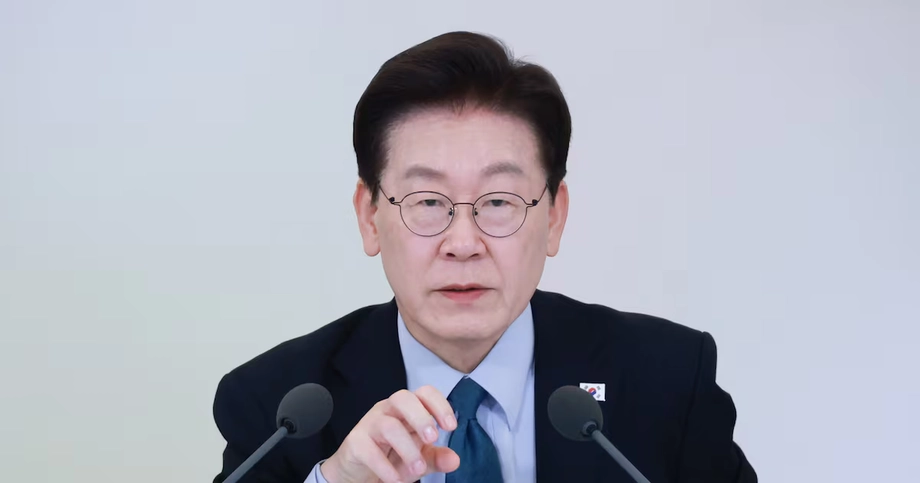
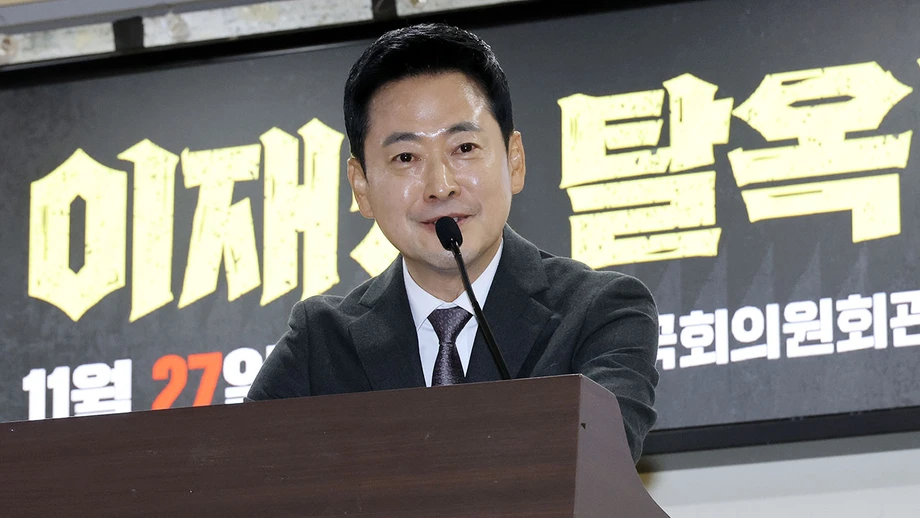
Jang Dong-hyeok, leader of South Korea's opposition People Power Party, called on 27 November 2026 for the resumption of five trials involving President Lee Jae-myung and for a public campaign to impeach him. Speaking at the National Assembly Members' Office Building in Seoul, Jang urged judges to act and voters to mobilise, turning two separate political demands into the centre of his party's campaign against the government and the ruling Democratic Party.
Contents
- Jang Puts Courts and Voters at the Center
- A Seminar Designed for Party Mobilisation
- Prison Rhetoric and Two Separate Legal Tracks
- Why the Cho Impeachment Fight Came First
- Personnel Control and Recent Acquittals Shape the Argument
- Poll Figures and a Direct Challenge to Judges
- Cabinet Appointments, Special Counsel Costs and a New Bill
- The Dates Driving the Campaign
- What Each Side Is Asking Institutions to Do
- What to Know
The immediate disputes concern a special counsel law connected to allegations of manipulated prosecutions and the ruling camp's push to impeach Supreme Court Chief Justice Cho Hee-dae. The People Power Party describes the legislation as an attempt to cancel prosecutions and protect Lee. It uses the phrase jailbreak law for that accusation. Jang presented the proposed impeachment of Cho and the special counsel investigation as related efforts to prevent the president from facing further court proceedings.
Addressing a seminar hosted by party lawmaker Park Jun-tae and a research group of district chapter heads, Jang explained why he wanted pressure directed at both the courts and the public.
We must awaken the courts to resume trials, and awaken the public to impeach Lee Jae-myung.
We have never seen the courts, the judiciary, or judges move at the very front. They have always moved at the very back, at the very end. Only when we act and awaken the courts and the judiciary will they begin to move.
Jang then placed the demands inside a longer electoral strategy. He said impeachment would not be the end of the campaign: he wants his party to win a landslide in a general election, replace the administration and rebuild the country that he accused Lee of tearing down. His remarks therefore joined court procedure, presidential removal and a future change of government in one political programme.
A Seminar Designed for Party Mobilisation
The seminar's full title presented it as a conservative reconstruction project with district chapter heads and declared that the people would judge the Lee Jae-myung jailbreak law. Alongside Jang, attendees included policy committee chair Lim Lee-ja, Secretary General Jeong Hee-yong and other senior officials. About 30 lawmakers and 50 district chapter heads who do not hold parliamentary seats were also present, giving the event both a parliamentary and a grassroots organising role.
Participants held placards equating an indictment cancellation special counsel law with the jailbreak law. Another sign referred to 38 billion won of public money for the special counsel. Attendees chanted for Lee's trials to resume immediately. The slogans condensed the party's argument into two claims: that the investigation would waste public funds and that its practical purpose would be to protect the president.
Park Jun-tae, who serves as chief of staff to the party leader, used the seminar to address divisions within his own camp. Referring to the impeachments of former presidents Park Geun-hye and Yoon Suk-yeol, he blamed lawmakers who had broken ranks.
There have been two presidential impeachments. We had enough seats to stop them, but we could not. That was because a small number of lawmakers from our party broke with the party position and colluded with the Democratic Party to support impeachment.
Park argued that those impeachments led to presidential election defeats and the births of the Moon Jae-in and Lee Jae-myung administrations. He said preventing a repetition was the party's responsibility and called for the politics of betrayal to be cut off completely. His conclusion was blunt: protect the party in order to protect the country. He also said Lee should be sent to prison rather than protected, along with those trying to shield him.
Prison Rhetoric and Two Separate Legal Tracks
Jang's language went beyond a request for political accountability. He said that explanation, persuasion and anger had all had their time, leaving only action. Referring to Lee as a criminal, he said the proper place for such a person was prison rather than the Blue House, the presidential compound. He also said Lee should be handcuffed on the day he leaves that compound and sent directly to a correctional facility.
Those statements were Jang's political accusations, delivered while he was arguing for trials to restart. He called resumption the surest way to stop what his party describes as a jailbreak. In that vocabulary, jailbreak means using legislation, appointments or pressure on senior judges to keep Lee away from legal consequences. It connects the special counsel dispute and the Cho impeachment push to the five cases that the opposition wants brought back into court.
The presidential impeachment demand follows a different route from those trials. In South Korea, impeachment begins as a political process in the National Assembly, with the Constitutional Court deciding whether removal takes effect. Court proceedings, by contrast, are conducted by judges and can continue through separate stages of the judicial system. Jang linked the two routes rhetorically, but he gave neither a timetable for introducing a presidential impeachment motion nor dates on which the five trials might resume.
Why the Cho Impeachment Fight Came First
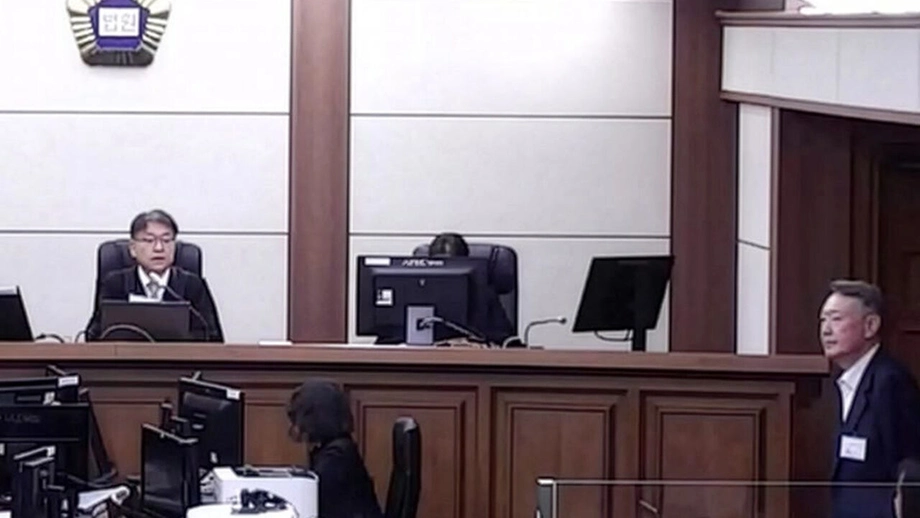
Four days before the seminar, at a People Power Party supreme council meeting on 23 November, Jang had already demanded faster action over Cho. His intervention followed a message on the courts' internal network from Kang Dong-won, chair of the National Conference of Judicial Representatives. Kang suggested that judges would need to act if an impeachment motion against the chief justice were passed.
Jang argued that waiting for that vote would leave judges and his party responding after the decisive moment.
If the impeachment motion is passed, it is already too late. We must act immediately.
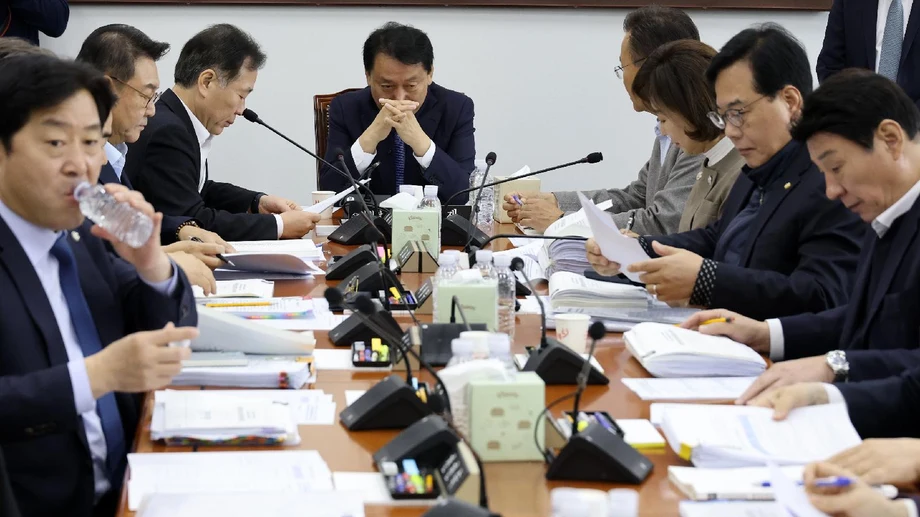
Jang focused on suggestions from the Democratic Party that suspending Cho's duties and appointment powers would itself be meaningful. He treated those comments as evidence that the purpose was to obstruct the resumption of Lee's trials, calling the effort a bulletproof impeachment, or an attempt to shield the president. He also argued that citing court judgments as grounds for removing the chief justice was unconstitutional and unlawful.
The Democratic Party had signalled that it wanted the impeachment matter handled before the end of the year, although no precise voting date appears in the exchanges described by the party leadership. Jang called the initiative an act of self destruction by the Lee administration and predicted that it would instead become a catalyst for reopening the president's cases. That claim set up the confrontation as a test of whether pressure on the chief justice would weaken judicial resistance or provoke a stronger response.
Personnel Control and Recent Acquittals Shape the Argument
Floor leader Jeong Jeom-sik offered a broader explanation for why the Democratic Party might pursue Cho even if the Constitutional Court could ultimately reject the impeachment. He listed political retaliation, cooperation between rival factions within the ruling party and an attempt to gain control of the judiciary. He also said the party's leaders might be trying to unite their most committed supporters and divert attention from internal conflict.
Jeong's institutional concern centred on what would happen while Cho's duties were suspended. He argued that an acting leadership arrangement could make it easier for the administration to influence court appointments. In his account, pressure on the chief justice would therefore extend beyond one officeholder and reach the judiciary's personnel system.
Jeong cited two recent decisions to support his argument that courts were already examining special counsel prosecutions strictly. One was the Supreme Court's decision to send back part of the case involving former prime minister Han Duck-soo, with reasoning directed towards acquittal. The other was the acquittal of Daegu Mayor Choo Kyung-ho at his first trial. Jeong presented both as examples of judges resisting indiscriminate indictments rather than simply accepting prosecutors' cases.
Other supreme council members warned about the precedent of impeaching judges over decisions. Shin Dong-wook said the same approach could be used against other Supreme Court justices or judges in lower courts whenever the Democratic Party disliked an outcome. Kim Min-soo pointed to what he described as a rapid change in the ruling party's position: after objecting to a judgment and threatening impeachment, he said, it had announced within three days that the content of that judgment would be removed from the stated grounds.
Poll Figures and a Direct Challenge to Judges
Secretary General Jeong Hee-yong brought public opinion into the campaign at a floor strategy meeting on 27 November. He cited a figure of 48 percent opposing Cho's impeachment and a separate figure of 59 percent supporting the resumption of Lee's trials. His remarks supplied the percentages without identifying the polling organisation, sample size or field dates, leaving those details unavailable for assessing the surveys behind them.
Jeong used the numbers to argue that the government's priorities were misplaced. He said the public wanted attention directed towards household living conditions and economic recovery rather than a special counsel or the removal of the chief justice.
What the public wants right now is neither a special counsel probe nor the impeachment of the chief justice, but for the government and ruling party to dedicate all their efforts to caring for public livelihoods and reviving the economy.
Jeong also addressed the Democratic Party floor leader's assurance that impeachment would target Cho alone, not the judiciary as a whole. He questioned whether voters would accept that distinction, given his party's claim that the underlying dispute concerns court judgments and control of judicial appointments.
Senior floor spokesperson Kim Tae-gyu directed a separate warning at the National Conference of Judicial Representatives, which was scheduled to discuss judicial independence on 30 November. He said the conference should represent all judges rather than members of particular research societies. Silence, he warned, would leave it vulnerable to being branded a voice for leftist groups, including the International Human Rights Law Research Society, and what he called Red Guards of the left.
Kim also criticised the Democratic Party for expressing deep regret after judges at Changwon District Court objected to the campaign against Cho. Speaking in his role as party spokesperson, he connected that response to his wider argument about judicial freedom.
Judicial independence cannot be protected in a country where judges are impeached over their rulings and a political party reprimands judges who oppose that impeachment.
Cabinet Appointments, Special Counsel Costs and a New Bill
The cabinet reshuffle announced on 23 November became another part of the opposition's case. Senior vice floor leader Kim Seung-soo criticised the appointments for the Ministry of Justice, the Ministry of the Interior and Safety, and the Ministry of Culture, Sports and Tourism. He described the three choices as a formation working together as a task force to support Lee's jailbreak, extending the party's accusation from legislation and judicial pressure to executive personnel decisions.
Lawmaker Kim Jae-seop responded to the special counsel dispute with a legislative proposal on 27 November. His amendment would require a president who appointed the special counsel to bear the full investigation costs if every case prosecuted by that team ended in a final acquittal. The condition is deliberately comprehensive: the proposal described by Kim applies when the entire set of prosecutions fails, rather than when a single defendant is acquitted.
The proposal gives a financial dimension to the seminar placards referring to 38 billion won in public money, although those signs and the amendment address different things. One is a campaign claim about the investigation's cost; the other is a proposed rule for allocating that cost after final verdicts. Kim introduced the amendment, but no date for a parliamentary vote was announced.
The Dates Driving the Campaign
The confrontation has developed through meetings, court-related interventions and street events rather than through one announcement. The main dates set out by party leaders and organisers are:
- 7 November: The People Power Party began holding rallies around the country against the special counsel legislation.
- 23 November: The cabinet reshuffle was announced, and Jang used a supreme council meeting to demand court action before any vote on Cho's impeachment.
- 26 November: At an outdoor rally in Yongin, Gyeonggi Province, Jang called the legislation a jailbreak law, described it as the worst form of immorality a president could commit and asked judges to act.
- 27 November: Jang and Park addressed the Seoul seminar, Jeong cited the two polling figures, and Kim Jae-seop introduced his costs amendment.
- 28 and 29 November: The party planned further rallies in Daejeon and Mungyeong.
- 30 November: Judicial representatives were scheduled to meet to discuss judicial independence after Kim Tae-gyu demanded that they speak.
- 3 December: The party was giving serious consideration to a Seoul rally marking the second anniversary of the emergency martial law declaration associated with that date.
The ruling camp's intention to pursue Cho's impeachment before the end of the year adds another deadline, but the calendar does not yet provide a specific vote. Nor does it establish when judges might consider the requested resumption of Lee's five trials.
What Each Side Is Asking Institutions to Do
Judges, lawmakers and party members have each been given a distinct task. Jang wants judges to restart proceedings and wants voters to create pressure for presidential impeachment. Park wants opposition lawmakers to maintain discipline when impeachment votes arise. Kim Tae-gyu wants judicial representatives to speak publicly, while Kim Jae-seop has turned the dispute over investigation spending into a bill that parliament can examine.
The Democratic Party position visible in this exchange is narrower than the opposition's portrayal of a campaign against the entire judiciary. Its floor leader said Cho alone was the impeachment target, while the party separately rebuked the Changwon judges' intervention by expressing deep regret. The People Power Party rejects that distinction and argues that judgments, appointments and the treatment of dissenting judges must be considered together.
For voters, the opposition has combined that institutional argument with Jeong's appeal on living costs and the economy. Its next public tests are the Daejeon and Mungyeong rallies, the judicial conference on 30 November and the possible Seoul gathering on 3 December. For the courts and parliament, the central practical questions remain whether any of Lee's cases resume and when the ruling camp brings its proposal concerning Cho to a vote.
What to Know
- Jang Dong-hyeok called on 27 November 2026 for five trials involving President Lee Jae-myung to resume and for a public campaign to impeach the president.
- Jang linked those demands to a future general election landslide, a change of administration and his promise to rebuild South Korea.
- The People Power Party accuses the government and Democratic Party of using a special counsel law and the proposed impeachment of Chief Justice Cho Hee-dae to protect Lee.
- Park Jun-tae urged an end to what he called betrayal by opposition lawmakers who supported earlier presidential impeachments.
- Jeong Hee-yong cited 48 percent opposition to Cho's impeachment and 59 percent support for restarting Lee's trials, without providing the polling details.
- Kim Jae-seop proposed making the appointing president pay all special counsel investigation costs if every prosecution ends in a final acquittal.
- Further opposition rallies were planned for Daejeon, Mungyeong and possibly Seoul, while judicial representatives were due to discuss judicial independence on 30 November.