A challenge built around fairness in football
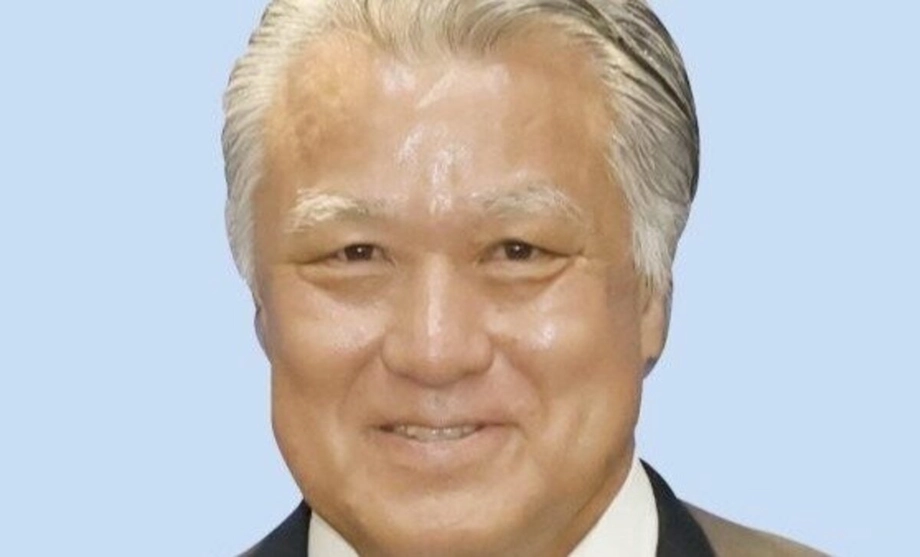
Kozo Tashima, Japan's former football association president and a member of the FIFA Council, announced in Tokyo on November 5 that he intends to challenge Gianni Infantino for the presidency of world football's governing body. The Japan Football Association board unanimously backed his candidacy, giving the 68-year-old its support ahead of a November 18 nomination deadline.
Contents
- A challenge built around fairness in football
- Why Tashima is confronting Infantino
- Japan's backing follows a dispute inside the JFA
- Five nominations are the first test
- World Cup business plans widened the opposition
- Asia's leadership is backing the incumbent
- An experienced insider joins another declared challenger
- The dates that shaped the challenge
- Key Points
Tashima would be the first Japanese candidate to seek the FIFA presidency. His announcement brings a senior figure from within FIFA's leadership into a contest shaped by disputes over World Cup discipline, commercial rights and the relationship between football officials and political leaders.
The immediate task is securing enough formal endorsements to enter the election, scheduled for March in Rabat, Morocco. According to the JFA, Tashima needs support from four national associations besides Japan, bringing his total to the five required.
Tashima, now the JFA's honorary president, presented the bid as an argument about how football should be governed. Speaking after the association's board meeting, he explained the values he wanted to bring to the contest:
It's not about winning or losing but about conveying to the world the honest, sound and upright attitude that Japanese football has built. What FIFA needs now are these values that we have protected. I have decided to run in order to make this appeal to the world.
Why Tashima is confronting Infantino
Tashima called for FIFA to return to fairness and impartiality. He questioned its handling of the suspended ban imposed on United States forward Folarin Balogun after a red card at the summer's World Cup, as well as its response to Iran's entry into the United States.
A red card sends a player off during a match, while a suspension can keep that player out of later games. Tashima's criticism concerns FIFA's decision to defer the subsequent punishment in Balogun's case, making the administration of sporting rules a central issue in his challenge.
Tashima also criticized Infantino for failing to answer questions he had sent him. He argued that allowing the incumbent to continue without an election or an opposing candidate would be undesirable.
Infantino's close ties with U.S. President Donald Trump form part of the political setting for the dispute. Tashima's stated demand is for consistent treatment by the organization responsible for running the World Cup and overseeing international football.
His campaign therefore connects decisions affecting players and national teams with a broader demand for answers from FIFA's president. For associations deciding whom to support, those are practical questions about who applies the rules and how decisions are explained.
Japan's backing follows a dispute inside the JFA
The JFA board's unanimous decision gives Tashima a clear national endorsement after uncertainty about Japan's position toward Infantino. Tashima said he had discussed his plans with current JFA president Tsuneyasu Miyamoto and expressed gratitude for the association's support.
The announcement followed the resignation of JFA vice president Takeshi Okada, effective October 24. Okada cited a substantial difference between controversies surrounding the World Cup and his beliefs about sporting integrity. His departure also came amid dissatisfaction over what was understood to be Miyamoto's support for Infantino.
Miyamoto addressed that issue after the November 5 board meeting. He explained that considering a common approach with the Asian Football Confederation, or AFC, was different from personally endorsing Infantino. He confirmed that the JFA intended to support Tashima.
Miyamoto also said he had spoken with Okada by telephone and that the former vice president had offered to support him from outside the association. The exchanges show that Japan's decision involved both choosing a presidential candidate and clarifying its own position within Asian football.
Five nominations are the first test
FIFA has 211 member associations. A prospective presidential candidate needs formal support from five of them and must pass an eligibility review conducted by a panel of three people appointed by FIFA.
Japan's endorsement supplies one of Tashima's required five nominations, leaving four to secure elsewhere. Those five nominations represent about 2.4% of FIFA's 211 members. They open the route to the ballot; winning the presidency requires a much larger coalition.
Tashima said at his announcement that he had no other backers and that no government was supporting him. He described the JFA's support as his strongest source of confidence.
Some Southeast Asian and European associations critical of Infantino are expected to be potential supporters. European backing would be especially valuable because UEFA, the governing body for European football, has been seeking a credible challenger. Formal endorsements from those associations had not been announced alongside Tashima's declaration.
The JFA gives November 18 as the candidacy deadline, although November 17 has also been cited. The election is scheduled for March in Rabat, with March 18 widely cited and March 16 also given. The precise polling date needs clarification.
World Cup business plans widened the opposition
Infantino's difficulties extend beyond the handling of individual teams and players. In July, he proposed bringing private investors into a new commercial entity holding rights connected to FIFA competitions, including the World Cup.
The proposal was described as involving the sale of a 20% stake in FIFA's commercial rights and a share of future World Cup profits. A stake is a portion of ownership: outside investors would receive a financial interest in the business covered by the arrangement.
UEFA and other football organizations strongly resisted the initiative. Infantino subsequently withdrew the plan. Opposition also focused on a proposed separate entity to oversee World Cup operations, raising concerns about how FIFA's most valuable competition would be managed.
UEFA said it had "lost confidence" in Infantino over the abandoned investment proposal and pledged to identify a credible alternative candidate. Several possible challengers were still being considered as the nomination deadline approached.
The commercial dispute and Tashima's complaints about sporting decisions give his candidacy two connected themes: who controls World Cup business, and whether FIFA's leadership applies football's rules fairly. His public declaration has focused on integrity rather than a detailed alternative commercial plan.
Asia's leadership is backing the incumbent
AFC president Sheikh Salman bin Ibrahim al-Khalifa publicly endorsed Infantino at the confederation's extraordinary congress in Tokyo on October 23. His support was a boost for the incumbent, who is expected to seek a fourth term.
Sheikh Salman had previously sided with UEFA and Concacaf, which represents North America, Central America and the Caribbean, in opposition to Infantino. His endorsement showed that criticism of the FIFA president had not produced a single, lasting opposition bloc.
Infantino also has support from influential Asian associations, including Qatar and Saudi Arabia, as well as backing across Africa and South America. With 211 voting members, 106 votes would amount to more than half the total membership.
Tashima's entry gives Asian associations a potential choice beyond the candidate supported by their confederation's president. Each national association casts its own vote, so regional leadership endorsements matter politically while the election is decided by the members themselves.
Tashima reportedly held talks with UEFA officials at the October AFC gathering in Tokyo, and his candidacy is understood to have European encouragement. His own statement, however, identified Japan as his confirmed source of support at the time of the announcement.
An experienced insider joins another declared challenger
Tashima is a former Japan international forward who has served on FIFA's ruling body since 2015, when Sepp Blatter was president. He became JFA president in 2016 and was succeeded by Miyamoto in 2024.
His career gives him experience both representing a national association and participating in the organization he now wants to lead. He is regarded within football administration as a diplomatic official who generally keeps a low public profile.
Former Tottenham Hotspur defender Ramon Vega had already announced in October that he intended to challenge Infantino. Tashima is therefore the second declared challenger, although Vega's ability to obtain the five required association endorsements was uncertain.
The immediate contest is about turning declarations into approved candidacies. Tashima brings the unanimous support of his national board and years inside FIFA; he still needs international nominations and eligibility clearance before a place on the ballot is secured.
The dates that shaped the challenge
Tashima's November announcement followed several months of disputes over FIFA's commercial direction and a rapid series of decisions within Asian and Japanese football.
- July: Infantino's proposal to bring private investment into World Cup related commercial business provoked strong opposition. The plan was later withdrawn.
- October: Ramon Vega announced his intention to challenge Infantino.
- October 23: AFC president Sheikh Salman publicly endorsed Infantino at an extraordinary congress in Tokyo.
- October 24: Takeshi Okada's resignation as JFA vice president took effect.
- November 5: The JFA board unanimously supported Tashima, who announced his intention to run at a Tokyo news conference.
- November 18: The JFA's stated deadline for candidates to declare and obtain the required association support.
- March: The presidential election is scheduled to take place in Rabat, Morocco.
The next concrete test for Tashima is obtaining the remaining nominations before the deadline. For Japan, the board's decision has already settled its immediate position: it is backing its former president to offer an alternative to Infantino.
Key Points
- Kozo Tashima announced his intention to run for FIFA president on November 5 in Tokyo.
- The JFA board unanimously backed the 68-year-old former association president.
- He needs four endorsements beyond Japan and must pass FIFA's eligibility review.
- His challenge centers on fairness, unanswered questions and disputed World Cup decisions.
- UEFA has sought an alternative to Infantino, while AFC president Sheikh Salman has endorsed the incumbent.
- Ramon Vega has also declared an intention to run.
- The nomination deadline is November 18 according to the JFA, with the election planned for March in Rabat.