Fukuoka finish leaves Hawks on the brink
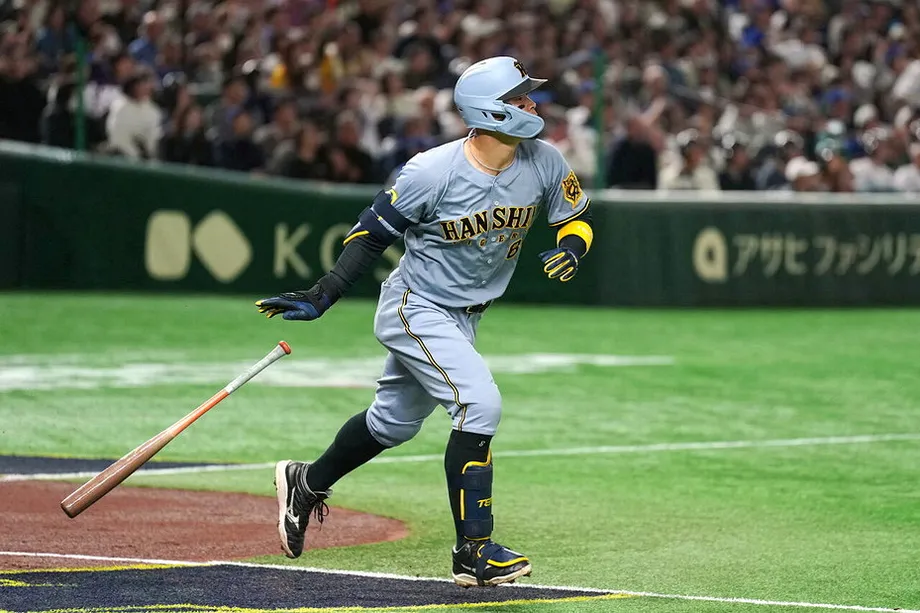
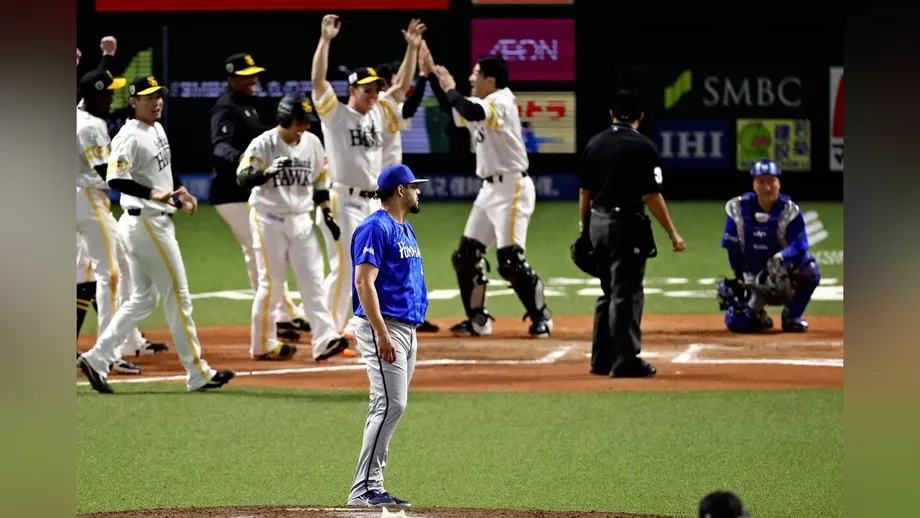
Tomoya Masaki hit a home run in the 10th inning as the Fukuoka SoftBank Hawks beat the Yokohama DeNA BayStars 2-1 on October 27, 2026, taking a 3-0 lead in the Japan Series and moving within one victory of a second consecutive championship.
Contents
- Fukuoka finish leaves Hawks on the brink
- Masaki finds the pitch he wanted
- The ninth inning that kept SoftBank alive
- DeNA loses a fielder during the tying play
- Azuma's seven scoreless innings go unrewarded
- Matsumoto keeps the deficit within reach
- How the series reached this point
- DeNA faces a steeper comeback than in 2024
- Key Points
The finish at Mizuho PayPay Dome Fukuoka followed an escape almost as dramatic as the winning hit. SoftBank was one out from defeat in the ninth when Taisei Makihara singled to right, bringing pinch runner Itua Ikhine home from second base. DeNA requested a review of the close play at the plate, and the tying run was confirmed.
All three games have gone beyond the usual nine innings, the first time a Japan Series has opened with three consecutive games requiring extra innings. SoftBank has won each one, leaving DeNA needing four consecutive victories in a series decided by the first team to win four games.
Game 4 is scheduled for October 28 at the same stadium. SoftBank announced Yugo Maeda as its starting pitcher, with Kentaro Taira set to start for DeNA. A Hawks victory would secure the franchise's 13th Japan Series championship.
Masaki finds the pitch he wanted
Masaki settled Game 3 by driving the third pitch of his at bat against Jose Ruiz over the wall in left field. With two balls and no strikes, he attacked a fastball clocked at 152 kilometers per hour, sending it into the terrace seats.
The SoftBank outfielder explained that his approach was to wait for a pitch he could hit hard:
I was just waiting for a fat pitch. It was 2-0 in the count, so I just thought about having a full swing at it.
A count of two balls and no strikes gives a hitter room to be selective. The pitcher needs to throw strikes to avoid allowing a walk, while the batter can wait for a favorable pitch. Masaki made his opportunity count with a solo home run, worth one run because nobody was on base.
Masaki also described his uncertainty as the ball traveled toward the seats:
I didn't think it was going out and I was running at full speed to reach second, so I couldn't savor it much. It was probably the first walk-off homer in my life.
A walk-off home run ends the game immediately because it gives the home team the lead in its final turn to bat. Masaki had also hit a solo home run in Game 2, making this his second homer in two consecutive series games.
The ninth inning that kept SoftBank alive
Ryoya Kurihara began the comeback with a double to right against DeNA closer Sean Reynolds. Yuki Yanagita and Hotaka Yamakawa then made outs, leaving SoftBank with a runner on second and one final chance to avoid defeat.
Ikhine entered as a pinch runner, replacing Kurihara on second base. A pinch runner takes over for a teammate already on base, allowing a manager to use a faster player when a single run could decide the game.
Makihara, facing a count of three balls and one strike, sent the ball into right field. Ikhine raced home and slid headfirst, reaching the plate just ahead of the attempt to tag him. The review upheld the run, turning DeNA's 1-0 lead into a 1-1 tie.
SoftBank manager Hiroki Kokubo praised Ikhine for scoring in his first Japan Series appearance. The contribution of a player coming off the bench gave Masaki the opportunity to decide the game an inning later.
DeNA loses a fielder during the tying play
DeNA right fielder Kazuki Kamizato charged toward Makihara's hit and threw home, but his throw bounced twice before reaching the plate. Kamizato then collapsed on the field and was taken away on a stretcher.
DeNA manager Ryoji Aikawa confirmed afterward that Kamizato had gone to hospital. The nature of the injury and his availability for Game 4 had not been announced.
Reynolds had also surrendered the tying run in the ninth inning of Game 2, when Yamakawa hit a home run as a pinch hitter. In two consecutive games, DeNA entered the ninth with a lead and finished the night with a defeat in extra innings.
Azuma's seven scoreless innings go unrewarded
Katsuki Azuma gave DeNA seven scoreless innings, allowing six hits and two walks while hitting two batters with pitches. He threw 89 pitches and repeatedly escaped trouble with help from his defense.
DeNA turned five double plays, matching the Japan Series record for a single game. A double play records two outs during the same continuous play, often erasing both a batter and a runner already on base. SoftBank matched the unwanted mark set by Seibu against Chunichi in Game 3 of the 1982 series.
Four of those plays came in the first six innings, ending opportunities involving Ukyo Shuto, Kensuke Kondo, Yamakawa and Yanagita. In the seventh, Azuma caught a line drive from pinch hitter Yuudai Yamamoto and threw to second before Makihara could return, completing the fifth.
Azuma had also started Game 3 against SoftBank in the 2024 Japan Series. On that occasion, he allowed one run over seven innings and earned the victory that began DeNA's championship comeback. This time he allowed no runs, but the bullpen could not protect the advantage.
Takuma Yoshino and Ryota Iwata handled the eighth inning before Reynolds took over in the ninth. Ruiz then allowed the deciding home run in the 10th. DeNA's starting pitcher and defense had carried a narrow lead deep into the game, leaving almost no room for an error late.
Matsumoto keeps the deficit within reach
SoftBank starter Haru Matsumoto allowed one run on six hits over six innings, striking out five without issuing a walk or hitting a batter. He threw 101 pitches in his first Japan Series start, having previously appeared in the competition as a relief pitcher.
Matsumoto entered the series after a regular season in which he won 12 games, lost three and recorded an earned run average of 2.66 across 22 appearances. Earned run average measures how many earned runs a pitcher allows per nine innings.
DeNA scored in the fifth after former Hawks player Masaki Mimori reached base on a fielder's choice and stole second. Takeru Furuichi, making his first start of this series, singled to center with two outs to bring him home.
Matsumoto faced another threat in the sixth when DeNA put runners on second and third. He struck out Yoshitomo Tsutsugo to end the inning, keeping the deficit at one run. SoftBank's relief pitchers then kept DeNA scoreless for the rest of the game.
Kazuki Sugiyama earned the victory after pitching a scoreless top of the 10th. He had recorded saves in the first two games, protecting leads to finish those wins. Across three games, he has therefore been credited with two saves and one victory.
How the series reached this point
SoftBank's three victories have produced a commanding series lead, yet each game has required play beyond nine innings. DeNA has repeatedly stayed close enough to win, only to lose the decisive exchanges.
- October 24, Game 1: SoftBank won the series opener in extra innings.
- October 25, Game 2: DeNA led until the ninth before SoftBank tied the game and won in extra innings. Masaki also hit a solo home run.
- October 27, Game 3: Makihara tied the score with two outs in the ninth, and Masaki's home run in the 10th secured a 2-1 SoftBank victory.
- October 28, Game 4: The teams are scheduled to meet again in Fukuoka, with SoftBank needing one win to clinch the championship.
Masaki's deciding hit also earned a place in the competition's records. He became the 18th player to hit a Japan Series walk-off home run, producing the 19th such homer. He was the first player batting at the top of the lineup to do it.
DeNA faces a steeper comeback than in 2024
DeNA reached this Japan Series after finishing third in the Central League and winning six consecutive games in the Climax Series playoffs. Three defeats have now left the BayStars needing four wins without another loss.
The teams have recent experience of a dramatic reversal. In 2024, SoftBank won the first two games before DeNA won four straight to claim the championship. The BayStars must now repeat that run of four victories, starting from a 3-0 deficit rather than 2-0.
Masaki was part of the SoftBank team that lost that earlier series. Now in his fifth professional season, he entered this postseason after hitting a personal best of 28 home runs. His two homers in this series have helped put the Hawks one victory from completing their title defense.
For DeNA, Game 4 brings an immediate demand: turn another competitive performance into a completed win. Azuma's seven scoreless innings and the team's five double plays were enough to build a lead in Game 3. Holding that lead through the final out is the task that has escaped the BayStars in consecutive games.
Key Points
- SoftBank beat DeNA 2-1 in 10 innings on October 27 to take a 3-0 Japan Series lead.
- Taisei Makihara tied the game with two outs in the ninth, bringing pinch runner Itua Ikhine home.
- Tomoya Masaki hit the winning home run off Jose Ruiz, his second homer of the series.
- The opening three Japan Series games all required extra innings for the first time.
- DeNA starter Katsuki Azuma pitched seven scoreless innings, supported by five double plays.
- Game 4 is scheduled for October 28 in Fukuoka. SoftBank needs one victory; DeNA needs four consecutive wins.