Community centers share space with commercial projects
A restricted Tashkent mayoral resolution dated November 29, 2024, allocated 131 properties for mahalla centers through partnerships with businesses. Project documents describe developments ranging from a building containing 80 apartments to a clinic with 56 beds, a hotel and a rooftop restaurant, while neighborhood committees would often occupy only a small part of the premises.
Contents
- Community centers share space with commercial projects
- What the centers were supposed to provide
- How much of the program can be traced?
- Apartments, hospital beds and a hotel
- Parking areas and existing offices make way
- Environmental approval followed construction in some cases
- Who received multiple properties?
- Restricted decisions became more common
- A court challenge and the legal timeline
- Key Points
Resolution No. 877-14-0-Q/24 lists 112 properties and includes an annex covering another 19. The annex changes provisions of an earlier resolution, No. 417-14-0-Q/24, adopted on July 1, 2024. A check through the November document's QR code confirmed its authenticity but showed that public access was restricted under the classification "for official use only," with protected information cited as the reason.
The allocations have drawn scrutiny following construction disputes in Mutaxassislar uylari, Cho'lpon, Qadrdon and Oqqo'rg'on. An investigation traced projects through environmental assessments, public partnership records and satellite imagery, identifying plans to replace existing mahalla offices and parking areas with larger developments.
A mahalla is a neighborhood community organization through which residents access local administration and support. A public-private partnership, or PPP, brings a public authority and a business together to deliver a project under an agreement. Here, the central issue is how much community space residents receive in exchange for allowing commercial development on the allocated properties.
What the centers were supposed to provide
The resolution set out a model based on Dilbuloq mahalla in Yakkasaroy district. Projects were supposed to follow approved designs and meet deadlines fixed in their partnership agreements.
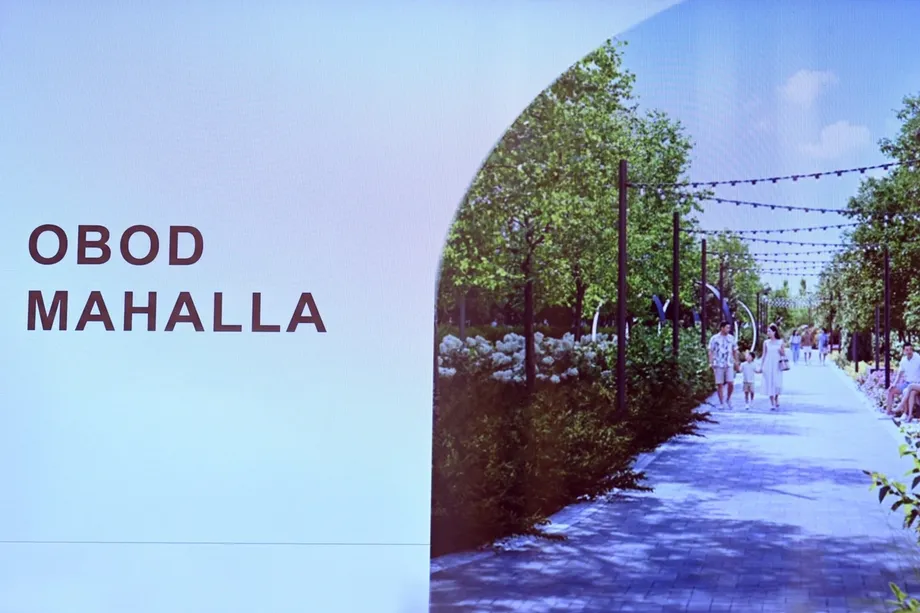
The required facilities included separate rooms for the mahalla chair and the "mahalla seven," the local leadership team, alongside a waiting area, meeting hall and library. Plans also called for a medical room, a children's playground, landscaping and modern parking areas available without charge.
Jadid corners were another requirement. These are spaces dedicated to the reformers associated with the Jadid movement, which promoted education and social renewal in Central Asia. Arrangements for using completed buildings were to be set out in the partnership agreements.
Tashkent has a documented need for better community premises: 99 mahallas lack their own offices, 84 premises fail urban planning standards and four are in emergency condition. Those figures describe different problems and should be considered separately. They explain why replacing or improving neighborhood offices could bring practical benefits, especially where residents currently lack a suitable place to meet local officials.
How much of the program can be traced?
Environmental assessments issued by the State Center for Ecological Expertise allowed investigators to examine 50 of the 131 properties, about 38% of the total. Coordinates in those documents were used to map locations and identify developers.
Assessments for seven companies directly cited the restricted resolution: Mercury Energy, Basic Idea, East Dream Engineering, Universal Montaj Group, Nani Studio, Welcome to Bukhara and Orient Star. Those references connect individual construction plans to the mayoral allocation.
The Ministry of Economy and Finance's PPP registry identified another nine facilities, with listed project costs ranging from UZS 8 billion to UZS 12.7 billion. The upper figure is UZS 4.7 billion, or about 59%, above the lower one. Precise coordinates were unavailable for these nine projects.
The registry associates Kaykovus Invest with Kaykovus mahalla, Ayino with Shirin, Yosh Nihol Tekstil with Birdamlik and Prosperity Tashkent with Chakar. It also identifies Omina Fayz Servis for Feruza, Max Win Service for Ijodkor, Gold Zillion Pharm for Fazogir, Blessed Rent for Marhamat and Universal Montaj Group for Qumariq.
The costs give residents a sense of the scale of individual developments. Assessing the public return also requires knowing the size and condition of the community premises, the value of the property allocated, and the obligations written into each agreement. Those details determine what the city and its neighborhoods receive.
Apartments, hospital beds and a hotel
In Guzarboshi mahalla, East Dream Engineering applied to construct a building with seven stories and 80 apartments, designed for 240 residents. The mahalla premises and commercial rooms would share the ground floor, with housing above them.
In Birdamlik, Yosh Nihol Tekstil proposed a building with five stories. A multidisciplinary diagnostic clinic would occupy the third, fourth and fifth floors, including wards providing 56 inpatient beds.
Turon's project, developed by Lauris Decoration Build, includes a gym, swimming pool, beauty salon, medical clinic and education center in a building with five stories. In Beshag'och, One Housing Group planned a hotel with six stories combined with a mahalla office. Friends Fish Lucky's project in Nihol includes a building with three stories and a rooftop restaurant.
Across most of the projects examined, the mahalla committee would occupy a relatively small area, commonly on the ground floor, in a basement or in a floor partly below ground. The remaining space would serve commercial purposes. A project by INSAN 01 listed shops, classrooms and offices without expressly mentioning mahalla committee premises.
Commercial uses can generate income within a partnership, while new clinics or sports facilities may provide services nearby. For residents seeking neighborhood administration, however, the concrete benefit depends on the rooms they can actually use, their accessibility and the services guaranteed under the agreement.
Parking areas and existing offices make way
Comparisons of Google Earth imagery with environmental documents identified at least six developments affecting existing parking areas: five planned centers and a sixth building already constructed on a parking site.
The projects examined included The Paradise House in Matonat, a mahalla center combined with a business center by Developers Sam, and a building with five stories associated with Rom Global Stroy. Other developments involved Voris Property Management in Oliy Himmat and Abdulla Avloniy, ABC Cosmo in Beg'ubor, and Umida Bintu Baxodir in Bunyod.
Existing mahalla buildings were also being demolished in more than 14 neighborhoods to make way for commercial developments with several floors. For those communities, the change involves replacing an established public facility rather than simply adding one on vacant land.
The resolution's promise of free parking is particularly relevant where construction takes over parking areas. Residents need to know how many usable spaces will remain after completion, where they will be located and whether access will stay free. During redevelopment, the location of temporary mahalla services also matters for people who need assistance before the replacement building opens.
Environmental approval followed construction in some cases
Construction in Nurliyo'l, Abdulla Avloniy and Astrobod reportedly began, or had already been completed, before the mandatory state environmental expert review. Some assessments were reportedly issued after the work they were meant to examine.
An environmental review assesses a proposed project's effects and the conditions needed to limit damage. Its timing matters because safeguards can be built into plans before excavation, demolition or tree removal begins. Approval issued after construction leaves less opportunity to change the design or protect features already lost.
The investigation also identified allegations that mature trees were removed before construction at locations associated with Quyosh and Mercury Energy. Developers reportedly told environmental authorities that no trees were present on allocated sites, while imagery showed green surroundings.
Near a True Grade project, 29 trees were recorded, adding a specific count to concerns about how vegetation was described. The location of trees relative to a property's boundary is important when checking such declarations, because a construction site's effects can also reach trees immediately around it.
For residents, these disputes concern shade, outdoor space and the condition of their streets as well as paperwork. Checking the original site surveys, tree records and dates of construction would help authorities assess whether project declarations matched conditions before work began.
Who received multiple properties?
Haike Zhineng, Max Win Service and Best-Tall-House were among companies that each received two projects. The investigation identified shared founders, executives or accountants among several businesses, alongside companies that had been declared bankrupt or liquidated.
Corporate links matter when assessing how widely public opportunities were distributed. Several businesses with different names may still be connected through ownership or management, making the identities behind the companies relevant to scrutiny of the allocations.
Ownership information cited in the investigation showed that Doniyor Komilov, the son of former Uzbek Foreign Minister Abdulaziz Komilov, held a 99% stake in Delta Global Dynamics. Examining the selection process requires tracing the ownership and management of recipients alongside the terms of their agreements.
Economist Otabek Bakirov and legal specialists called for a comprehensive audit and the return of allocated land to the state reserve. Their concern was that valuable Tashkent plots had been assigned for commercial development under the stated purpose of building mahalla centers.
An audit would need to compare each allocation with its approved design, partnership obligations and completed facilities. For a neighborhood, the practical test is whether the promised public premises, parking and other amenities have been delivered and remain available on the agreed terms.
Restricted decisions became more common
E-Qaror portal figures show that Tashkent's mayor issued 803 decisions and orders from January to August 18, 2025. Of these, 264 were open and 539 were closed, including 371 stamped "for official use only."
During the same period in 2024, 405 of 763 documents were open and 358 were closed, including 277 carrying that stamp. The closed share rose from 46.9% to 67.1%, an increase of 20.2 percentage points. The total number of documents grew by only 40.
Tashkent's Council of People's Deputies had a different publication pattern. It made 135 of its 172 decisions public during the 2025 period, about 78%, compared with 110 of 130, about 85%, a year earlier.
The Ministry of Justice has explained that mayors decide publication status subject to legal restrictions covering information such as security matters, personal data and guardianship. In November 2022, the mayor's office published and then hid council decisions concerning the city budget for the first half of that year. The ministry subsequently restored access.
The Anti-Corruption Agency's review of 19,495 hidden decisions and orders during January through June 2026 found that 775 had been withheld without justification. That equals about 4% of the documents examined and places the mahalla controversy within a wider problem of access to local government decisions.
A court challenge and the legal timeline
Oqqo'rg'on residents successfully challenged a mayoral decision allocating a site of 0.05 hectares, equivalent to 500 square meters, for a building with five stories. The Mirzo Ulug'bek interdistrict administrative court declared the decision invalid on August 4. The year of that ruling was not specified.
Rules governing documents marked "for official use only" were approved through Cabinet of Ministers Resolution No. 766 of December 4, 2025. They require public bodies to establish lists of information eligible for restriction and exclude information that openness legislation requires them to publish.
The rules also restrict the use of that classification for documents establishing, changing or repealing generally binding legal rules, with an exception for information subject to restricted distribution. They assign the O'zarxiv agency coordination and monitoring duties, including powers to issue binding instructions to address violations.
The main dated developments show how the property allocations and wider disclosure rules unfolded:
- July 1, 2024: Tashkent adopted the earlier resolution, No. 417-14-0-Q/24.
- November 29, 2024: Resolution No. 877-14-0-Q/24 covered 131 properties, including amendments concerning 19.
- January to August 18, 2025: Closed mayoral documents accounted for 67.1% of the total.
- December 4, 2025: Cabinet Resolution No. 766 approved rules for handling documents marked for official use only.
- January to June 2026: The Anti-Corruption Agency identified 775 unjustifiably hidden decisions and orders.
The Oqqo'rg'on judgment gives residents a concrete example of an allocation being overturned through court proceedings. Across the wider program, public access to property decisions and partnership agreements would allow communities to compare the facilities promised with what is being built.
Key Points
- A restricted November 2024 mayoral resolution allocated 131 Tashkent properties for mahalla centers through public-private partnerships.
- Environmental documents allowed 50 properties to be examined; the finance ministry's registry identified another nine facilities.
- Plans include apartments, a clinic with 56 beds, a hotel and a rooftop restaurant, often alongside limited mahalla office space.
- At least six developments affected existing parking areas, while existing mahalla buildings were being demolished in more than 14 neighborhoods.
- Construction reportedly preceded mandatory environmental approval in Nurliyo'l, Abdulla Avloniy and Astrobod.
- Oqqo'rg'on residents won a court challenge against a site allocation for a building with five stories.
- The share of closed Tashkent mayoral documents rose from 46.9% to 67.1% between comparable periods in 2024 and 2025.