A new role for Uzbekfilm after a sharp rise in spending
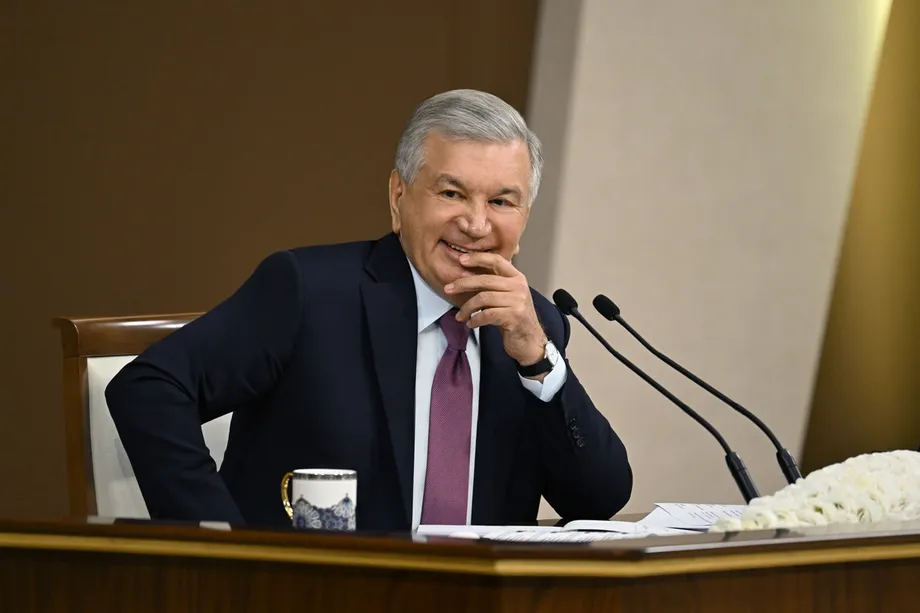
Uzbekistan will transfer film production entirely to private studios and independent filmmakers, abolish its Cinematography Agency and turn Uzbekfilm into a national company that finances and distributes films rather than making them. President Shavkat Mirziyoyev announced the changes on October 26, 2026, at the Uzbekfilm studio in Tashkent.
Contents
- A new role for Uzbekfilm after a sharp rise in spending
- Who will run the industry?
- How will subsidies replace state commissions?
- Why the existing system came under criticism
- Getting films from studios to viewers
- A film services complex costing hundreds of billions
- What stories does the president want on screen?
- Critics and filmmakers will get new organisations
- AI training and support for cinema workers
- The timetable from earlier proposals to construction
- Key Points
The overhaul follows a steep increase in public spending. According to the official UzA meeting account, annual state funding for film production rose from 10 billion soums in 2016 to 218 billion soums in 2026. That is 21.8 times the earlier amount. Total funding over the decade reached 1.2 trillion soums.
Mirziyoyev said the larger budgets had helped bring dozens of private studios into the industry, alongside a new generation of filmmakers. Yet he also described a system in which almost half of state commissions went to public studios, some directors handled as many as six projects simultaneously, and completing assignments could take priority over making films audiences wanted to watch.
The proposed solution separates three jobs: setting cinema policy, deciding which projects receive money, and producing the films. The Ministry of Culture will handle policy, the new Uzbekfilm company will select and finance projects and help them reach viewers, and private filmmakers will make them.
Presidential press secretary Sherzod Asadov said Mirziyoyev announced at the end of the meeting that he had signed a decree covering the changes. Officials received deadlines ranging from one week for organising the new company to March 2027 for starting construction of a film services complex.
Who will run the industry?
The Cinematography Agency, the 19 organisations within its system and the Cinematography Fund are to be abolished. Responsibility for implementing state cinema policy will move to the Ministry of Culture, where a new Film Art Department will be established.
The department's head will have a status equivalent to a deputy minister. Officials were instructed to organise the department and complete the dissolution of the agency system within one month of the meeting. Buildings released by the restructuring, along with unused state cinema assets, are to be offered at open auctions.
Uzbekfilm will also change its legal and operational form. The existing state institution will be dissolved and replaced by a national film company operating under a new business model. Its activities are to be organised within one week.
The company will select projects, provide financing, promote completed films, arrange distribution and help productions enter international markets and festivals. Private studios and independent filmmakers will take responsibility for production. Public institutions will therefore continue to shape funding and access to audiences, while filming moves out of the state studio system.
How will subsidies replace state commissions?
State commissions will give way to subsidies. Under the existing approach, the government orders a film against an approved assignment. Under the announced replacement, public money will support projects selected through the new national company.
Mirziyoyev, explaining the state's intended relationship with filmmakers, said:
From now on, the state will be not the commissioner of films, but a reliable partner of creative workers and the private sector.
Officials must introduce the financing mechanism within one month. From 2027, the state budget will provide funds annually in response to requests from the national Uzbekfilm company.
The announcement did not specify selection criteria, subsidy amounts or allocation procedures. Those rules will determine how private filmmakers apply for support and how the company chooses among competing projects. The reform changes who makes publicly supported films while keeping the government involved in financing them.
Why the existing system came under criticism
Mirziyoyev criticised the concentration of commissions among a limited group of filmmakers. Assigning up to six projects to one director and seven to one writer, he said, made careful work on each production difficult. Almost half of orders went to state studios, restricting opportunities for private competitors.
A review discussed during an earlier presentation on cinema reform examined 181 planned projects. It found repeated subjects and historical periods, creators working on several projects at once, and some studios and creative teams with insufficient experience.
The review also identified weak scripts and gaps between generations of specialists in cinematography, sound direction and editing. Those are different parts of filmmaking: cinematographers shape how a film looks, sound directors manage its audio, and editors assemble the recorded material into the finished story.
The agency's performance had come to be judged by completion of approved plans rather than audience appreciation or popularity. Mirziyoyev argued that films need room for scripts and creative decisions to develop during production, instead of being purchased through detailed technical instructions like ordinary goods or construction work.
The financing reform and the training proposals address different parts of that problem. Changing access to public money can open opportunities for private teams; improving scripts and technical skills concerns the work those teams must deliver.
Getting films from studios to viewers
Mirziyoyev said foreign films continued to fill cinema halls, arguing that audiences had changed their tastes and expectations rather than abandoned cinemas. He acknowledged that national productions were falling short of those expectations.
The government identified distribution as a particular weakness. Distribution is the process that takes a completed film to viewers, including arranging screenings, promoting its release and selling it to other markets. A finished film needs that work to find an audience and earn revenue.
The new Uzbekfilm company will combine project financing with responsibility for promotion and distribution. An earlier reform presentation also proposed a national online cinema platform through which films could generate income. Plans discussed around the meeting included expanding modern cinemas in Tashkent and the regions and improving the release of local productions.
For private filmmakers, this puts the company in two important positions: it will help decide which projects receive public support and then help completed films reach cinemas, overseas buyers and festivals. For audiences, the intended change is a more reliable route to seeing Uzbek films beyond their initial production.
A film services complex costing hundreds of billions
A new Uzbekfilm cinema town will occupy the studio's 10 hectares in Tashkent. The government plans to direct 400 billion soums to the project, bringing film production services together in one industrial cluster.
A further 80 billion soums is planned for a modern dubbing and sound centre. The proposals include a studio equipped with Dolby Atmos, a sound technology that allows audio to be placed around a listener. Dubbing replaces dialogue with voices recorded in another language, while sound production also covers dialogue recording, effects and the final audio mix.
The two announced allocations add up to 480 billion soums. That is about 2.2 times the 218 billion soums allocated for film production in 2026, although the construction allocations concern infrastructure and were not described as annual spending.
Officials have two months to prepare the complex's master plan and design and cost documents with a qualified design organisation. Construction is scheduled to begin in March 2027.
Uzbekfilm has already undergone a complete reconstruction in recent years. The new complex extends that investment into shared services for an industry in which private companies will carry out production.
What stories does the president want on screen?
Mirziyoyev urged filmmakers to portray contemporary people alongside historical figures. He identified teachers, doctors, athletes, soldiers, entrepreneurs, builders and young people as subjects whose lives could provide material for compelling films.
The president described cinema as an instrument of "soft power", meaning a country's ability to build influence through its culture and appeal. In this case, the aim is to introduce international audiences to Uzbekistan's history, people and national identity.
Explaining his idea of O'z in cinema, Mirziyoyev said:
Being aware of our identity, we should tell the world our own story in our own voice.
He placed that ambition within a longer filmmaking tradition, naming independence era productions including Abdullajon, Fields Left by My Father, Dilkhiroj, Vatan and O'tov. More recent historical films highlighted at the meeting included Ibrat, Avloniy, Abdulla Qodiriy, Ilhaq and Uzbek Girl.
The proposals also include broader special competitions and state grants for work with a national character and strong artistic merit. Taken together, the stated priorities combine international reach with stories that Uzbek viewers, including children, can recognise in their own lives.
Critics and filmmakers will get new organisations
A Film Critics Club will be created to develop research, analysis and professional criticism. Uzbekfilm will support its work and help it seek membership of FIPRESCI, the International Federation of Film Critics.
Mirziyoyev said professional critics received too little attention under the existing system. The club is intended to give informed assessment a larger place in the industry, alongside efforts to improve films' participation in international festivals.
The Creative Union of Filmmakers of Uzbekistan and the Association of Film Industry Representatives will merge into a new chamber representing cinema professionals. Its responsibilities will include industry self government, copyright protection, professional interests and support for younger filmmakers.
Officials were instructed to organise the chamber within one month. Financial and organisational support is planned for its activities, together with opportunities for young filmmakers to improve their skills abroad. Copyright protection concerns creators' rights over the use of their work, a practical issue as films are sold, distributed and shown in more markets.
AI training and support for cinema workers
Mirziyoyev also ordered a cooperation programme on artificial intelligence in filmmaking to be prepared within one month. It will include new educational courses, specialist training and opportunities to improve qualifications abroad.
The programme's specific technologies and financing arrangements were not announced. Its stated educational focus comes alongside the earlier review's findings about shortages and gaps in specialist skills.
Cinema workers will also receive access to the recently renovated Kohinur sanatorium in Quyi Chirchiq district, Tashkent region. The facility is to be placed at filmmakers' disposal as a place for rest, recovery and creative work.
At least 300 industry employees each year will receive free vouchers for rest and treatment at sanatoriums across Uzbekistan. The measure extends support beyond individual productions to the people working in the sector.
The timetable from earlier proposals to construction
The October measures build on changes presented on June 1, 2026. Those earlier measures envisaged national status for Uzbekfilm, its conversion into a cinema concern, support for private producers and tax benefits for film industry companies until 2036.
The October announcement gives Uzbekfilm a more specific role as a financing, promotion and distribution company, with production assigned entirely to the private sector. The main stages are:
- June 1, 2026: Earlier cinema reforms set out support for Uzbekfilm and private producers, including tax benefits until 2036.
- October 26, 2026: Mirziyoyev announced the restructuring and said he had signed a decree covering the changes.
- Within one week: Officials must organise the national Uzbekfilm company's operations.
- Within one month: The new ministry department, agency dissolution, subsidy mechanism, professional chamber and AI cooperation programme are to be organised or prepared.
- Within two months: The cinema town's master plan and design and cost documents must be prepared.
- From 2027: Annual budget allocations will respond to requests from the national company.
- March 2027: Construction of the cinema town is scheduled to begin.
Mirziyoyev also proposed bringing more institutions under the Uzbekfilm name. The proposals cover the Museum of Cinema Art, the Palace of Cinema Art and the National Film Fund, as well as renaming part of Chilanzar Street. The name would connect the country's filmmaking heritage with its new funding and distribution structure.
Key Points
- Private studios and independent filmmakers will take over film production.
- The Cinematography Agency will be abolished, with cinema policy transferred to the Ministry of Culture.
- A new national Uzbekfilm company will select and finance projects and manage promotion and distribution.
- Subsidies will replace state commissions, with selection and allocation rules still to be announced.
- Annual film production funding rose from 10 billion soums in 2016 to 218 billion soums in 2026.
- The cinema town and sound centre have announced allocations totalling 480 billion soums, with construction scheduled for March 2027.
- New professional bodies, training initiatives and welfare support form part of the restructuring.