Cabinet study will test the price of bringing F1 back
Malaysia is preparing a November Cabinet proposal on bringing Formula One back to Sepang, with an estimated annual commitment of at least RM300 million weighed against RM950 million in economic activity attributed to this month's relocated Bahrain Grand Prix.
Contents
- Cabinet study will test the price of bringing F1 back
- How an emergency relocation reopened the debate
- Annual racing or a place every few years?
- What Malaysia would have to pay
- Where the RM950 million figure needs closer examination
- Large crowds strengthen the case, while transport needs work
- A five year plan and protection for other sports
- Teams and lighting companies see an opportunity
- Calendar competition adds another constraint
- Key Points
Sepang International Circuit chief executive Azhan Shafriman Hanif said the circuit was gathering information from the government, public agencies and industry for a feasibility study. Speaking ahead of an October 26 update, he put the prospects of a return at 50-50, with the final decision resting with the government.
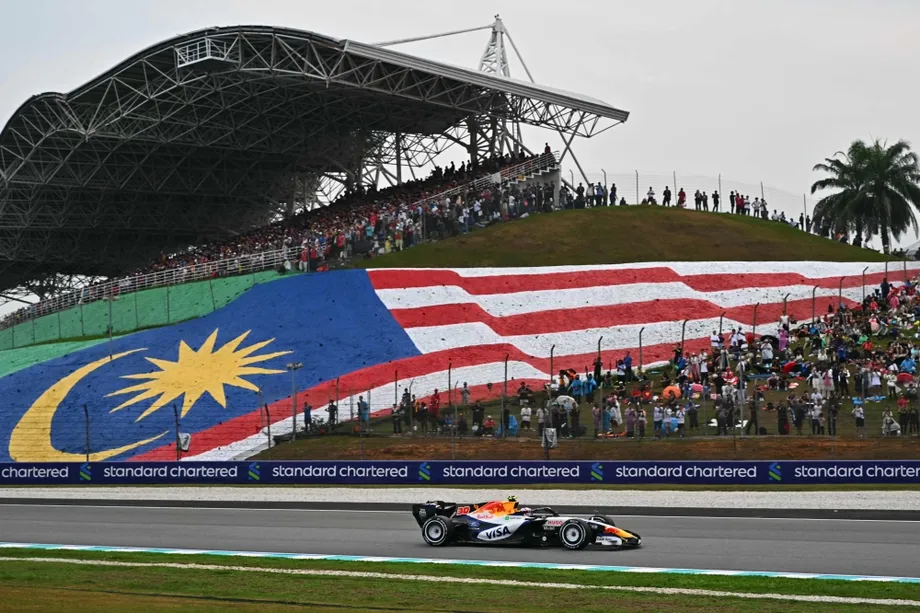
The assessment follows the Gulf Air Bahrain Grand Prix held at Sepang from October 2 to 4, 2026, after conflict in West Asia prevented the race from taking place in Bahrain earlier in the season. Malaysia had last hosted Formula One in 2017.
Youth and Sports Minister Dr Mohammed Taufiq Johari has said the government is examining both annual races and an arrangement under which Malaysia could host every few years in cooperation with another country. The assessment is expected to be completed by the end of November and presented to Cabinet.
Costs, benefits and transport readiness are central to the decision. The October event brought large crowds and renewed enthusiasm, alongside complaints about shuttle queues and crowd control. Its financial structure also gave Malaysia an advantage: Bahrain paid the hosting fee and collected ticket revenue, while Malaysia handled local preparations.
A lasting return would require Malaysia to settle who pays, how often Sepang hosts and how much new spending the event brings into the country.
How an emergency relocation reopened the debate
Sepang hosted the Malaysian Grand Prix from 1999 until 2017, when rising costs and licensing fees helped bring its run to an end. Nine years later, the circuit returned to Formula One through an agreement involving Formula One, the International Automobile Federation (FIA), and the Malaysian and Bahraini governments.
The October race retained Bahrain's Grand Prix identity. Cooperation between Malaysia's King Sultan Ibrahim, Bahrain's King Hamad bin Isa Al-Khalifa and both governments helped preserve the event after its original April date could not go ahead.
The main developments have unfolded over several weeks:
- October 2 to 4, 2026: Sepang hosted the relocated Gulf Air Bahrain Grand Prix.
- October 4: Prime Minister Anwar Ibrahim discussed a permanent Malaysian return with Formula One chief executive Stefano Domenicali.
- October 15: Mohammed Taufiq outlined the government's assessment of costs, economic returns and possible hosting arrangements in Parliament.
- October 26: Azhan's update described the circuit's consultations and plans for a November Cabinet proposal.
- By the end of November: The government assessment is expected to be ready for Cabinet consideration.
Azhan also said Sepang had received no approaches from other countries affected by the West Asia conflict seeking an alternative venue. The circuit remains open to discussions, subject to the preparation time required.
Annual racing or a place every few years?
Mohammed Taufiq told the Dewan Rakyat that early discussions had involved the prime minister, Formula One's chief executive and its management. He was answering a supplementary question from Bangi MP Syahredzan Johan during Minister's Question Time.
The Youth and Sports Ministry is leading an F1 evaluation committee involving all ministries and Chief Secretary to the Government Tan Sri Shamsul Azri Abu Bakar. Its work covers hosting costs, return on investment and infrastructure readiness, with the aim of spreading benefits beyond the circuit and the sports ministry.
Hosting every few years could reduce how frequently Malaysia pays to stage a race. Economist Yeah Kim Leng also suggested that occasional events could help maintain public interest. A partner country, schedule and commercial agreement have not been announced.
Anwar said after his October 4 discussion with Domenicali that a permanent return would need time because Formula One must account for a crowded calendar and existing agreements with host countries.
What Malaysia would have to pay
Azhan has estimated that securing a permanent Formula One slot would cost at least RM300 million annually, including hosting rights and local preparations. Hosting rights alone have been estimated at US$70 million to US$80 million. These are the commercial fees paid for permission to stage a championship race.
Bahrain covered that fee for the October event and received the ticket revenue. Malaysia gained the opportunity to attract visitors without taking on the same commercial arrangement that a future Malaysian Grand Prix could require.
Malaysia's preparation bill has been stated as RM10 million to RM16 million, while another estimate puts it at US$10 million to US$16 million, or about RM40.8 million to RM65.3 million. A confirmed final accounting would resolve that substantial difference.
Universiti Teknologi Mara tourism management lecturer Hafiz Hanafiah estimated that maintaining Sepang at Formula One standards could cost as much as RM10 million a year. That creates an expense between races even if Malaysia chooses to host only occasionally.
Former circuit chief executive Razlan Razali has questioned the viability of a permanent comeback. The scale of the commitment explains why the government is examining a longer period rather than judging the proposal solely on one busy weekend.
Where the RM950 million figure needs closer examination
Mohammed Taufiq initially described RM950 million as the projected economic return from the October race. He subsequently announced economic activity of that amount, equivalent to about US$232 million, alongside 261,000 spectators over three days and more than 50,000 foreign visitors.
The Cabinet assessment will need to examine how that spending was calculated and how much Malaysia gained after paying the costs of hosting. Economic activity covers spending circulating through businesses, including hotels, restaurants and transport operators. Government revenue comes through a different route, such as taxes.
Sunway University economist Yeah Kim Leng said the assessment should identify spending by foreign visitors who travelled specifically for the race. He also pointed to spending by Malaysians who might otherwise have used their money on another holiday or leisure activity within the country.
Hafiz Hanafiah, the UiTM tourism lecturer, explained that difference through a household image:
Think of the Malaysian economy as a bathtub.
He then described how domestic spending can move between destinations:
If a Malaysian skips a trip to Langkawi to buy an F1 ticket, he is just moving the water from one end of the tub to the other. It may look busy, but the water level doesn't rise.
Hafiz estimated that an event would need at least RM300 million in additional foreign tourist revenue to justify the hosting fee. His estimate gives the government a specific spending target to examine alongside the broader RM950 million figure.
Large crowds strengthen the case, while transport needs work
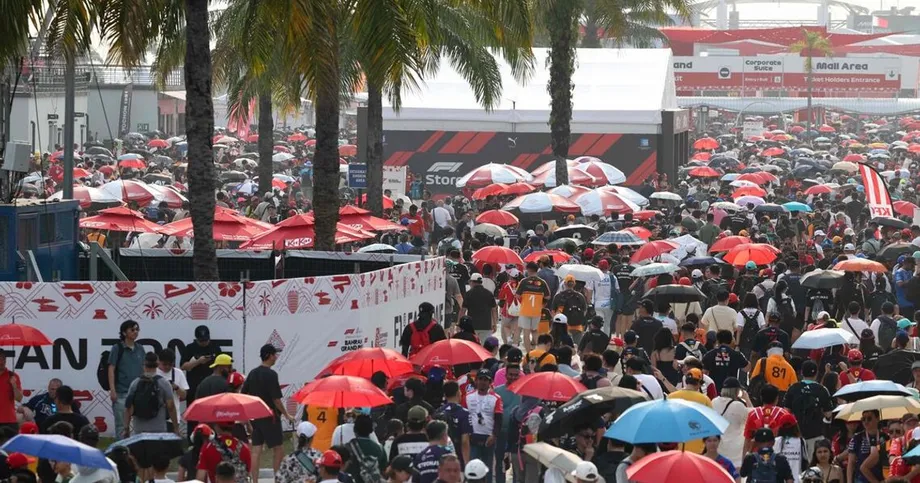
Ticket sales reached roughly 100,000 for the October event, compared with about 30,000 in 2017, according to figures cited by Mohammed Taufiq. That is around 70,000 more tickets and more than three times the earlier total.
The minister also cited 261,000 spectators across the three days. Ticket sales and attendance across a race weekend are different measures: a person with access to several days can attend more than once. The earlier Sepang Malaysian Grand Prix attendance record was 126,690 in 2008.
Fans complained of long waits for shuttle buses and poor crowd control. Some walked several kilometres along main roads and motorways to leave the area. Sepang acknowledged the complaints and said it was working with transport partners and the authorities to strengthen traffic, shuttle arrangements and crowd management.
Azhan said traffic congestion and public transport would receive particular attention in the feasibility study. For spectators, those decisions determine how they reach the circuit and get home. For organisers, they affect how smoothly a large crowd can move through a venue over several days.
The comparison with 2017 gives Malaysia evidence of renewed demand. The financial assessment must now consider whether similar ticket sales and visitor spending could be sustained if races return regularly.
A five year plan and protection for other sports
FIA president Mohammed Ben Sulayem said Malaysia would need a business plan covering at least five years, including commercial, promotional and logistical arrangements. Speaking on October 4, he offered the governing body's support for that preparation.
"Have a business plan covering a minimum of five years, and we will support it," he said.
At the circuit's estimate of at least RM300 million annually, five annual editions would involve at least RM1.5 billion before any changes in costs. That calculation shows the scale of planning required for a permanent return.
Mohammed Taufiq said Formula One funding must leave allocations for athlete development and other sports intact. In 2025, the ministry allocated RM5.6 million to 29 motorsport programmes covering 159 activities and competitions for vehicles with two or four wheels.
Work on local talent has continued through motocross, karting, drifting, rallying and mini bike racing under Rakan Muda. Sepang also supports opportunities through the Malaysia Touring Car Championship and Sepang 1000km.
Yeah said the government should consider alternative uses for the money, including schools and hospitals. Hafiz proposed involving private sponsors and extending Formula One related events over 10 days in different parts of Malaysia to encourage longer stays and greater visitor spending.
Teams and lighting companies see an opportunity
Mercedes deputy team principal Bradley Lord said his team would welcome a permanent return to Sepang. He recalled thousands of fans gathering at the Petronas Twin Towers before the October race and described Malaysia as feeling like a home event.
"For us, it feels a little bit like a home race in Malaysia. We'd love to go back," he said.
A possible night race has also attracted commercial interest. Signify chief executive As Tempelman said lighting technology could support such an event, with the first decision resting with organisers and the authorities.
DZ Engineering general manager Roberto Grilli expressed interest in proposing a solution using Signify technology. The companies have worked together on motorsport lighting since Singapore's first Formula One night race in 2008.
At Singapore's Marina Bay circuit, Philips ArenaVision LED floodlights introduced in 2023 reduced lighting power consumption by 30 per cent compared with the previous system. A Sepang lighting proposal would need its own costs and design as part of the wider business plan.
Calendar competition adds another constraint
Malaysia is pursuing its proposal alongside reported interest from Thailand, Vietnam and South Korea. Asia is expected to host nine Formula One races in 2027, compared with Europe's eight, following the return of the Turkish Grand Prix.
Anwar's warning about existing contracts makes calendar space a practical part of the negotiations. Government approval would allow Malaysia to pursue an agreement, while Formula One would still need to fit any Malaysian race into its commercial commitments and schedule.
November's assessment is the next concrete step. Cabinet will be asked to weigh the public cost, expected foreign spending, transport readiness and a possible partnership with another country. Those findings will shape whether Malaysia seeks an annual Grand Prix, an occasional race or another arrangement.
Key Points
- Sepang is preparing a feasibility proposal for Cabinet consideration in November, with the government assessment expected by the end of that month.
- Malaysia is considering annual races or hosting every few years in cooperation with another country.
- A permanent Formula One slot has been estimated to cost at least RM300 million annually.
- The sports minister attributed RM950 million in economic activity and more than 50,000 foreign visitors to the October Bahrain Grand Prix at Sepang.
- Bahrain paid the October hosting fee and collected ticket revenue; a future Malaysian agreement would require fresh financial terms.
- The study will examine traffic, public transport, economic returns and infrastructure, while the FIA has called for a business plan covering at least five years.